
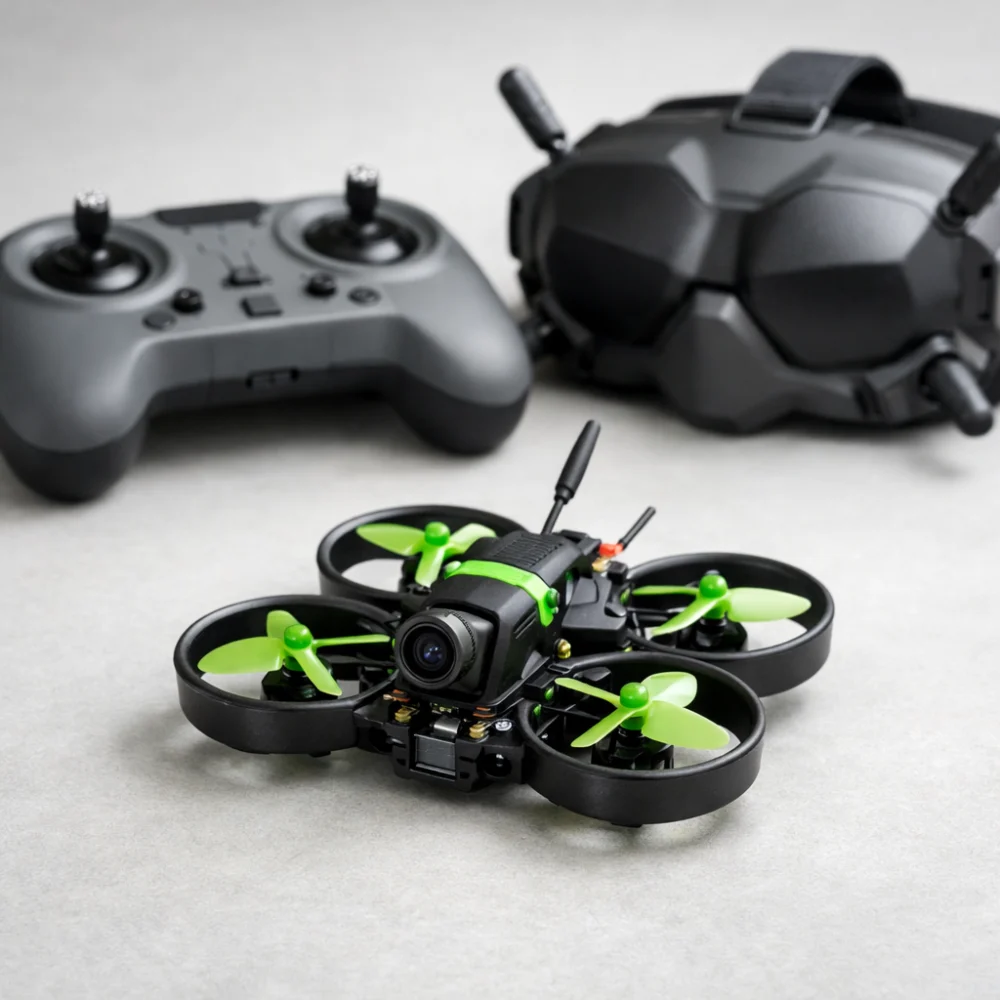
Emax Tinyhawk drones are aimed at buyers who want a compact FPV drone experience rather than a general camera drone. They are often considered by beginners, indoor flyers and hobbyists who want a small quad that is easier to handle in tighter spaces.
If you are comparing options in this category, the main question is not just which drone looks appealing, but which setup fits your experience, flying space and preference for analogue or digital FPV equipment. That makes it worth looking closely at what is included in the kit and what you may need to already own.
Because Tinyhawk products can be sold as different ready-to-fly bundles and system variants, the details matter more than the name alone. Specifications vary by model, so always check the individual product page before buying.
What should you look for in an Emax Tinyhawk drone?
The best starting point is to decide whether you want a complete ready-to-fly kit or a drone-only option, then compare the FPV system, controller compatibility and intended flying style. For most buyers, the right choice comes down to whether the bundle matches the equipment you already have and the type of flying you want to do. A smaller, lighter Tinyhawk-style drone can be easier for indoor or close-range practice, but it may also feel less suited to open-area flying than a larger model.
| Feature | What It Means | Why It Matters | What To Check |
|---|---|---|---|
| Bundle type | Whether the drone is sold alone or as a kit with controller and goggles | Determines how much extra equipment you need | Look for RTF or kit wording and confirm what is included |
| FPV system | The video transmission and viewing format used for flying | Must suit the goggles or receiver you plan to use | Check whether it is analogue or a digital system such as HD Zero, if stated |
| Controller compatibility | Which radio setup the drone or kit is designed around | A mismatch can mean buying extra gear | Confirm the transmitter type mentioned on the product page |
| Use case | Indoor practice, backyard flying or more energetic freestyle use | Different flying spaces call for different handling and durability needs | Look for clues in the product title and description about intended use |
| Spare parts and support | Access to replacement parts and consumables | Small drones are more likely to need routine parts over time | Check whether parts, batteries and accessories are listed separately |
Key decision criteria explained
RTF kit or drone only
Many Tinyhawk options are sold as ready-to-fly kits, which can be useful if you want a complete entry point into FPV. A drone-only listing may suit someone who already has the right goggles and radio gear. The trade-off is simple: kits are easier to start with, while separate components can give more flexibility if you already own compatible equipment.
Analogue or digital FPV
The FPV video format affects what you need to fly the drone and how the viewing setup works. Analogue kits are often chosen for straightforward compatibility and lower entry cost, while digital options are for buyers who already want that specific ecosystem. If you are not sure which you need, compare the goggles and camera system on the individual product page rather than assuming all Tinyhawk products work the same way.
Indoor practice or freestyle use
Some buyers want a tiny drone for learning control indoors or in limited space, while others want a more agile quad for freestyle flying. The practical difference is how forgiving the drone feels in tighter areas and how much space it needs to be enjoyable. A smaller model can be easier to manage for practice, but it may not offer the same outdoor confidence as a larger FPV quad.
Durability and maintenance needs
Compact FPV drones are typically used in situations where bumps and occasional repairs are part of ownership. That means you should pay attention to whether replacement parts are easy to source and whether the frame design looks intended for repeated use. Specifications vary by model, so always check the individual product page before buying.
Types and variants you are likely to see
Within this category, the main differences usually come from the bundle and FPV system rather than from entirely different product families.
- Ready-to-fly kits: Useful for buyers who want a more complete setup in one purchase.
- Drone-only listings: Better for people who already own compatible radio and FPV gear.
- Analogue FPV versions: Common for straightforward use with analogue goggles and transmitters.
- Digital FPV versions: Suitable for buyers already committed to a digital viewing system.
If you are comparing similar listings, the title alone is not enough. Check the included accessories and system compatibility line by line.
Which Tinyhawk setup suits different buyers?
| Buyer need | What tends to matter most | Why |
|---|---|---|
| First-time FPV buyer | Complete kit, simple compatibility | Reduces the chance of missing goggles, radio gear or other essentials |
| Existing FPV hobbyist | Radio and video system compatibility | Lets you use equipment you already own |
| Indoor practice | Compact size and manageable handling | Helps keep flying practical in limited space |
| Freestyle interest | Agility, frame design and suitability for repeated use | Supports more active flying styles |
| Gift buyer | Clear included items and ease of setup | Makes it easier to choose something usable without extra purchases |
Common mistakes to avoid
- Assuming every Tinyhawk listing includes the same extras: kit contents can vary, so check whether goggles, transmitter and batteries are included.
- Ignoring the FPV format: a drone can look similar while still requiring different viewing equipment.
- Buying for the wrong flying space: a compact FPV drone may be ideal indoors but less suited to open-area expectations.
- Overlooking replacement parts: small drones are easier to enjoy when consumables and spares are straightforward to find.
Safety and suitability caveats
Tinyhawk drones are small FPV products, but they still need to be chosen with care for the intended user and flying environment. Check the product page for any included guidance on age suitability, setup requirements and what equipment is needed before flight. If the drone is for a younger or less experienced flyer, it is especially important to make sure the bundle is genuinely complete and that the user can manage the controls comfortably.
Maintenance, storage and ownership considerations
When comparing these drones, it helps to think beyond the first purchase. Batteries, propellers and other small parts may be consumables over time, so it is sensible to check whether replacement items are easy to source. Storage also matters: a compact drone is easier to keep safe between sessions if the kit or case arrangement is practical for your space. If you plan to fly often, a model with readily available support items can be less frustrating to own.
How to compare options efficiently
- Decide whether you need a complete kit or just the drone itself.
- Check which FPV system and controller setup the product uses.
- Match the drone to your main flying space and intended use.
- Look at what is included, not just the headline product name.
- Compare spare parts and accessory needs before you commit.
Summary buyer decision checklist
- Do I need a ready-to-fly kit or a drone-only product?
- Will the FPV system match my goggles or viewing setup?
- Is this suited to indoor practice, freestyle use or another purpose I have in mind?
- Are the included accessories clearly listed?
- Can I source replacements and consumables if needed?
- Have I checked the individual product page for the exact specification?
Frequently asked questions
Are Emax Tinyhawk drones good for beginners?
They can be, especially when sold as a ready-to-fly kit with the needed accessories included. The important point is that the beginner still needs a setup that matches the included goggles and radio equipment. A simple, complete bundle is usually easier to start with than a partial package.
Do I need goggles to fly a Tinyhawk drone?
FPV drones normally need a viewing solution of some kind, which may be included in a kit or bought separately. Whether you need goggles depends on the exact listing and the FPV system it uses. Check the included items carefully before buying.
What is the difference between analogue and digital FPV listings?
The difference is the video system used to send and view the flight image. The practical issue for buyers is compatibility: the drone must match the goggles or receiver you plan to use. If you already own FPV gear, this is one of the most important checks.
Are these drones mainly for indoor flying?
Many buyers choose them for indoor practice or smaller flying spaces, but the right use depends on the exact model and bundle. Some are more suited to freestyle-style flying than others. Check the product description for clues about intended use rather than relying on the category name alone.
What should I check if I am buying one as a gift?
Make sure the package is genuinely complete and that the recipient can use it without buying extra equipment first. It also helps to check whether the setup is aimed at a beginner or someone who already has FPV experience. A clear kit listing is usually easier to give as a gift than a drone-only product.
Why do similar Tinyhawk products have different titles?
The titles often reflect differences in bundle contents, controller type or FPV system. That means two listings can sound very similar but still require different supporting equipment. Reading the full product page is the safest way to compare them.

