
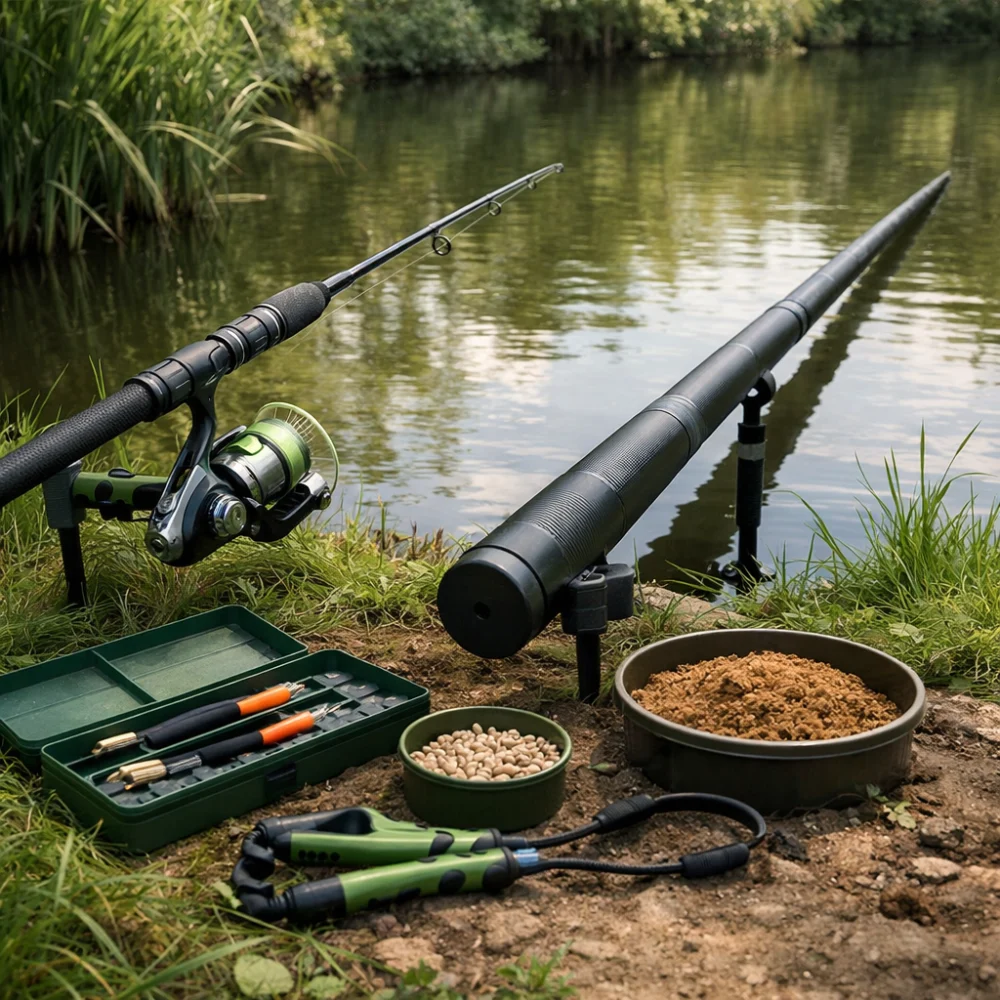
Match and pole rods are chosen for controlled fishing where presentation, reach and feel matter more than brute force. They suit anglers who want to place bait accurately, manage line neatly and fish comfortably over a session rather than simply cast as far as possible.
If you are deciding between a match rod, a pole or a related rod type, the main question is how you prefer to fish and how much reach or control you need. The right choice usually comes down to venue, target fish, transport and how much setup you are happy to handle.
Specifications vary by model, so always check the individual product page before buying.
What should you look for in a match or pole rod?
Start with the fishing style you use most often. A rod that feels balanced and manageable on the bank is usually more useful than one that looks impressive on paper.
Match rods are generally about casting and line control, while pole-style options are often about reach and precise presentation close to hand. The trade-off is that more reach can mean more handling and storage considerations, so it helps to think about how you travel and fish as well as what species you are targeting.
| Feature | What it means | Why it matters | What to check |
|---|---|---|---|
| Length | How long the rod is in use | Affects reach, leverage and how easy it is to manage | Whether the length suits your venue and fishing position |
| Rod type | Match rod or pole-style design | Changes how you present bait and manage line | Which style matches the way you fish most often |
| Sections or pack-down | How the rod breaks down for carrying and storage | Impacts transport convenience and setup time | Whether it will fit your vehicle, bag or storage space |
| Material | The construction used for the blank and sections | Influences feel, weight and handling | Which materials are stated on the individual product page |
| Action and feel | How the rod bends and responds under load | Affects casting comfort and control | Whether the rod is described as suited to your fishing style |
| Spare parts or tip sections | Extra sections included or available | Can help with long-term practicality | What is included with the product, if anything |
Key decision criteria explained
Length and reach
Longer rods can help with reach and line control, but they are not automatically easier to use. In tighter swims or on smaller venues, a shorter or more manageable option may be the better fit. Think about where you usually fish and how much room you have behind you.
Handling and balance
How a rod feels in the hand matters because you may hold or manage it for long periods. Balance can affect comfort, steadiness and how tiring the rod feels during a session. A well-matched rod should feel predictable rather than awkward.
Transport and storage
Some designs are easier to carry, protect and store than others. If you travel light, use public transport or have limited storage space, folded or sectional size may be a deciding factor. This is especially important when comparing longer poles and compact alternatives.
Presentation and control
The main appeal of this category is controlled presentation. If you value placing bait neatly and managing tackle with accuracy, focus on the rod style that supports that approach rather than chasing the longest option available. The right level of control often matters more than raw size.
Types and variants within the category
There are two broad ways buyers tend to approach this category.
- Match rods suit anglers who want a rod-led approach with casting and line control.
- Pole-style rods suit anglers who want reach and precise presentation, often with a more direct, hands-on feel.
The main limitation to remember is that a rod designed for one style may feel less convenient in another setting. A longer pole-style setup may be excellent for reach, but less convenient if you want faster transport or a simpler setup.
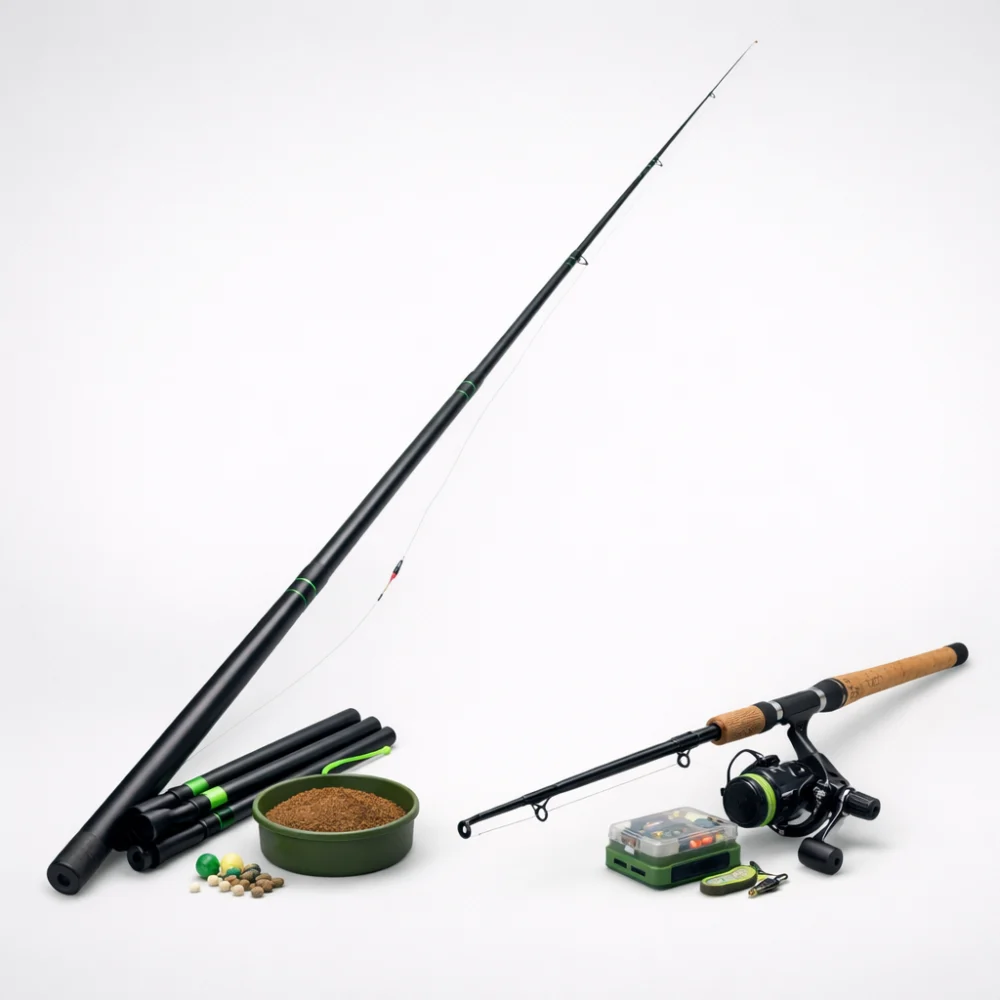
Which option suits different buyers?
| Buyer need | What to prioritise | Why |
|---|---|---|
| Beginner | Simple handling and a clear, practical length | Helps reduce setup frustration and makes learning easier |
| Regular coarse angler | Balanced feel and reliable presentation | Comfort and control matter more over repeated sessions |
| Travel or limited storage | Pack-down size and easy transport | Makes the rod more realistic to carry and store |
| Angler focused on reach | Longer pole-style options | Useful where extended reach and precise placement matter |
| Gift buyer | A broadly usable, well-described option | Reduces the risk of choosing something too specialised |
Common mistakes to avoid
- Choosing by length alone: longer is not always better if the rod becomes cumbersome.
- Ignoring transport needs: a rod that is awkward to carry may not get used as often.
- Overlooking the fishing style: match rods and pole-style rods suit different habits and venues.
- Assuming all models feel the same: handling can vary even when products look similar.
Safety and suitability caveats
Check that the rod suits your intended fishing method, venue and the space you have available for carrying and storage. If you are buying for someone else, think about their experience level and how much setup they will realistically want to manage. Specifications vary by model, so always check the individual product page before buying.
Maintenance, storage and lifespan considerations
Fishing rods are easier to live with when they are stored carefully and kept clean after use, especially if they are regularly exposed to damp conditions. Protective sleeves, sensible storage and attention to sections or joints can help preserve day-to-day usability. If a model includes spare sections or extra tips, that can add convenience, but only if those parts are clearly listed.
How to compare options efficiently
- Decide how you fish most often and whether you want a match rod or a pole-style rod.
- Check the length and whether it suits your usual venue.
- Compare how easy each option will be to transport and store.
- Look at the stated materials, sections and any included extras.
- Choose the rod that gives the best balance of control, comfort and practicality.
Summary buyer decision checklist
- Have you chosen the right rod style for your fishing approach?
- Does the length suit your venue and handling preferences?
- Will the rod be easy to carry, store and set up?
- Have you checked the construction and any included sections or parts?
- Does the individual product page match your intended use?
Frequently asked questions
What is the difference between a match rod and a pole rod?
A match rod is generally associated with casting and line control, while a pole-style rod is more about reach and direct presentation. The better choice depends on how you like to fish and how much setup you are happy with.
Are longer rods always better?
Not necessarily. Longer rods can offer extra reach, but they can also be less convenient to carry and handle. The best length is the one that suits your venue and your fishing style.
What should a beginner prioritise?
A beginner should usually look for clear product information, manageable handling and a style that matches the way they actually plan to fish. A simple, practical option is often easier to live with than a highly specialised one.
How important is pack-down size?
It matters a lot if you have limited storage, travel by car with other gear or want something easier to carry. A rod that stores neatly is often more convenient to use regularly.
Can one rod suit every venue?
Usually not completely. Different venues can favour different lengths, handling characteristics and levels of reach, so it helps to choose based on where you fish most often.
Should I worry about spare sections?
Only if they are part of the individual product listing. Spare sections can be useful, but what matters most is whether the rod itself suits your fishing style and practical needs.

