
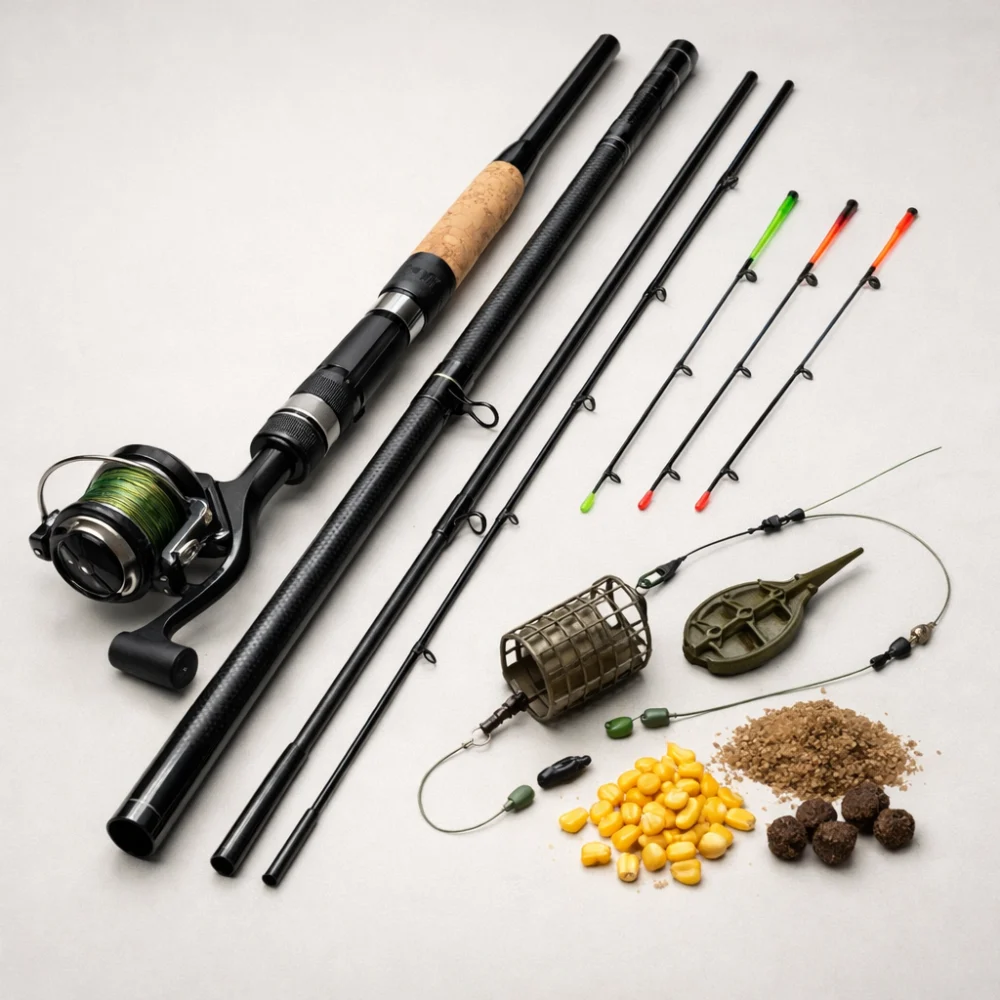
Feeder rods are designed for angling with a feeder, where accuracy, bite detection and control all matter. They are used in a wide range of situations, from stillwaters to rivers, but the right choice depends on how far you need to cast, how heavy the feeder is likely to be and how delicate the bite indication needs to feel.
If you are comparing feeder rods for the first time, it helps to think about the waters you fish most often rather than trying to cover every situation with one rod. A rod that feels ideal for a calm commercial water may feel less suitable on a bigger river, and the other way round.
This guide explains the main buying decisions so you can narrow the choice without getting lost in model names and marketing terms.
What should you look for in a feeder rod?
The most useful starting point is the kind of fishing you actually do. A lighter, more responsive rod can help with finesse and shorter-range fishing, while a more powerful rod may be more appropriate where casting distance, flow or feeder weight becomes more demanding. The key trade-off is usually sensitivity against power and casting range. Specifications vary by model, so always check the individual product page before buying.
| Feature | What It Means | Why It Matters | What To Check |
|---|---|---|---|
| Length | The overall rod length when assembled | Influences casting reach, line control and how the rod handles on different waters | Choose a length that fits your usual venue and the room you have for casting |
| Power or casting rating | How much load the rod is intended to handle | Affects whether the rod feels suited to lighter, medium or heavier feeder fishing | Check the stated casting range and match it to the feeder weight you expect to use |
| Action | How the rod bends when under load | Changes casting feel, bite detection and how the rod cushions fish | Look for a feel that suits your preferred level of responsiveness and forgiveness |
| Tip style | The interchangeable or built-in quiver tip arrangement, where applicable | Helps with bite indication and can influence overall sensitivity | Check how many tips are included and how the rod is intended to be used |
| Sections and transport length | How the rod breaks down for carrying and storage | Important if you travel often or have limited storage space | Compare the packed length with your vehicle, bag or storage needs |
Key decision criteria explained
Venue and distance
Think first about where you fish most often. Shorter, calmer venues may favour a rod that feels neat and responsive, while larger waters or longer casting ranges can justify more length and power. The practical question is not which rod sounds strongest, but which rod matches the ranges you actually fish.
Power and feeder weight
Feeder rods are chosen partly around the weight they are expected to cast and control. If the rating is too light for the job, the rod may feel overworked; if it is much heavier than you need, it may feel less sensitive than you want. Use the stated rating as a guide and compare it with your usual feeder setup rather than the biggest one you think you might use occasionally.
Action and feel
Action affects how a rod behaves during the cast and when playing fish. A more forgiving action can be easier for a beginner or for fishing close in, while a quicker feel may suit anglers who want a more direct response. Neither is universally better; the right choice depends on whether you value sensitivity, control or a softer cushion under load.
Tip choice and bite detection
Tip choice matters because it influences how clearly bites show. More sensitive tips can help in calmer conditions, while firmer tips may be better when water movement, distance or heavier tackle makes indication harder to read. Check whether the rod includes multiple tips and whether they are intended to cover a narrow or broader range of situations.
Transport and storage
Two rods that look similar in use may differ a lot in how easy they are to carry. Packed length, number of sections and overall convenience can be important if you fish from the car, use public transport or store kit in a small space. This is often overlooked until after purchase, so it is worth checking early.
Common feeder rod types and variants
Within the feeder rod category, the most relevant differences are usually about application rather than a completely different kind of rod. Some are aimed more at lighter, closer-range work, while others are built for more demanding casting or heavier feeders. Some models are also designed to feel more specialist, such as those intended for commercial waters or more all-round feeder use.
For many buyers, the main choice is between a more delicate setup and a more robust one. If you fish a mix of venues, an all-round option can be practical, but a specialist rod may be a better fit if you know the conditions you face most often.
Which feeder rod suits which buyer?
| Buyer need | What usually helps | Why |
|---|---|---|
| Beginner or occasional angler | An all-round rod with straightforward handling | It is easier to learn with a rod that covers common situations without feeling overly specialised |
| Commercial stillwater angler | Good bite detection and a balanced, responsive feel | Accuracy and clear indication are often more useful than maximum power |
| River angler | More power and control where conditions demand it | Flow and distance can make a more capable rod a better fit |
| Travel-conscious buyer | Attention to transport length and storage convenience | Ease of carrying can matter as much as on-water performance |
| Upgrade buyer | Better matched action and a more refined feel | An upgrade often makes the biggest difference when it suits your usual venue and feeder weight |
Common mistakes and misunderstandings
- Choosing for the rare edge case. It is easy to buy for the heaviest feeder or longest cast you might ever need. A better approach is to choose for the conditions you actually face most often.
- Focusing only on length. Length matters, but action and power can change the way a rod feels just as much. A longer rod is not automatically more suitable.
- Assuming a stiffer rod is always better. Extra power can help in some situations, but it may reduce the finesse and feedback you want in others.
- Ignoring packed length. A rod that is awkward to transport can be inconvenient even if it feels right on the bank.
Safety and suitability caveats
Choose a rod that suits the fishing you intend to do and the tackle you expect to use. Do not assume that a rod marketed for feeder fishing will suit every feeder style or venue. If you are unsure, check the product page carefully for the rod’s intended use, included tips and stated casting range.
Maintenance, storage and lifespan considerations
Feeder rods do not usually need complicated maintenance, but basic care helps them last longer. Rinse off dirt or moisture after use if needed, keep the sections clean and dry before storage, and store the rod where it will not be bent or knocked. If the rod uses interchangeable tips, keep them organised and protected so they are easier to use next time.
It is also worth considering replacement parts and accessories where relevant, such as tip protection or a suitable rod holdall, because these affect day-to-day convenience more than many buyers expect.
How to compare feeder rods efficiently
- Start with the waters you fish most often and the range you usually cast.
- Choose the overall type that fits that use, rather than buying for the most demanding scenario.
- Compare length, power rating, action and tip setup.
- Think about transport, storage and how often you will carry the rod.
- Read the individual product page carefully before deciding.
Feeder rod buyer checklist
- Does the rod suit the venue you fish most often?
- Is the stated casting range appropriate for your usual feeder weight?
- Does the action sound like the feel you want on the cast and when playing fish?
- Are the tips or tip options suitable for the level of bite indication you need?
- Will the packed length work for your transport and storage needs?
- Have you checked the individual product page for the exact specification?
Frequently asked questions
What is a feeder rod used for?
A feeder rod is used for fishing with a feeder, where accurate casting and bite detection are important. It is designed to handle this style of fishing more effectively than a general-purpose rod in many situations.
Do I need a long feeder rod?
Not necessarily. A longer rod can help with distance and line control, but it is not the right answer for every venue. The best length is the one that matches your usual fishing range and the space you have to cast.
What does feeder rod power mean?
Power usually refers to how much load or feeder weight the rod is designed to handle. It helps indicate whether a rod is better suited to lighter, medium or heavier feeder fishing, but you should still check the exact product details.
Are feeder rods suitable for beginners?
Yes, many beginners use feeder rods because they are practical and fairly straightforward to understand. A more all-round model is often easier to start with than a highly specialised one.
Why do some feeder rods come with different tips?
Different tips help fine-tune bite indication for different conditions. A more sensitive tip can help in calmer situations, while a firmer one may be more suitable where conditions are less delicate or the feeder is heavier.
Should I choose a feeder rod based on the heaviest feeder I might ever use?
Usually not. It is better to choose based on the tackle and venues you use most of the time, because that gives you a rod that feels right for regular fishing rather than occasional extremes.
How important is packed length?
It is very important if you travel with your gear or have limited storage space. A rod that is awkward to carry can become inconvenient even if it performs well on the bank.

