
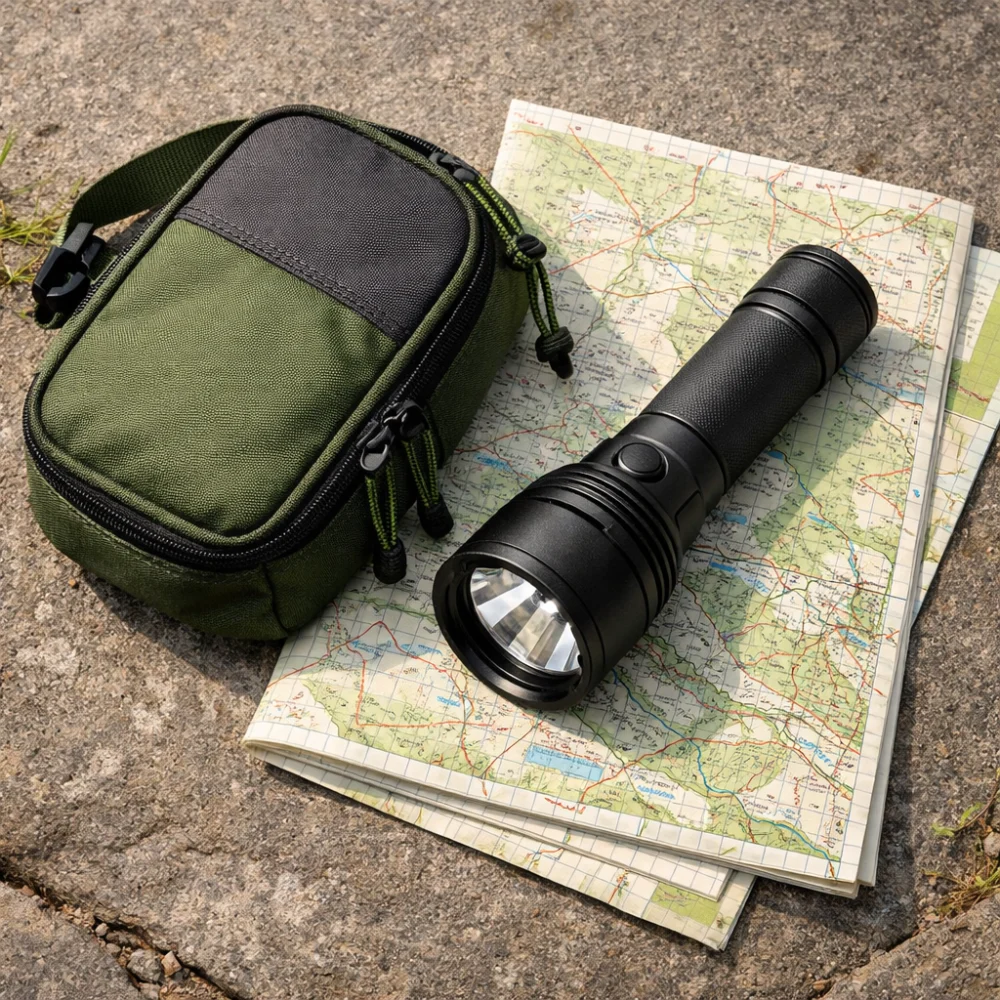
If you are looking at Olight torches, you are usually comparing compact everyday carry lights, more powerful torches for distance, or hands-free options such as headlamps and clip-on lights. The right choice depends less on the brand name and more on how you plan to carry, charge and use the torch.
This guide focuses on the practical buying questions: how bright you need it to be, how easy it is to carry, which beam style suits your tasks and what to check on the individual product page before you buy.
Specifications vary by model, so always check the individual product page before buying.
What should you look for when choosing an Olight torch?
The best starting point is your main use. A small torch is often more convenient for daily carry or close work, while a larger torch may suit searching, longer-distance lighting or more demanding outdoor tasks. The main trade-off is usually size and portability versus output, runtime and beam reach.
Think about how you will carry it, how often you will use it and whether you prefer a simple torch, a headlamp or a clip-on light. A good choice is one that fits your routine without feeling bulky or awkward.
| Feature | What it means | Why it matters | What to check |
|---|---|---|---|
| Size and form factor | Whether the light is a pocket torch, headlamp or clip-on style | Affects comfort, carry convenience and hands-free use | How you plan to carry or wear it, and whether it suits that role |
| Beam style | How the light is distributed, from wider close-up light to more focused distance lighting | Changes how useful it feels for walking, searching or task lighting | The product description for the intended beam pattern or use case |
| Brightness level | How much light the torch is designed to produce | Higher output is not always better if you mainly need close-range light | Whether the brightness is appropriate for your normal environment |
| Charging method | How the torch is powered and recharged | Convenience and ownership routine often depend on charging style | The charging arrangement on the product page and what is included |
| Controls | Button layout, mode access and how easy it is to switch settings | Simple controls can be easier in the dark or with gloves | Whether the control style suits your intended use |
| Mounting or hands-free use | Whether the torch can be clipped, worn or mounted | Useful for camping, working or situations where you need both hands free | Any accessory compatibility or built-in attachment method |
Key decision criteria explained
Carry style and size
For many buyers, the most important question is whether the torch will actually be with them when needed. Pocket-friendly models suit everyday carry and backup use, while larger formats may be more comfortable for regular campsite or search tasks. Smaller lights are easier to keep close at hand, but they may be less suitable if you want longer reach or a larger grip.
Brightness and beam reach
Brightness matters, but it should be matched to the task. A very bright torch can be useful outdoors, yet it may be more than you need for tent use, close inspection or reading maps. A focused beam is often better for seeing further ahead, while a wider beam can feel more natural for general lighting.
Power and charging
Many buyers prefer rechargeable torches because they reduce the need to keep separate batteries on hand, but the exact charging setup varies. Check whether charging is built in, whether a cable or case is involved, and how easy the torch is to top up before a trip. If you want a simple ownership routine, charging convenience may matter more than absolute output.
Controls and modes
Some torches are designed for quick single-button use, while others offer more mode control. That can be helpful, but only if the controls are intuitive for you. If you expect to use the torch in cold weather or in a hurry, simpler controls can be a practical advantage.
Hands-free convenience
If you need both hands for pitching a tent, handling kit or working on a task, a headlamp or clip-on light may be more useful than a standard torch. The main trade-off is that these styles are chosen for convenience first, not always for maximum throw or the most compact pocket carry.
Product types and variants
Within this category, buyers are usually choosing between a few broad styles rather than completely different products.
- Compact pocket torches suit everyday carry, quick checks and backup use. Their main limitation is that they may not feel as substantial for longer sessions or very demanding outdoor tasks.
- Performance torches are often chosen when the user wants more light output or greater reach. They can be less discreet to carry and may be more torch than some casual buyers need.
- Headlamps are useful when you need both hands free. Their limitation is that they are a wear-on-the-head solution rather than a general pocket torch.
- Clip-on or small utility lights can be handy for short, close-range jobs. They are convenient, but not always the best option if you want a more traditional torch feel.
Which Olight torch suits which buyer?
| Buyer need | Usually worth prioritising | Why |
|---|---|---|
| Everyday carry | Compact size, simple controls, easy charging | It is more likely to be carried regularly if it is easy to live with |
| Camping and general outdoor use | Balanced size, comfortable handling, practical beam pattern | General tasks often need flexibility more than maximum output |
| Searching or longer-distance lighting | More focused beam and a form factor that is comfortable to hold | Reach matters more than an ultra-compact shape in this scenario |
| Hands-free work | Headlamp or clip-on style, secure fit or attachment | Freeing your hands can matter more than torch size alone |
| Gift buying | Simple, versatile design and straightforward charging | A broadly useful torch is usually easier to choose when the user preference is unknown |
Common mistakes and misunderstandings
- Choosing brightness alone. A very bright torch is not automatically the most useful one. Beam shape, size and controls often affect day-to-day satisfaction just as much.
- Ignoring how it will be carried. A torch that is impressive on paper may be left behind if it is too bulky for your pocket, bag or belt setup.
- Overlooking charging convenience. A rechargeable torch is only convenient if the charging method fits your routine and travel habits.
- Picking a torch for a task it was not meant for. A compact everyday light and a more specialised performance torch are not interchangeable in every situation.
Safety and suitability caveats
Check that the torch suits your intended environment before buying, especially if you plan to use it outdoors, around other people or for close-up tasks. If you need hands-free lighting, make sure the format is designed for that role rather than assuming any torch will do. For model-specific details such as charging method, beam characteristics or included accessories, rely on the individual product page.
Maintenance, storage and ownership considerations
Torches are generally simple to look after, but it is still worth thinking about the long term. Rechargeable models need a charging routine that fits how often you use them, and any included accessories or cables should be stored with the torch so they are easy to find when needed. If you plan to keep a torch in a vehicle, bag or emergency kit, choose one that you will be comfortable leaving ready for use.
How to compare options efficiently
- Start with the main job: everyday carry, camping, hands-free work or longer-distance lighting.
- Choose the format that fits that job best: pocket torch, headlamp or clip-on style.
- Compare the practical features that matter most to you, especially size, beam style, charging and controls.
- Read the product page for any included accessories and the exact setup of the model you are considering.
- Pick the option that matches your routine most closely, not the one with the most features on paper.
Summary buyer decision checklist
- Does the torch suit your main use: carry, camping, searching or hands-free work?
- Is the size comfortable for the way you will store or carry it?
- Is the beam style appropriate for close work or longer reach?
- Does the charging method fit your routine?
- Are the controls simple enough for your needs?
- Do you need a headlamp or clip-on style instead of a standard torch?
- Have you checked the individual product page for the exact model details?
Frequently asked questions
Are Olight torches only for tactical use?
No. While some models are designed with more performance-focused or tactical-style features, others are better suited to everyday carry, camping or hands-free use. The important point is to match the format and controls to your own use rather than the style name alone.
Is a more powerful torch always the better choice?
Not necessarily. More output can help in some outdoor situations, but it may be unnecessary for close-range tasks and can make the torch larger or less convenient to carry. Many buyers are better served by a balanced model they will actually use often.
Should I choose a headlamp instead of a torch?
Choose a headlamp if you need both hands free for tasks such as setting up camp, handling gear or working in place. A torch is usually better if you want something to carry in a pocket or use as a general-purpose light source. The right answer depends on how you expect to use it most often.
What matters most for everyday carry?
For everyday carry, comfort and convenience usually matter most. A torch that is easy to carry, simple to operate and easy to recharge is often more useful than one with features you rarely need.
What should I check on the product page before buying?
Check the exact format, charging method, controls and any included accessories. Specifications vary by model, so always check the individual product page before buying.
How do I avoid choosing the wrong size?
Think about where the torch will live when you are not using it. If it must fit in a pocket, small pouch or emergency kit, portability becomes more important than maximum output. If it will stay in a vehicle or work bag, a larger model may be easier to live with.

