
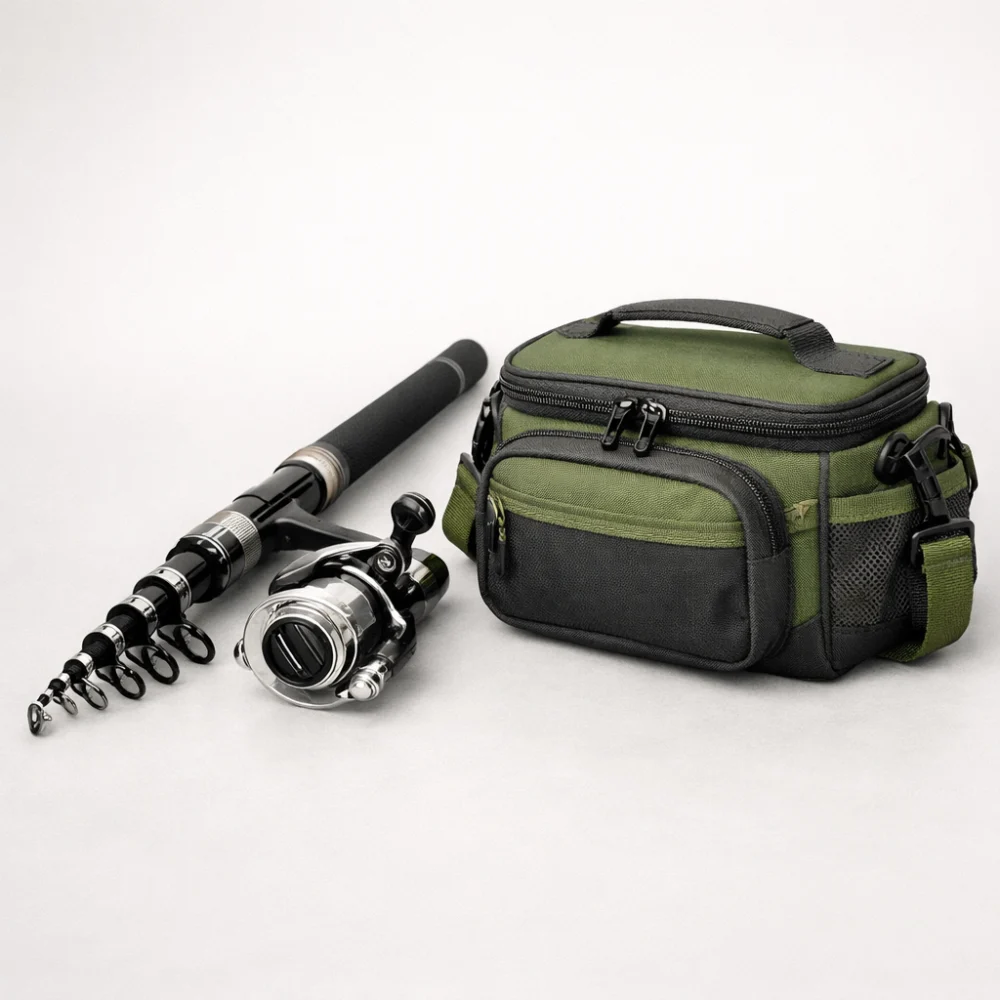
Telescopic rods are designed for anglers who want a rod that packs down to a shorter length for carrying, storing or travelling with. They can be a practical choice for casual sessions, holiday fishing and anyone who values convenience over a fixed-length rod.
The main buying decision is not simply whether a rod telescopes, but how the collapsed length, rod action and intended fishing style fit the way you fish. A compact rod can be very convenient, but that usually means checking more carefully for handling, casting comfort and the kind of setup it is meant to support.
Because telescopic rods vary widely, the useful comparison is between portability and the feel you want on the bank, beach or boat. Specifications vary by model, so always check the individual product page before buying.
What should you look for in a telescopic rod?
Start with the fishing situation you expect to use it for. The rod should suit the water type, the bait or lure approach and how much space you have for transport and storage. A shorter packed length is helpful, but it is only one part of the choice.
| Feature | What it means | Why it matters | What to check |
|---|---|---|---|
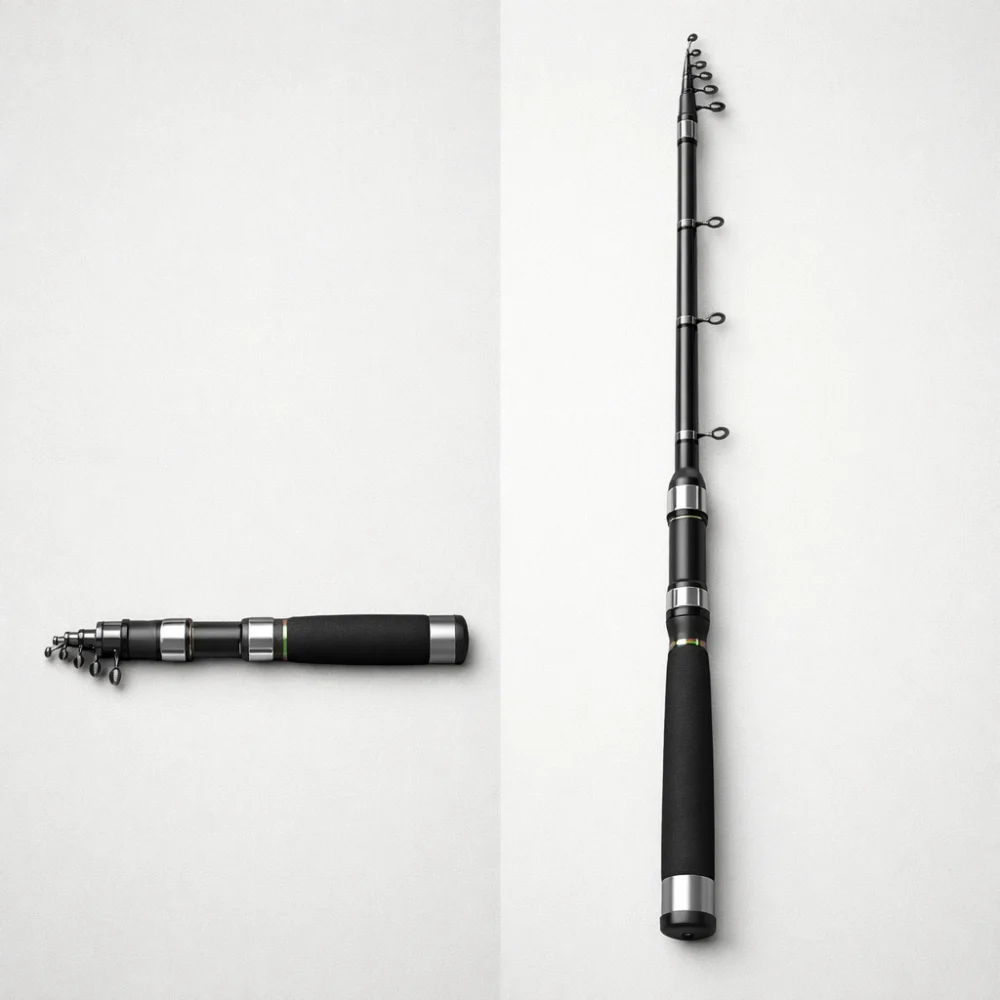
| Packed length | How short the rod becomes when collapsed | Determines how easy it is to carry, store and travel with | Measure against your bag, boot, locker or suitcase space |
| Extended length | The rod’s working length when opened out | Affects casting reach, line control and overall handling | Match it to the fishing style and the space you will fish from |
| Action and feel | How the rod bends under load | Changes casting feel, bite detection and playing fish | Check whether the model is described for lighter or heavier use |
| Intended use | The style of fishing the rod is meant for | Helps avoid choosing a rod that is too specialised or too general | Look for clues in the product description and the paired tackle setup |
| Build and section design | How the telescopic sections extend and lock in place | Influences convenience, stability and how compact the rod feels | Check how many sections there are and whether any care is needed when extending |
Key decision criteria explained
Portability versus handling
The biggest advantage of a telescopic rod is easy transport. That is especially useful if you travel light, keep tackle in the car or need something that stores neatly at home. The trade-off is that a very compact rod may not feel quite the same as a conventional multi-piece rod, so think about how much comfort you want when casting and playing fish.
Length and fishing space
Longer rods can help with reach and line control, while shorter rods are often easier to manage in tight spaces. The right length depends on where you actually fish, not just the idea of having a bigger rod. If you fish from awkward banks, holiday spots or crowded venues, a manageable length may matter more than maximum reach.
Rod action and responsiveness
Rod action describes where and how the rod bends. A more forgiving action can feel easier for casual use, while a different action may better suit a particular method or lure style. Because wording varies from one listing to another, read the description carefully rather than assuming all telescopic rods behave the same way.
Strength and intended load
Some telescopic rods are aimed at lighter, more general fishing, while others are presented for heavier or more specialised use. The important point is not to rely on the word “telescopic” as a guide to strength. Look for the intended fishing application and any load guidance provided on the product page.
Common telescopic rod types and variants
Telescopic rods are less about strict product families and more about intended use. You may see versions aimed at coarse fishing, sea fishing, lure fishing or general travel use, and the right one depends on where and how you plan to fish.
- Compact travel-focused rods suit anglers who prioritise easy packing and storage.
- General-purpose rods can work for occasional use when you want a simple, flexible option.
- More specialised telescopic rods are aimed at a particular fishing method and may feel better when used as intended.
The practical limitation is that not every telescopic rod is equally versatile, even if the category sounds broad. A model that is ideal for transport may be less refined than a fixed-length rod in the same fishing style.
Who is a telescopic rod likely to suit?
| Buyer need | What to prioritise | Why it helps |
|---|---|---|
| Holiday or occasional angling | Compact packed size and straightforward handling | Makes it easier to take the rod with you without committing to a large setup |
| Storage in a small home or vehicle | Short collapsed length and simple pack-away design | Reduces the hassle of keeping fishing gear out of the way |
| Beginner or casual buyer | Clear intended use and uncomplicated specification | Helps avoid over-specialised choices that may be harder to match to your fishing |
| More regular angler | Better balance between transport convenience and rod feel | Supports more comfortable use over repeated sessions |
| Gift buyer | General-purpose suitability and broad use description | Makes it easier to choose a rod without knowing every detail of the recipient’s setup |
Common mistakes and misunderstandings
- Choosing on packed size alone: a very short collapsed rod is useful, but the working length and action still need to suit the fishing.
- Assuming all telescopic rods feel the same: the difference between models can be significant, so compare the intended use and product description.
- Ignoring the fishing method: a rod suited to one style may be awkward for another, even if it extends to a convenient length.
- Overlooking storage and transport needs: measure the space you actually have, rather than relying on a rough estimate.
Safety and suitability caveats
Choose a rod that matches your intended environment and the kind of fishery you will use it in. If you are buying for a child, a first-time angler or someone with limited fishing experience, keep the setup simple and make sure the rod size and intended use are appropriate. Do not assume a compact rod is automatically the easiest option; suitability depends on how it will be used.
Maintenance, storage and lifespan considerations
Telescopic rods usually reward careful handling, because dirt or grit in the sections can affect the way they extend and collapse. After use, let the rod dry fully before storing it away, and avoid forcing sections if they do not move smoothly. A protective storage plan matters here because compact rods are often chosen for convenience, and that advantage is only useful if the rod remains easy to extend and pack down over time.
How to compare options efficiently
- Decide where and how you will use the rod most often.
- Check the packed length and confirm it fits your storage or travel needs.
- Compare the extended length and the stated intended use.
- Look at the rod’s action and handling description rather than the category name alone.
- Read the individual product page carefully before choosing.
Summary buyer decision checklist
- Does the packed length suit your transport and storage needs?
- Is the extended length appropriate for the places you fish?
- Does the rod’s intended use match your fishing style?
- Have you checked the action and general handling description?
- Will the rod be comfortable for the amount of use you expect?
- Have you confirmed the individual product page details before buying?
Frequently asked questions
Are telescopic rods good for beginners?
They can be, especially if the buyer values simple storage and easy transport. The most important thing is to choose a model with a clear intended use rather than the shortest or longest option available. A beginner-friendly choice is usually one that keeps the setup straightforward.
Do telescopic rods cast as well as fixed rods?
That depends on the specific rod and what you compare it with. Telescopic rods are chosen mainly for convenience, so they may feel different from a fixed-length rod of a similar intended style. It is better to think in terms of suitability for your fishing rather than expecting identical handling.
What should I check if I want a rod for travel?
Focus on collapsed length first, then check how the rod is intended to be used. A compact rod is only helpful if it still suits the type of fishing you plan to do. Also consider how easy it is to store safely in your bag, case or vehicle.
Can one telescopic rod suit several fishing styles?
Sometimes, but only within reason. Some models are described more broadly than others, yet each rod still has limits based on its action, length and intended use. If you need versatility, look for a general-purpose description rather than assuming every telescopic rod is multi-use.
What makes one telescopic rod easier to live with than another?
Practical details such as packed length, ease of extension, balance and overall handling often matter more than the category label. The best choice for everyday convenience is the one that fits your storage space and fishing routine without feeling awkward to use.
Do I need to match it to a particular reel or tackle setup?
That depends on the individual product and the fishing method you plan to use. Some rods are part of broader tackle choices, while others are bought on their own. Check the product page carefully and make sure the rod fits the way you already fish or intend to fish.

