
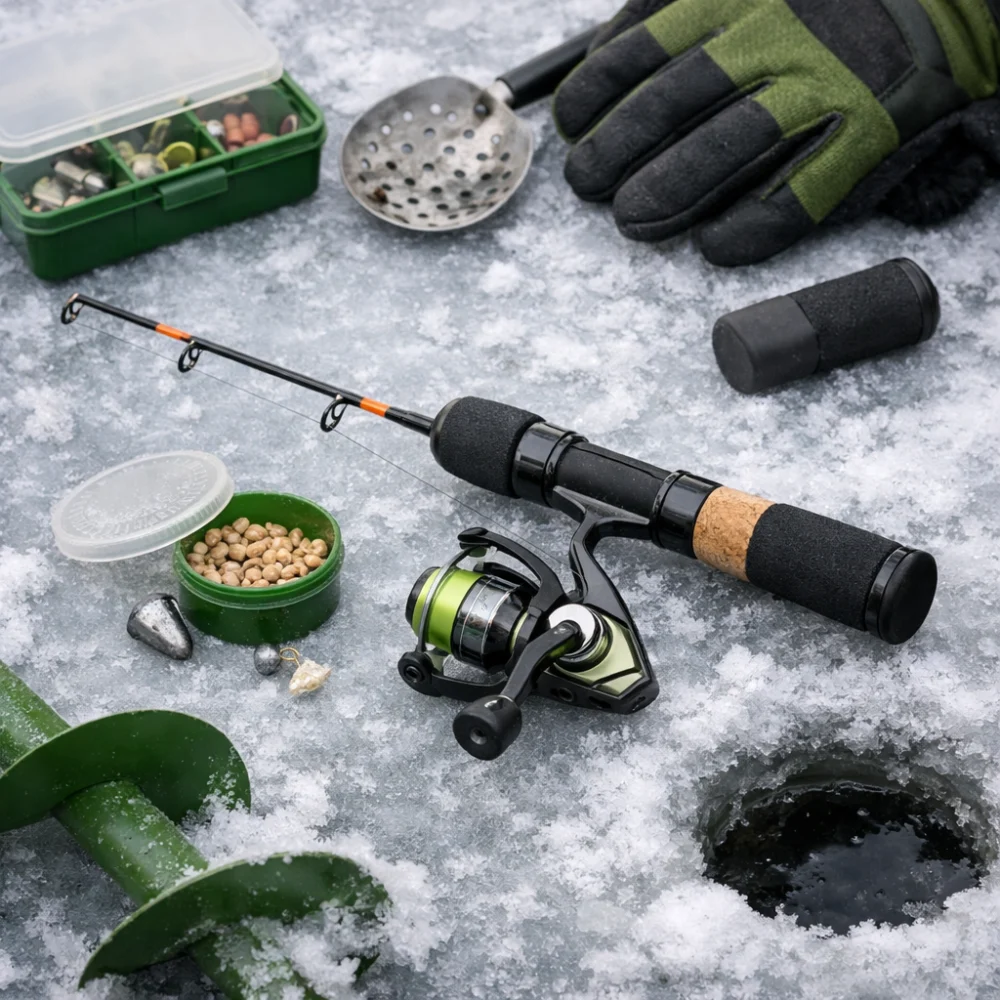
Ice fishing rods are designed for close-range fishing where control, sensitivity and comfort matter more than long casting distance. Buyers often want a rod that feels manageable in cold conditions, suits the kind of lures or bait they use and is easy to transport.
If you are comparing compact winter rods, it helps to focus on how you plan to fish rather than on a single feature. Length, action, handle style and overall portability can all make a difference to how usable the rod feels in practice.
This guide keeps the choice simple: understand the main rod styles, match them to your fishing needs and then check the individual product details carefully.
What should you look for in an ice fishing rod?
The most useful starting point is how you will use the rod. For many buyers, a shorter rod is easier to handle in tight spaces and in cold weather, while a slightly longer one may offer a bit more leverage and comfort. The main trade-off is usually sensitivity versus power, so think about whether you want subtle bite detection, better hook-setting control or a balance of both.
Specifications vary by model, so always check the individual product page before buying.
| Feature | What it means | Why it matters | What to check |
|---|---|---|---|
| Rod length | The overall size of the rod | Affects handling, transport and how much room you need to fish comfortably | Measure whether a shorter or longer rod suits your storage space and fishing setup |
| Action | How much of the rod bends under load | Changes bite feel, lure control and the way the rod responds when striking | Look for wording that suggests a more sensitive or more forgiving feel |
| Power | How much resistance the rod is designed to handle | Helps determine whether the rod suits lighter or heavier fishing styles | Match the rod to the type of line, bait or lure you expect to use |
| Handle style | The grip design and material | Influences comfort, control and how the rod feels with gloves on | Check whether the grip looks easy to hold in cold conditions |
| Portability | How easy it is to carry or store | Important for travel, compact storage and mobile fishing sessions | Look for sectioned, telescopic or otherwise compact designs if space matters |
Which features matter most?
Length
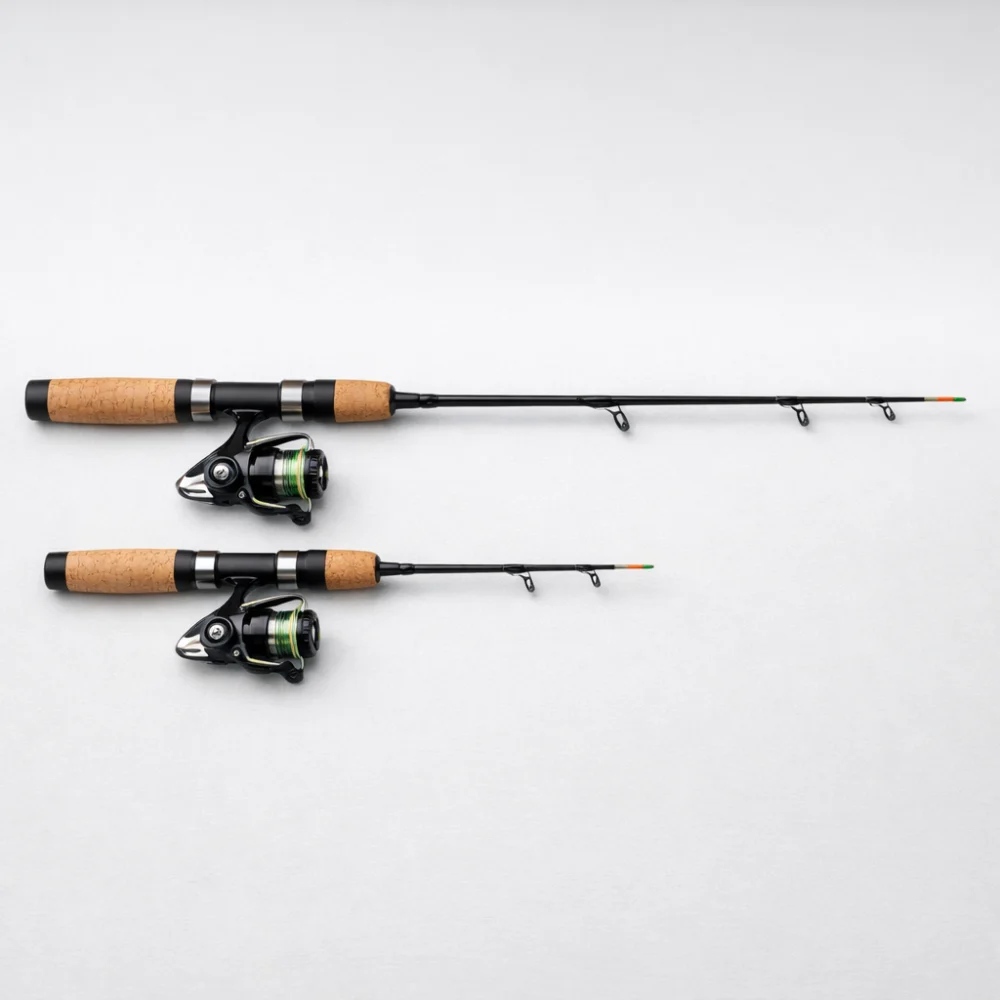
Length is one of the first things to compare because it affects both comfort and transport. Shorter rods are often easier to manage in confined spaces, while slightly longer rods may feel more comfortable for some anglers and can give a little more reach. Choose based on where you fish and how much room you have to work with.
Action and feel
Action affects how the rod bends and how directly you feel movement at the tip. A more responsive rod can help when you want to notice light bites, but a more forgiving rod may feel easier to use for steady fishing. The best option depends on the balance you want between sensitivity and control.
Power and intended use
Power is about the rod’s overall strength profile. If you are planning lighter presentations, you may prefer a rod that feels subtle and controlled; if you want something with more backbone, choose accordingly. Do not assume a short rod is automatically light-duty or that a compact design cannot be capable.
Handle and grip comfort
In cold weather, a comfortable grip matters more than many first-time buyers expect. Handle shape and material affect how secure the rod feels, especially if you are wearing gloves. If you fish for longer sessions, comfort can be as important as sensitivity.
Types and variants you may see
Ice fishing rods are usually chosen more by form and handling than by dramatic category differences, but a few broad patterns are worth noting.
- Compact fixed-length rods suit anglers who want a simple, straightforward feel and easy handling.
- Sectioned or travel-friendly rods are useful when storage and portability matter.
- Telescopic-style designs may appeal if you want the smallest packed size, but the feel can differ from a one-piece rod.
- Rod and reel combos can be convenient if you want a matched setup without choosing each part separately.
Each style has a trade-off. A more compact rod may be easier to carry, while a simpler fixed design can feel more direct in use. If convenience matters most, a combo may save time; if you want more control over your setup, separate components may be preferable.
Which rod suits which buyer?
| Buyer need | What to prioritise | Typical trade-off |
|---|---|---|
| Beginner | Straightforward handling and a comfortable grip | May sacrifice some fine-tuned performance choices |
| Frequent traveller | Compact size and easy packing | Smaller pack size can mean fewer design choices |
| Cold-weather angler | Comfortable grip and easy control with gloves | Bulkier handles may feel less compact in storage |
| Angler focused on bite feel | Greater sensitivity and a responsive action | More sensitivity can feel less forgiving |
| Buyer wanting simplicity | Clear, ready-to-use style or combo setup | Less flexibility when changing components later |
Common mistakes to avoid
- Choosing only by size. A compact rod may be easy to carry, but it still needs to suit your fishing style.
- Ignoring handle comfort. A grip that feels awkward on a shelf can feel worse during a cold session.
- Assuming all short rods are the same. Short rods can still vary in action, strength and overall feel.
- Overlooking storage and transport. If you travel often, pack size may matter as much as performance.
Safety and suitability checks
Choose a rod that suits the conditions and style of fishing you actually plan to do. If you are buying for a child, a beginner or a gift recipient, consider whether the rod will feel manageable rather than simply compact. Also check the individual product information for any details that affect intended use, because category-level descriptions cannot confirm model-specific suitability.
Care, storage and everyday ownership
General care is usually straightforward: keep the rod clean, dry and stored where it will not be bent or knocked about. Cold-weather gear can collect moisture, so drying it properly after use helps reduce avoidable wear. If the rod is sectioned or telescopic, check how it packs away and whether that suits your storage space.
How to compare options efficiently
- Decide where and how you will fish most often.
- Choose a rod length and format that suits your storage and transport needs.
- Compare action, power and handle comfort rather than looking at one feature alone.
- Think about whether you want a simple rod or a combo setup.
- Read the individual product page carefully before buying.
Summary buyer decision checklist
- Does the rod length suit your fishing space and transport needs?
- Does the action feel suitable for the level of sensitivity you want?
- Is the power profile appropriate for your intended style of fishing?
- Will the handle remain comfortable in cold conditions?
- Is the format simple enough for your experience level and storage space?
- Have you checked the individual product page for model-specific details?
Frequently asked questions
Are ice fishing rods different from regular fishing rods?
Yes, they are generally chosen for close-range fishing and easier handling in cold conditions. The main differences for buyers are often size, feel and convenience rather than one universal design rule. That is why it helps to compare how the rod feels in use rather than relying on the name alone.
What rod length should I choose?
Choose the length that best suits where you fish and how much room you have. Shorter rods are usually easier to store and manage in tight spaces, while longer options may feel more comfortable for some anglers. There is no single correct choice, so the practical setting matters most.
Does action matter for ice fishing?
Yes, because action affects how the rod bends and how it responds when a fish bites. A more responsive rod can help with bite detection, while a more forgiving one may feel steadier. Think about whether you value sensitivity or a smoother, more forgiving feel.
Should I buy a combo or just the rod?
A combo can be a simple choice if you want convenience and fewer decisions to make. Buying the rod separately gives you more freedom to match your own setup. The right answer depends on whether ease or customisation matters more to you.
Is a more compact rod always better for ice fishing?
Not always. Compact rods are easier to pack and often easier to handle, but the best choice still depends on comfort, sensitivity and how you fish. A slightly larger rod may suit some anglers better if it feels more balanced in use.
What should I check on the product page before I buy?
Look for the rod length, action, power, grip style and whether the format suits your storage needs. If it is a combo, check what is included so you know exactly what you are getting. Specifications vary by model, so always check the individual product page before buying.

