
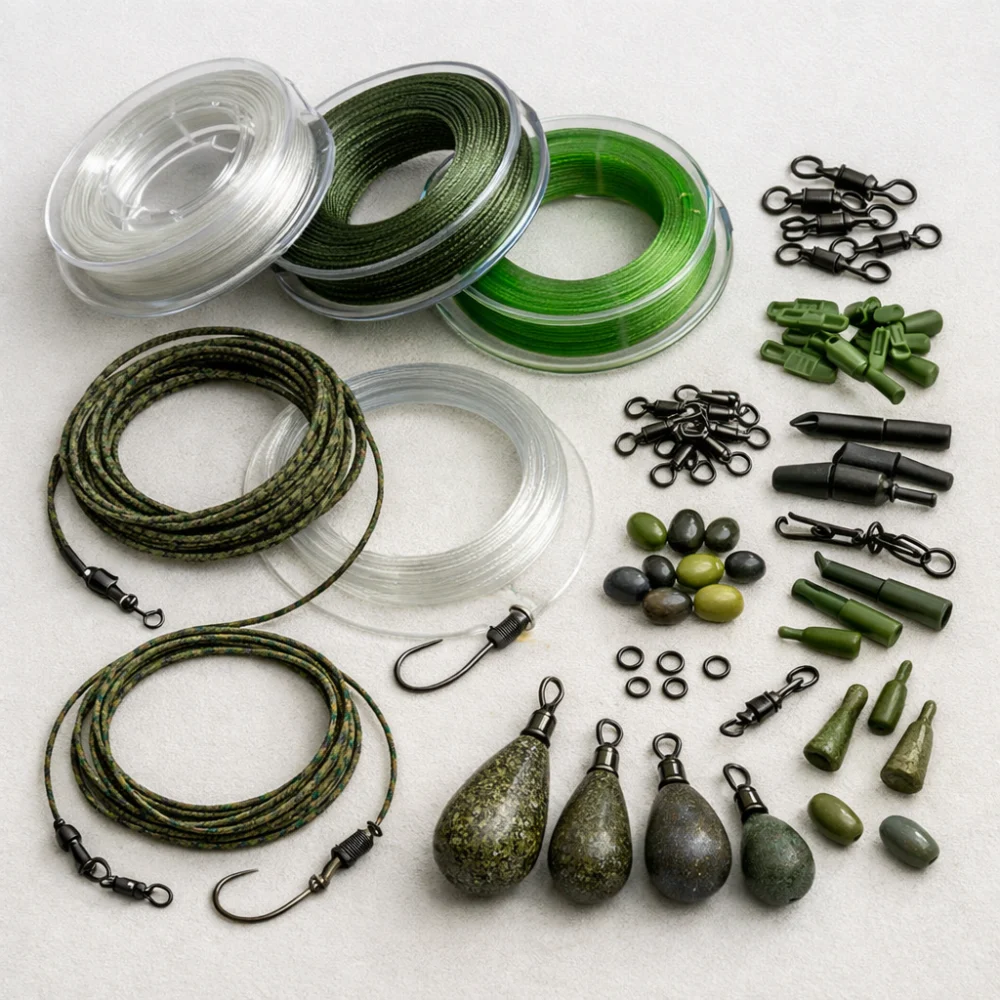
Hooklengths and leaders sit between your main line and the hook, helping you match the rig to the way you fish. They are chosen for presentation, control and, in some cases, added resistance to bite-offs or abrasion. Because the right option depends on the method and species, it is worth comparing the small details rather than buying by name alone.
This guide explains the main differences between ready-tied and make-your-own options, how material and length affect presentation, and what to check before ordering. It is aimed at anglers who want a clearer, more practical way to choose the right terminal tackle for their setup.
What should you look for in a hooklength or leader?
The best starting point is the kind of fishing you are doing and how the rig needs to behave in the water. A lighter, more discreet leader may suit cautious fish and fine presentation, while a tougher trace may be chosen where abrasion or sharp teeth are a concern. The main trade-off is usually between subtle presentation and added robustness, so it helps to decide which matters most for your fishing style.
| Feature | What it means | Why it matters | What to check |
|---|---|---|---|
| Material | The line or wire used for the leader or hooklength | Affects visibility, flexibility, abrasion resistance and how natural the rig looks | Check whether it is nylon, fluorocarbon, braid or wire, and whether that suits the intended species and method |
| Length | How much material is included between main line and hook | Influences presentation, casting behaviour and how the rig fishes | Look for the stated length and think about whether you need a short trace or a longer leader |
| Strength | The load or resistance level the product is intended to handle | Important for matching the rig to fish size, cover and the style of fishing | Compare the stated strength and avoid assuming one rating suits every setup |
| Pre-tied or untied | Whether the hooklength or leader arrives ready to use | Affects convenience, repeatability and how much rig tying you need to do | Check if hooks, loops, swivels or clips are already included |
| End fittings | Loops, swivels, clips or other connection points | Determines how easily the leader joins to the rest of the rig | Make sure the fitting matches your main line, hooklink system or feeder setup |
Key decision criteria explained
Material and visibility
Material is one of the biggest influences on how a hooklength or leader behaves. Clear or low-visibility materials are often chosen when presentation matters, while wire is more commonly used where bite resistance is a priority. Specifications vary by model, so always check the individual product page before buying.
Length and rig presentation
Length changes the way the bait or hook sits in relation to the main line and terminal tackle. Shorter lengths can feel neater and more direct, while longer ones may give a more natural presentation in some situations. The right choice depends on the method, the water and how you want the bait to move.
Strength and intended use
Do not choose strength from a number alone. A stronger leader can add reassurance around cover, rocks or teeth, but it may also be stiffer or more visible than a lighter option. If you are matching a hooklength to a known method or species, compare the product’s stated rating with the rest of your rig rather than treating it as a universal standard.
Pre-tied convenience versus custom rigging
Pre-tied hooklengths and leaders suit anglers who want consistency or a quicker setup. Make-your-own materials suit those who prefer to fine-tune hook size, length and presentation. The convenience of a ready-made option is useful, but it can be less flexible if you like to adapt rigs often.
Common types and variants
Within this category, the most useful differences are usually about material and how the item is supplied rather than dramatic changes in shape. Common choices include:
- Nylon or monofilament leaders for straightforward, general-purpose use where flexibility matters.
- Fluorocarbon-style leaders when a lower-profile presentation is preferred.
- Wire leaders where added resistance to bite-offs is more important.
- Pre-tied hooklengths or rigs for quicker setup and repeatable rigging.
- Leader material on spools or in packs for anglers who want to tie their own.
The main limitation is that no one variant does everything well. A leader that is better for concealment may be less suited to abrasion, while a stronger trace may be more noticeable in clear water.
Which option suits different fishing needs?
| Buyer need | What usually matters most | What to lean towards |
|---|---|---|
| Quick setup | Ease of use and consistency | Pre-tied hooklengths or leaders with suitable end fittings |
| Fine presentation | Low visibility and natural movement | More discreet materials and a length that suits the method |
| Toothy or rough situations | Resistance to bite-offs and wear | Wire or a tougher leader material, if appropriate to the species and setup |
| Rigs you change often | Flexibility and easy replacement | Leaders or hooklength material that can be adapted to different rigs |
| Beginner-friendly buying | Simple matching and less guesswork | Ready-tied options with clear descriptions of what is included |
Common mistakes to avoid
- Choosing only by breaking strength. Strength matters, but material, length and flexibility can affect results just as much.
- Ignoring the end fitting. A well-chosen leader is less useful if the loop, swivel or clip does not suit the rest of the rig.
- Overlooking presentation. A stronger or thicker option may be less discreet than you expect.
- Buying the wrong format. Some anglers want finished hooklengths, while others need bulk material to tie their own.
Safety and suitability considerations
Check that the product is suitable for the species, method and venue rules you are fishing. If you are fishing around snaggy ground, sharp rocks or fish with teeth, it is sensible to think carefully about wear resistance and how often you inspect your tackle. A leader can improve suitability for a setup, but it is not a substitute for checking your whole rig.
Maintenance, storage and lifespan
Hooklengths and leaders are usually simple to store, but they still need looking after. Keep them clean, dry and out of direct sunlight where possible, and replace any item that looks kinked, abraded or worn. If you buy bulk material, how it is stored can affect how easy it is to tie later.
How to compare options efficiently
- Decide what you need the rig to do: present a bait neatly, resist bite-offs or provide a quicker setup.
- Choose the material type that best suits that aim.
- Check the length, strength and end fittings on the product page.
- Compare the convenience of ready-tied options with the flexibility of tying your own.
- Confirm that the individual product matches your fishing method before you buy.
Frequently asked questions
What is the difference between a hooklength and a leader?
A hooklength usually refers to the section of line closest to the hook, while a leader is a more general term for line placed between the main line and the terminal tackle. In practice, the terms are sometimes used differently depending on the fishing method. The important point is to check how the product is intended to be used, not just the label.
Should I buy pre-tied hooklengths or make my own?
Pre-tied options are useful if you want convenience, speed and consistent rigs. Make-your-own material gives you more control over length, hook choice and presentation. The better choice depends on whether you value ease or customisation more.
Is a stronger leader always better?
Not always. A stronger leader can help in rougher conditions, but it may be less discreet or less supple than a lighter option. The right choice is the one that suits your fishing situation, not the highest number on the pack.
Do I need wire leaders for every type of fishing?
No. Wire leaders are generally chosen when extra resistance to bite-offs is useful, not as a default for every setup. For many situations, a more discreet material may be more appropriate. Always match the leader to the intended use.
How important is leader length?
Length can make a noticeable difference to presentation and how the rig behaves. A shorter leader may feel more direct, while a longer one may suit a different approach. Check the product page carefully, because the useful length depends on the method you are using.
Can I use the same leader for different species?
Sometimes, but not always. The right choice depends on the size of fish, the conditions and whether teeth, snags or abrasion are a concern. It is usually better to choose a leader that fits the specific situation rather than assuming one option will cover everything.

