
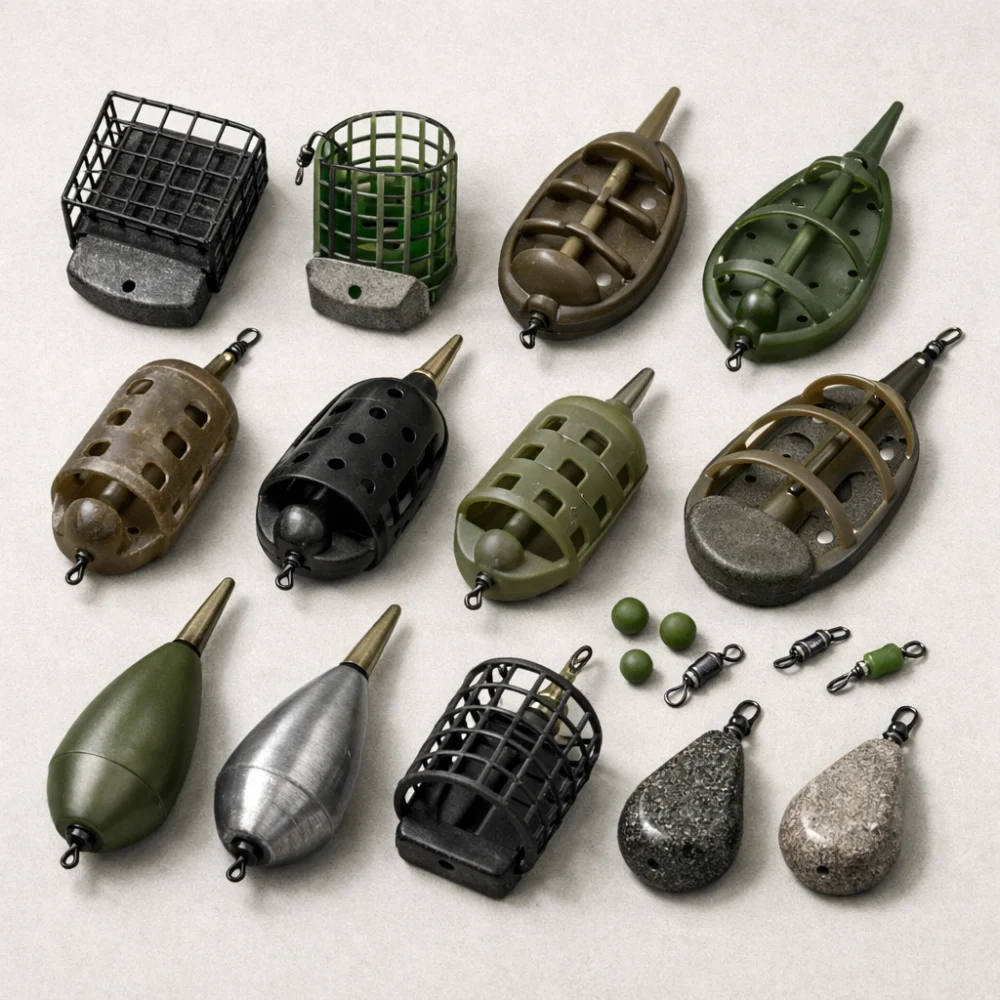
Feeder systems are a straightforward part of coarse and carp fishing tackle, but the choice is not always as simple as picking a weight and hoping for the best. The right feeder depends on how you want to present bait, how far you need to cast and how quickly you want feed to break down in the water.
This guide focuses on the buying decisions that matter most: feeder style, size, weight, loading method and the small details that affect how neatly the tackle fishes. It is aimed at anglers who want a clearer way to compare options without getting lost in catalogue jargon.
Specifications vary by model, so always check the individual product page before buying.
What should you look for in a feeder system?
The best starting point is to match the feeder to your fishing method and venue rather than to the biggest weight or the most complex design. A simple cage feeder, an inline method feeder or a closed-end feeder each serves a different purpose, so the main trade-off is usually between bait release, casting stability and how you want the rig to present itself.
If you are unsure, begin with the water you fish most often and the bait you use most often. That will usually narrow the choice more effectively than focusing on brand names or pack size.
| Feature | What it means | Why it matters | What to check |
|---|---|---|---|
| Feeder style | The shape and loading method, such as cage, inline or closed-end designs | It affects how bait is held, released and presented | Choose the style that suits your bait and target species |
| Weight | How heavy the feeder is | It influences casting feel, holding power and how the tackle sits in the water | Check the stated weight and whether it fits your rod and venue conditions |
| Capacity | How much bait the feeder can hold | It affects how often you need to recast and how much feed reaches the swim | Look at feeder size and whether it matches your chosen feed or pellets |
| Attachment type | How the feeder connects to the rig | It affects setup simplicity and how the rig behaves on the cast | Confirm whether it is inline or uses another connection method |
| Release method | How easily the bait comes free in the water | It changes how quickly feed spreads and how concentrated the baited area remains | Check whether the design is intended for quick release or slower breakdown |
Key decision criteria explained
Feeder style
Feeder style is the biggest decision because it shapes the whole presentation. Cage feeders are usually chosen when you want feed to wash out gradually, while method feeders are often used when you want bait to sit compactly around the feeder. Closed-end styles can help keep bait contained for longer, which may suit certain baits and conditions. The limitation is that each style does one job well, but not all jobs at once.
Weight and holding power
Weight matters because it influences how comfortably you can cast and whether the feeder stays put once it reaches the bottom. A lighter feeder may suit calmer water or shorter casts, while a heavier option may be more suitable where you need extra holding power. Do not assume heavier is automatically better; it can make the rig less forgiving and may be unnecessary for a stillwater session.
Size and bait capacity
The size of the feeder affects how much bait you can carry and how quickly it empties. Larger feeders can reduce the need to recast as often, but they can also create a heavier, bulkier setup. Smaller feeders may be neater and easier to fish accurately, but they may need more frequent baiting to keep the swim active.
Rig compatibility
It is worth checking how the feeder fits into the rest of your terminal tackle. Some anglers prefer a simpler setup; others want a feeder that works neatly with specific hooklengths, beads or quick-change components. The important point is not to overcomplicate the rig unless the design really gives you a practical benefit. If compatibility is important to your method, compare the individual product details carefully before buying.
Common feeder system types and variants
Most feeder systems fall into a few practical groups rather than a long list of technical variants.
- Method feeders: suited to compact bait presentation and a tidy loading routine, but less flexible if you want a looser feed pattern.
- Cage feeders: useful when you want bait to disperse gradually, though they may be less controlled with very soft bait.
- Closed-end feeders: helpful for containing bait for longer, but not always the best choice where quick release is the goal.
- Inline designs: often chosen for a simple, direct setup, though the exact behaviour depends on the specific model.
The exact variant that suits you depends on the venue, the species and how you like to fish. A single style does not suit every session.
Which feeder system suits different buyers?
| Buyer need | Useful feeder characteristics | Why it suits that need |
|---|---|---|
| Beginner wanting a simple setup | Clear feeder style, straightforward attachment and modest size | It keeps the system easier to understand and less fiddly to rig |
| Angler fishing a fixed swim regularly | A feeder that matches the same bait and casting distance each time | Consistency matters more than versatility in a familiar venue |
| Angler trying different baits | Feeder styles that accept a range of bait densities | It gives more flexibility when switching between mixes or pellets |
| Buyer replacing lost tackle | Exact weight, attachment style and shape match | Matching the original setup helps keep the rig feeling familiar |
Common mistakes and misunderstandings
- Choosing only by weight: the feeder shape and bait release are often just as important as the grams printed on the pack.
- Ignoring bait type: a feeder that suits pellets may not be the best choice for softer groundbait or a different presentation.
- Assuming all feeders fish the same: two products with similar sizes can behave differently once they are loaded and cast.
- Buying for maximum capacity: a larger feeder is not always more practical if you only need a modest bait load.
A good rule is to start with the presentation you want, then choose the feeder that supports it, rather than trying to make every feeder work for every situation.
Safety and suitability caveats
Check that the feeder is suitable for your rod, rig and fishing conditions, especially if you are buying for a specific venue or method. Also consider how the feeder behaves when cast and retrieved, as different designs can feel very different in use. If you are unsure about a particular model, rely on the product details rather than on the name alone.
Maintenance, storage and lifespan considerations
Feeder systems are usually simple to look after, but they still benefit from basic care. Rinse off dirt after use if needed, let them dry properly and store them so they are not crushed or tangled with other tackle. As with any terminal tackle, repeated casting and contact with hard bottoms can lead to wear, so it is sensible to check for distortion or damage before the next trip.
How to compare feeder options efficiently
- Decide whether you want a method, cage or closed-end style.
- Match the feeder weight and size to your usual venue and casting distance.
- Check how the feeder is loaded and how the bait is meant to release.
- Confirm that the attachment and rig layout suit the rest of your tackle.
- Compare individual product pages for the specific details that matter to your setup.
Summary buyer decision checklist
- Does the feeder style suit your bait and presentation?
- Is the weight sensible for your usual fishing conditions?
- Is the size appropriate for the amount of bait you want to carry?
- Does the attachment method match your rig preference?
- Will the feeder help you fish consistently without unnecessary fuss?
- Have you checked the individual product page for the exact details?
Frequently asked questions
What is a feeder system used for?
A feeder system helps deliver bait to the swim while also supporting the rig presentation. Different styles are used to hold feed in place, release it gradually or present it in a compact form. The right choice depends on how you want to fish rather than on one universal standard.
Is a heavier feeder always better?
Not necessarily. Heavier feeders may help in some conditions, but they can also be less comfortable to cast and may be unnecessary on calmer water. It is usually better to choose the lightest option that still suits your venue and presentation.
How do I choose between a cage feeder and a method feeder?
A cage feeder is generally chosen when you want bait to disperse more freely, while a method feeder is often used for a tighter, more compact presentation. The better option depends on the bait you use and how concentrated you want the feed to be. Specifications vary by model, so always check the individual product page before buying.
Do feeder systems need special maintenance?
They do not usually need much more than basic cleaning and sensible storage. Rinsing off dirt and drying them before putting them away can help keep them in better condition. It is also worth checking for wear if they have been used repeatedly on rough bottoms.
Can one feeder system suit every fishing situation?
No single feeder is ideal for every venue, bait and casting requirement. Some are better for controlled presentation, while others are better for spreading feed more gradually. A practical choice is to pick the type that best matches the sessions you actually fish most often.

