
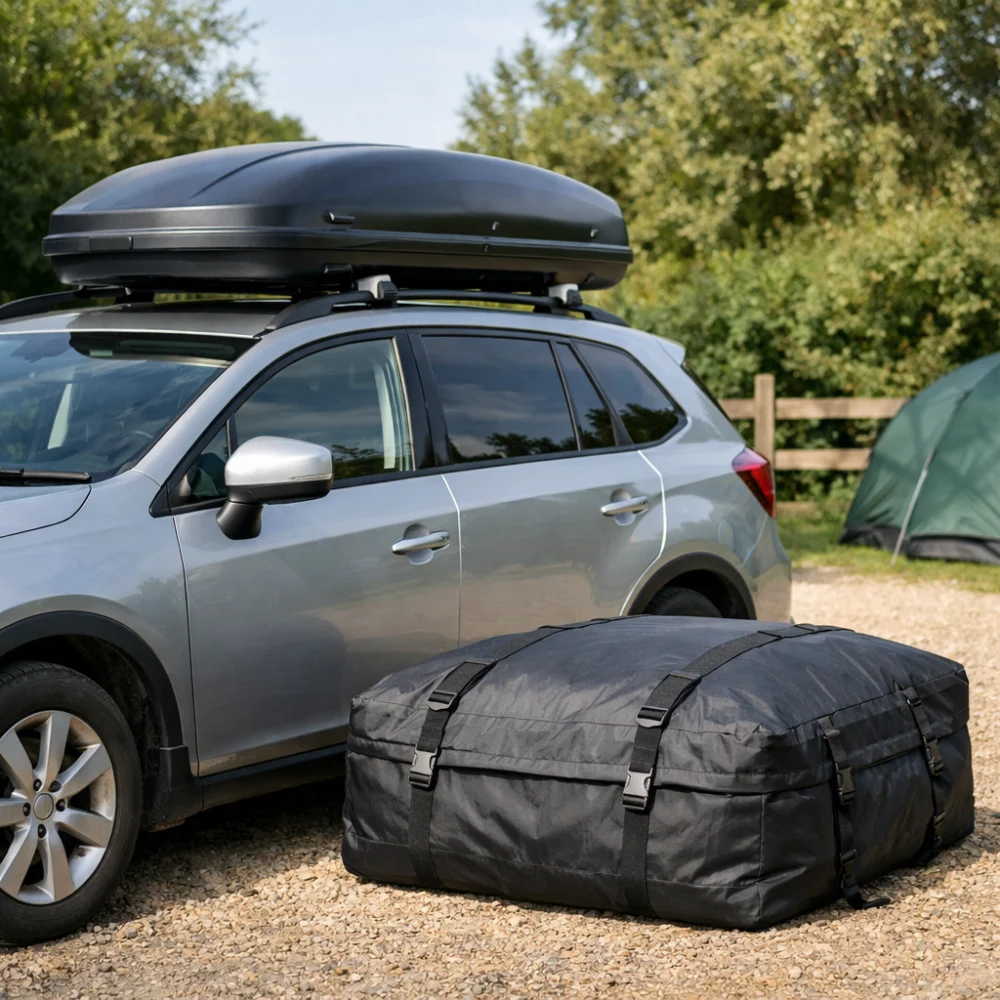
Vehicle roof boxes and bags are a practical way to create extra carrying space when the boot is full or when you want to keep bulky kit separate from passengers. They are commonly considered for family trips, camping, sport equipment and other journeys where luggage volume matters more than compact packing.
The main buying decision is usually between a rigid roof box and a softer roof bag, then between different sizes, fixing methods and access features. The right choice depends on your vehicle, how often you will use it and how much effort you want to spend fitting and removing it.
Because roof storage sits outside the car, small details matter more than they might at first seem. A good choice is not just about capacity; it is also about compatibility, ease of loading, security and how much roof space you can comfortably live with.
What should you choose first: a roof box or a roof bag?
Start by deciding whether you want a rigid roof box or a softer roof bag. A roof box usually offers a more structured shape and a tidier loading space, while a roof bag is often chosen for lighter, more flexible use and easier storage when not in use. The right option depends on how often you will use it, how much gear you need to carry and how much convenience matters to you.
If you expect regular use, easier loading and a more defined packing space may matter most. If you want something that can be stored away more simply when the trip is over, a bag may suit you better. Specifications vary by model, so always check the individual product page before buying.
| Feature | What it means | Why it matters | What to check |
|---|---|---|---|
| Type | Rigid roof box or soft roof bag | Shapes convenience, storage and day-to-day practicality | How often you will use it and where you will store it between trips |
| Capacity | How much luggage it is designed to carry | Determines whether it suits family luggage, camping kit or lighter extras | Whether the listed volume matches your real packing needs |
| Vehicle fit | How the product attaches to your car and roof setup | Compatibility is essential for safe, stable use | Roof bars, fixing method and any vehicle-specific guidance |
| Access | How easily you can load and unload it | Affects everyday convenience, especially when the box is full | Opening style, strap access and whether one or both sides are usable |
| Weather resistance | How well it helps protect contents from the elements | Important for wet-weather travel and exposed journeys | Product description wording and any stated weather features |
| Security | Features that help reduce unauthorised access | Useful if the vehicle will be left unattended | Locking features or closure method described on the product page |
| Storage when not in use | How much room the product needs off the vehicle | Matters for buyers with limited garage or shed space | Foldability, rigidity and practical storage size |
Key decision criteria
1. Match the product to your vehicle setup
The first check is not the storage itself but the roof arrangement on your car. Some products are intended to work with roof bars, while others use straps or vehicle-specific fixing methods. A model that looks suitable at a glance may still be awkward or unsuitable for your exact vehicle if the mounting method does not suit your roof.
Check what the product expects from the car and whether your vehicle has the necessary roof equipment. If the listing refers to a particular make or model, read that carefully rather than assuming a near match will do the same job.
2. Think about how you will load it
Easy loading can matter as much as capacity. A roof box with a more rigid opening can make packing feel orderly, while a bag may need more attention to packing shape and strap tension. If you will be using it in poor weather or parking in tight spaces, simple access can save time and frustration.
Look for details that explain how the opening works, how wide the access is and whether the contents can be organised sensibly. For family trips, this can be more useful than chasing a bigger number on the packaging.
3. Judge weather exposure realistically
Roof storage lives outside the vehicle, so it will face rain, wind and dirt. That makes weather resistance an important buying factor, but it should be judged carefully. A product may be suitable for outdoor travel without being completely equal to every other model in every condition.
Think about the journeys you actually make. A regular motorway trip in mixed weather asks more of a product than an occasional short drive in settled conditions.
4. Consider security and peace of mind
Security features can matter if you will stop overnight, park away from the vehicle or leave luggage unattended for periods of time. The right level of protection depends on how and where you travel, not just on the product type.
Check whether the product description mentions locking or closure features and think about whether those features are enough for your use. For some buyers, simple deterrence is enough; for others, that will not be the right fit.
5. Balance size against practicality
It is tempting to choose the biggest option available, but larger roof storage can be harder to load, harder to store and more noticeable on the vehicle. The best size is the one that solves your packing problem without creating a new one.
Measure your likely luggage carefully in your head before choosing. If you only need extra room for a few bulky items, a moderate option may be easier to live with than an oversized one.
Common product types and variants
Within this category, the main distinction is between rigid roof boxes and softer roof bags. Rigid boxes are generally chosen when a more structured, enclosed solution is wanted. Roof bags appeal to buyers who want flexibility and simpler off-vehicle storage.
There are also practical differences in how products open and how they are secured. Some are aimed at easier side access, while others focus more on simple mounting and compact storage. The useful question is not which style is inherently better, but which one fits the way you travel.
Which type suits which buyer?
| Buyer need | Usually worth prioritising | Why | Trade-off to accept |
|---|---|---|---|
| Occasional holiday use | Simple fitting and easy storage | You may only need the product a few times a year | Less permanent convenience than a dedicated fitted setup |
| Regular family travel | Loading convenience and capacity balance | Frequent use makes practicality more important | Bulkier products can be less easy to store at home |
| Camping trips | Room for awkward or bulky gear | Camping luggage is often irregularly shaped | Big capacity can increase handling effort |
| Limited storage space at home | Foldability or manageable off-vehicle size | You may not want to keep a large rigid item permanently | More compact options may offer less structure |
| Wet-weather travel | Weather resistance and secure closure | Contents are more exposed to the elements | More protective designs may take longer to fit or use |
Common mistakes and misunderstandings
- Choosing by capacity alone. Volume matters, but fit, access and storage can matter just as much. A slightly smaller product that is easier to use may be the better choice.
- Ignoring the vehicle setup. The roof system on the car can be the deciding factor. Always check the fixing method against your vehicle rather than assuming universal fit.
- Overestimating how often it will be used. A product that is awkward to store or fit may be fine for one trip and annoying for repeated use. Match the design to real habits, not hoped-for habits.
- Assuming all weather protection is identical. Roof storage products vary, so read the product wording carefully rather than assuming the same level of protection across the category.
Safety and suitability caveats
Roof storage changes the way a vehicle is loaded, so it is worth being realistic about what you carry and how you use it. Do not assume a product will suit every roof type or every trip pattern. Check the individual product page for vehicle fit guidance, fixing method and any limits mentioned by the manufacturer.
It is also sensible to think about handling. A product that seems straightforward on paper may still be difficult to fit or load if it is too large for one person to manage comfortably.
Maintenance, storage and lifespan considerations
General care is usually straightforward, but it still affects long-term satisfaction. Roof bags may need drying and careful folding before storage, while rigid boxes need space and may benefit from regular cleaning after road use. If the product includes straps, locks or fittings, those parts should also be checked periodically for wear and secure operation.
How long a product feels useful often depends on how well it matches your routine rather than on one single feature. A well-chosen item is one you can fit, remove and store without turning every trip into a task.
How to compare options efficiently
- Decide whether you want a rigid roof box or a softer roof bag.
- Check the fitting method against your vehicle and roof setup.
- Compare practical capacity, not just headline volume.
- Look at loading access, weather resistance and security features.
- Consider how you will store it when it is not on the car.
- Read the individual product page carefully before deciding.
Summary buyer decision checklist
- Does the product suit your car’s roof setup?
- Is the type right for how often you will use it?
- Will the capacity suit your real luggage?
- Is loading and unloading practical for your routine?
- Does it suit the weather exposure you expect?
- Is storage at home manageable when it is not in use?
- Have you checked the individual product page for any model-specific details?
Frequently asked questions
Are roof boxes better than roof bags?
Not always. Roof boxes are often preferred when a more structured, enclosed storage space is useful, while roof bags may suit buyers who want something simpler to store when not in use. The better choice depends on your vehicle, how often you travel and how much convenience you want.
Do I need roof bars for these products?
Some products may need roof bars, while others use different fixing methods. The important point is to check the product page carefully before buying rather than assuming every roof storage item fits every vehicle in the same way.
What size should I choose?
Choose the size that matches what you actually carry, not the largest available option. If you are packing family luggage or camping kit, think about shape as well as volume, because awkward items often take more space than expected.
How important is weather resistance?
Quite important, because the product sits outside the vehicle. That said, the right level of protection depends on how you travel and what you carry, so it is worth reading the product wording rather than assuming all models offer the same level of shielding.
Is a roof bag less secure than a roof box?
They can feel different in use, but security depends on the specific design and fittings rather than the category name alone. Look for the closure or locking details described on the product page and decide whether they suit your needs.
Can I store a roof box at home easily?
Rigid roof boxes usually need more space than bags, so storage is an important part of the buying decision. If home storage is tight, a softer design may be more practical, provided it still suits your travel needs.
What should I check before ordering?
Check the vehicle fit, fixing method, practical capacity, access style and any guidance on weather protection or security. Those details tell you far more about suitability than the headline category name alone.

