
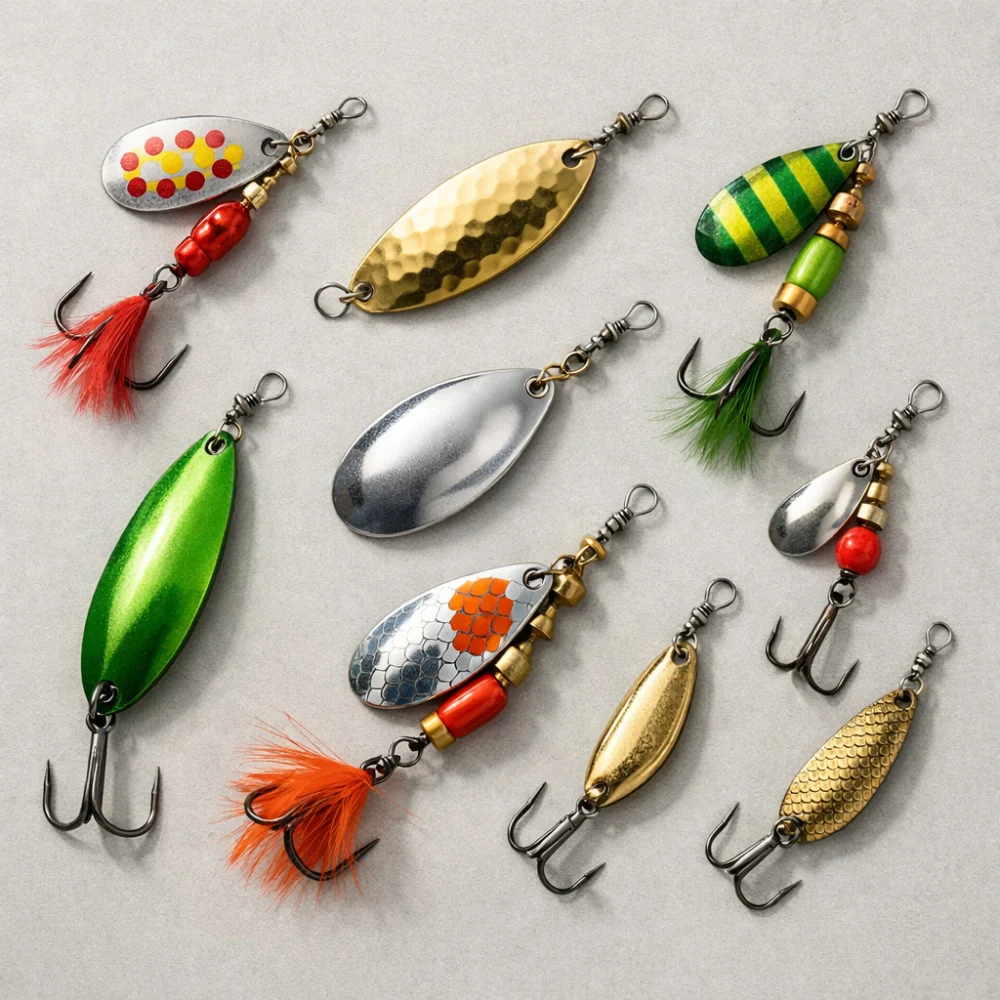
Fishing spinners and spoons are simple-looking lures, but the details can make a real difference to how they fish. The right choice depends on where you plan to use them, how you want to retrieve them and what kind of response you are trying to trigger.
This guide focuses on the practical buying questions that matter before you choose a spinner or spoon. It is about comparing the main features, understanding the limitations and matching the lure to your fishing rather than buying by appearance alone.
Because product ranges vary, it helps to think in terms of shape, size, weight, finish and hook arrangement rather than assuming every lure of the same type behaves the same way.
What should you look for first?
Start with the water you expect to fish, the species you are targeting and the retrieve style you are most likely to use. A spinner and a spoon may both be metal lures, but they create different movement and flash in the water, so the best option is often the one that suits your conditions rather than the one that looks most dramatic. Specifications vary by model, so always check the individual product page before buying.
The biggest trade-off is usually between casting ease, lure action and the conditions you want to cover. Lighter lures can be useful for finesse and shorter-range work, while heavier ones may suit longer casts or deeper water, but no single type does everything equally well.
| Feature | What it means | Why it matters | What to check |
|---|---|---|---|
| Size | The overall physical size of the lure | Influences how visible it is and how much water it displaces | Match the lure size to the species, water clarity and the style of fishing you plan to do |
| Weight | How heavy the lure is | Affects casting distance, sink rate and how the lure behaves in the retrieve | Check whether the lure suits your rod, line and the depth you expect to fish |
| Blade or spoon shape | The shape that controls movement and flash | Changes vibration, wobble and how the lure tracks through the water | Look for the action description and decide whether you want more flash, more vibration or a subtler movement |
| Finish and colour | The visible surface appearance of the lure | Can affect visibility in different light and water conditions | Choose finishes that suit clearer, darker or more coloured water, without relying on colour alone |
| Hook arrangement | The type and placement of the hooks | Influences hooking potential, weed resistance and ease of handling | Check the hook style and whether the lure is intended for your preferred fishing environment |
| Target use | The kind of fishing the lure is designed to support | Helps narrow the choice when several lures look similar | Read the product description carefully and focus on the intended species and conditions |
Key decision criteria explained
Action and movement
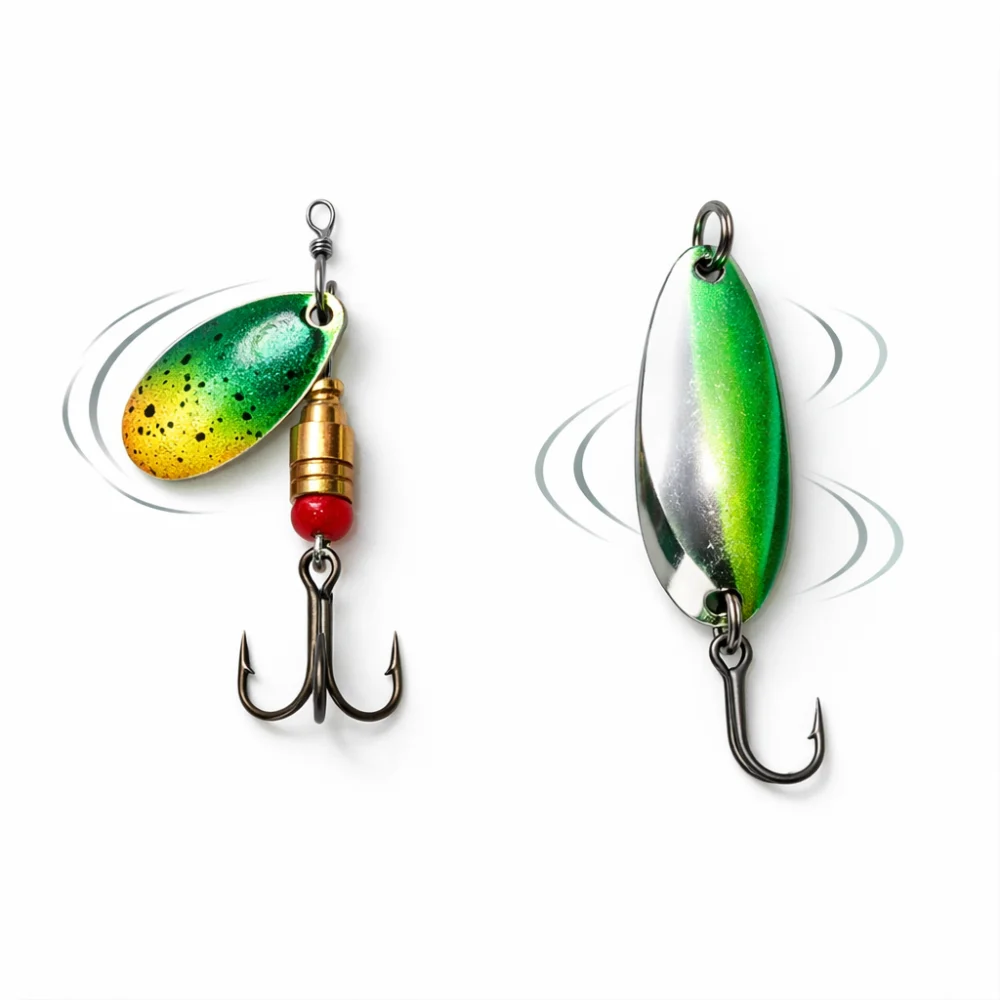
The action is the way the lure moves through the water. Some spinners create rotation and strong vibration, while spoons tend to wobble and flash. That movement is often more important than the colour you choose, because it affects how the lure presents itself and how noticeable it is to fish.
If you want a lure that does a lot of the work for you, choose one with a clear, well-described action. If you prefer a more controlled retrieve, look for a lure that suits a slower or steadier presentation.
Weight and casting feel
Weight affects how far the lure can be cast and how it behaves once it lands. A heavier lure may be easier to reach distant marks, but it may not be the best choice if you want a lighter presentation or a slower sink. A lighter lure can feel more delicate, but it may be harder to cast in wind or to cover larger areas efficiently.
Think about your usual fishing distance, the rod you use and whether you need the lure to travel quickly to the target area or work more gradually through the water.
Size and visibility
Size is one of the easiest ways to narrow the range. Larger lures are often more visible and can create a stronger impression, while smaller lures may be better when you want a subtler presentation. The right choice depends on the species, the conditions and the level of disturbance you want to create.
It is usually better to choose a size that fits the situation than to assume bigger is always more effective.
Hooks and handling
Hooks are a practical part of the decision because they affect both performance and handling. Some lures are sold with a particular hook style already fitted, while others may use a different arrangement depending on the model. If you have a specific fishing environment in mind, consider whether the hook setup is suitable for that setting and easy for you to manage.
Do not assume that the lure body alone tells the whole story. Hook arrangement can influence how the lure fishes and how comfortably it can be used.
Common types and variants
Inline spinners
Inline spinners are designed around a rotating blade on the lure body. They are often chosen when the angler wants strong vibration and a straightforward retrieve. Their main limitation is that they are not always the most subtle option, especially in very clear or pressured water.
Spoons
Spoons use a curved metal body that flashes and wobbles as it moves. They can be a practical choice when you want visible movement and a simple presentation. Their limitation is that their action depends on retrieve speed and can vary more than buyers expect.
Heavier casting styles
Some lures in this category are built for longer casting or quicker sinking. These can be useful when you need to reach distance or work deeper water, but they may be less forgiving if you want a lighter, slower presentation.
Which features matter for different buyers?
| Buyer need | What to prioritise | Why it helps |
|---|---|---|
| Beginner buyer | Simple action, clear product description, easy handling | Makes it easier to understand how the lure should be fished |
| Angler choosing for varied waters | Versatile size and weight, balanced action, useful range of finishes | Helps one lure cover more than one type of situation |
| Distance-focused fishing | Heavier design and stable casting feel | Can help reach more distant areas more consistently |
| Subtle presentation | Smaller size, less aggressive action, suitable finish | May suit clearer water or more cautious feeding conditions |
| Gift buyer | General-purpose choice with clear label and straightforward description | Reduces the risk of buying something too specialised |
Common mistakes and misunderstandings
- Choosing by colour alone: finish matters, but action, weight and size are often more important.
- Assuming all spinners or spoons behave the same: small design differences can change the way a lure moves and casts.
- Ignoring weight and rod match: a lure that is awkward to cast can be frustrating even if the design looks suitable.
- Buying for one situation only: if you fish different waters, a more versatile lure can be a better starting point.
- Overlooking hook style: the hook arrangement is part of how the lure performs and how convenient it is to use.
Safety and suitability caveats
Fishing lures are small tackle items, so it is worth checking the product information carefully before buying. Make sure the lure suits the kind of fishing you intend to do and that the hook arrangement is appropriate for your needs and local conditions.
If you are buying for someone else, try to choose a straightforward, general-purpose option unless you already know their preferred fishing style. A more specialised lure may be less useful if it does not match their usual setup.
Maintenance, storage and lifespan considerations
Metal lures are usually best stored so they do not rub against other tackle, which helps reduce wear and tangles. After use, it is sensible to dry them before putting them away, especially if they have been used in wet or salty conditions.
Over time, finish, hooks and moving parts can show wear, so it is sensible to think about whether a lure is easy to inspect and maintain. If a lure uses moving components, check how easy it is to keep them in good condition.
How to compare options efficiently
- Decide where you will use the lure most often.
- Choose between spinner and spoon based on the type of movement you want.
- Compare size and weight against your casting needs.
- Check the description for action, finish and hook arrangement.
- Choose the option that best balances visibility, control and versatility for your fishing.
Summary buyer decision checklist
- Does the lure suit the water you plan to fish?
- Is the size appropriate for your target and presentation style?
- Does the weight fit your casting needs?
- Is the action what you want from a spinner or spoon?
- Have you checked the hook arrangement and general handling?
- Does the product page give enough detail for your intended use?
Frequently asked questions
Are spinners and spoons used for the same situations?
There is overlap, but they do not always behave the same way. Spinners often create more rotation and vibration, while spoons usually give a wobbling flash. The better choice depends on the presentation you want and the conditions you expect.
Does a heavier lure always cast better?
Heavier lures often cast more easily, especially in wind or at longer range, but that does not make them the right choice for every situation. A heavier lure may also behave differently in the water and may not suit a more delicate approach. It is a balance between casting ease and presentation.
Is colour more important than shape?
Not usually. Colour can help with visibility, but the lure’s shape and movement often have a bigger effect on how it fishes. It is generally better to get the size, action and weight right first, then consider finish and colour.
Can one lure work across different waters?
Some can, especially if they have a balanced size and a versatile action. Even so, no lure is ideal for every situation. A general-purpose option is useful, but it is still worth checking that it suits the specific water and style you have in mind.
What should a beginner prioritise?
A beginner is often best served by a lure with a straightforward description, manageable weight and an obvious action. That makes it easier to understand how the lure is meant to work and whether it suits the fishing conditions. A highly specialised lure can be harder to judge at first.
Why does hook arrangement matter?
Hook arrangement affects how the lure is fished and how easy it is to handle. It can also influence whether the lure feels suited to open water or more cluttered surroundings. Checking the product page helps you avoid surprises once the lure arrives.

