
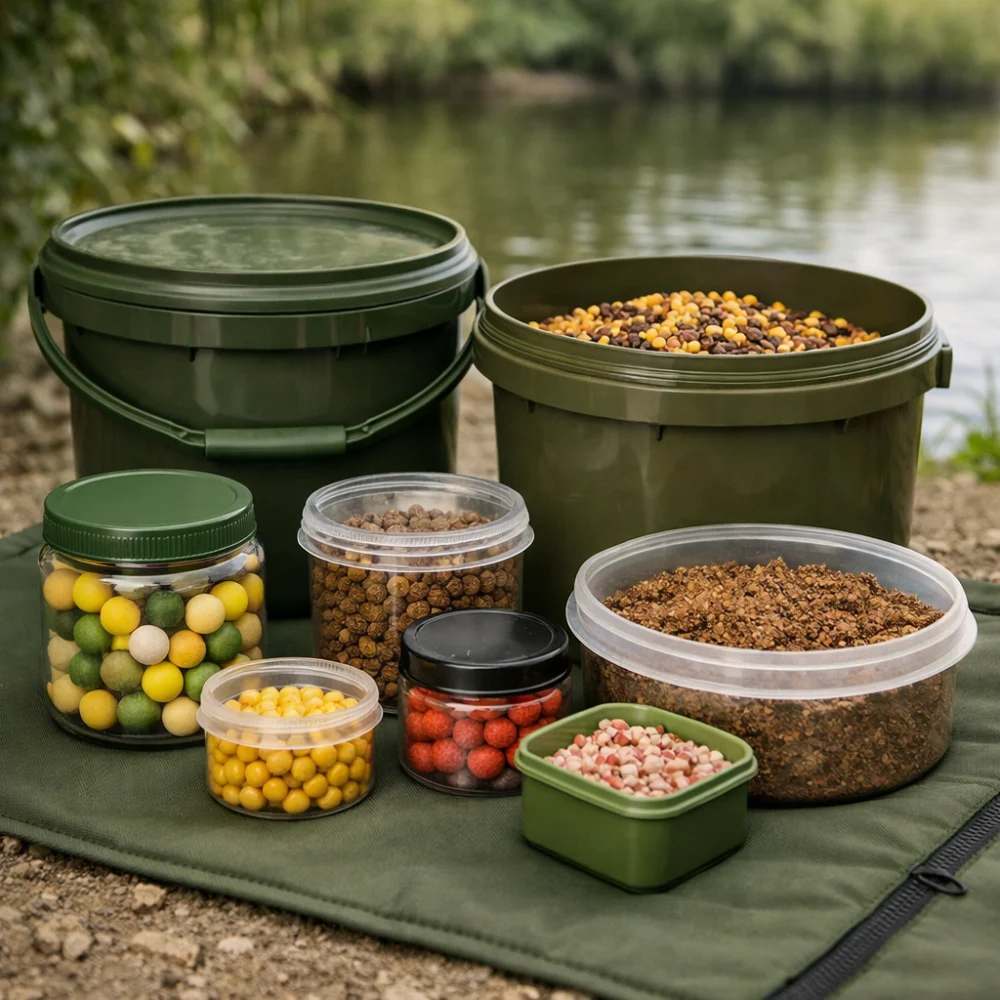
Bait buckets and storage products help anglers keep bait organised, protected and easy to carry to the water. They are often bought for practical reasons rather than as a luxury, so the main decision is usually about choosing the right size, lid style and level of organisation for the way you fish.
If you are replacing a worn container, putting together a first fishing kit or looking for a tidier way to transport bait, it helps to compare the options by use rather than by appearance. A small box that suits session fishing may not be the right choice for someone who carries several bait types or prefers a more modular setup.
This guide focuses on the buying choices within the category, so you can judge what matters most before opening individual product pages.
What should you look for in bait buckets and storage?
The best starting point is how much bait you need to carry, how you want to separate it, and how often you move between home, car and bank. A simple container may be enough for one bait type, while a more organised setup can be better if you want separate sections for different items. The main trade-off is usually between simplicity and flexibility.
Specifications vary by model, so always check the individual product page before buying.
| Feature | What it means | Why it matters | What to check |
|---|---|---|---|
| Capacity | The amount of bait or accessories the container can hold | Too little space means overfilling; too much can be awkward to carry | Look for a size that matches your usual bait load and session length |
| Container style | Bucket, box, tub or multi-part storage | Different styles suit different levels of organisation and portability | Check whether you want one open container or several smaller sections |
| Lid or closure | How the container is closed or sealed | Helps keep bait contained and makes transport cleaner | See how the lid fits, opens and closes in normal use |
| Organisation | Compartments, inserts or stacked pieces | Useful if you carry different bait types or related small items | Confirm whether the layout matches the way you sort tackle |
| Carry convenience | Handles, shape and portability | Important if you walk a long distance or carry several items at once | Check the shape and carrying method against your usual setup |
| Cleaning and storage | How easy it is to empty, rinse and stow away | Important for hygiene and for keeping equipment ready for next time | Look for a design that is straightforward to clean and dry |
Key decision criteria explained
Size and capacity
Size is usually the first filter because it affects both convenience and how much bait you can bring. If you often fish short sessions, a compact container may be easier to carry and store. If you like to keep several baits separate, a larger or more modular option may be more practical.
Think about the bait you actually use rather than the maximum space a container offers. A roomy product that is half empty can be less convenient than a smaller one that fits your routine neatly.
Separation and organisation
Some buyers only need one simple place to keep bait, while others prefer separate spaces for different baits or accessories. Compartments, inserts and stacked containers can help keep things tidy, but they can also add bulk. Choose organisation features only if they solve a real problem in your setup.
Lid and closure design
The closure matters because it affects both transport and everyday use. A secure lid can help stop spills and keep contents together in a bag or carryall. However, a lid that is awkward to open and close may slow you down when you are setting up or changing bait.
Portability and handling
Consider where the storage will travel. If it spends most of its time in the car or tackle bag, portability may be less important than capacity. If you carry it by hand, a shape that is easy to hold and stack can make a real difference.
Cleaning and dry storage
Bait containers are easier to live with when they are simple to empty and clean. Smooth interiors and uncomplicated shapes are often more practical than complicated corners that can trap residue. If you store bait-related items between trips, think about whether the container will dry and stow neatly.
Common types and variants
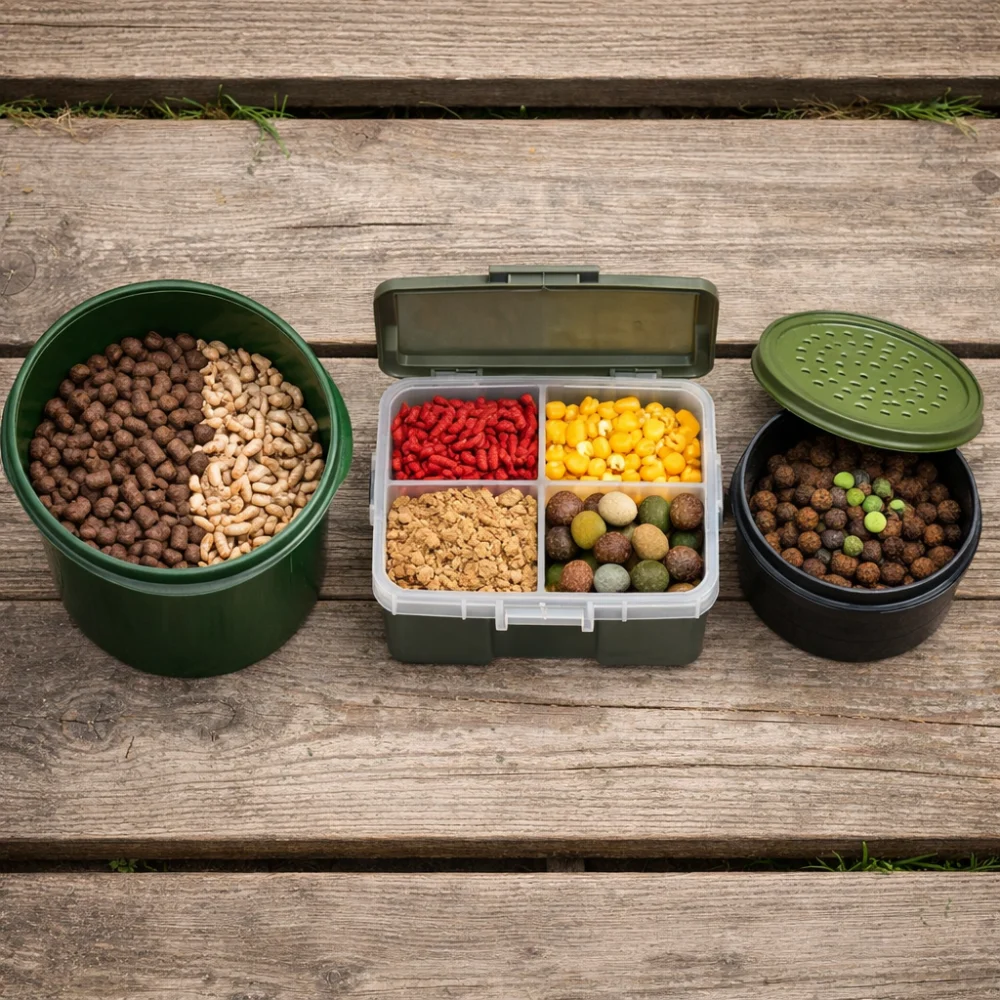
Within this category, buyers usually choose between plain buckets, smaller bait boxes, and more organised storage systems with multiple pieces or inserts. A plain bucket tends to suit straightforward transport or larger quantities. Smaller boxes are useful when you only need to carry a modest amount or want to keep one bait type separate.
More structured storage can suit anglers who like to sort items carefully, but it is not always the right answer if you want something quick and uncomplicated. The more sections and accessories a system has, the more you should think about whether you will actually use them.
Which type suits different buyers?
| Buyer need | Likely better fit | Reason | Trade-off |
|---|---|---|---|
| Simple, low-fuss storage | Basic bucket or tub | Easy to pack, carry and understand at a glance | Less built-in organisation |
| Several bait types to keep apart | Multi-part or divided storage | Helps prevent mixing and keeps items easier to find | Can take up more space |
| Short sessions and light carrying | Compact bait box | Smaller and easier to store with other tackle | Limited room for extras |
| Neat, repeatable tackle organisation | Stacked or modular system | Useful when you like everything in a fixed place | May be more than you need for casual use |
Common mistakes to avoid
- Choosing by size alone. A large container is not always better if it is awkward to carry or does not fit your normal bait routine.
- Overlooking the closure. A tidy-looking container still needs a lid or fastening that suits real transport and handling.
- Buying more organisation than you need. Compartments are useful, but only if you will actually separate bait or small items.
- Ignoring cleaning. Containers that are hard to empty or rinse can become inconvenient very quickly.
- Assuming similar-looking products work the same way. Small differences in layout, lid fit and carry style can change how useful the item feels in practice.
Safety and suitability caveats
Choose a container that suits the conditions you actually fish in and the bait you plan to carry. If you use perishable bait or carry bait alongside other tackle, check how the product is intended to be used and stored. Do not assume that every container is equally suitable for every bait type or every trip.
It is also sensible to think about hygiene and containment, especially if the storage will sit in a vehicle or bag for any length of time. The right choice is the one that fits your routine without creating extra mess or confusion.
Maintenance, storage and lifespan considerations
Bait buckets and storage tend to last longer when they are emptied promptly, cleaned after use and stored dry. If a product has lids, inserts or removable parts, think about how easy those pieces are to dry and put away. Simpler designs can be easier to maintain, while more complex ones may reward careful handling.
If you expect the container to live in a garage, car boot or tackle room, check whether the shape stacks neatly and whether the materials seem suitable for regular use in that environment. Good storage habits matter as much as the original choice.
How to compare options efficiently
- Decide how much bait or tackle you normally carry.
- Choose between a simple container and a more organised system.
- Check the closure, handling and cleaning convenience.
- Compare the trade-off between compactness and storage space.
- Read the individual product page carefully before buying.
Summary buyer decision checklist
- Does the size match your normal bait load?
- Do you need one compartment or several?
- Will the lid or closure suit your day-to-day use?
- Is it easy to carry, stack and store?
- Will it be straightforward to clean and dry?
- Does the layout suit the way you already organise tackle?
Frequently asked questions
What is the main purpose of a bait bucket or storage container?
It gives you a practical way to carry, separate and protect bait or related items. For many anglers, the real value is less about the container itself and more about keeping the rest of the setup tidy and easy to manage.
Do I need a simple bucket or a more organised storage system?
If you usually carry one bait type or only a small amount of gear, a simple container may be enough. If you keep several bait types separate, or like everything arranged in fixed places, a more structured option can be easier to live with.
What matters most when comparing products in this category?
Capacity, lid design, organisation and portability are usually the main points. The right balance depends on whether you value quick access, tidy separation or easier carrying most.
Are larger bait containers always better?
Not necessarily. Extra space can be useful, but it can also mean more bulk and less convenience. A container that matches your real routine is usually a better choice than one chosen purely for size.
How important is the lid or closure?
Very important, because it affects how the container behaves in transit and during use. A good lid should fit the way you fish, open comfortably and help keep contents together without fuss.
Can I use bait storage for other tackle items?
Sometimes, yes, if the layout suits what you want to store. Just make sure the shape and compartments make sense for the items you plan to carry, rather than forcing a single product to do several jobs badly.
What should I check on the product page before ordering?
Check the size, number of sections, closure style and any included inserts or accessories. It is also worth confirming how the item is intended to be used, especially if you want storage for a specific bait routine.

