
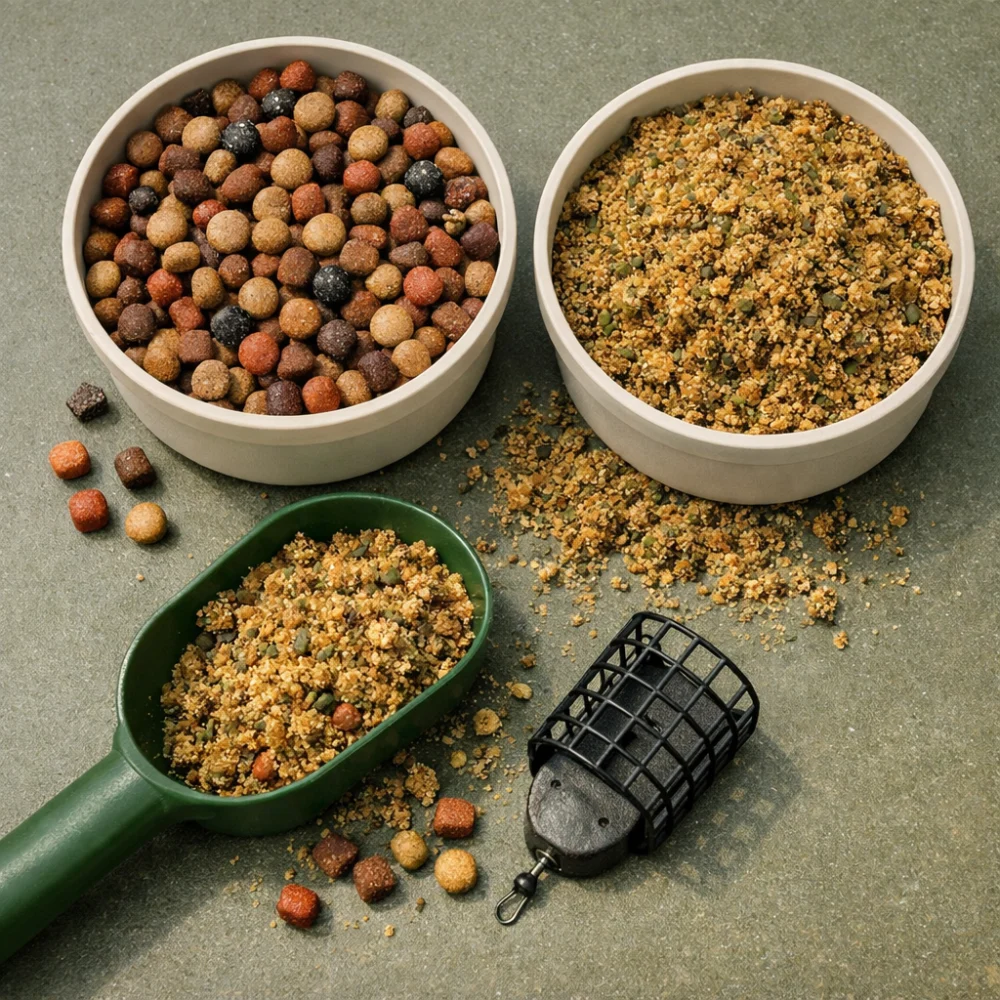
Pellets and ground bait are widely used to create a feeding area, draw fish into a swim and keep them interested once they arrive. The right choice depends less on a single “best” bait and more on how you fish, what species you are targeting and how much feed you want to put in the water.
If you are new to bait choice, it helps to think about how the bait will behave in the water. Some options are designed to break up quickly and spread scent or particles, while others are better for a more controlled feed. That difference can matter more than flavour labels or packaging style.
This guide focuses on choosing between pellet and ground bait options rather than how to fish every situation. It should help you narrow down the type that matches your session, venue and approach.
What should you look for when choosing pellets and ground bait?
The best starting point is to match the bait to your method and the amount of feed you want to introduce. Pellets are usually chosen for a more controlled feed, while ground bait is often used to create a wider attraction area. The main trade-off is simple: a tighter, slower feed versus a more immediate spread of attraction. Specifications vary by model, so always check the individual product page before buying.
| Feature | What it means | Why it matters | What to check |
|---|---|---|---|
| Particle size | How fine or coarse the bait is | Helps determine how quickly it works and how far it spreads | Look for the size description and whether it suits feeder use, loose feeding or mixing |
| Breakdown rate | How fast the bait starts to disperse in water | Influences how quickly fish are drawn in and how long the feed lasts | Check whether it is described as fast, medium or slow acting |
| Feed style | Whether the product is for loose feed, balling in or method-style use | Different approaches suit different venues and target species | Read the intended use carefully rather than relying on the product name alone |
| Target species | The fish the bait is intended to attract | Some mixes are better suited to carp, coarse fish or trout-style fishing | Check the product description for the intended target or typical use |
| Water conditions | How the bait behaves in calm or moving water | Helps avoid feed that disperses too fast or too slowly for the venue | Look for guidance on use in still waters, canals or flowing water where supplied |
Key decision criteria explained
Pellet size and consistency
Pellets often vary in size and firmness, which changes how they feed fish. Smaller pellets usually create a quicker, finer spread of food, while larger pellets can give a more deliberate feed. The trade-off is between speed and control: smaller feed may attract faster, but larger feed can stay in place longer.
Ground bait texture and bind
Ground bait is often mixed to a specific texture, from loose and clouding to heavier and more binding. A lighter mix may spread more quickly, while a denser mix can hold together longer. What matters is how well the mix matches your approach, your feeder or mould, and how fast you want it to work in the water.
Attraction profile
Some products are intended to create a cloud of scent and particles, while others are designed to put more food on the bottom. Neither is automatically better. The right choice depends on whether you want to search for fish, hold them in an area or build a steady feeding pattern over the session.
Intended method
Check whether the product is meant for feeder fishing, method fishing, balling in by hand or straight loose feeding. A bait can be very effective in one method and awkward in another if the texture or breakdown does not suit the presentation. This is one of the easiest checks to miss when comparing options quickly.
Common pellets and ground bait variants
There is usually more variation within this category than the name suggests. A few common patterns are worth understanding before you compare products.
- Standard pellets: Often used for controlled feeding and can suit a simple, repeatable approach.
- Floating or expanding pellets: Can suit some surface or mid-water situations, but they are not the same as sinking feed.
- Ground bait mixes: Often chosen when you want to create a feed area, with texture and bind varying by mix.
- Method-style mixes: Intended for compact presentation around a feeder or mould.
The important point is not the label itself but how the bait behaves once prepared and introduced to the water.
Which type suits which buyer?
| Buyer need | More suitable characteristics | Why |
|---|---|---|
| Beginner or occasional angler | Simple, clearly described bait with a straightforward use case | Makes it easier to match the bait to the method without overcomplicating the choice |
| Method feeder user | Ground bait or pellets described as suitable for compact presentation | Consistency and binding matter more than broad attraction alone |
| Loose-feed approach | Pellets or crumbier mixes that spread well | Useful when you want to create a wider feeding area rather than a tight ball of bait |
| Targeting cautious fish | More controlled feed and moderate breakdown | Helps avoid overfeeding or creating too much disturbance |
| Session fishing with a longer plan | Bait that can be used in a measured way across the session | Allows you to build a feeding pattern rather than spending all your bait quickly |
Common mistakes to avoid
- Choosing by flavour name alone: a flavour can be relevant, but texture and feed behaviour often matter more.
- Assuming all pellets work the same way: size, buoyancy and breakdown can change how they perform.
- Using a mix that is too active for the venue: very fast breakdown can be useful, but not if you need the feed to stay concentrated.
- Ignoring preparation advice: some products are designed for a particular mixing approach or use method.
- Overbuying one type for every situation: different waters and sessions often call for different feed behaviour.
Safety and suitability caveats
Pellets and ground bait are buying decisions where suitability matters more than complexity, but it is still worth checking a few basics. Make sure the product description matches the species, venue and method you plan to use, and pay attention to any preparation or storage guidance supplied by the seller. If you are unsure how a product behaves, the individual product page is the best place to confirm the intended use.
Maintenance, storage and lifespan considerations
These products are usually easier to manage than many fishing accessories, but storage still affects usability. Keep unopened and opened bait in suitable conditions according to the product guidance, and avoid assuming all mixes will stay fresh or usable in the same way. If you buy in larger quantities, think about whether you will use it quickly enough for your normal fishing pattern.
How to compare options efficiently
- Decide how you fish: feeder, loose feed, balling in or another method.
- Choose the general type: pellets, ground bait or a mix that suits that approach.
- Compare the texture, breakdown rate and intended use, not just the product name.
- Check whether the bait matches your target species and venue conditions.
- Read the individual product page for preparation notes and any details that affect use.
Summary buyer decision checklist
- Does this bait suit my method of fishing?
- Is the feed style appropriate for how quickly I want attraction?
- Does the size or texture match the presentation I plan to use?
- Is it described for the species or venue I am fishing?
- Have I checked the preparation and storage guidance?
Frequently asked questions
Are pellets better than ground bait?
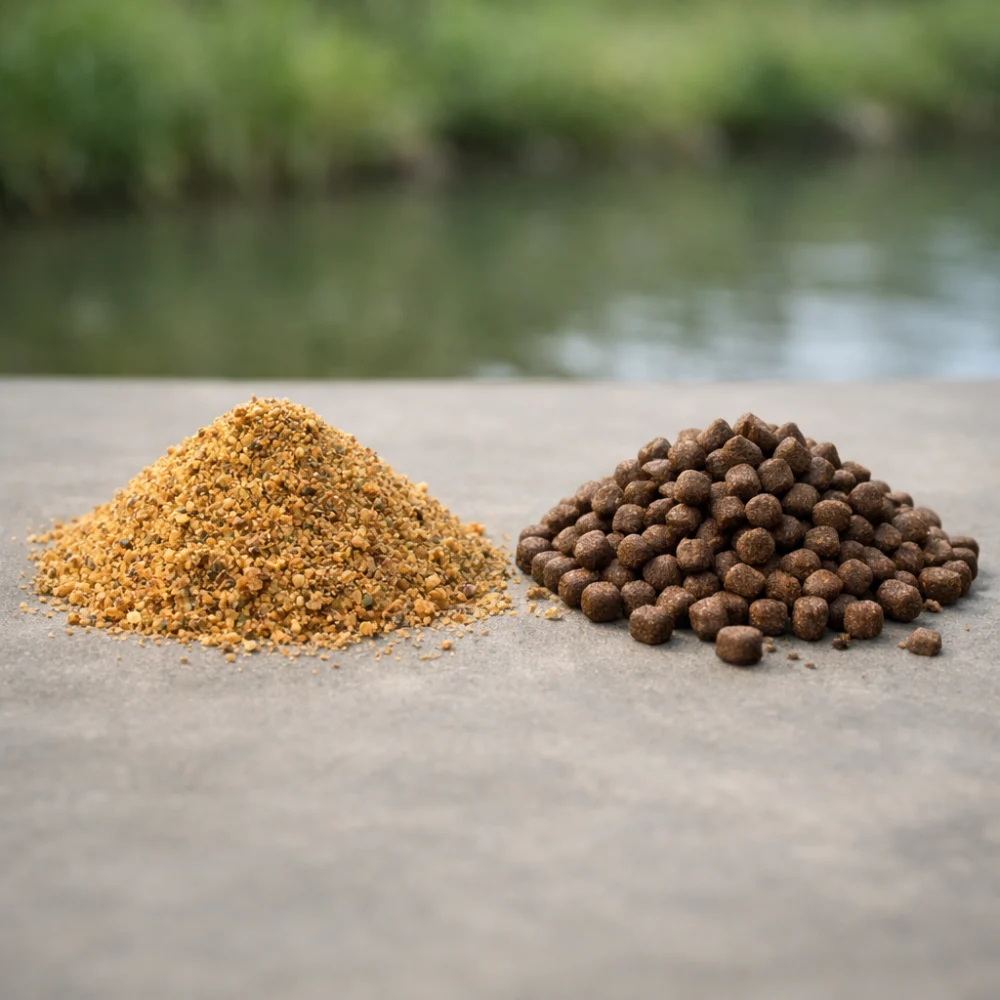
Neither is automatically better. Pellets are often used for a more controlled feeding approach, while ground bait is usually chosen when you want to create a broader attraction area. The better choice depends on your method and how much feed you want in the water.
Can I use ground bait and pellets together?
Yes, many anglers use them together when the method and venue suit it. The main point is to avoid making the mix overly active or too heavy for the presentation. Check the product descriptions and match the combination to the way you plan to fish.
What does breakdown rate mean?
It refers to how quickly the bait starts to disperse in water. A faster breakdown can draw fish in sooner, while a slower one can keep the feed area more compact for longer. Which is better depends on the session and the venue.
Do I need a specific bait for feeder fishing?
Not always, but some mixes are better suited to feeder use than others. A feeder-friendly product will usually be described in a way that suggests the right texture and bind for that presentation. It is worth checking this before you buy.
How do I know whether a mix is too fine or too coarse?
Read the product description and think about how quickly you want the bait to spread. Finer mixes tend to work more quickly and broadly, while coarser mixes can hold together better. If the product page gives a recommended use, that is usually the safest guide.
Does the flavour matter as much as the texture?
Flavour can matter, but it is only one part of the choice. Texture, breakdown and method suitability often have a bigger effect on how the bait behaves. A well-matched mix is usually more useful than a strongly named flavour on its own.

