
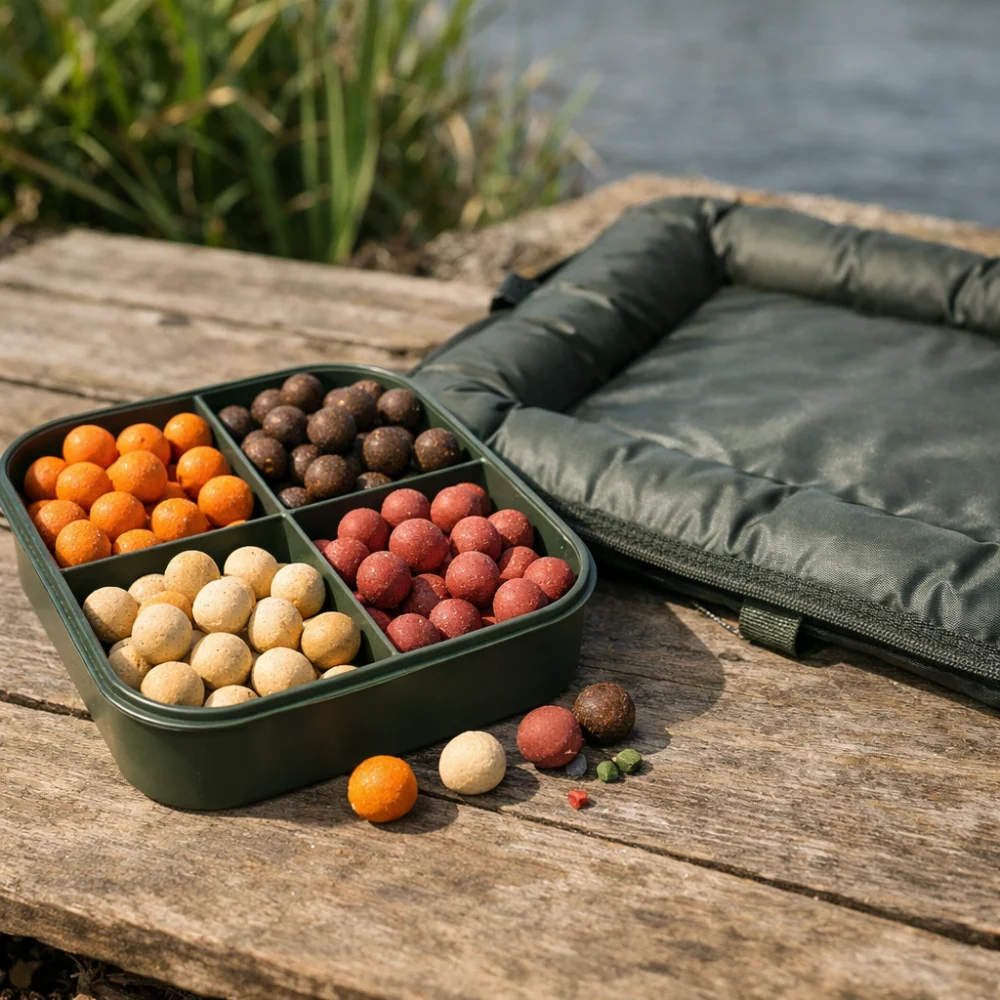
Boilies are a common carp fishing bait, but the right choice is not simply about picking the most attractive name on the bag. Size, texture, flavour profile and how quickly the bait releases attraction can all affect how well it suits your approach.
This guide is for anglers who want a clearer way to compare boilies before buying. It focuses on the buying decisions that matter most, rather than on one fixed formula that suits every session.
Because boilies are used in different ways, the useful question is not just what they are, but how they fit your water, your rig and how long you expect to fish for. Specifications vary by model, so always check the individual product page before buying.
What should you look for when choosing boilies?
The most useful starting point is to match the boilie to your fishing conditions and how you intend to use it. A smaller bait can be easier to present and feed, while larger sizes may suit longer sessions or situations where you want a more selective presentation. The main trade-off is usually between attraction, durability and how the bait behaves in the water.
| Feature | What it means | Why it matters | What to check |
|---|---|---|---|
| Size | The diameter of the boilie | Affects presentation, feeding approach and how quickly fish may find it | Whether the size suits your rig, hookbait choice and planned session |
| Type of bait | How the boilie is made and intended to be used | Influences convenience, storage and how it behaves during fishing | Whether it is intended as a shelf-life or freezer-style product, where stated |
| Flavour profile | The scent or attractor style associated with the bait | Helps you choose a bait that fits water conditions and your approach | The flavour description and whether it matches your own fishing pattern |
| Texture and firmness | How hard or soft the boilie feels | Can affect how long it stays on the rig and how quickly it breaks down | Any product notes about consistency, durability or intended use |
| Pack size | How much bait is supplied | Useful for single sessions, regular fishing or stocking up for longer use | The amount provided and whether it is practical for your fishing frequency |
Key decision criteria
Size and presentation
Boilie size is one of the first choices to narrow down. Smaller boilies are often chosen when a subtler presentation is wanted, while larger boilies may be preferred when you want to reduce attention from smaller fish or make a bolder feed item. The right answer depends on your venue, the fish you expect and the rest of your setup.
Attraction style
Different boilies are designed around different attraction styles, from sweet and fruity profiles to richer, fishmeal-style baits. None of these is automatically better; the practical point is to choose a profile that makes sense for the water and season rather than assuming one scent suits all conditions.
Durability and breakdown
Some boilies are chosen because they stay intact for longer, while others are more open in texture and may give up attraction more quickly. That trade-off matters if you are fishing for a short session, leaving bait in for longer, or trying to balance attraction with staying power on the hook or in the feed spot.
Convenience and storage
How you store bait can matter as much as the bait itself. Some anglers prioritise the convenience of a bait that is easy to keep and carry, while others are happy to manage a more selective bait type if it better suits their fishing style. Check the product page for any notes that help you judge storage and handling needs.
Common boilie types and how they differ
In this category, the most useful distinction is often between boilies that are intended for regular general use and boilies chosen for a more specific fishing approach. You may also see differences in size, flavour style and whether the bait is sold as a smaller session pack or a larger bulk pack.
- Smaller boilies: often used when you want a neater presentation or a more subtle feed item.
- Larger boilies: may suit anglers who want a bigger bait profile and are happy with a bolder approach.
- General-purpose boilies: useful when you want a straightforward option without overthinking the flavour or size choice.
- Specialist flavour styles: helpful if you already have a preferred scent profile or are matching an established approach.
Which boilies suit different buyer needs?
| Buyer need | What to prioritise | Why it helps |
|---|---|---|
| Beginner or occasional angler | Simple size choice, familiar flavour style and manageable pack size | Makes the first decision easier and avoids buying more bait than you need |
| Longer session angler | Practical pack size, bait durability and a profile that suits repeated use | Helps you plan baiting and reduces the need to restock quickly |
| Angler fishing a smaller water or pressured venue | More considered size and presentation | Can help keep the approach controlled and focused |
| Angler comparing value | Pack size, intended use and how often the bait will be used | Lets you compare on practicality rather than on bait claims alone |
Common mistakes and misunderstandings
Choosing only by flavour name: the flavour description is useful, but it should not be the only factor. Size, texture and intended use can matter just as much.
Buying a large pack without a plan: bigger packs can make sense, but only if you will use them. Otherwise, a smaller pack may be the more practical choice.
Assuming all boilies behave the same: boilies vary in how they are intended to be used and how they break down. Read the product information closely rather than assuming one bait is interchangeable with another.
Ignoring the fishing situation: a bait that suits one venue or session length may be less suitable elsewhere. Think about your actual use case before focusing on scent alone.
Safety and suitability caveats
Boilies are a fishing bait, so the main checks are practical rather than technical. Make sure the product suits the type of fishing you are doing and that you are happy with how it is packaged, stored and handled. If you are comparing options for a particular venue or fishing method, check the individual product page carefully for the most relevant details.
Maintenance, storage and lifespan considerations
How you look after boilies affects how convenient they are to use. Some anglers prefer bait that is easy to store between sessions, while others are willing to manage more specific storage requirements in return for a bait style they prefer. Consider how often you fish, how much bait you use at a time and whether you want a pack that is easy to keep ready.
If you only fish occasionally, a smaller pack may be easier to manage. If you fish regularly, a larger pack can be more practical, provided it will be used before it becomes inconvenient to store. The right choice is often about reducing waste as much as it is about choosing a flavour.
How to compare boilies efficiently
- Start with the kind of fishing you plan to do and the venue conditions you expect.
- Choose the size range that fits your presentation and feeding approach.
- Compare the flavour style, texture and durability rather than flavour alone.
- Check the pack size against how often you fish and how much bait you are likely to use.
- Review the individual product page for any details that affect storage, handling or intended use.
Summary buyer decision checklist
- Have I chosen a boilie size that suits my setup and fishing approach?
- Does the flavour style suit the venue and the kind of session I am planning?
- Is the bait’s texture and durability appropriate for how long I expect to fish?
- Is the pack size practical for my usage and storage?
- Have I checked the individual product page for the details that matter most?
Frequently asked questions
What is the main difference between boilie sizes?
Size changes how the bait presents and how boldly it fishes. Smaller boilies can offer a more subtle approach, while larger boilies may be used when you want a bigger feed item. The right size depends on your setup, your target fish and how you want the bait to behave.
Should I choose sweet or fishmeal-style boilies?
That depends on your own fishing approach and the water you are fishing. Sweet and fruity styles are often chosen for one kind of presentation, while richer profiles suit others. Neither is automatically better, so it is more useful to think about what fits your usual sessions.
Is a bigger pack always better value?
Not necessarily. A larger pack only makes sense if you will actually use it. If you fish occasionally, a smaller pack may be the more practical option because it is easier to manage and less likely to go unused.
What should I check on the product page before buying?
Focus on size, flavour description, pack size and any notes about intended use or storage. Those details will tell you much more about suitability than the product name alone.
Do boilies suit every fishing situation?
No single boilie suits every venue or session. The most suitable choice depends on presentation, baiting strategy and how long you expect to fish. That is why comparing the practical details matters more than choosing by name alone.

