
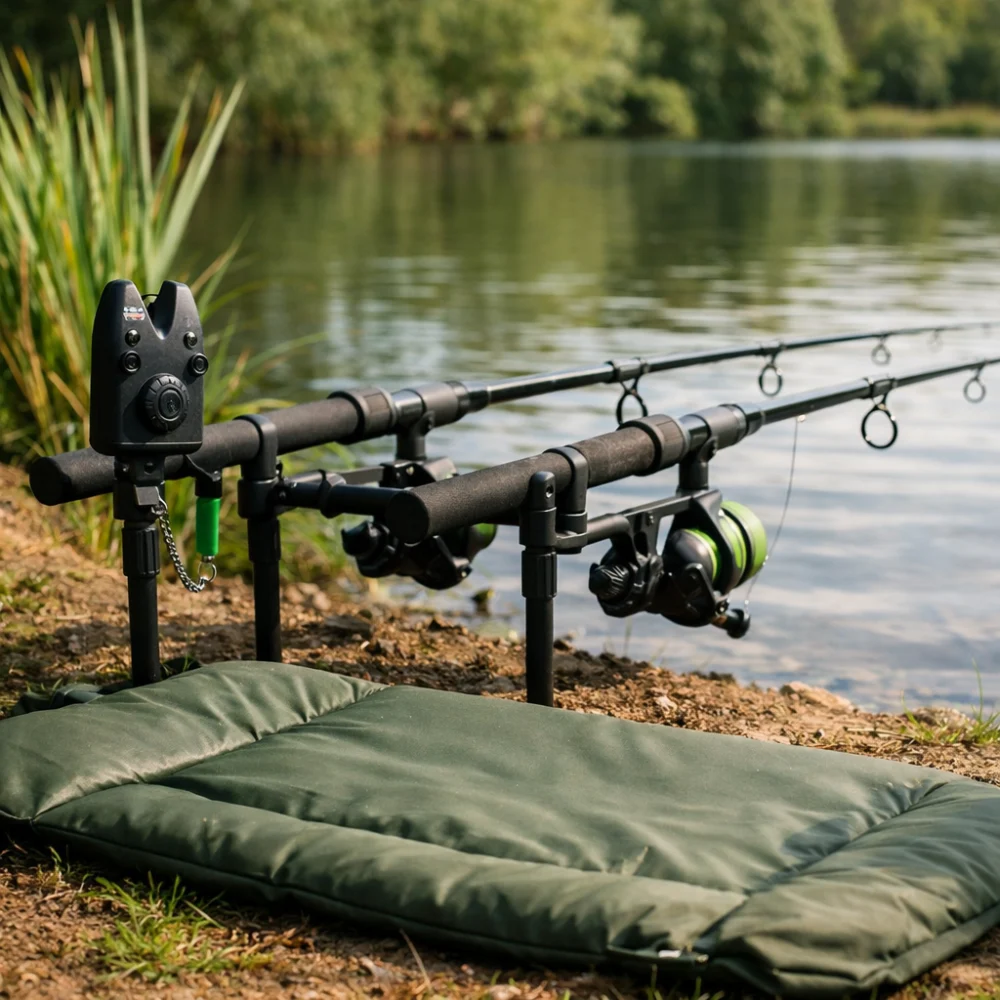
Fishing bite alarms are designed to alert you when a fish takes line, letting you fish more comfortably while keeping an eye on the rods. They are especially useful when you are fishing with more than one rod, fishing at night or wanting a clearer signal than watching the tip alone.
The main buying decision is not just whether you want alarms, but how much control and convenience you need. Some buyers want a simple, compact setup; others want a set with a receiver, extra settings or a more complete bank-side system. The right choice depends on how you fish, how many rods you use and how much adjustment you want.
Because models vary widely, it helps to compare the parts of the system rather than focusing on one feature in isolation. Specifications vary by model, so always check the individual product page before buying.
What matters most when choosing fishing bite alarms?
Start with how you fish, then compare the features that affect everyday use. A straightforward alarm can suit casual sessions well, while a wireless set may be more convenient if you fish from a bivvy or want alerts at a distance. The main trade-off is usually between simplicity and extra control.
| Feature | What It Means | Why It Matters | What To Check |
|---|---|---|---|
| Number of alarms | How many rods or setups the set can cover | Helps match the system to your usual fishing style | Whether you need one alarm or a multi-piece set |
| Volume and tone control | Ability to change how loud or how the alert sounds | Makes it easier to suit conditions and personal preference | Range of adjustment and how easy it is to set |
| Wireless receiver | A handheld or bank-side unit that repeats the alarm signal | Useful when you are away from the rods or fishing in low light | Whether a receiver is included and how the system is paired |
| Sensitivity settings | How readily the alarm reacts to movement or line movement | Helps balance responsiveness with avoiding unnecessary alerts | Whether sensitivity is adjustable and how it is described |
| Indicator lights | Visual cue that shows an alert | Useful in dim conditions or when sound needs to stay low | Whether the light is visible enough for your usual fishing environment |
| Included extras | Items such as hangers, cases or batteries | Can make a set more convenient to use from day one | Exactly what is included in the box |
Key decision criteria explained
Simple set or fuller system
Basic bite alarms suit buyers who want a straightforward alert and minimal setup. A fuller system may include several alarms and a receiver, which can be more convenient if you fish with multiple rods or want alerts away from the banksticks. The trade-off is usually between convenience and the extra parts you need to carry and manage.
Sound, tone and volume control
Adjustable sound helps you tune the alarm to your surroundings. A quieter setting may suit close-range sessions or social venues, while a louder setting can be easier to notice outdoors. The key question is whether the adjustment range is enough for your kind of fishing, not whether a model simply has a volume knob.
Visible alerts and night use
Many buyers value visual indication as much as sound, especially if they fish after dark or want a quick glance from a shelter. Look at whether the alarm offers clear light signalling and whether the display is easy to notice from your normal position. If you fish mostly in daylight, this may matter less than clarity of sound and ease of setup.
Power and included batteries
Power source affects convenience over time. Some products are supplied with batteries, while others may require you to source them separately. Check what is included so you can compare the real out-of-box value rather than assuming every set is ready to use immediately.
Product types and variants
Within this category, the main differences are usually in how the alarms are packaged and controlled rather than in a completely different product form.
- Single alarms suit anglers who only need one rod monitored or want a simple replacement.
- Multi-alarm sets suit anglers fishing several rods who want matched alerts across the setup.
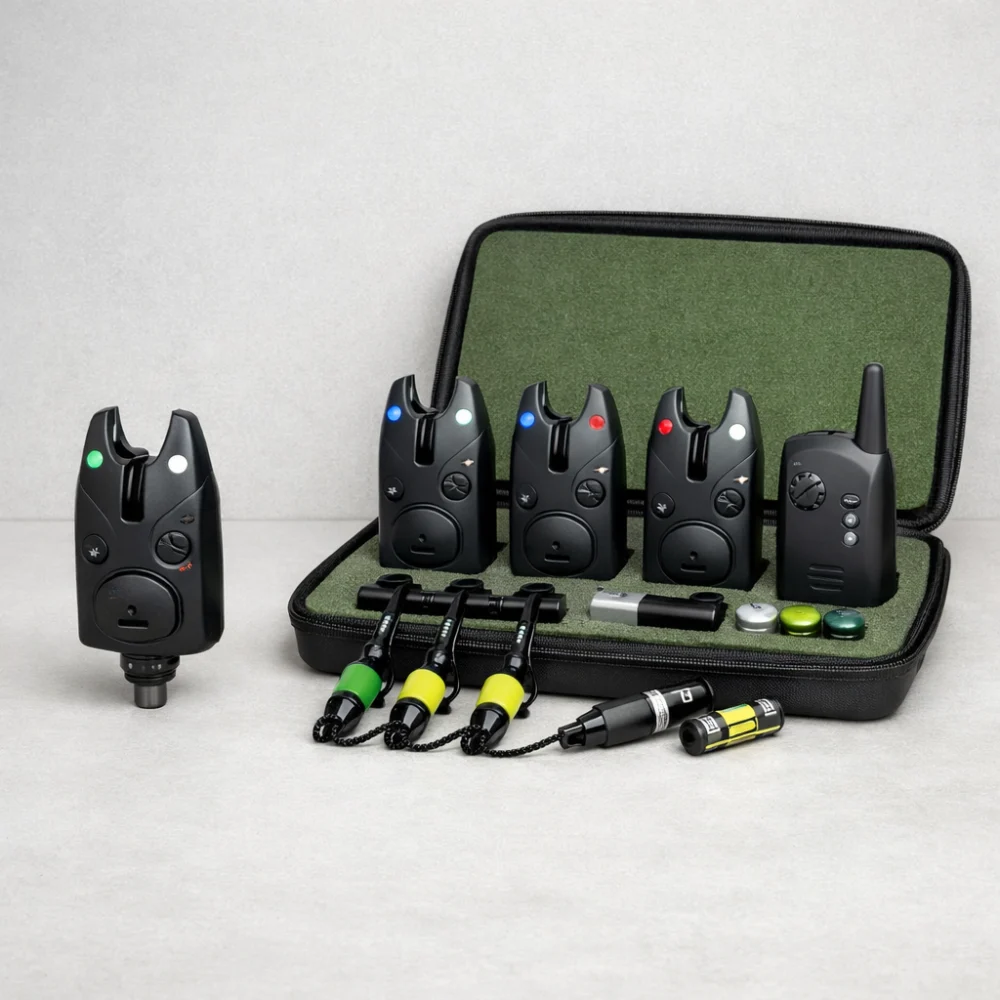
- Wireless sets with receiver suit buyers who want alerts away from the rods or prefer a more complete system.
- Alarms with extras may include hangers, cases or batteries, which can improve convenience.
These are practical distinctions rather than fixed quality levels. A simpler product can be the right choice if you do not need the extra features.
Which type suits which buyer?
| Buyer need | What to prioritise | Why |
|---|---|---|
| Beginner or occasional angler | Ease of use, clear basic alerts, simple setup | Less to adjust and fewer parts to manage |
| Multi-rod angler | Matched multi-piece set and consistent controls | Makes it easier to keep the setup uniform |
| Night or low-light fishing | Sound plus visible indication | Helps you notice activity without relying only on the rod tip |
| Buyer wanting convenience | Receiver, included batteries and useful extras | Reduces what you need to source separately |
| Replacement shopper | Compatibility with your current style of use | Focuses the choice on function rather than buying a full new system |
Common mistakes and misunderstandings
- Focusing only on loudness. A louder alarm is not always more useful than one with better control over tone and sensitivity.
- Assuming every set includes everything. Some products include batteries or extras, while others do not, so check the listing carefully.
- Choosing a wireless system without needing it. A receiver is useful for some anglers, but it adds cost and complexity if you only fish close to the rods.
- Ignoring the number of rods you actually use. Buying more alarms than you need can add clutter, while buying too few can mean replacing the set sooner.
Safety and suitability caveats
Fishing bite alarms are a convenience item, not a substitute for paying attention to your fishing setup. Check that the product suits the way you fish, especially if you use multiple rods, fish at night or want a receiver. If you fish in changing weather or damp conditions, it is sensible to read the individual product details carefully for any guidance on use and care.
Maintenance, storage and lifespan considerations
General care is usually simple, but it still affects value. Keep alarms clean and dry, store them safely between trips and check whether batteries need to be removed when not in use. If a set includes a case or protective pouch, that can help with transport and storage. Over time, the parts you handle most often, such as clips or switches, are worth checking for wear.
How to compare options efficiently
- Decide how many rods you need to cover and whether you want a single alarm or a set.
- Choose between a basic alert and a system with a receiver or extra convenience features.
- Compare sound, tone, sensitivity and visual indication against where and how you fish.
- Check what is included in the box so you understand the real setup cost and convenience.
- Read the individual product page to confirm the details that matter most to you.
Summary buyer decision checklist
- Does the set match the number of rods you use?
- Do you want a simple alarm or a wireless receiver system?
- Are sound, tone and sensitivity easy enough to adjust for your needs?
- Is a visual alert important for your usual fishing conditions?
- Are batteries, hangers or other extras included?
- Does the product page confirm the details you care about most?
Frequently asked questions
Do I need a wireless receiver?
Not necessarily. A receiver is most useful if you want alerts away from the rods or you like having a central unit nearby. If you usually stay close to your rod rests, a simpler alarm can be enough.
Are bite alarms suitable for night fishing?
They can be very useful at night because they give sound and, on some models, a visual signal as well. The important point is to check how easy the indicator is to see in low light and whether the sound can be set comfortably.
How many bite alarms should I buy?
That depends on how many rods you normally fish. If you only use one rod, a single alarm may be enough; if you fish multiple rods, a matched set can be more practical. Buying for your normal setup is usually better than buying more than you need.
What should I check before buying a set?
Look at what is included, how many alarms are in the pack, whether there is a receiver and whether the alert settings suit your fishing. It is also worth checking the power requirements so you know whether batteries are supplied.
Are more features always better?
Not always. Extra functions can be helpful, but they also add cost and complexity. A simpler model may be the better choice if you mainly want a clear, reliable alert without extra setup.
Can I use a bite alarm as a replacement for watching the rod tip?
It helps, but it does not remove the need to stay attentive to your tackle and fishing conditions. Think of it as a useful aid rather than a complete replacement for observing your rods.

