
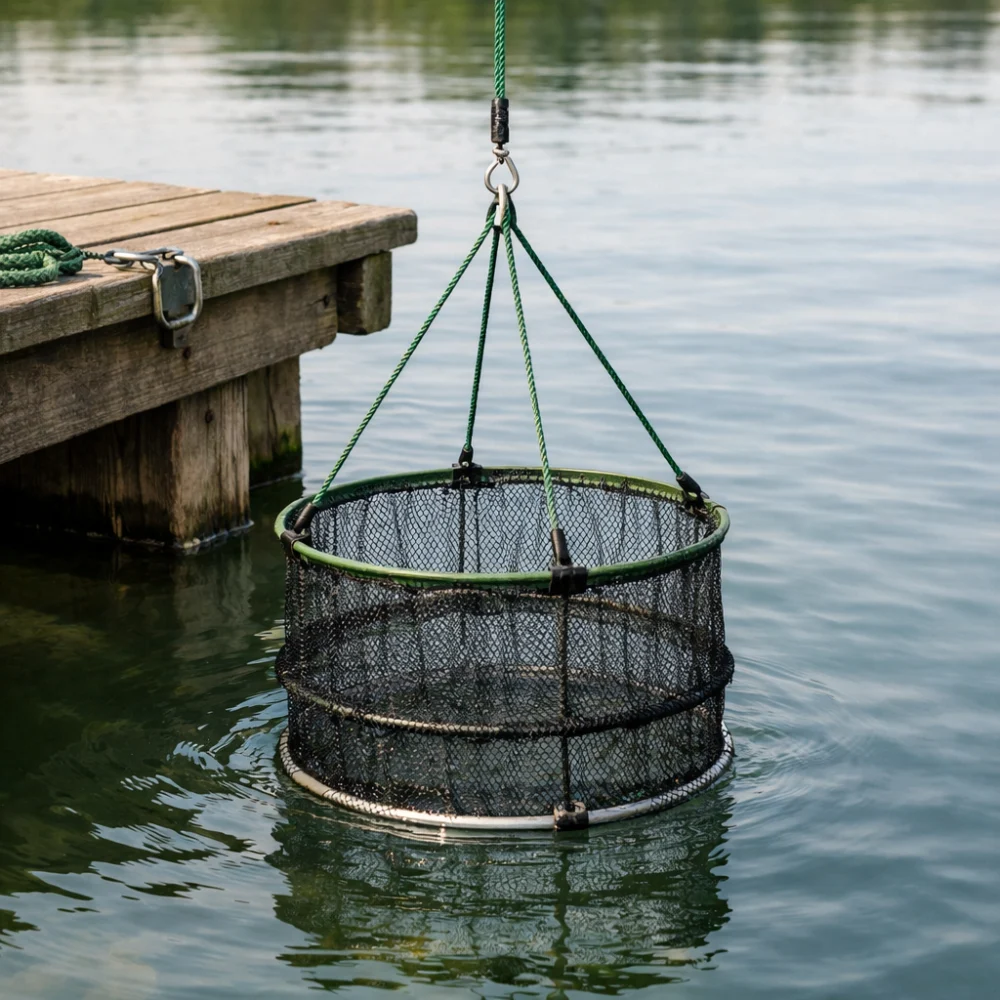
Drop nets are a practical choice when you want to lower a net into the water rather than cast or scoop from the bank. They are commonly used from piers, walls, marinas and other places where a straight drop can be more useful than a traditional landing net.
Because the category covers a few different uses, the right choice depends on what you plan to catch, where you will use it and how you want to deploy it. Some buyers want a simple collapsible net for occasional use, while others need a sturdier setup for repeated lowering and retrieval.
This guide focuses on the buying decisions that matter most so you can compare options quickly and avoid choosing a net that suits the wrong fishing situation.
What should you look for in a drop net?
The best starting point is to match the net to your fishing spot and target catch. A drop net for a high pier or wall needs to be easy to lower and retrieve, while a net for crabs, shrimp or small bait species may need a different shape and mesh style. Specifications vary by model, so always check the individual product page before buying.
| Feature | What it means | Why it matters | What to check |
|---|---|---|---|
| Intended use | Whether the net is meant for fish, crabs, bait or general drop use | Different uses can call for different shapes, mesh and handling methods | Read the product description for the intended species and fishing style |
| Size and shape | The overall dimensions and whether the net opens wide or packs compactly | Affects what you can land or collect and how easy it is to manage from height | Check the stated measurements and whether the shape suits your spot |
| Mesh style | The netting pattern and openness of the mesh | Influences how the catch is contained and how water flows through the net | Look for the mesh description and consider the size of the intended catch |
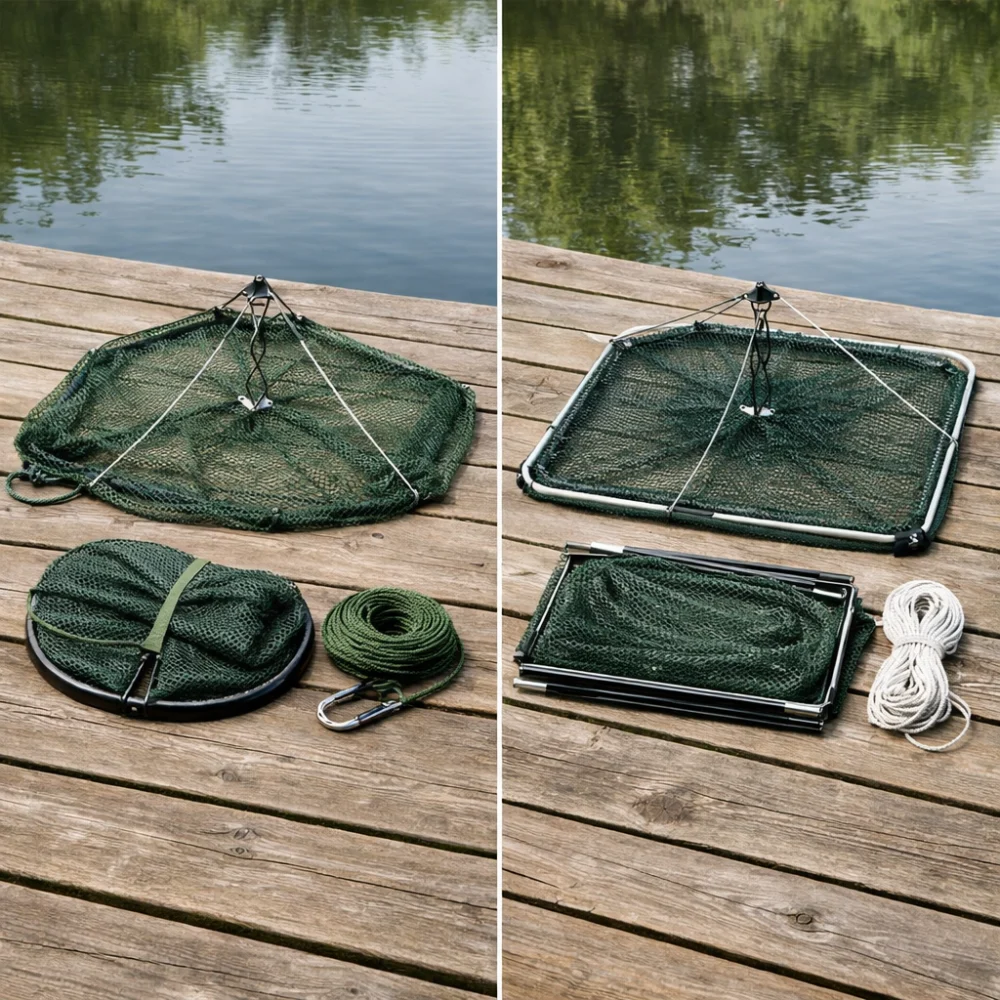
| Frame or foldability | Whether the net folds, collapses or keeps a fixed shape | Changes storage convenience and how quickly it can be set up | See whether the product is foldable, collapsible or rigid |
| Rope or line setup | How the net is lowered and retrieved | Important for control, comfort and ease of use from a height | Check whether a rope, line or handle is included and how it is attached |
| Material and finish | The netting and any support materials used | Helps you judge durability, handling and cleaning needs | Review the material information on the individual listing |
Key decision criteria explained
What are you trying to catch?
The first decision is the simplest one: fish, crabs, shrimp, bait or mixed use. A net that is comfortable for one task may be awkward for another, especially if the mesh or opening is designed around smaller or larger catches. If you mainly want a bait or crab net, you may not need the same structure that a larger fish landing setup would use.
How will you use it?
Drop nets are often used from piers, walls and harbour edges, where the key issue is control rather than casting distance. A compact design can be easier to store and lower, while a larger design may offer more working room once it is in the water. Think about the height of the drop, the space around your position and whether you need to lift the net repeatedly.
How important is portability?
Some buyers want a net that packs away neatly in a bag or tackle box, especially if they travel light. Others care more about stability and ease of handling than packed size. A more compact net can be convenient, but it may feel less substantial in use, so it is worth balancing storage convenience against the way you actually fish.
Do you need a simple or more complete setup?
Some drop nets are sold as a straightforward net only, while others may include rope, line or a bait bag as part of the package. A more complete setup can save time, but it is still worth checking that every included part is suitable for your intended use. If you already own suitable cord or accessories, a simpler net may be enough.
Product types and variants
There is no single standard drop net design, so most choices come down to practical variation rather than dramatic product families.
- Foldable or collapsible drop nets suit anglers who want easier storage and transport. Their main advantage is convenience, while their limitation is that they still need to be checked for stability and size.
- Fixed-shape or framed nets can feel more straightforward in use. They may suit buyers who prefer a more rigid setup, although they can be less compact when stored.
- Smaller bait or crab-style nets are aimed at lighter catches and compact handling. Their limitation is that they are not a substitute for a larger landing solution if you are dealing with bigger fish.
Which drop net suits which buyer?
| Buyer need | What to prioritise | Why it helps |
|---|---|---|
| Occasional pier angler | Simple setup, easy storage, clear product description | Makes the net easy to carry and use without overcomplicating the choice |
| Crab or bait collector | Size suited to small catches, practical mesh, manageable retrieval | Helps the net match the task rather than wasting space on unnecessary bulk |
| Regular shore or marina user | Comfortable handling, reliable lowering and retrieval, suitable dimensions | Better for repeated use where convenience and control matter |
| Buyer with limited storage | Foldability and compact packed size | Makes transport and home storage easier between trips |
Common mistakes and misunderstandings
- Choosing by general size alone. Bigger is not always better if the net is awkward to lower or harder to store. Match the size to the fishing spot and the catch you expect.
- Ignoring the intended use. A net that sounds suitable for one species or task may not be ideal for another. Check the description carefully instead of assuming all drop nets behave the same way.
- Overlooking the retrieval method. If the line or handle setup does not suit your location, the net may be inconvenient to use. Look at how it is lowered and lifted, not just the net body itself.
- Assuming accessories are included. Some listings may include rope, line or a bait bag, while others may not. Check the contents list before comparing value.
Safety and suitability caveats
Drop nets are usually chosen for convenience and access, but the right model still depends on where you will use it. A net that suits a low wall may not feel as manageable from a higher pier, and a lightweight design may not be ideal if you want frequent, repeated use. Check the product page for the intended fishing style, any included accessories and any notes about how it is meant to be deployed.
Maintenance, storage and lifespan considerations
General care matters because fishing gear often lives in damp conditions. Rinsing after use, letting the net dry before storage and keeping it out of prolonged moisture can help it stay in better condition. If the product includes rope, fittings or a folding mechanism, those parts may also influence how easy it is to store and maintain over time.
How to compare options efficiently
- Start with the use case: fish, crabs, bait or mixed shoreline use.
- Check the dimensions and shape against your fishing spot and storage space.
- Compare the mesh, structure and retrieval setup for ease of handling.
- Look for any included accessories and confirm what is actually supplied.
- Read the individual product page carefully before deciding.
Summary buyer decision checklist
- Does the net suit your intended catch?
- Is the size practical for the place you fish?
- Will it be easy to lower, retrieve and store?
- Do the mesh and structure match the job you want it to do?
- Are any rope, line or extras included if you need them?
- Have you checked the individual product page for the full specification?
Frequently asked questions
What is a drop net used for?
A drop net is lowered into the water rather than cast out. It is often used from piers, walls or other elevated places where a straight drop is more practical than a throw or scoop.
Is a drop net the same as a landing net?
Not always. A landing net is often used to scoop or cradle a fish, while a drop net is typically lowered from above. Some products sit close to the boundary between the two, so the product description matters.
Can I use a drop net for crabs or bait?
Some drop nets are suitable for crabs, shrimp or bait collection, but not all are designed the same way. Check the intended use and mesh details to make sure the product fits the type of catch you want.
Why does foldability matter?
Foldable or collapsible nets are easier to carry and store, which can be useful if you travel with limited tackle. The trade-off is that you should still check whether the folded design feels convenient and sturdy enough for your use.
Do I need to buy rope separately?
Sometimes yes, sometimes no. Some listings include a line or rope, while others focus on the net itself, so it is worth checking the contents list rather than assuming a full kit.
What should I check before buying online?
Focus on the intended use, size, shape, foldability and what is included. If anything is unclear, the individual product page is the best place to confirm the details before you choose.

