
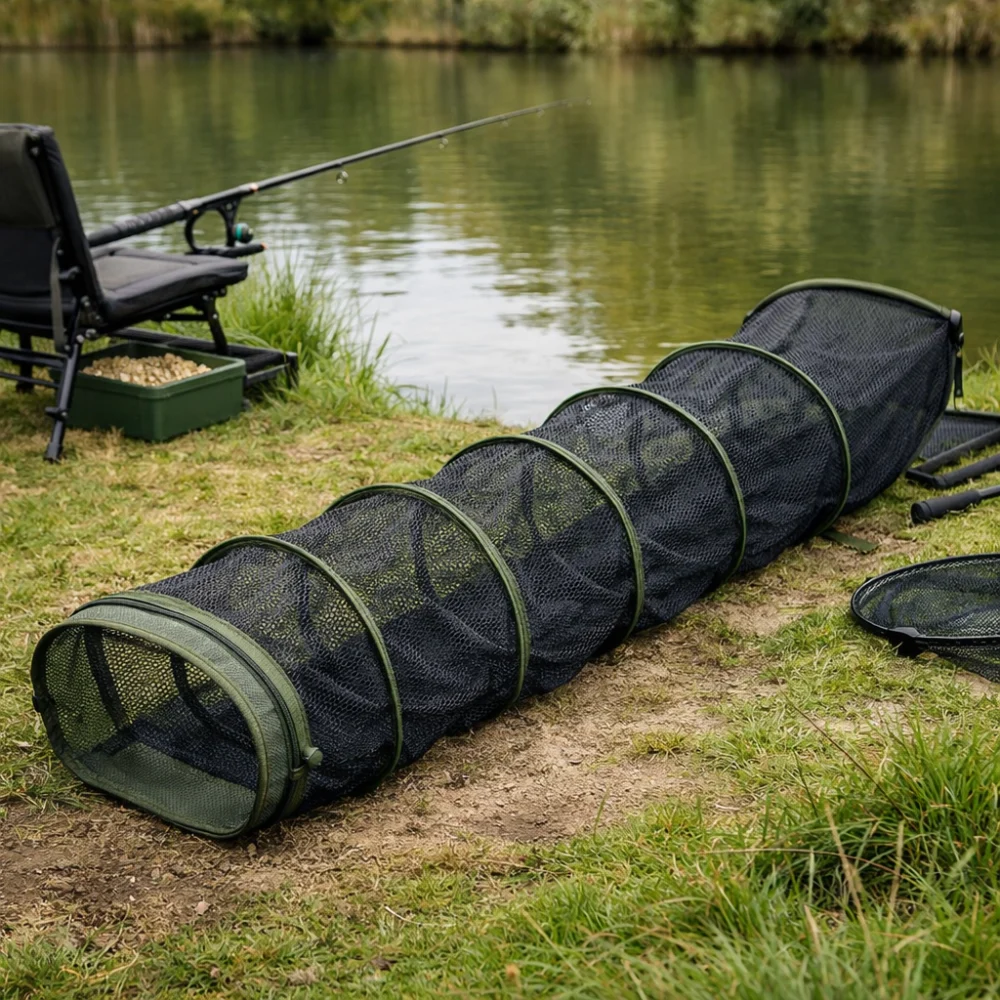
Keep nets are a simple but important part of many anglers’ kit, especially when fish need to be held safely for a period before weighing, photography or final return. The right choice depends on the species you target, the venue rules you fish under and how you prefer to fish from the bank.
This guide focuses on the buying decisions that actually make a difference: size, material, mesh, shape, fixing method and ease of handling. It is not about landing nets or other fishing accessories, and it does not assume every keep net is suited to every style of angling.
What should you look for in a keep net?
Start with the fish you expect to retain and the conditions you usually fish in. A larger or longer net may suit regular coarse or carp fishing, while a more compact option can be easier to transport and position on busy swims. The most useful starting point is to balance capacity with practicality, because a net that is awkward to manage is rarely a good choice on the bank.
Specifications vary by model, so always check the individual product page before buying.
| Feature | What it means | Why it matters | What to check |
|---|---|---|---|
| Length and capacity | How much fish the net can hold and how deep it reaches | Helps match the net to your quarry and session style | Overall length, diameter or section size, and whether it suits your intended use |
| Mesh type | The material and weave of the netting | Affects fish support, water flow and handling | Whether the mesh is described as fish-friendly, coarse, fine or micro mesh |
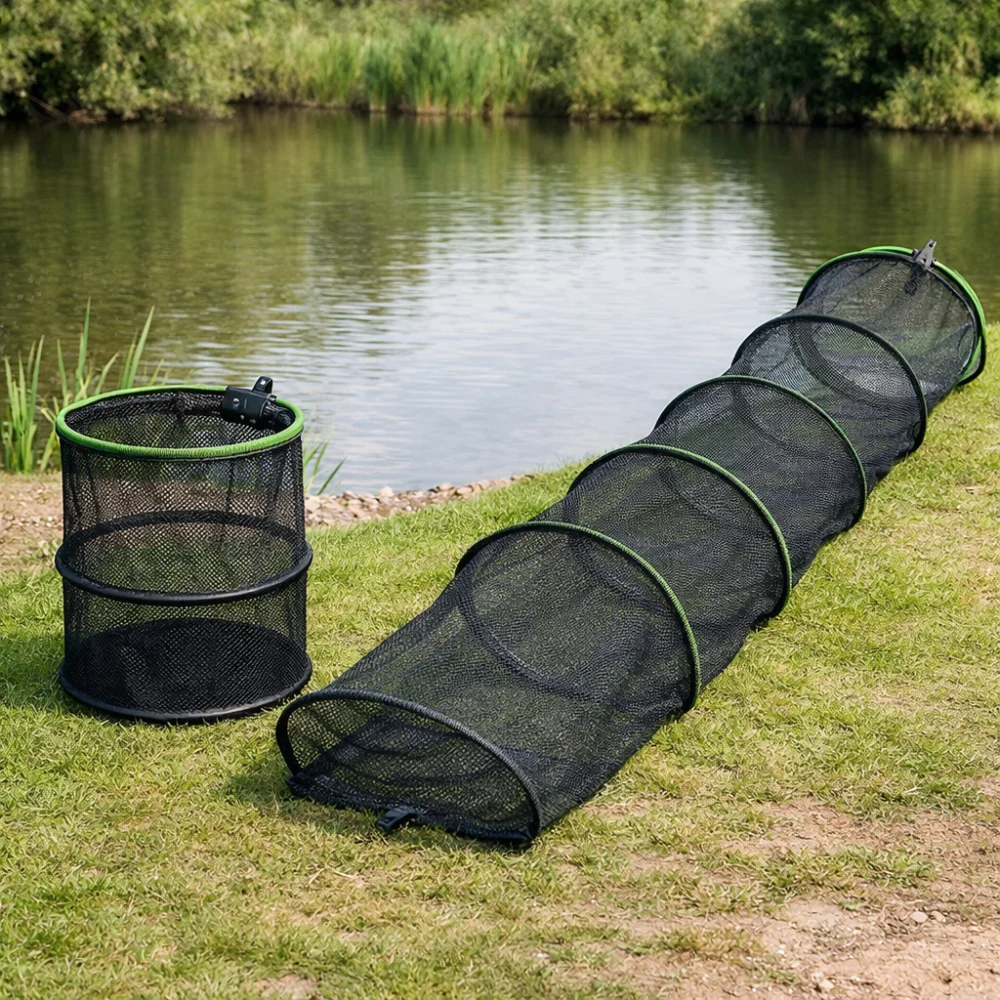
| Shape | Round, square or rectangular profile | Can influence how the net sits, stores and handles fish | Which shape feels manageable in your swim and suits the species you target |
| Fixing and support | How the net attaches to a bank stick or similar support | Determines stability and ease of positioning | Head design, thread fitting and any included support hardware |
| Portability | How easy it is to carry, dry and store | Important for anglers who travel light or fish often | Foldability, packed bulk and whether a carry bag is included |
| Care and drying | How the net can be cleaned and stored between sessions | Helps reduce odour and keeps the net in better condition | Drying space, cleaning access and the material’s tendency to hold water or silt |
Key decision criteria
Size and intended use
The first question is simple: what are you using the keep net for? If you fish matches or longer sessions, capacity and length become more important than absolute compactness. If you mainly fish short local sessions, a smaller net may be easier to transport and quicker to set up. The trade-off is usually between convenience and the amount of room available for fish.
Mesh and fish handling
Mesh affects both how the net performs in the water and how it feels when fish are placed in it. Finer or fish-friendlier meshes are often preferred where protection and support are a priority, while more open mesh may drain differently and feel less bulky. Check the product description for the mesh wording rather than assuming all nets behave the same.
Shape and stability
Shape influences how the keep net sits in the water and how easy it is to organise at the bank. Some anglers prefer a profile that feels stable in their swim, while others want the simplest possible shape for packing and storing. Choose the shape that fits your setup, not just the one that looks most familiar.
Attachment and support
Many keep nets rely on a bank stick or similar support, so the head fitting is worth checking carefully. A secure fixing helps the net stay where you want it and makes it easier to position at a sensible angle. If you already use a bank stick system, confirm that the thread or head design suits it.
Product types and variants
There are a few broad styles within this category, and the main differences are practical rather than dramatic.
- Compact keep nets are easier to transport and can suit shorter sessions or lighter tackle.
- Longer keep nets may suit anglers who need more holding space over a full session or during matches.
- Fish-friendlier mesh styles are often chosen when the angler wants softer support and easier water flow around the fish.
- Foldable or more portable designs can be useful when storage space is limited or when you move swims often.
These are broad buying patterns rather than fixed rules. The right type depends on the species, venue expectations and how much kit you want to carry.
Which keep net suits which buyer?
| Buyer need | Likely priority | What to favour |
|---|---|---|
| Match angler | Capacity and consistency | Longer or more structured options that suit repeated use during a session |
| General coarse angler | Balanced practicality | A mid-sized net that is easy to handle and store |
| Carp angler | Fish support and suitability | Mesh and size that align with the fish you expect to hold |
| Occasional angler | Ease of use | A straightforward design that packs down easily and is simple to attach |
| Angler with limited storage | Compact transport | Foldable or less bulky options with manageable drying needs |
Common mistakes and misunderstandings
- Choosing on length alone can lead to a net that is awkward for your setup. Check the rest of the design, not just one number.
- Assuming all mesh is the same can cause disappointment when the net feels too open or too heavy for your preference. Read the description carefully.
- Forgetting the fixing system can make a net hard to use on the bank. Make sure the attachment suits your support gear.
- Ignoring drying and storage can leave you with a net that is awkward to maintain between trips. Think about where it will be kept after use.
Safety and suitability caveats
Check that the keep net is suitable for the species and venue rules you fish under, as requirements can vary. If you fish in busy or restricted swims, think about how much room the net will need in the water and on the bank. A product that looks suitable in principle may still be a poor fit if it does not suit your local conditions or existing tackle.
Maintenance, storage and lifespan considerations
Keep nets usually need basic care after use, especially if they have been in muddy or silty water. Allowing the net to dry properly before storage can help with odour and general condition. It is also worth thinking about how easy the material is to rinse and where you will keep it between trips, particularly if space at home is limited.
How to compare options efficiently
- Decide what kind of fishing you will use the keep net for.
- Compare size, shape and mesh type against that use.
- Check how the net attaches and whether it suits your existing support gear.
- Consider portability, drying and storage as part of the choice.
- Read the individual product page carefully before deciding.
Keep net buying checklist
- Does the size suit the fish and session length you expect?
- Is the mesh type appropriate for your preferred handling style?
- Does the shape work in your swim and on your bank setup?
- Is the fixing method compatible with your support gear?
- Will it be easy to carry, dry and store after use?
- Have you checked the individual product page for model-specific details?
Frequently asked questions
What is a keep net used for?
A keep net is used to hold fish in the water for a short period during a fishing session, usually before weighing or return. It helps keep fish together in a controlled way while the angler continues fishing. The exact suitability depends on the species, venue rules and the design of the net.
How do I choose the right size?
Think about the fish you expect to hold and how long they may need to stay in the net. A longer or larger net can suit more demanding sessions, while a smaller one is often easier to carry and handle. The right size is the one that suits your fishing rather than the largest option available.
Is mesh type important?
Yes, because mesh affects handling, support and how the net behaves in the water. Some buyers prefer finer or fish-friendlier mesh, while others focus on ease of draining and packing. Read the wording on the product page rather than assuming the mesh will feel the same across different models.
Do I need a bank stick or support?
Many keep nets are designed to be positioned with a bank stick or similar support, so it is sensible to check this before buying. The attachment matters because it affects how securely the net can be set up. If you already own support gear, make sure the fitting is compatible.
Can I use one keep net for every type of fishing?
Not always. A keep net that suits match or coarse fishing may not be ideal for every venue, species or session length. It is better to choose a net that fits your typical use than to expect one design to suit every situation.
What should I check before buying online?
Check the size, mesh type, shape, attachment method and any details about portability or storage. It also helps to look at the product description for species or venue guidance where provided. Specifications vary by model, so always check the individual product page before buying.

