
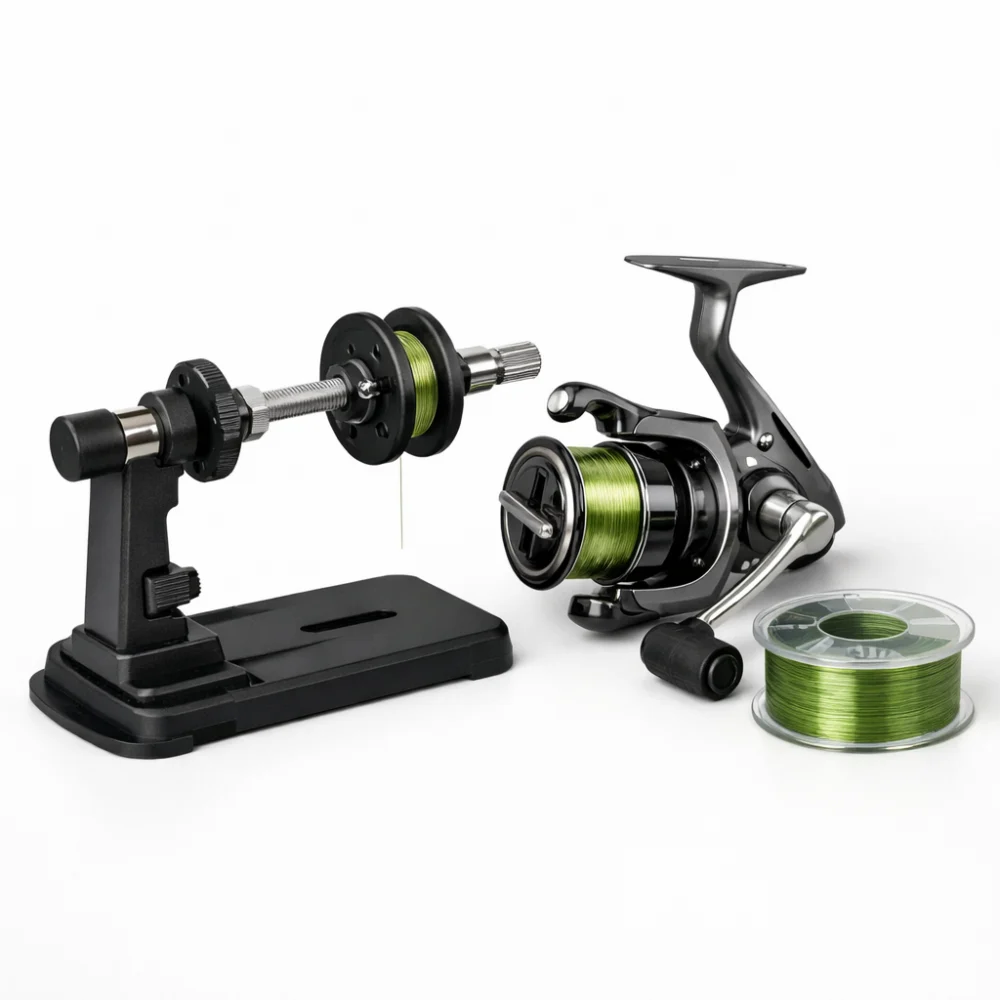
Fishing spoolers and winders are practical tools for putting line onto a reel more neatly and with less fuss than doing it by hand. They are mainly useful for anglers who want a tidier setup, easier line changes or a steadier way to manage spools at home or on the bank.
Because different designs suit different reel styles and line-handling preferences, it helps to look at support, stability and adjustability rather than focusing on appearance alone. The right choice depends on how often you respool, what kind of reel you use and whether you want a simple portable aid or a more controlled winding setup.
What should you look for in a fishing spooler or winder?
Start with the type of reel and spool you want to use it with, then compare how securely the tool holds the line spool and how smoothly it helps the reel take line. For many buyers, the main trade-off is between compact portability and a more stable, adjustable setup. Specifications vary by model, so always check the individual product page before buying.
| Feature | What it means | Why it matters | What to check |
|---|---|---|---|
| Reel and spool support | How the tool holds the line spool and works with the reel during winding | Helps the line go on evenly and reduces awkward handling | Whether it is suited to your reel style and the spool sizes you commonly use |
| Stability | How firmly the tool stays in place while line is being wound | A steadier setup is usually easier to control and less frustrating to use | Clamp, suction or other mounting method, if shown on the product page |
| Adjustability | The amount of positioning or tension control available | Can make it easier to line up different spool and reel combinations | Any adjustable arms, angle settings or tension features listed by the seller |
| Portability | How easy the tool is to carry and store | Useful if you spool line away from a workbench or move between venues | Size, folding design and whether it is intended for home or mobile use |
| Build and finish | The materials and construction approach used | Usually affects how solid the tool feels in use and how long it may stay usable | Material description, moving parts and general construction details |
Key decision criteria explained
How you will actually use it
If you only respool occasionally, a straightforward tool may be enough. If you change line often, use several reels or want a smoother routine, a more stable and adjustable design can save time and reduce hassle. Think about whether you need something for occasional home use or a tool that can travel with your tackle.
Compatibility with your reel and line setup
The most important compatibility question is whether the spooler or winder is intended for the kind of reel you use. Some buyers are looking for help with spinning reels, others with baitcasting or more general line-winding tasks. The product page should make clear what it is designed to support, and it is wise to check that against your own setup rather than assuming every spooler works the same way.
Control over line handling
A good winding setup should help you keep the line under sensible control while you spool. That does not mean every tool needs multiple adjustments, but it should feel secure and predictable enough that the line feeds on in a controlled way. If you often swap between different line types or spool sizes, adjustability becomes more useful.
Ease of mounting and storage
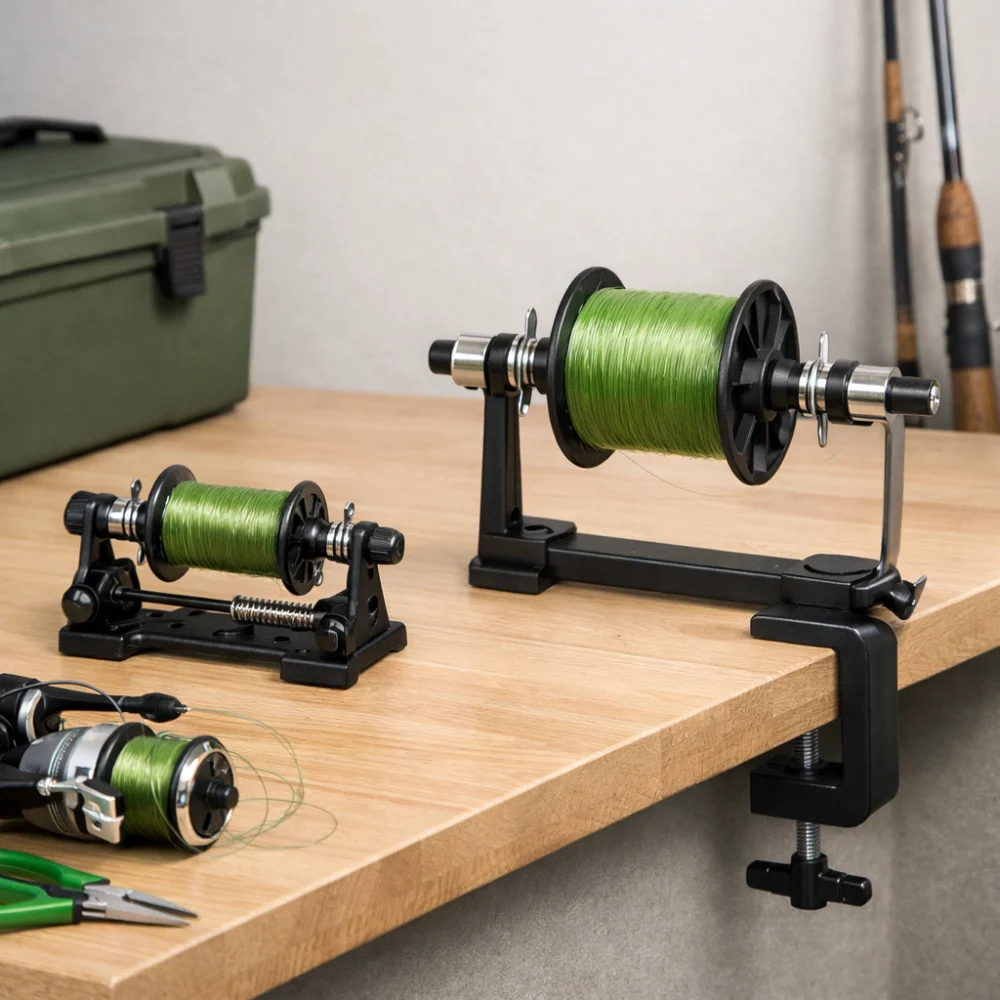
Some anglers prefer a clamp-style setup, while others may want a compact tool that stores easily in a bag or box. The right answer depends on where you prepare your reels and how much space you have. A more portable design can be convenient, but a more fixed setup may feel easier to use when you are working carefully at home.
Common types and variants
Within this category, you will usually see a few broad approaches rather than entirely different product families.
- Portable spoolers and winders suit anglers who want a compact tool that can be moved or stored easily.
- Clamp or mount-based tools suit buyers who want a steadier setup on a work surface.
- Adjustable spool systems suit people who use different reel or spool arrangements and want more flexibility.
- Simple line holders or organisers suit lighter-duty use, where convenience matters more than a full winding station.
The main limitation is that more compact tools may be simpler but less anchored, while more substantial tools may take up more space. The best choice is the one that matches how you maintain your tackle, not the one with the most complicated design.
Which type suits which buyer?
| Buyer need | What to prioritise | Why it helps |
|---|---|---|
| Occasional home use | Simplicity, easy storage and basic stability | Enough support for infrequent line changes without adding extra complexity |
| Frequent respooling | Better control, steadier mounting and clearer adjustability | Makes repeated line changes less awkward and easier to repeat consistently |
| Limited storage space | Compact size and portability | Easier to keep in a tackle box, bag or small workshop area |
| Multiple reel types | Flexible setup and good compatibility information | Reduces the chance of buying a tool that only suits one arrangement |
Common mistakes and misunderstandings
- Choosing only by size or appearance. A compact tool may look convenient, but stability and reel support usually matter more in use.
- Assuming all spoolers are universal. Some are more flexible than others, so it is worth checking the stated reel and spool compatibility.
- Overlooking how it is mounted or supported. A tool that slips or shifts can make line winding more awkward than expected.
- Ignoring how often you will use it. A very basic model may be fine for occasional use, while frequent line changes may justify a more refined setup.
Safety and suitability caveats
These are buying aids rather than safety equipment, so the main concern is suitability for your setup. Check the product description carefully if you plan to use it with heavier tackle, different reel styles or a particular mounting arrangement. If a product page leaves out an important detail, treat that as a sign to choose conservatively rather than guessing.
Maintenance, storage and lifespan considerations
Most spoolers and winders should be kept clean and stored dry so moving parts and contact points stay in good condition. If a design uses clamps, pads or other gripping parts, those may wear over time and are worth checking before you buy. A simple, well-stored tool can be easier to keep ready for the next respool than a more complex one that is left loose in a tackle bag.
How to compare options efficiently
- Decide how often you will use the tool and where you will use it.
- Check whether it suits your reel type and the spools you normally handle.
- Compare stability, adjustability and portability rather than looking at the name alone.
- Read the individual product page for the exact setup, mounting method and any limitations.
- Choose the simplest option that genuinely fits your needs.
Summary buyer decision checklist
- Does it suit the reel type you use?
- Will it hold the spool securely enough for your needs?
- Is the mounting or support method practical for where you will use it?
- Do you need portability, or is a steadier setup more important?
- Have you checked the individual product page for the exact compatibility details?
Frequently asked questions
Do I need a fishing spooler or winder?
Not every angler does, but it can make line changes neater and less fiddly. If you respool often or prefer a more controlled setup, it is a useful tool to consider.
Are spoolers and winders only for one type of reel?
Not always, but compatibility can vary by model. It is important to check what the product is designed to support rather than assuming it will suit every reel.
Is a portable model less stable?
Not necessarily, but portability and stability are often a trade-off. A compact design may be convenient to carry, while a more fixed setup may feel steadier during use.
What matters more: adjustability or simplicity?
That depends on how many different reels or spools you use. If your setup is fairly consistent, simplicity may be enough; if you switch between different arrangements, adjustability can be more helpful.
Can I use one for occasional line changes only?
Yes, many buyers choose these tools exactly for that reason. If you only respool occasionally, a straightforward design is often enough as long as it suits your reel and storage needs.
What should I double-check before buying?
The most useful checks are compatibility, mounting method, stability and whether the overall design matches how you actually prepare your tackle. Those details usually matter more than the product name or general appearance.

