
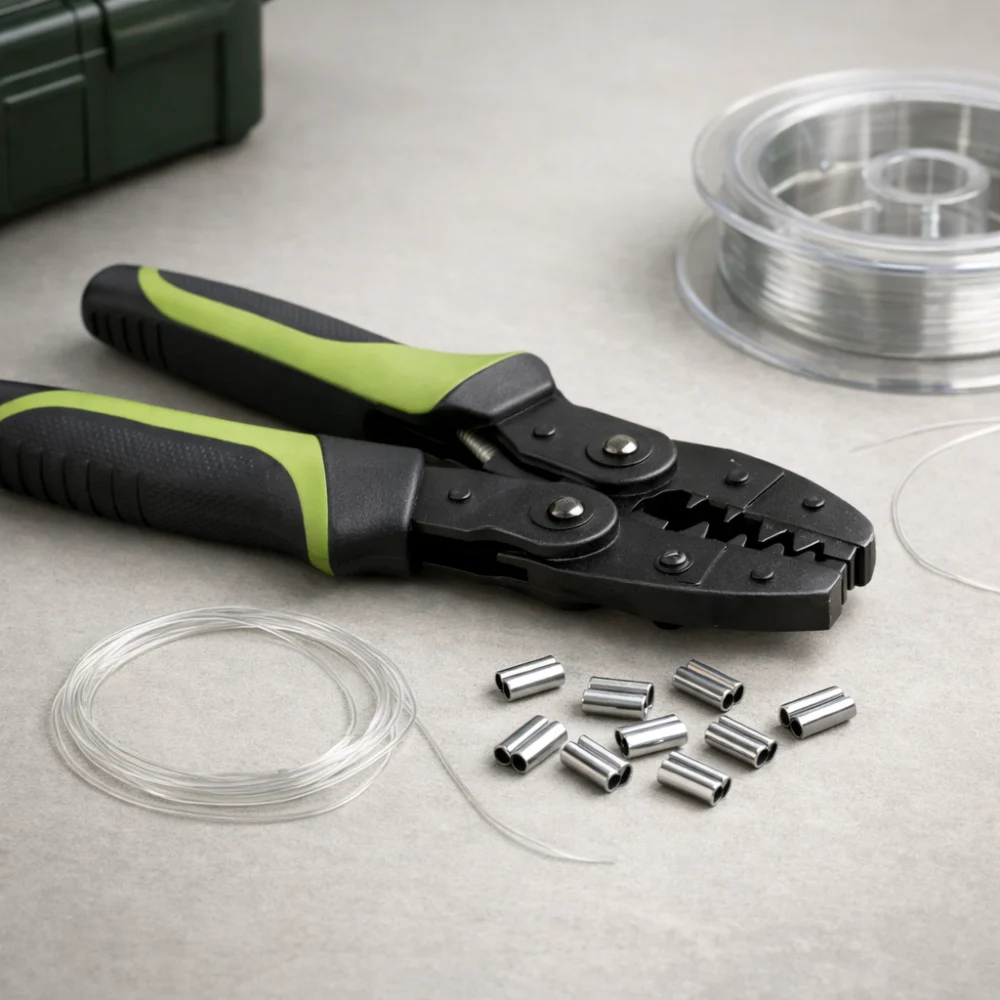
Fishing crimping tools are for anglers who want a neat, repeatable way to secure sleeves or crimps on leaders, hook links and rig materials. They are used where a controlled crimp is preferred over knotting, especially when the material is stiff, heavy or awkward to tie cleanly.
If you are new to crimping, the main decision is not just the tool itself but whether it suits the size and type of crimps you plan to use. A well-matched tool should make it easier to form a secure connection without crushing the sleeve too much or leaving it under-formed.
This guide helps you compare the practical differences that matter most: jaw shape, crimp size range, handle comfort and whether you want a simple tool or a kit with accessories.
What should you look for in a fishing crimping tool?
The best starting point is the crimp size and sleeve type you expect to use. The tool needs to match the crimps you already have in mind, because using the wrong jaw profile or size can make the connection awkward to form. Comfort matters too, especially if you prepare several rigs in one session or want a tool that is easy to control with wet hands.
Specifications vary by model, so always check the individual product page before buying.
| Feature | What It Means | Why It Matters | What To Check |
|---|---|---|---|
| Crimp size compatibility | The sleeve or ferrule sizes the tool is designed to close properly | Matching size helps form a tidy, secure crimp without over-compressing it | Look for the sizes listed on the product page and compare them with your sleeves |
| Jaw design | The shape and profile of the crimping jaws | Different jaws suit different sleeve styles and can affect how evenly the crimp closes | Check whether the tool is intended for single or double barrel crimps, where stated |
| Handle comfort | The grip shape and how the tool feels in use | Comfort helps with control, especially if you crimp often | Look for grip details, handle length and any comfort features mentioned |
| Material and build | The construction of the pliers or crimper | A solid build can feel more controlled and durable in regular tackle use | Check the product description for material and finish details |
| Extra functions | Added features such as a line cutter or sleeve kit | These can be convenient, but they are not essential for everyone | Decide whether you want a standalone tool or a set with accessories |
Key decision criteria explained
Crimp size and sleeve type
The most important question is whether the tool suits the crimps you intend to use. Some anglers want a tool for small sleeves on light rigs, while others need something for heavier leaders or wire-style applications. The key trade-off is flexibility versus precision: a more focused tool may do one job neatly, while a broader set may suit more situations but require closer checking.
Single barrel or double barrel
Crimps are not all shaped the same way. Some tools are designed around single barrel sleeves, while others are better suited to double barrel crimps. Choose based on the sleeves you already use, rather than assuming one tool will suit every crimp style equally well.
Grip and control
Crimping is easier when the tool sits comfortably in the hand and closes smoothly. If you fish in cold or wet conditions, a secure grip can make the job feel less fiddly. For occasional use, a basic tool may be enough; for repeated rig making, comfort and control become more important.
Included extras
Some products are sold as a tool only, while others come with crimps or accessory pieces. A set can be convenient if you are starting from scratch, but it is still worth checking that the included sleeves match the rigs you want to tie. Extra items are useful only if they are the right size and style for your setup.
Types of fishing crimping tools
There are a few broad forms you are likely to see in this category.
- Dedicated crimping pliers: Simple tools focused on compressing sleeves neatly. These suit buyers who know the crimp size they need and want a straightforward option.
- Crimp tool sets: Tools supplied with sleeves or crimps. These can be useful for beginners or anyone replacing old tackle and wanting a matched starting point.
- Multi-function pliers with a crimping section: Handy if you prefer carrying fewer tools, though the crimping function may be only one part of the design.
The practical difference is usually convenience versus specialisation. A dedicated crimping tool may feel more focused, while a broader tool may be useful if you want less kit in your bag.
Which buyer needs suit which features?
| Buyer need | Useful features | What to avoid |
|---|---|---|
| Beginner setting up basic rigs | Clear size guidance, simple design, maybe a kit with matching crimps | Buying a tool without checking sleeve compatibility |
| Regular rig maker | Comfortable handles, reliable jaw alignment, consistent closure | A tool that feels loose or awkward to control |
| Angler using heavier or stiffer materials | Crimp sizes and jaw profiles suited to the material being used | Assuming a small general-purpose tool will suit all leader types |
| Buyer replacing an old tool | Similar crimp style and a familiar grip, or a clearer upgrade in comfort | Changing to a different crimp style without checking the sleeves first |
Common mistakes and misunderstandings
- Choosing the tool before the sleeve: The crimp size matters as much as the pliers. It is better to match the tool to the crimp style you plan to use.
- Assuming all crimps are interchangeable: Different sleeve sizes and shapes may need different handling, so do not rely on guesswork.
- Overlooking comfort: A tool may work on paper but still feel awkward after repeated use.
- Buying extras you do not need: A kit can be useful, but only if the included pieces are relevant to your rigs.
Safety and suitability caveats
Check that the tool is intended for the fishing line, leader or sleeve material you plan to use. A crimp that is too small or too large for the tool can lead to poor results, so product-page details matter here. If you are unsure, start with the sleeve type and confirm the tool is designed for it rather than forcing a close match.
Maintenance, storage and lifespan considerations
Fishing crimping tools are usually straightforward to look after, but they benefit from basic care. Keep them clean and dry after use, especially if they have been near saltwater, and store them where the jaws will not be knocked out of alignment. If a tool includes cutters or moving parts, check whether any cleaning or light maintenance is mentioned on the individual product page.
How to compare options efficiently
- Decide what rigs or leader materials you want to crimp.
- Check the crimp sizes and sleeve style the tool is meant to handle.
- Compare jaw design, grip comfort and any included extras.
- Think about how often you will use it and whether a dedicated tool or a set makes more sense.
- Read the individual product page carefully before buying.
Summary buyer decision checklist
- Does the tool match the crimp size you plan to use?
- Is it suited to the sleeve or ferrule style in your setup?
- Do you want a dedicated tool or a set with accessories?
- Will the handle shape feel comfortable for repeated use?
- Have you checked the individual product page for model-specific details?
Frequently asked questions
Do I need a special tool for fishing crimps?
If you plan to use crimp sleeves or ferrules, a dedicated crimping tool makes the job much easier and more consistent. It helps you form the crimp more cleanly than trying to improvise with general pliers.
Are all fishing crimp tools the same?
No. They can differ in jaw shape, size range, comfort and whether they are made for single or double barrel crimps. The right choice depends on the sleeves and rigs you plan to use.
Should I buy a tool kit or just the pliers?
A kit can be useful if you are starting out or want a ready-made set of matching parts. If you already know the sleeve size you need, a dedicated tool may be the simpler choice.
What should I check before buying?
Check the crimp size compatibility, the sleeve style the tool is meant for and any accessory items included. It is also worth checking the handle design if you expect to use it often.
Can one crimping tool suit every fishing setup?
Not always. Some tools are broad enough for a range of sleeves, but others are better suited to a narrower task. Matching the tool to your actual rig materials is usually the safest approach.
How do I know if a crimp is the right size?
The individual product page should list the sleeve sizes or styles the tool is intended to handle. If that detail is unclear, it is better to choose a product with explicit size information rather than guessing.

