
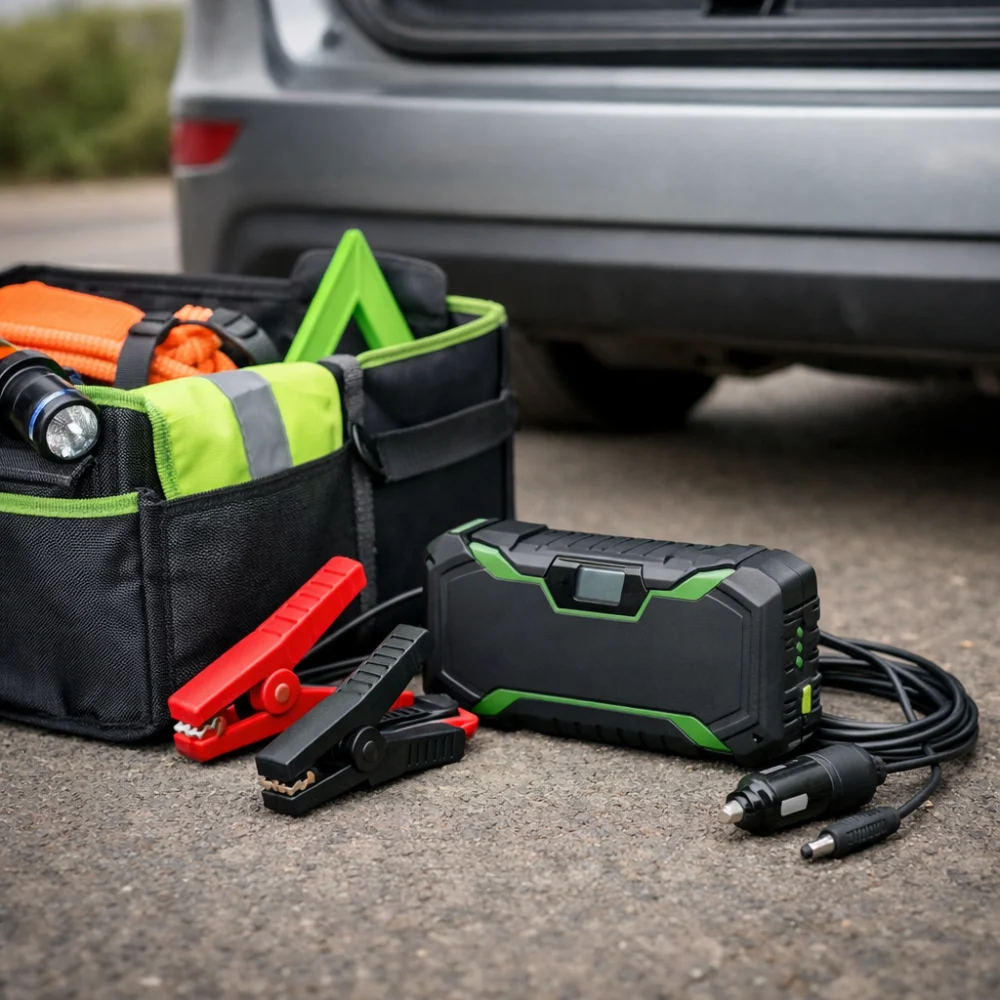
Jump starters are useful for drivers who want a portable way to deal with a flat vehicle battery. They are especially helpful for camping trips, occasional use, emergencies and anyone who wants a backup that does not rely on another vehicle being nearby.
Buying one is less about choosing the most impressive-looking unit and more about matching the starter to your vehicle and your needs. The important questions are how it is intended to be used, what type of vehicle it should support and which extra features are genuinely useful rather than just convenient.
Because products in this category vary quite a lot, it helps to compare the basics before focusing on extras. Specifications vary by model, so always check the individual product page before buying.
What should I look for in a jump starter?
The best starting point is your vehicle type and how often you expect to need the unit. A compact unit can be convenient to store and carry, while a more capable model may suit larger engines or more demanding use. The trade-off is usually between size, simplicity and added features on one side, and higher apparent capability or extra functions on the other.
| Feature | What It Means | Why It Matters | What To Check |
|---|---|---|---|
| Vehicle compatibility | Whether the unit is intended for the vehicle type you need to start | Not every jump starter is a good match for every battery or engine type | Check the individual product page for the intended vehicle use and any stated limitations |
| Starting power | The level of output the model is designed to provide | This affects whether the unit is likely to suit a small car, a larger vehicle or more demanding use | Look for the model’s stated capability and compare it with your vehicle needs |
| Battery capacity | How much stored energy the unit carries | This can affect how many starts or charges the unit may support before recharging | Check the listed capacity and whether it suits occasional or more regular use |
| Extra features | Built-in additions such as lights or charging outputs | These can add convenience, but they should not be the main reason to buy | Decide which extras you would actually use and ignore the rest |
| Size and storage | How easy it is to keep in the car or pack with camping kit | A unit that is too bulky may be awkward to carry or store | Consider where it will live in the vehicle and how often you will move it |
| Leads and connectors | The cable and clamp setup supplied with the unit | This affects ease of connection and how straightforward the unit feels in use | Check the included accessories and whether the layout looks practical for your vehicle |
Key decision criteria explained
Match the starter to the vehicle first
The most important filter is whether the jump starter is intended for the kind of vehicle you have. A product page may describe the intended use in general terms, but you should still confirm that it is suitable for your vehicle size and battery setup. If you are unsure, it is better to choose conservatively than to rely on a feature list alone.
Think about how often you expect to use it
For occasional emergency use, portability and simplicity may matter more than a long list of extras. For regular campsite or road-trip use, a model that is easier to store, recharge and carry may be more practical. The right choice depends on whether the starter is a backup item or something you expect to use more than once in a while.
Do not treat add-on features as the main decision
Many jump starters include extras such as lighting or device-charging functions. These can be useful, especially in a roadside or camping setting, but they should be treated as secondary to the unit’s main job. A feature that sounds impressive is only valuable if it fits the way you will actually use the product.
Check the whole package, not just the headline figure
People often focus on a single number and overlook the rest of the specification. It is more useful to check the intended use, the included cables, the charging method and the physical size together. That gives a better picture of whether the unit will be practical in real life.
Types and variants within the category
Jump starters in this category are usually best thought of by their size, intended vehicle use and extra functions rather than by a rigid set of product types.
- Compact emergency units may suit drivers who want something easy to keep in the boot or glovebox.
- Higher-capacity models may suit buyers who want a bit more headroom for larger or more demanding vehicles.
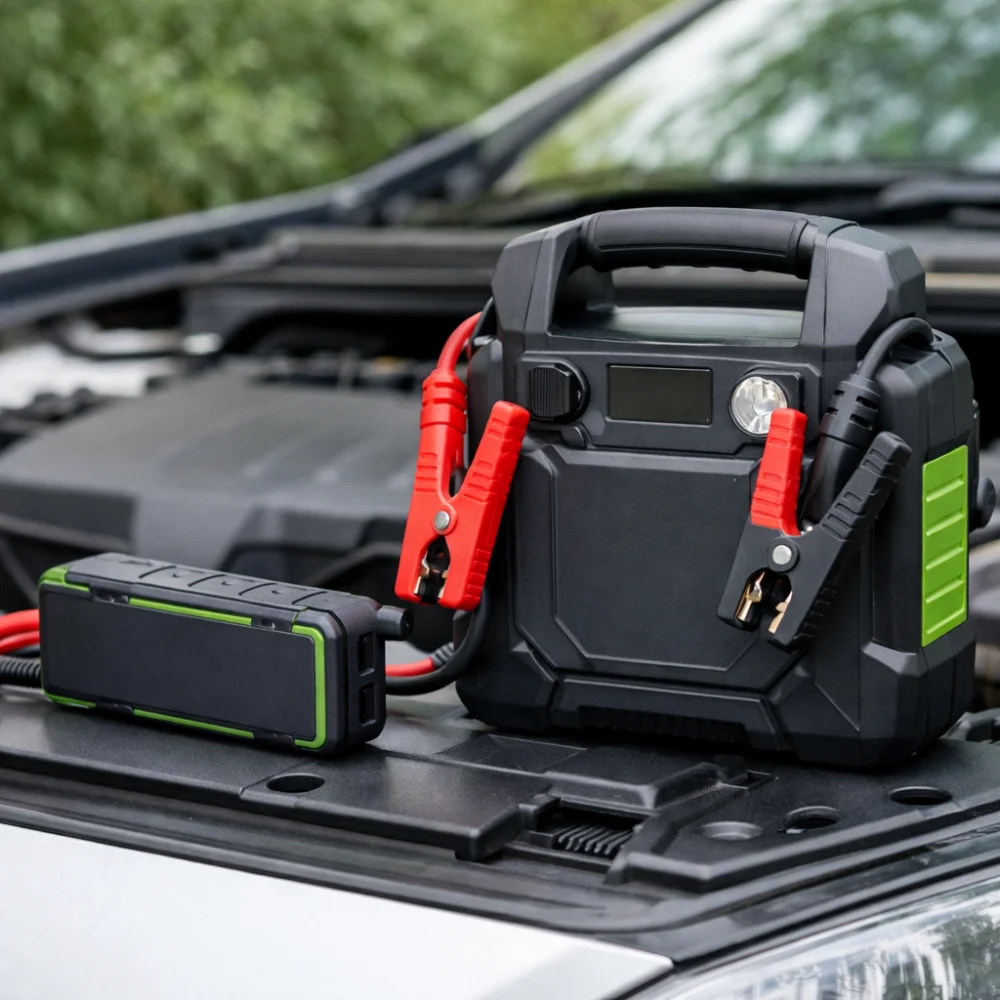
- Multi-function models may suit people who value convenience features such as lighting or charging outputs.
The limitation of any variant is that added convenience does not replace the need to check suitability. A smaller model may be easier to store, while a larger model may be less convenient to carry. The right balance depends on your vehicle and how you plan to use it.
Which type suits different buyers?
| Buyer need | What to prioritise | Why it matters |
|---|---|---|
| Occasional emergency backup | Simple operation, compact storage and clear included accessories | The unit may spend most of its time unused, so convenience and ease of access matter |
| Camping and touring use | Portability, practical extras and easy recharging | It needs to fit with other kit and be straightforward to keep ready |
| Drivers with a larger vehicle | Stated suitability for the vehicle type and enough headroom in the specification | Compatibility is more important than compact size alone |
| Gift buyers | Clear labelling, broad usefulness and simple setup | The recipient may value something easy to understand and store |
Common mistakes and misunderstandings
- Buying on size alone: a very compact unit may be convenient, but it still needs to suit the vehicle you intend to start.
- Assuming extras make a better starter: lights and charging functions are useful only if they are relevant to your use.
- Ignoring storage and charging habits: a jump starter is most useful when it is kept ready, so think about where it will live and how you will recharge it.
- Not checking the included kit: the leads, clamps and any carrying case can affect how easy the product is to use in practice.
Safety and suitability caveats
Jump starters are practical tools, but they should still be chosen carefully. Check that the product page matches your vehicle type and intended use, and do not assume every model suits every engine or battery setup. If you are buying for a less common vehicle or a situation that feels borderline, choose a product with clear published suitability information.
Maintenance, storage and lifespan considerations
These products are usually most useful when stored somewhere accessible and kept charged according to the manufacturer’s guidance. If a model includes extra functions, those features may affect how often you need to recharge it. It is also sensible to keep the unit protected from damage in the boot or storage area so it remains ready when needed.
How to compare options efficiently
- Start with your vehicle and confirm the jump starter is intended for that kind of use.
- Decide whether you want a compact emergency tool or a model with more headroom and extras.
- Compare the included accessories, charging method and physical size.
- Look past headline figures and weigh the trade-off between convenience and capability.
- Check the individual product page carefully before you decide.
Summary buyer decision checklist
- Does the product page show that it suits your vehicle type?
- Is the size practical for the place you plan to store it?
- Do the extra features match how you will actually use it?
- Are the included cables and accessories suitable for your needs?
- Will you be able to keep it charged and ready?
- Have you checked the full individual specification before buying?
Frequently asked questions
What is a jump starter used for?
A jump starter is used to help start a vehicle when the battery is flat or too weak to turn the engine over normally. It is a portable alternative to relying on another vehicle or roadside assistance in the first instance.
Are all jump starters suitable for every vehicle?
No. Suitability varies by model and by the vehicle you want to start, so it is important to check the product page carefully. A model that is fine for one vehicle may not be the right choice for another.
Do I need a large jump starter for a small car?
Not necessarily. A larger unit may offer more headroom, but it may also be bulkier than you need. If you only want an emergency backup for a smaller vehicle, a more compact option may be more practical.
What extra features are actually useful?
Useful extras are the ones that fit your routine, such as a built-in light or device-charging output. They are worth having if you will use them, but they should not distract you from the main task of starting the vehicle.
How often should I think about recharging it?
That depends on the model, how it is stored and how often you use any additional functions. The key point is to keep it ready rather than leaving it unused for long periods without checking its charge.
Is a jump starter a replacement for regular battery care?
No. It is a useful backup, but it does not remove the need to look after the vehicle battery itself. If you are replacing a battery or diagnosing a recurring issue, the jump starter is only part of the picture.

