
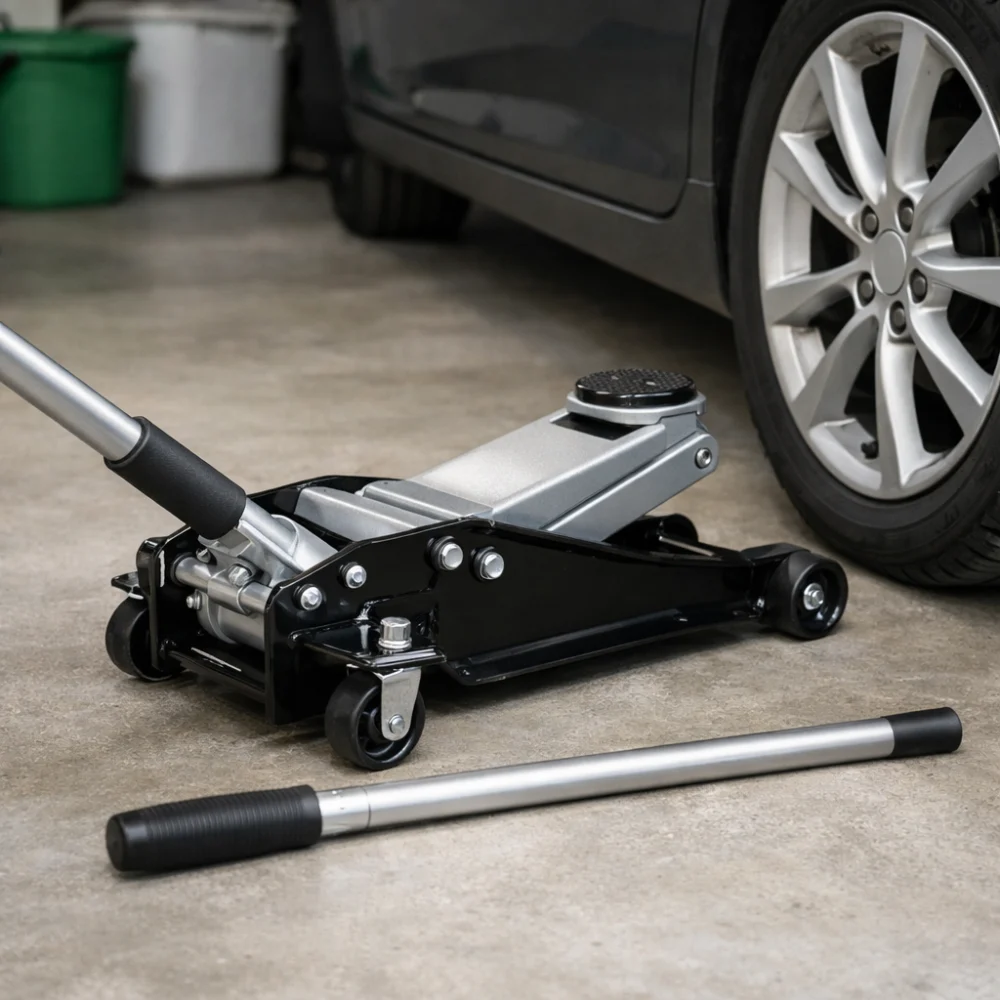
A car jack is a practical tool for lifting a vehicle enough to change a wheel, inspect the underside or carry out light maintenance. The right choice depends less on brand name and more on how the jack will be used, where it will be stored and whether it suits the vehicle you own.
This guide keeps the decision simple. It explains the main jack types, the features that affect ease of use and the checks that matter before you buy.
What should you look for in a car jack?
The most useful starting point is to match the jack to the vehicle and the kind of work you expect to do. A compact emergency jack, a workshop-style trolley jack and a labour-saving scissor jack can all do the same broad job, but they suit different spaces and different levels of effort. The main trade-off is usually between portability, lifting comfort and stability.
Specifications vary by model, so always check the individual product page before buying.
| Feature | What it means | Why it matters | What to check |
|---|---|---|---|
| Jack type | The general design, such as scissor or trolley | Affects storage, ease of lifting and how the jack is used | Think about where it will live and whether you need a compact or more stable design |
| Lifting range | The lowest and highest working positions | Must suit your vehicle’s ground clearance and the height needed for the task | Check that the jack can reach the vehicle’s jacking points and lift enough for your intended job |
| Load capacity | How much weight the jack is designed to handle | Should be appropriate for the vehicle you plan to lift | Confirm the stated capacity on the product page rather than relying on appearance alone |
| Operation style | How the jack is raised and lowered | Influences effort, control and convenience | Look for the handle or winding method that suits your strength and routine |
| Footprint and storage | How much room the jack takes up when in use and when stored | Important for small boots, sheds and garage shelves | Check size, folded form and whether a case is included |
| Included accessories | Extra items supplied with the jack | Can improve convenience but are not always essential | See whether handles, cases or additional tools are part of the package |
Key decision criteria explained
Vehicle fit and ground clearance
The first question is whether the jack can physically get under the vehicle and lift it to a useful height. Lower cars often need a jack that starts from a lower profile, while taller vehicles may need more reach at the top end. If you are buying for more than one vehicle, check the most demanding case rather than the easiest one.
Type of job you expect to do
If you mainly want an emergency jack for wheel changes, compactness and straightforward use may matter more than speed. If you expect occasional maintenance at home, a more stable workshop-style jack may be easier to live with. If you only need the jack for rare roadside use, the smallest practical option may be enough.
Ease of use
Some jacks are designed to reduce effort, while others trade convenience for compactness. Consider how much winding, positioning and space around the car will be involved. A jack that is simple to store may still feel awkward if it is hard to place accurately or slow to operate.
Stability and confidence
Buyers often focus on lifting ability and overlook the importance of a stable feel. A jack should suit the surface it will be used on and the vehicle it will support at the intended lifting point. For anyone new to basic vehicle maintenance, a design that feels predictable is usually more reassuring than one that is only compact.
Car jack types and where they fit best
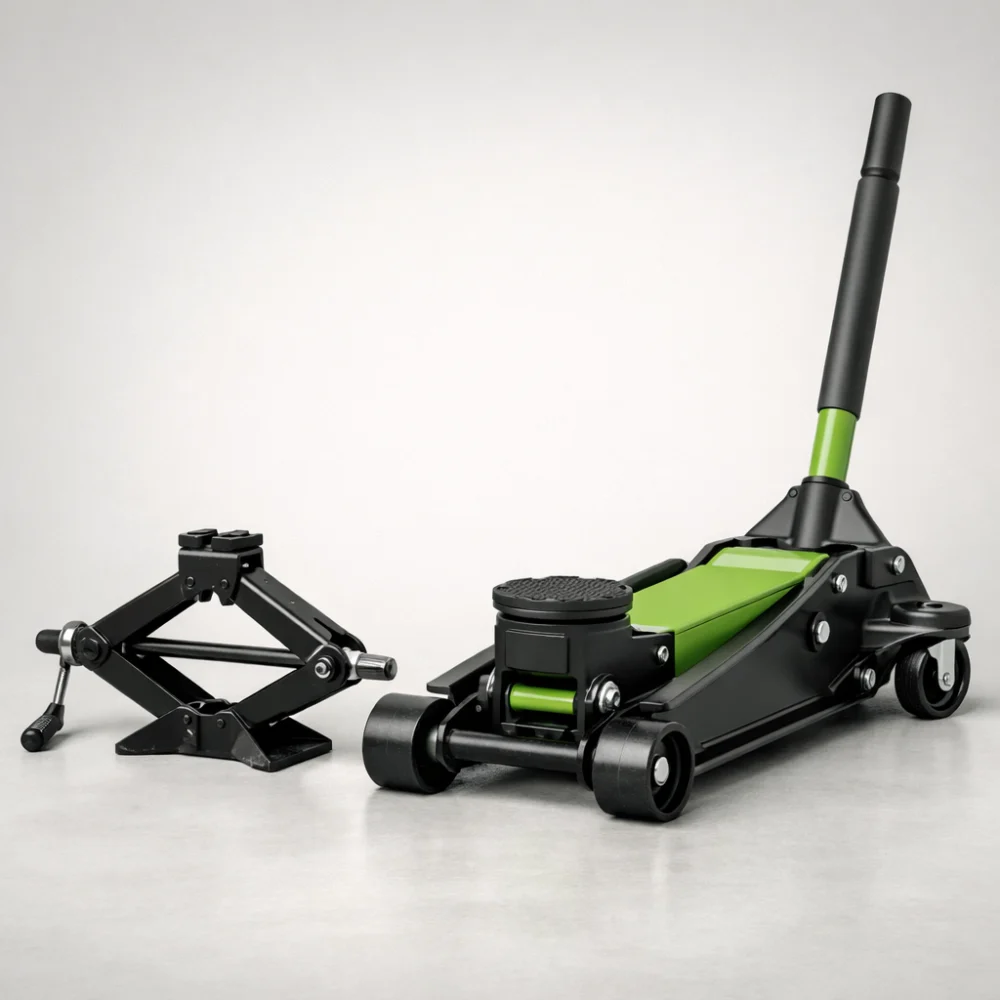
- Scissor jacks: usually compact and easy to store, which makes them useful for keeping in the boot. They can be a sensible choice for occasional roadside use, but they are not the same as a larger garage jack.
- Trolley jacks: generally suit driveway or garage use where there is room to manoeuvre. They are often chosen for more comfortable lifting, but they take up more space and are less convenient to carry around.
- Labour-saving or ratcheting designs: can reduce the physical effort needed to raise the vehicle. They may suit buyers who value easier operation, although the exact mechanism and feel vary from model to model.
Which jack suits different buyers?
| Buyer need | More suitable characteristics | Reason to prefer them |
|---|---|---|
| Roadside emergency kit | Compact size, simple operation, easy storage | Fits in the boot and is quick to keep with the vehicle |
| Home garage use | More stable design, easier manoeuvring, broader lifting range | Better for repeated use and planned maintenance |
| Limited storage space | Smaller footprint, foldable or compact form | Less awkward to keep in a small car or shed |
| Less physical effort | Labour-saving mechanism, manageable handle design | Can make lifting feel easier and more controlled |
| Multiple vehicles | Flexible lifting range and suitable capacity | Helps if the same jack needs to work across different vehicle sizes |
Common mistakes and misunderstandings
- Choosing only by capacity: a higher number is not the only factor. The jack still has to fit under the vehicle and reach the right height.
- Ignoring storage space: a jack that seems ideal on paper can be awkward if it is too bulky for the boot or garage shelf.
- Assuming all jacks feel the same: the lifting experience varies a lot by design, so the operation method matters as much as the headline specification.
- Overlooking the intended use: a tool that is fine for occasional roadside work may not be the most convenient choice for regular maintenance.
Safety and suitability caveats
Car jacks are bought for lifting, not for holding a vehicle in place for longer than necessary. Buyers should check the individual product page carefully and make sure the jack suits the vehicle and the intended task. It is also wise to think about the surface you will use it on, because uneven or soft ground can affect suitability.
If you plan to do more than a quick wheel change, consider whether you also need additional support equipment for your workflow. Always treat the stated capacity and lifting range as product-specific rather than generic.
Maintenance, storage and lifespan considerations
A car jack is easier to keep useful when it is stored cleanly and protected from unnecessary wear. Dust, moisture and rough handling can affect how neatly it works over time, especially if it lives in a boot or shed. For models with moving parts or a winding mechanism, straightforward care and sensible storage usually matter more than complicated maintenance.
It is also worth checking whether the jack comes with a case or any storage aid, because that can make a difference to how often you are willing to carry it and how well it stays organised.
How to compare car jacks efficiently
- Start with the vehicle you need to lift and the space where the jack will be used or stored.
- Choose the type that matches the job: compact for emergencies, more substantial for garage use.
- Compare lifting range, capacity and operation style before looking at extras.
- Think about the trade-off between portability and ease of use.
- Check the individual product page for the exact specifications before deciding.
Summary buyer decision checklist
- Does the jack suit your vehicle type and jacking needs?
- Is the lifting range suitable for the ground clearance and height required?
- Is the capacity appropriate for the vehicle?
- Will the jack fit in the space you have for storage?
- Is the operation style one you can use comfortably?
- Do you need a compact emergency tool or a more substantial home-use option?
Frequently asked questions
What is the difference between a scissor jack and a trolley jack?
A scissor jack is usually more compact and easier to keep in a car for occasional use. A trolley jack is generally larger and better suited to garage work where space is less restricted. The better option depends on whether portability or convenience matters more.
How do I know which load capacity I need?
Check the product page for the stated capacity and make sure it is suitable for the vehicle you plan to lift. Do not rely on size alone, because two jacks that look similar may be intended for different jobs. If you are buying for more than one vehicle, use the most demanding case as your guide.
Can one jack work for different vehicles?
Sometimes, yes, but only if the lifting range and capacity suit each vehicle. A jack that works well on a small car may not be the best fit for a larger vehicle, and the reverse is also true. It is safer to check compatibility for each vehicle rather than assume a universal fit.
Is a compact jack always the best choice for emergencies?
Not always. Compactness is useful, but the jack still needs to be practical to position and operate when you need it. A slightly larger option may be worth considering if it offers easier use and still fits your storage space.
What should I check before buying for a low car?
Low cars often need extra attention to the minimum starting height and the ability to get under the vehicle comfortably. Check the product’s lifting range carefully and make sure it is suitable for your car’s ground clearance. Specifications vary by model, so always check the individual product page before buying.
Do I need extra accessories with a car jack?
Not always, but some buyers prefer a case, handle or other included items for convenience. Think about whether the extras improve storage and use, rather than choosing them for the sake of having more parts. A simpler package can still be the right choice if it meets your needs.

