
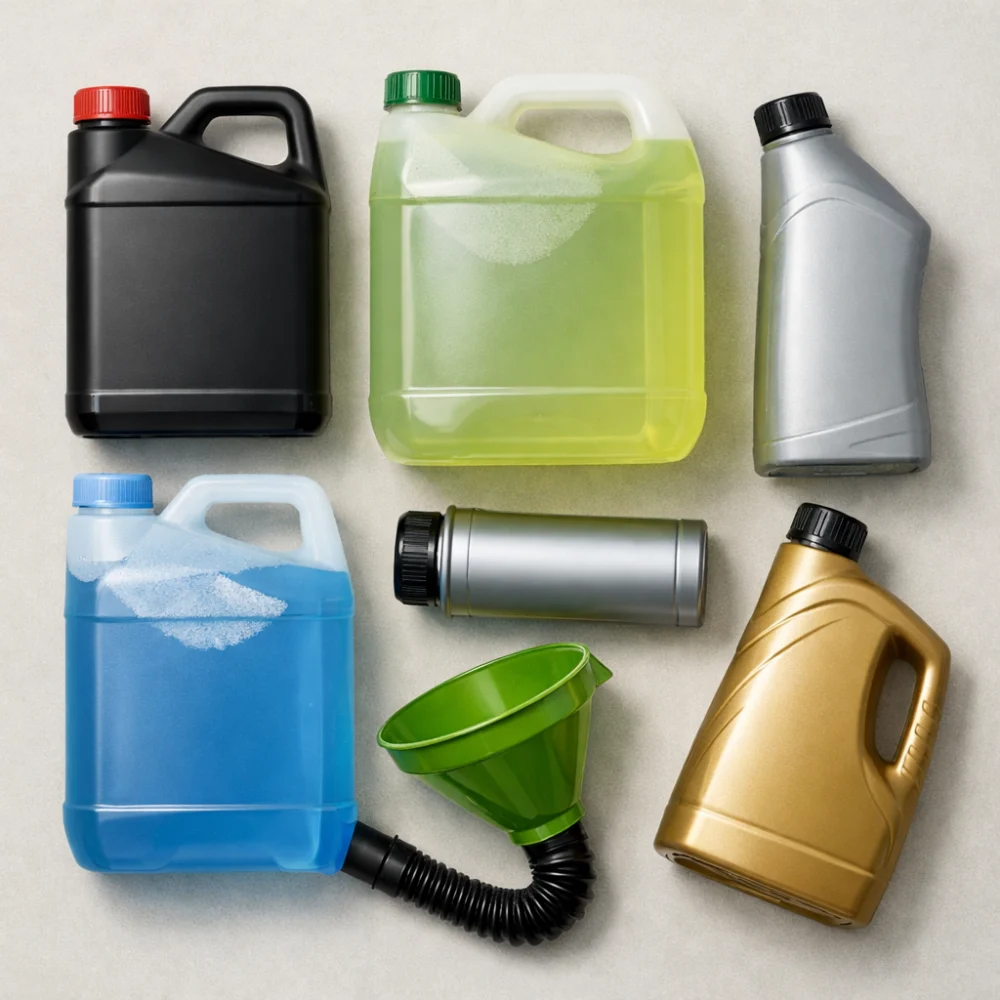
If you are buying oils and fluids for a camping vehicle, the main job is usually straightforward: choose the correct product for the system it is meant to serve. The tricky part is that oil grades, fluid types and manufacturer approvals can look similar while serving different purposes.
This guide helps you narrow down what matters before you buy, so you can compare products with more confidence. It focuses on the checks that matter most for vehicle use, from viscosity and specification to container size and intended application.
It also helps you avoid the common mistake of treating one fluid as interchangeable with another. Specifications vary by model, so always check the individual product page before buying.
What should I look for first?
Start with the exact requirement for the vehicle or component you are topping up or servicing. The most useful first checks are the fluid type, the viscosity or grade where relevant, and any manufacturer or performance specification shown for that product. If those details do not match the vehicle’s needs, the rest of the comparison matters less.
For many buyers, the decision then comes down to how closely the product matches the required spec, how much you need, and whether you want a standard or more specialised formulation. A product that is suitable on paper is still only suitable if it fits the intended system.
| Feature | What it means | Why it matters | What to check |
|---|---|---|---|
| Fluid type | The kind of oil or fluid the product is designed to be | Different vehicle systems need different fluids | Confirm the product is meant for the exact use you need |
| Viscosity or grade | The thickness or flow characteristic of an oil | Affects suitability for the engine or system | Match the required grade in the vehicle handbook or on the product page |
| Specification or approval | The performance standard the product is designed to meet | Important for compatibility and confidence | Look for the stated specification and compare it carefully |
| Container size | How much fluid is supplied | Helps avoid overbuying or running short | Check the litre size and estimate what you actually need |
| Intended application | Whether it is for engine oil, coolant or another vehicle use | Prevents cross-use between different systems | Read the product description for the exact application |
Key decision criteria
Fluid type and application
The first choice is simply what the product is for. Engine oils, coolants and other automotive fluids are not interchangeable, even if they are all sold in similar containers. Make sure the product description matches the part of the vehicle you are maintaining.
Viscosity and grade
Where oil is involved, the grade is one of the most important details. It helps define how the oil behaves in use, so it should be compared against the vehicle’s required grade rather than guessed from brand name alone. A correct grade is more useful than a familiar label.
Specification and approval wording
Some products list manufacturer approvals, performance standards or service classifications. These can be helpful, but only if they match the vehicle’s requirement. Do not assume that similar wording means the same thing, and do not rely on one abbreviation without checking the full description.
Quantity and packaging
Smaller bottles are easier for top-ups and occasional use, while larger containers can be more convenient for planned servicing. Choose the size that fits the job rather than buying extra just because it looks better value. Leftover fluid still needs sensible storage.
Product types and variants
Within this category, the main differences usually relate to the fluid’s intended use rather than a broad lifestyle choice. You are typically comparing engine oils, and within that, different grades and formulations. Some are aimed at specific service requirements, while others are described as more general-purpose within a stated specification.
That means the variation is more technical than visual. Two products can look similar on the shelf but still suit different engines or service intervals. If you are unsure, compare the exact grade, the stated application and any specification wording before deciding.
Which option suits which buyer?
| Buyer need | What to prioritise | Why |
|---|---|---|
| Routine top-up | Exact grade and compatible application | Matching the required fluid matters more than choosing a larger pack |
| Planned servicing | Correct specification and enough volume | You need the right product in the right quantity for the job |
| Occasional camper or touring use | Clear labelling and simple compatibility information | You may be buying less often and want the decision to be easy to verify |
| Cost-conscious buyer | Size, specification and intended use | The cheapest option is not useful if it does not match the requirement |
Common mistakes and misunderstandings
- Buying by brand name only: a familiar brand does not replace the need to match the correct grade or specification.
- Assuming similar fluids are interchangeable: products that look alike can still serve different systems.
- Choosing the wrong pack size: a large container is not helpful if you only need a small top-up and want to avoid storage issues.
- Overlooking the wording on the product page: the exact description matters more than a brief title.
Safety and suitability caveats
Always make sure the product is intended for the vehicle system you plan to use it with. If the handbook or service information specifies a particular grade or approval, use that as your reference point rather than a general description. Keep in mind that mixing or substituting fluids without checking suitability can create avoidable problems.
Maintenance, storage and lifespan considerations
Oils and fluids are often bought for occasional use, so storage matters. Keep containers sealed, upright and in a suitable place, and avoid assuming a partially used bottle will stay suitable forever. If you buy more than you need, plan to store it carefully and check the product page or packaging guidance for any relevant handling notes.
How to compare options efficiently
- Identify the exact fluid you need and where it will be used.
- Check the required grade, specification or application on the vehicle information.
- Compare products by those details first, not by packaging or brand familiarity.
- Choose a container size that matches the job you are doing.
- Read the individual product page carefully before you buy.
Summary buyer decision checklist
- Have I confirmed the exact fluid type I need?
- Does the grade or specification match the vehicle’s requirement?
- Is the product meant for the correct system or application?
- Is the container size suitable for a top-up or full service?
- Have I checked the individual product page for the full wording?
Frequently asked questions
Can I choose oil just by the viscosity number?
No. The viscosity is important, but it is only one part of the decision. The product also needs to suit the intended application and any specification or approval the vehicle requires.
Why do some oils look similar but have different labels?
Similar-looking products can differ in grade, formulation or intended use. The label wording is there for a reason, so it is worth checking the exact description rather than assuming they are interchangeable.
Is a bigger container always better value?
Not necessarily. A larger pack may make sense for planned servicing, but for a small top-up it can be more than you need. Choose the size that fits the task and your storage space.
Do I need to match the exact wording shown on the product page?
Yes, where possible. Small differences in wording can indicate different specifications or uses, so the individual product page is the safest place to confirm suitability.
What if I am not sure which fluid my vehicle needs?
Use the vehicle handbook, service information or the existing product requirement as your starting point. If you still cannot confirm it, avoid guessing, because the wrong fluid can be a poor fit even if it seems close.
Can I store leftover oil or fluid for later use?
Often yes, as long as it is kept sealed and stored properly. Check the packaging and keep it in a place where contamination and temperature changes are minimised.

