
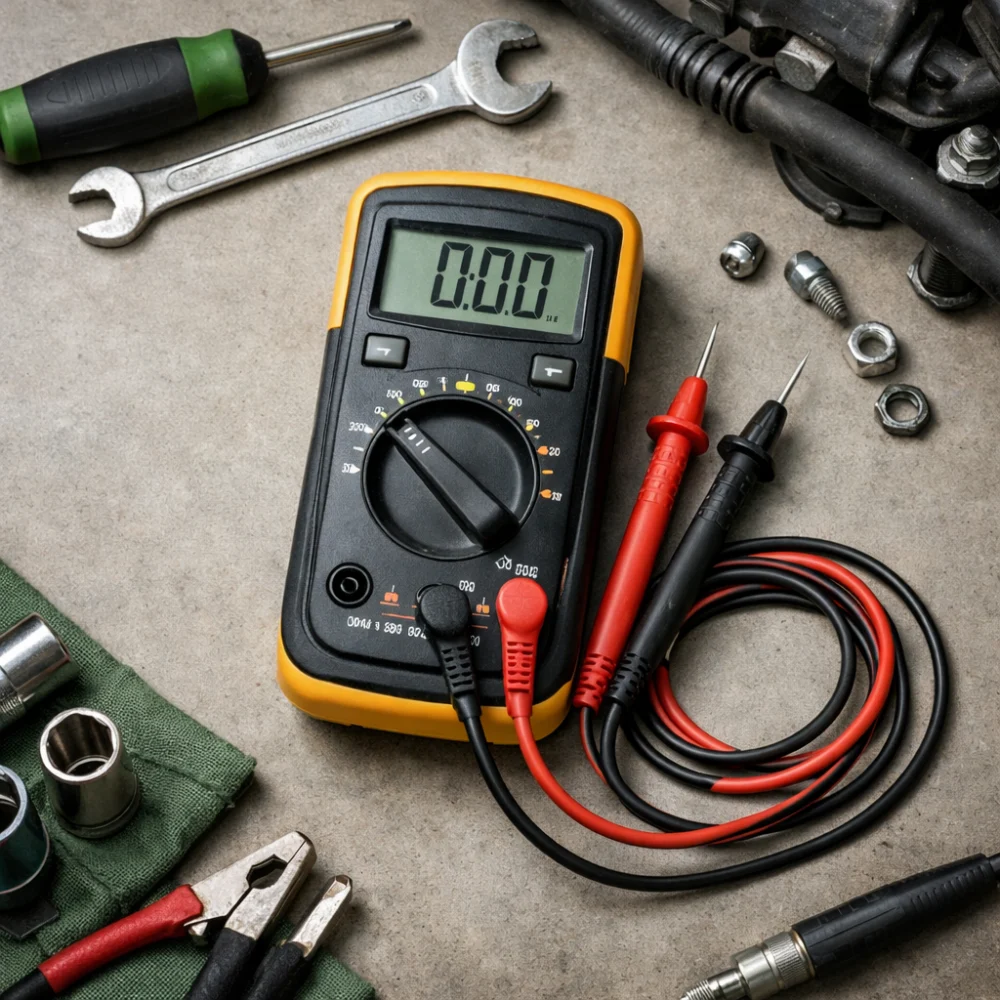
Multimeters are one of those tools that seem simple at first, but the right choice depends on what you plan to measure and how often you will use it. In a camping vehicle setting, they are often bought for basic electrical checks, fault-finding and routine maintenance rather than specialist lab work.
If you are comparing models, it helps to think about the tasks first and the display, measurement functions and probe setup second. That way you can avoid paying for extras you will not use while still getting a tool that suits the jobs you actually need to do.
Specifications vary by model, so always check the individual product page before buying.
What should you look for in a multimeter?
The best starting point is the kind of checking you expect to do most often. A straightforward digital multimeter will suit many everyday voltage, continuity and resistance checks, while more advanced models may add extra measurement options or features that help with frequent use. The main trade-off is usually between simplicity and extra functionality.
If you only need a general-purpose tester, a clear display and the basic measurement functions may be enough. If you work on vehicle electrics regularly, it is worth paying closer attention to how the meter is operated, how readable it is in awkward spaces and whether the included accessories suit your tasks.
| Feature | What It Means | Why It Matters | What To Check |
|---|---|---|---|
| Measurement functions | The kinds of electrical values the meter can read | Determines whether it suits simple checks or broader fault-finding | Look for the functions you actually need, such as voltage, resistance, continuity or current |
| Auto-ranging or manual ranging | How the meter selects the measurement range | Affects ease of use and how much control you have | Choose the style that matches your experience and the way you prefer to work |
| Display readability | How easy the screen is to read in different conditions | Important when working in dim vehicle spaces or at awkward angles | Check screen size, backlight and how clearly the readout is presented |
| Probes and leads | The test accessories used to make contact | A poor probe setup can make measurements fiddly or less convenient | Check the included leads and whether they look suitable for the tasks you plan to do |
| Build and portability | How practical the meter is to carry and use | Useful if you want a tool for the glovebox, workshop or touring kit | Consider size, grip and how easy it is to store safely |
Key decision criteria explained
Which measurements do you actually need?
Not every buyer needs the same set of functions. Some people mainly want a basic voltage tester for battery or circuit checks, while others want broader diagnostic capability. Start with the jobs you expect to do most often and avoid choosing on the basis of functions you are unlikely to use.
Auto-ranging versus manual ranging
Auto-ranging can make a meter easier to use because it selects the range for you. Manual ranging gives you more direct control, which some experienced users prefer. The trade-off is simplicity versus control, so think about whether you want a quicker learning curve or a more hands-on tool.
Readability in real-world use
A clear display is more useful than a long list of features if you need to read results in a cramped engine bay or a dimly lit area. Backlighting and a straightforward screen layout can make everyday use less frustrating. If the meter will live in a vehicle or touring kit, ease of reading matters more than you might expect.
Leads, probes and handling
The meter itself is only part of the experience. Good leads and probes can make a simple task feel much easier, especially when access is awkward. Check what is included and whether the set-up looks practical for your hands, your storage space and the type of work you do.
Durability and storage
For occasional use, compactness and straightforward storage may matter most. For regular use, a more robust-feeling tool may be worth considering. Try to judge the meter as a working tool rather than only by its feature list.
Product types and variants
Most shoppers in this category will be choosing between digital multimeters that look broadly similar but differ in how they are used. Some are designed to feel simple and approachable, while others offer more advanced readings or a more technical interface.
- Basic digital multimeters: Suitable for general checks and simpler jobs where ease of use is the main priority.
- Feature-rich digital multimeters: Better for users who want more measurement options or a tool for broader diagnostic work.
- Auto-ranging models: Often easier for less experienced buyers or anyone who wants a quicker start.
- Manual-ranging models: Often preferred by users who like more direct control over the measurement process.
Which multimeter suits which buyer?
| Buyer need | What to prioritise | Main trade-off |
|---|---|---|
| Occasional home or vehicle checks | Simple controls, clear display and the functions you use most | Less advanced capability, but easier day-to-day use |
| Frequent troubleshooting | Readable screen, practical leads and a wider measurement set | More features can mean a more involved interface |
| New to electrical testing | Auto-ranging and a straightforward layout | Less manual control, but a gentler learning curve |
| Compact storage in a vehicle | Portable size and tidy accessory storage | Smaller kits may be less comfortable for extended use |
Common mistakes and misunderstandings
- Buying for feature count alone: More functions are not automatically better if you only need a few basic checks.
- Ignoring readability: A screen that is hard to read can be more annoying than a slightly simpler meter.
- Overlooking the probes: The included leads matter because they affect how easy the meter is to use in practice.
- Assuming all multimeters suit the same tasks: Different models can feel very different depending on how they range and what they measure.
Safety and suitability caveats
Check that the meter is appropriate for the kind of electrical work you intend to do, especially if you are using it around vehicle systems. Do not assume that a multimeter is suitable for every diagnostic job just because it can measure voltage or continuity. Specifications vary by model, so always check the individual product page before buying.
Maintenance, storage and lifespan considerations
Multimeters are usually straightforward to look after, but they still benefit from sensible storage and care. Keep the meter and leads together so the kit is ready when needed, and store it somewhere dry and protected from knocks. If a model uses batteries, think about how easy it is to keep it ready for occasional use.
How to compare options efficiently
- Decide what you want to test most often.
- Choose between a simple or more feature-rich meter.
- Compare the display, ranging style and included probes.
- Check how the meter will fit your vehicle, workshop or storage space.
- Read the individual product page carefully before buying.
Summary buyer decision checklist
- Does it cover the measurements you actually need?
- Is the display easy to read where you will use it?
- Do you prefer auto-ranging or manual control?
- Are the included leads and probes practical for your jobs?
- Will it store neatly with your other vehicle accessories?
- Have you checked the individual product page for the exact model details?
Frequently asked questions
What is the main use of a multimeter?
A multimeter is used to check electrical values such as voltage, resistance and continuity, depending on the model. For many buyers, it is a practical diagnostic tool for general electrical checks rather than a specialist instrument.
Is auto-ranging easier for beginners?
Often, yes. Auto-ranging reduces the amount of manual setup and can make the meter feel more approachable at first. Some experienced users still prefer manual ranging because it gives them more direct control.
Do I need a multimeter for vehicle use?
If you want to check circuits, batteries or other electrical issues, a multimeter is a useful tool to have. The right model depends on how often you will use it and how much detail you want from the readings.
Are all multimeter leads the same?
No. Leads and probes can differ in quality, length and how practical they are for different jobs. It is worth checking what is included rather than assuming every kit will feel the same in use.
Should I choose the cheapest option?
Not necessarily. The lowest-cost model may be perfectly adequate for light use, but it is still worth checking readability, included accessories and whether the functions match your needs. A slightly better-suited meter can be easier to live with.
Can one multimeter do every job?
No single model suits everyone. A multimeter can be very versatile, but the right choice still depends on the measurements you plan to make and the level of convenience you want.

