
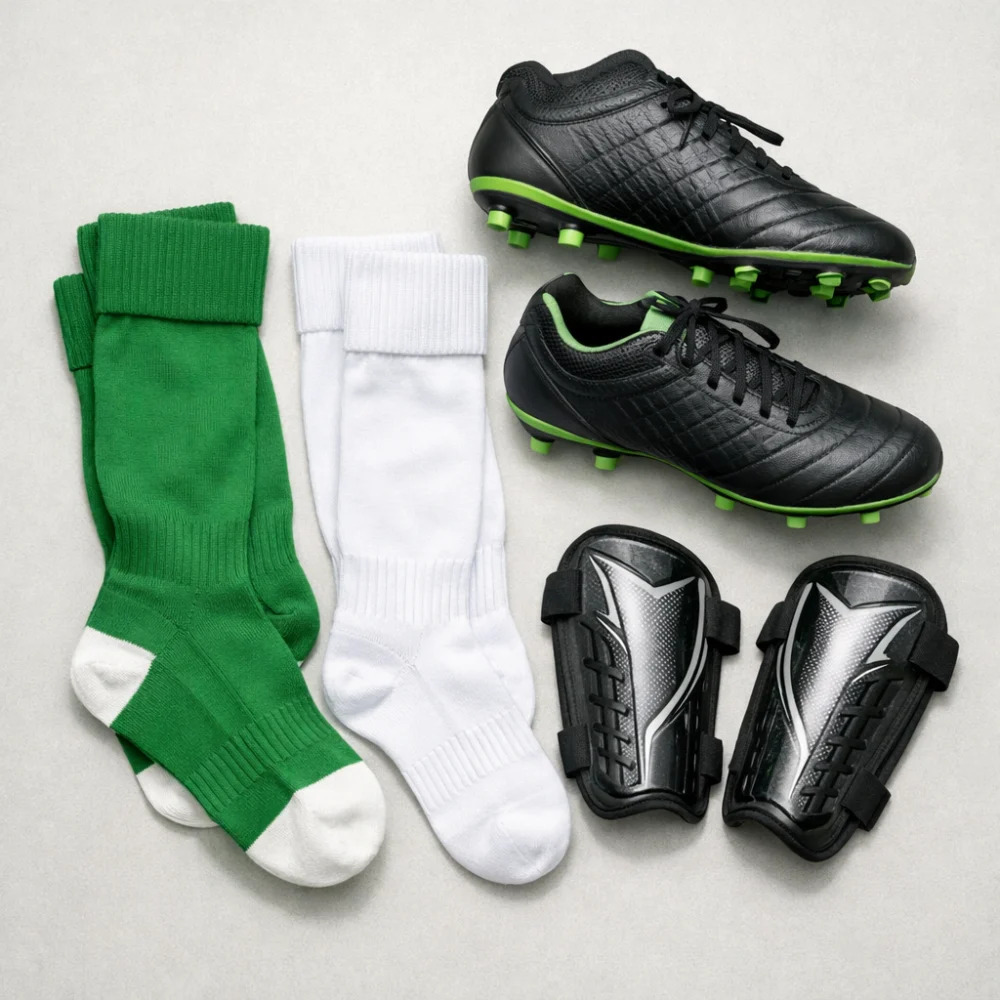
Football socks look simple, but the right pair can make a noticeable difference to comfort on match day and in training. Buyers usually want to balance fit, cushioning, hold and compatibility with shin pads or tape without overcomplicating the choice.
This guide helps you compare the features that matter most, so you can choose socks that suit the way you play and the kit you already use. Specifications vary by model, so always check the individual product page before buying.
What should you look for in football socks?
The best starting point is fit: socks that are too loose can bunch, while socks that are too tight may feel restrictive. After that, check how tall the sock is, how much cushioning it offers and whether the material blend is likely to suit your preference for breathability or a firmer feel. The main trade-off is usually comfort versus hold, with thicker or more structured socks sometimes feeling more secure but less light.
| Feature | What It Means | Why It Matters | What To Check |
|---|---|---|---|
| Fit | How closely the sock follows the foot and calf | Affects comfort, bunching and overall feel in boots | Size guidance, stretch and whether the sock is described as junior, adult or unisex |
| Length | How high the sock sits on the leg | Helps determine coverage with shin pads and personal preference | Product wording such as knee-high or crew length, plus your own kit setup |
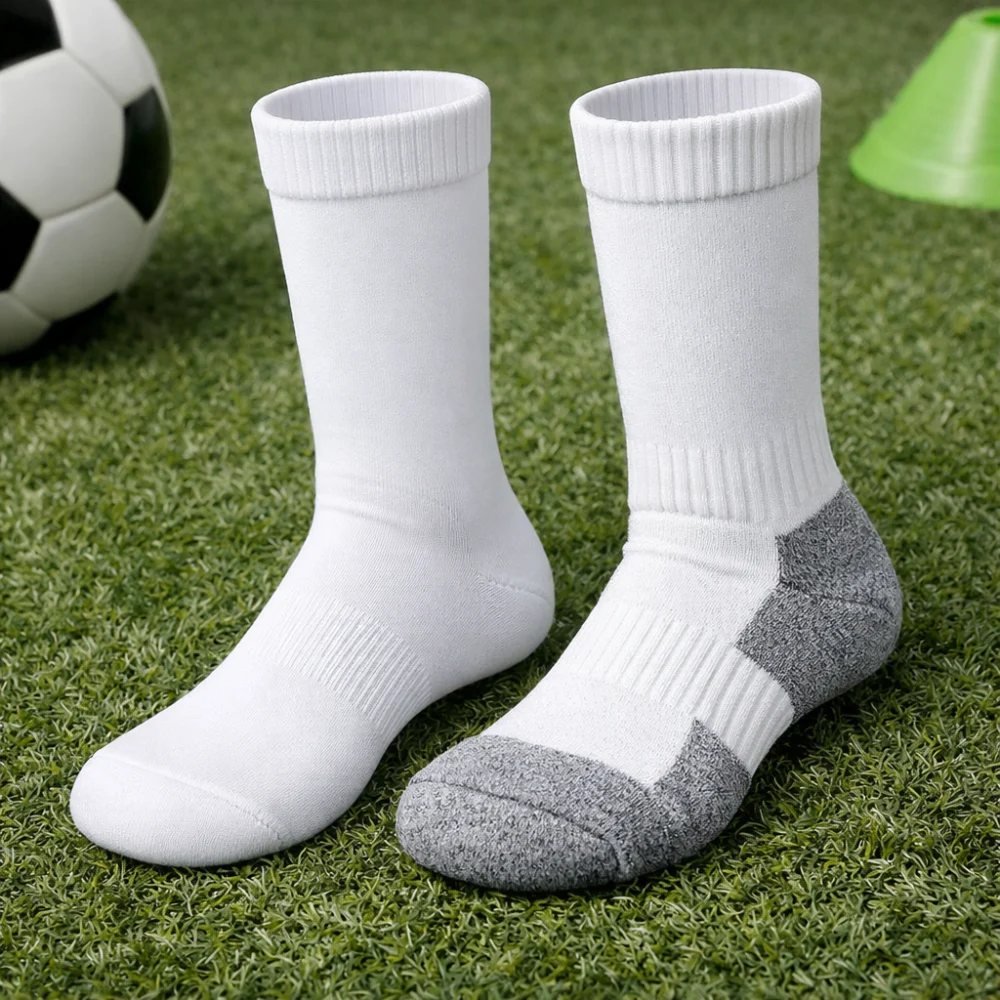
| Cushioning | Extra material in certain areas | Can change comfort and pressure points during play | Whether the sock is described as padded, cushioned or plain |
| Grip or hold | Features that help the sock stay in place | May reduce slipping inside the boot or around the calf | Any grip wording, elastic support or ribbed construction |
| Material feel | The fabric blend and how it may wear and breathe | Influences warmth, moisture feel and softness | Fibre content if listed, plus notes about stretch or moisture management |
| Pack size | How many pairs come in a pack | Useful for rotation, training frequency and value comparison | Single pair or multipack, especially if you want spares |
Key decision criteria
Fit and hold
Good football socks should stay comfortable without sliding down or cutting in. A secure fit matters because loose socks can distract you, while over-tight socks can feel tiring over time. Check size ranges carefully and think about whether you prefer a closer, more athletic feel or a slightly looser everyday fit.
Length and kit compatibility
Most buyers need socks that work neatly with shin pads and football boots. Longer socks give more coverage, while shorter options may suit some players only if they still fit the rest of the kit setup. The key is not just leg length, but whether the sock sits where you want it during movement.
Cushioning and comfort
Some socks feel more padded in the foot or lower leg, while others are designed to be lighter and simpler. More cushioning can improve comfort for some players, but it may also add bulk. If you like a closer boot feel, plain or lightly cushioned styles may suit you better.
Material and feel
The fabric mix influences softness, stretch and how warm the sock feels. A smoother finish can feel neat and streamlined, while a more textured or ribbed sock may feel more structured. Because material blends vary, it is worth reading the product page rather than assuming all football socks feel the same.
Common football sock types and variants
Within this category, the biggest differences are usually in construction rather than in formal product type. Some socks are plain and straightforward, some are designed with extra cushioning, and some emphasise grip or a tighter hold. The right version depends on whether you want simplicity, comfort or a more secure feel in the boot.
- Plain socks: Best for buyers who want a simple match sock with fewer extras.
- Cushioned socks: May suit players who prioritise comfort and a softer feel.
- Grip or hold-focused socks: Can suit those who want less slipping, though the fit still depends on the individual model.
- Multipacks: Useful for frequent training or anyone who wants a spare pair ready.
Choosing socks for different needs
| Buyer need | What to prioritise | Why it helps |
|---|---|---|
| Matchday consistency | Secure fit, reliable length, familiar feel | Helps reduce distractions when you already know what suits you |
| Training use | Durability, easy rotation, sensible pack size | Useful when socks are washed and worn frequently |
| Comfort-first buying | Soft feel, cushioning, good stretch | Can make longer sessions feel more comfortable |
| Minimalist preference | Plain construction, lighter feel | Works for buyers who do not want extra bulk |
| Gift or replacement purchase | Flexible sizing guidance, simple styling, multipack options | Makes the choice easier when you are buying for someone else |
Common mistakes to avoid
- Choosing by colour alone. Colour matters for kit matching, but comfort and size are more important.
- Ignoring calf fit. A sock can fit the foot but still feel wrong around the leg.
- Assuming all football socks are the same. Construction, padding and stretch can vary noticeably.
- Overlooking pack size. A single pair and a multipack serve different needs.
- Not checking the product page details. Specifications vary by model, so always check the individual product page before buying.
Safety and suitability caveats
Football socks are mainly about comfort, fit and kit compatibility, but they should still be chosen with the rest of your setup in mind. Make sure the sock length works with your shin pads and boots, and avoid assuming that a tight or grip-focused sock will suit everyone. If you have particular comfort or fit concerns, check the individual product page carefully before ordering.
Maintenance, storage and lifespan considerations
Football socks are usually simple to look after, but frequent use means they may need regular washing and sensible rotation. If you play or train often, buying an extra pair can help reduce wear from repeated use. Keep an eye on elastic recovery, thinning and general fit over time, because those are often the first signs that a pair is no longer feeling its best.
How to compare options efficiently
- Start with your main use: matches, training or general kit replacement.
- Choose the length and fit that suit your shin pads and boots.
- Compare cushioning, grip and material feel against your comfort preference.
- Check pack size and whether you want a plain or more structured design.
- Read the individual product page for the exact size guidance and model details.
Summary buyer decision checklist
- Does the size range suit the intended wearer?
- Will the sock length work with your shin pads and boots?
- Do you prefer plain, cushioned or grip-focused construction?
- Is the fit likely to feel secure without being restrictive?
- Does the pack size suit your training or match schedule?
- Have you checked the individual product page for the exact details?
Frequently asked questions
Are football socks different from ordinary socks?
They often are, mainly in length, stretch and how they are shaped to work with football kit. Many football socks are designed to sit neatly with shin pads and boots, whereas everyday socks are not usually made with that use in mind.
Should football socks be tight?
They should feel secure, but not uncomfortably tight. A close fit can help prevent bunching, though too much tightness may feel restrictive during play. The right balance depends on your preference and the product’s construction.
What length is usually best?
That depends on your kit and what feels comfortable. Longer socks often suit players who want more coverage with shin pads, while shorter or less tall options may suit those who prefer less material around the leg. Check the product description rather than assuming all football socks are the same length.
Do cushioned football socks make a big difference?
They can, especially if you prefer a softer feel underfoot or around pressure points. The trade-off is that extra padding may feel bulkier to some players. Whether that matters will depend on how snug you like your boots to feel.
Is a multipack better than buying one pair?
A multipack is useful if you play or train often, or if you want easy spares. A single pair may be enough if you are replacing one lost or worn pair and already know what you like. The better value depends on how often you will use them.
What should I check if I am buying for someone else?
Focus on size range, preferred colour and whether they usually wear shin pads with a particular sock length. If you are unsure, a straightforward plain style can be a safer choice than something highly specific. It is still worth checking the product page for the exact size guidance.

