
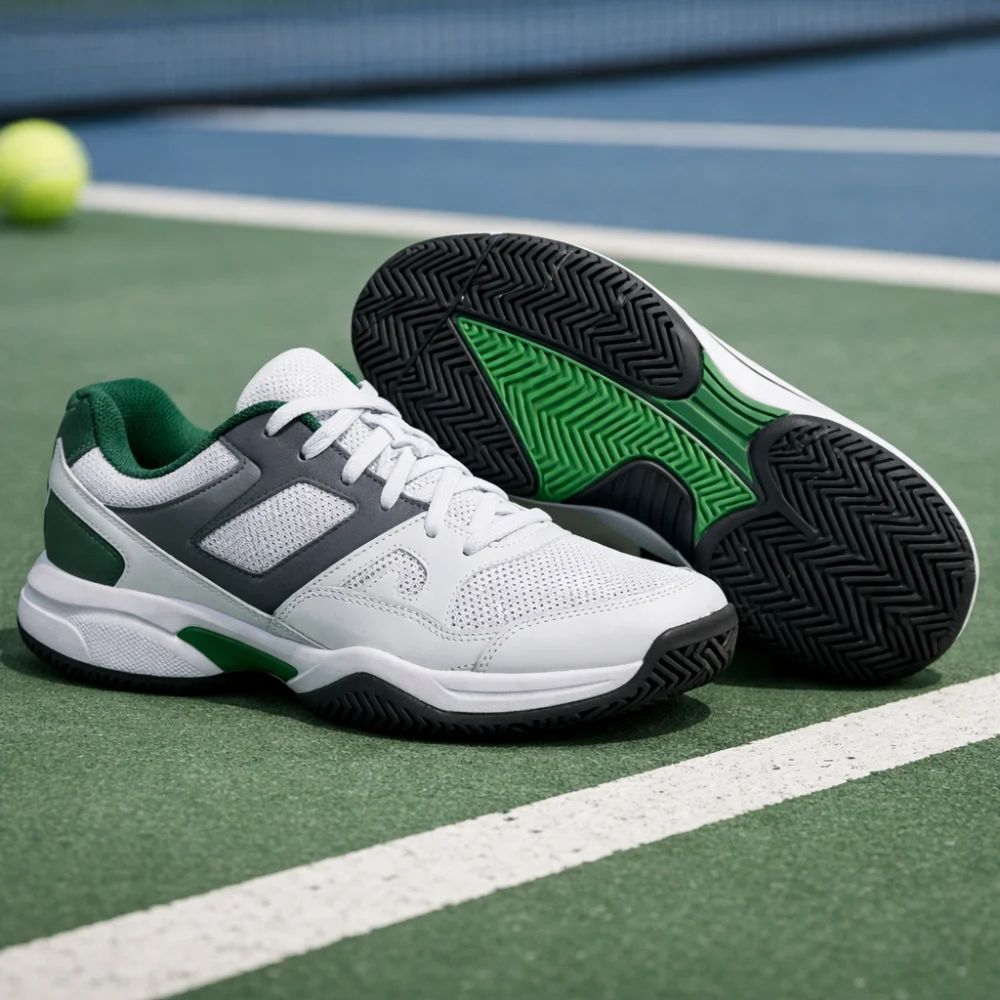
Men’s tennis shoes are built for court movement rather than general casual wear, so the right choice depends on how you move, how often you play and the surface you use most. A good pair should feel stable through side-to-side steps, secure when you push off and comfortable enough for a full session.
Because tennis footwear varies widely by design, it helps to focus on the features that affect support, traction and durability rather than the name on the box. Specifications vary by model, so always check the individual product page before buying.
What should you look for in men’s tennis shoes?
The best starting point is the court surface you play on and the level of support you want from the shoe. Hard courts, clay and indoor courts can place different demands on grip and outsole wear, while your own preference may lean towards a lighter, more flexible feel or a more structured, supportive ride.
Most buyers will narrow the choice by considering fit, outsole pattern, cushioning and the amount of lateral stability they need. The key trade-off is usually comfort and lightness versus structure and durability.
| Feature | What it means | Why it matters | What to check |
|---|---|---|---|
| Fit | How the shoe matches the shape and volume of your foot | A poor fit can affect comfort, control and confidence on court | Width, toe room, heel hold and whether the model is known for a snug or generous feel |
| Support | How well the shoe helps with side-to-side movement | Tennis involves frequent lateral steps and quick changes of direction | Upper structure, midfoot hold and how secure the shoe feels when you move quickly |
| Traction | The grip pattern on the outsole | It influences how confidently you start, stop and recover | Whether the outsole is intended for the surface you use most |
| Cushioning | How much impact absorption the shoe provides | More cushioning can feel kinder over longer sessions, but may add bulk | The balance between underfoot comfort and the level of court feel you prefer |
| Durability | How well the shoe resists wear in high-friction areas | Frequent play can wear out toes, outsoles and side panels | Reinforcement at the toe and along the sides, plus outsole coverage |
| Weight and flexibility | How light and bendable the shoe feels | Lighter shoes can feel quicker, while firmer shoes may feel more stable | Whether you value speed, comfort, support or a compromise between them |
Key decision criteria explained
Fit and sizing
Fit is one of the most important factors because even a well-made shoe will feel wrong if it does not sit securely on your foot. Look for enough room at the toes without unnecessary movement at the heel. If you already know that some tennis shoes feel narrow or roomy on your foot, use that as a guide when comparing product pages.
Support for direction changes
Tennis shoes are designed to cope with lateral movement, so support matters more than it does in many other sports shoes. A more structured shoe can feel reassuring if you move aggressively or want extra hold, while a softer shoe may feel more comfortable for lighter use. The trade-off is that more structure can sometimes feel less flexible at first.
Outsole grip and court surface
The outsole is a practical clue to where the shoe is intended to be used. Some buyers need a shoe that suits a specific court surface, while others want a general all-court option. Check the product page carefully rather than assuming a tennis shoe will suit every surface in the same way.
Cushioning and court feel
Cushioning affects comfort during longer sessions and can make repeated impacts feel less harsh. More cushioning may suit players who spend a lot of time on court or prefer a softer underfoot feel, but it can also reduce direct court feedback. If you like to feel close to the court, a lower-profile shoe may be more appealing.
Durability and wear points
Tennis shoes are exposed to drag, stopping and turning, so the most useful durability clues are usually found in the outsole and around the toe and sides. If you play regularly, it is worth checking whether the shoe shows reinforcement in the areas that tend to wear first. That can matter more than surface appearance alone.
Common men’s tennis shoe types and variants
Within this category, the main differences are usually about playing feel rather than a completely different kind of shoe.
- More supportive shoes: aimed at players who want a stable feel and extra reassurance during quick changes of direction.
- Lighter, faster-feeling shoes: usually chosen by players who prefer agility and a less bulky sensation.
- More cushioned shoes: may suit those who want comfort over longer sessions or prefer a softer landing underfoot.
- General all-round shoes: a sensible choice if you want a balanced option and do not need a highly specialised feel.
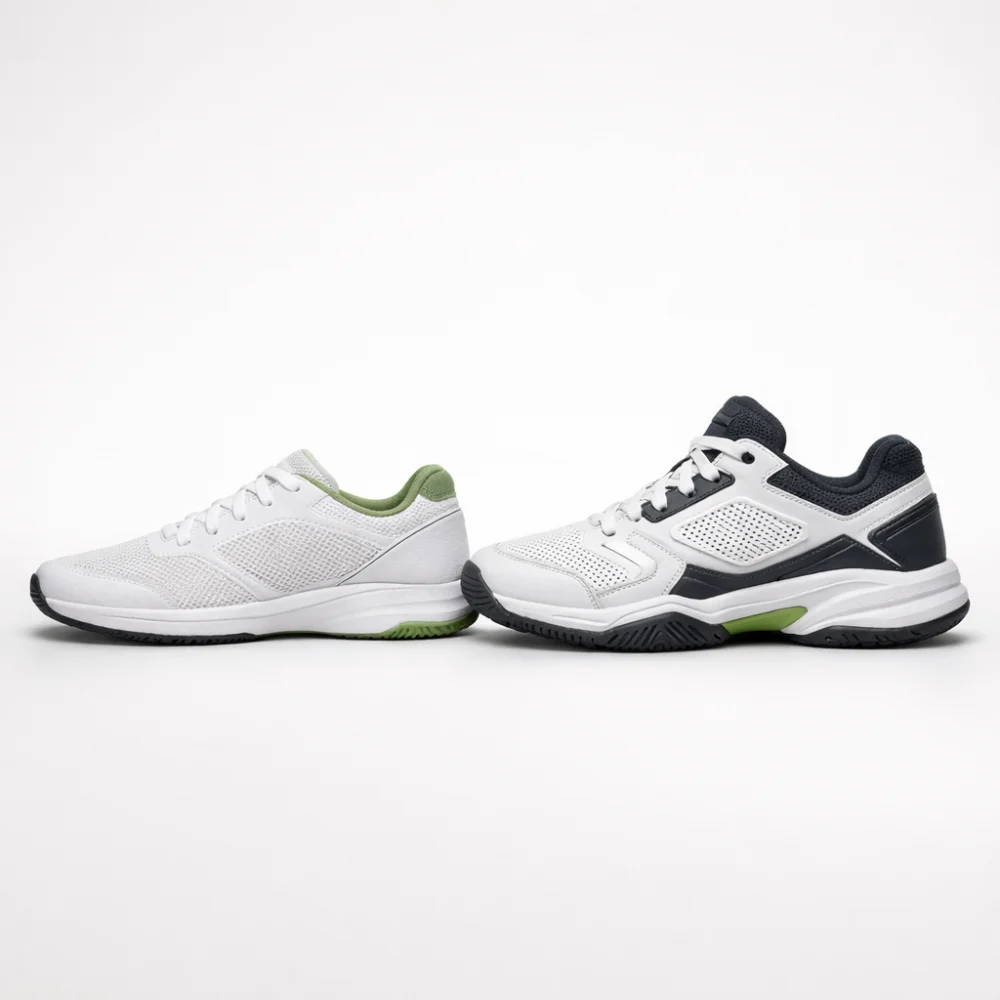
The main limitation is that a shoe that excels in one area may ask you to compromise in another. For example, a lighter shoe may feel nimble but less substantial, while a more structured shoe may feel secure but less free-moving.
Which shoe suits which buyer?
| Buyer need | What to prioritise | What to be careful about |
|---|---|---|
| Casual or occasional player | Comfort, easy fit and a balanced all-round feel | Buying a very specialised shoe you may not need |
| Frequent player | Durability, support and secure lockdown | Choosing a shoe that feels good at first but wears too quickly |
| Player who values speed | Lighter weight and a responsive feel | Giving up too much support or cushioning |
| Player who wants extra comfort | Cushioning and a forgiving fit | Assuming softness alone will suit all court movements |
| Buyer replacing an old pair | Similar fit, surface suitability and feel to the pair you already trust | Changing too many variables at once |
Common mistakes to avoid
- Choosing by colour or brand alone: looks matter less than fit, support and surface suitability.
- Ignoring court surface: the outsole should suit where you actually play most often.
- Assuming a casual trainer will do the same job: tennis movement places different demands on the shoe.
- Over-prioritising light weight: a very light shoe may not suit every player or every level of use.
- Forgetting about toe room and heel hold: both affect comfort and confidence when moving quickly.
Suitability, care and lifespan
How long a pair lasts depends on how often you play, the surface and your movement style, so it is better to think in terms of wear patterns than fixed expectations. If you play regularly, inspect the outsole and high-friction areas from time to time so you can judge when the shoe is no longer giving the support or grip you want. Letting shoes dry properly after use and keeping them clean and stored in a dry place can help maintain comfort and appearance.
Keep in mind that different models may use different materials and constructions, so the same care routine will not suit every pair equally.
How to compare options efficiently
- Decide where you play most often and what surface the shoe needs to suit.
- Choose the level of support and cushioning that matches how you move and how long you stay on court.
- Compare fit clues carefully, especially toe room, heel hold and overall shape.
- Check the outsole and reinforcement areas for signs of durability relevant to your use.
- Read the individual product page to confirm the details that matter most to you.
Summary buyer decision checklist
- Does the shoe suit the court surface you use most?
- Does the fit sound right for your foot shape and preferred level of room?
- Do you want more support, more cushioning or a lighter feel?
- Is durability important because you play often?
- Will the shoe feel comfortable enough for the length of your sessions?
- Have you checked the individual product page for the details that matter most?
Frequently asked questions
Are men’s tennis shoes different from running shoes?
Yes. Tennis shoes are generally designed for side-to-side movement, quick stops and repeated changes of direction, while running shoes are built more around forward motion. That means the fit and feel can be quite different even if they look similar at a glance.
Can I use one pair for different court surfaces?
Some shoes are more versatile than others, but surface suitability still matters. If you play on more than one surface, look for a shoe described in a way that suggests broader use, then check the product page carefully for the intended surface. Avoid assuming every tennis shoe performs the same way everywhere.
Should I choose a lighter shoe or a more supportive one?
That depends on what matters most to you. Lighter shoes may feel quicker and less bulky, while more supportive shoes can feel more secure during lateral movement. If you are unsure, a balanced all-round shoe is often a sensible place to start.
How important is cushioning in tennis shoes?
Cushioning affects comfort, especially over longer sessions or on harder court surfaces. More cushioning can feel softer underfoot, but some players prefer a closer court feel and a firmer platform. The right level depends on your comfort preference and how much support you want from the shoe.
What should I check first when comparing two pairs?
Start with fit, surface suitability and the level of support. Those three factors usually have the biggest effect on whether the shoe feels right in real play. After that, compare cushioning and durability to fine-tune the choice.
Do I need a specific tennis shoe if I play only occasionally?
Even occasional players may benefit from a shoe designed for tennis movement, especially if comfort and stability matter. You may not need the most specialised or durable option, but a proper tennis shoe can still be a better match than a general trainer.

