
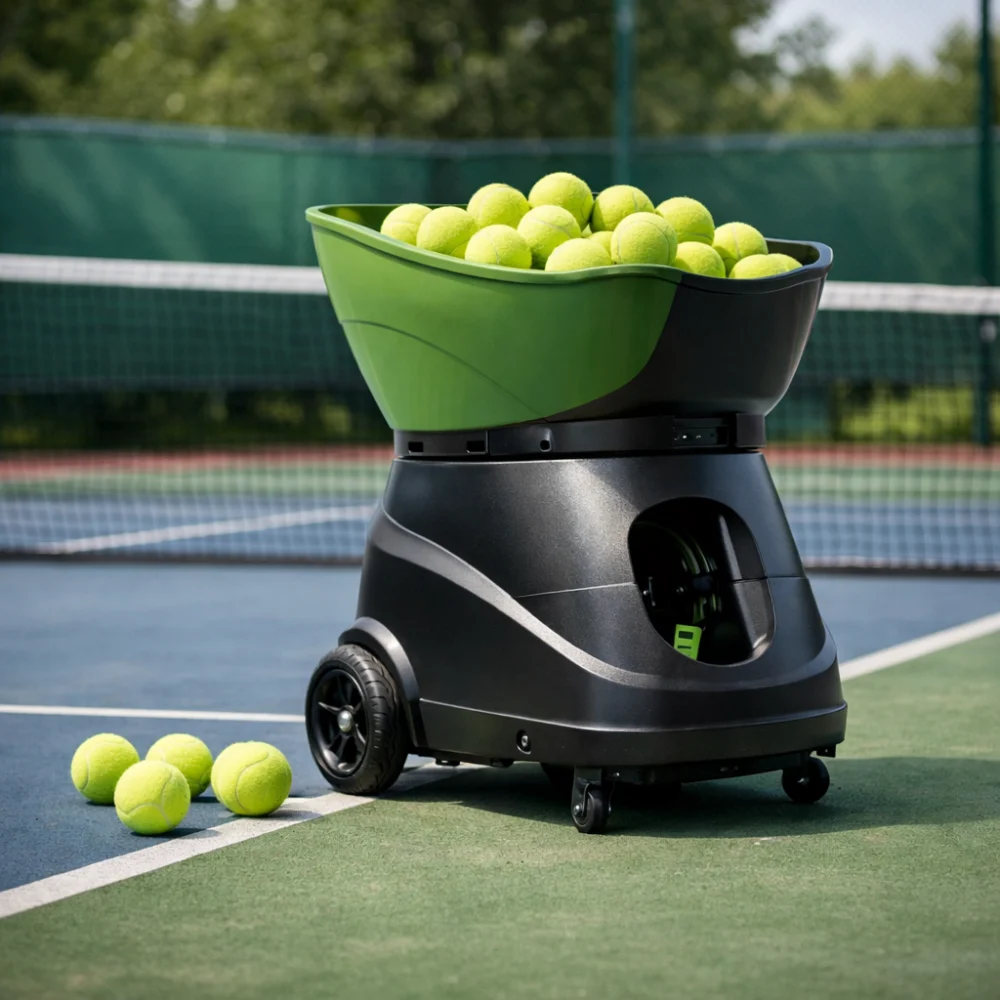
Tennis ball machines can be a practical way to practise on your own, repeat drills and work on consistency without needing a regular hitting partner. The right choice depends less on brand language and more on how you plan to use it: casual feeding, structured drills, or more varied practice sessions.
Because these machines can differ in the way they feed balls, move on court and power on, it helps to compare the features that affect training rather than focusing on a single headline claim. Specifications vary by model, so always check the individual product page before buying.
What should you look for in a tennis ball machine?
The best starting point is to match the machine to your practice style. If you mainly want simple repetition, a straightforward feeder may be enough. If you want to practise footwork, movement and reacting to different shots, look more closely at feed variation, oscillation and power options. The main trade-off is usually between simplicity and training variety.
| Feature | What It Means | Why It Matters | What To Check |
|---|---|---|---|
| Feed pattern | How the machine delivers balls during a session | Affects whether drills feel repetitive or varied | Look for the level of control described on the product page |
| Oscillation | Whether the machine changes where balls are delivered | Useful for movement, timing and realistic practice | Check whether movement is present and how it is described |
| Ball capacity | How many balls the machine can hold at once | Influences how long you can practise before refilling | Compare stated capacity and decide how often you want to stop |
| Power source | How the machine runs | Determines where and how easily you can use it | Check whether it is battery-powered, mains-powered or both |
| Portability | How easy it is to move, carry and store | Important if you transport it to different courts | Look for size, weight and handling details on the product page |
| Control options | How you adjust speed, feed or drill style | More control can make practice more targeted | Check which adjustments are clearly listed rather than assumed |
Key decision criteria explained
Feed control and drill variety
Some buyers want a machine that simply returns a steady stream of balls. Others need more variation so they can practise forehands, backhands, movement and recovery. More adjustment generally gives more useful training options, but it can also make the machine less straightforward to use.
Oscillation and placement
Oscillation matters if you want balls to land in different parts of the court rather than the same spot every time. That can make solo sessions feel more like real play and less like feeding practice. If you mainly want rhythm and repetition, a simpler machine may be enough.
Capacity and session length
A larger ball capacity usually means fewer interruptions for refilling, which is helpful for longer practice blocks. A smaller-capacity machine can still suit shorter, focused sessions or occasional use. Think about how much stopping and restarting you are comfortable with during training.
Power and setup
Power is one of the most practical buying decisions. A machine that suits your court access, charging habits or available mains supply will be easier to use regularly. If you expect to move it often, consider the convenience of setup as well as the training features.
Types of tennis ball machines
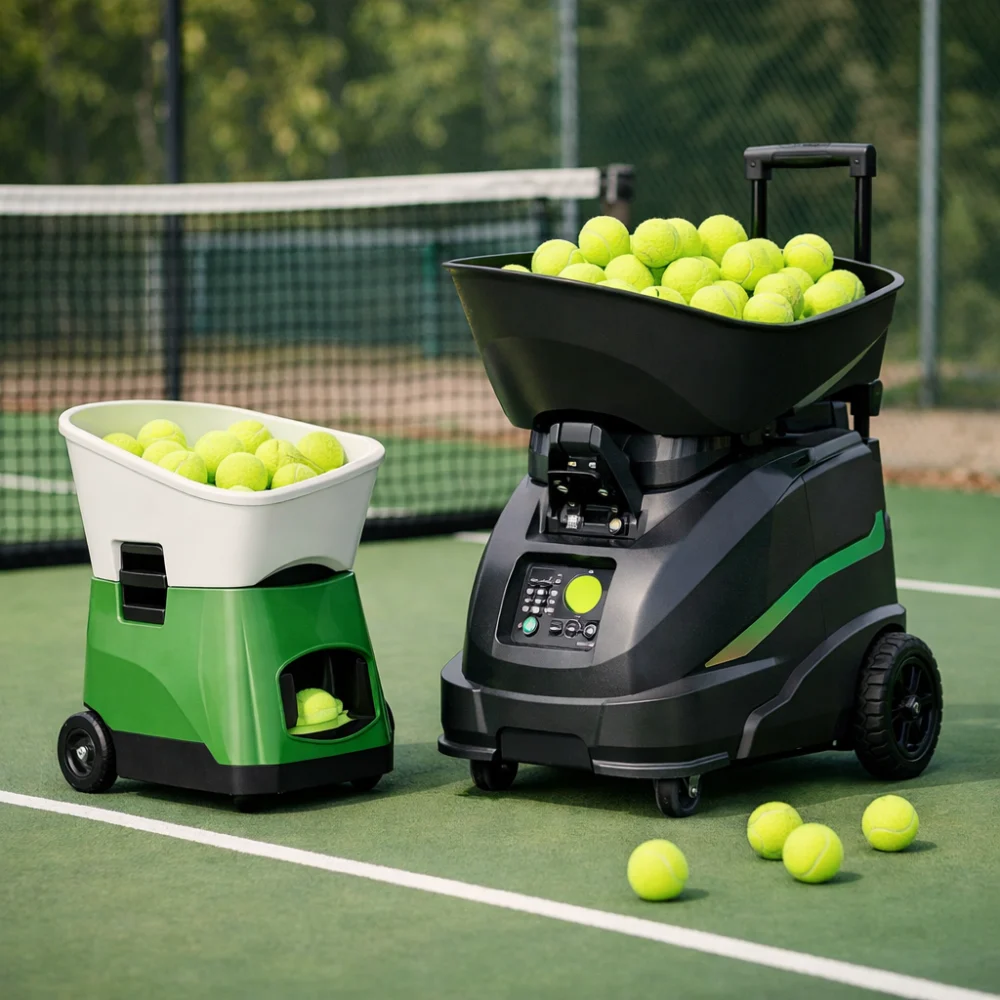
At category level, the main difference is usually between simpler ball feeders and more adjustable training machines. A basic feeder suits straightforward repetition and lower-complexity practice. A more adjustable machine suits buyers who want to work on movement, variety and more structured drills.
Some machines are designed to be more portable, while others may place more emphasis on extended practice or broader control. The most useful distinction is not the marketing label but how much variation you need in day-to-day training.
Which machine suits which buyer?
| Buyer need | What to prioritise | What may matter less |
|---|---|---|
| Solo practice for basic consistency | Straightforward feeding, easy setup, simple controls | Advanced drill options |
| Movement and footwork drills | Oscillation, placement variation, reliable feed behaviour | Maximum simplicity |
| Longer practice sessions | Ball capacity, power convenience, straightforward refilling | Ultra-compact size |
| Occasional or transportable use | Portability, manageable storage, easy handling | Large footprint or more complex setup |
Common mistakes to avoid
- Choosing on capacity alone. A large hopper is useful, but it does not replace the need for suitable feed control or court movement.
- Assuming every machine offers the same kind of drills. Some are much more limited than others, so check the description carefully.
- Overlooking power and setup. A machine that is awkward to charge, carry or position may get used less often.
- Buying more complexity than you need. If you only want simple repetition, extra features can add cost and make the machine less convenient.
Safety and suitability caveats
Tennis ball machines are generally bought for practice, but suitability still depends on where and how you plan to use them. Check that the machine is appropriate for your court space, your ability to move and store it, and any requirements listed on the product page. If you are buying for a junior player or a shared setting, make sure the control level and setup are suitable for the intended user.
Maintenance and storage considerations
Ownership is usually simpler when you think ahead about storage, charging and transport. A machine that is easy to keep clean, easy to recharge and easy to store will tend to be more practical in regular use. If a model uses a battery or other consumable power source, check what the page says about charging or replacement expectations before you decide.
It is also worth thinking about where the machine will live between sessions. A compact design may suit home storage, while a larger unit may be better if you have a dedicated place to keep it.
How to compare options efficiently
- Decide whether you need simple ball feeding or more varied drill practice.
- Check whether oscillation, feed variation and control options match that use.
- Compare power, capacity and portability for your usual training routine.
- Look for details that affect convenience, such as setup and storage.
- Read the individual product page carefully before deciding.
Summary buyer decision checklist
- Does the machine suit your main training goal?
- Is the feed style simple enough or varied enough for your drills?
- Does it offer the movement or placement behaviour you want?
- Will the power source work for your usual court access?
- Is the capacity practical for the length of session you want?
- Can you transport, store and set it up comfortably?
- Have you checked the individual product page for the exact specification?
Frequently asked questions
Do I need oscillation in a tennis ball machine?
Not always. Oscillation is most useful if you want to practise movement, court coverage and reaction, while a simpler feeder may be enough for rhythm and consistency work.
Is a larger ball capacity always better?
Not necessarily. A larger capacity can reduce interruptions, but it may also come with a bigger, less portable machine. Choose the capacity that suits the length and style of your sessions.
What is the main difference between basic and more advanced machines?
Basic machines usually focus on feeding balls in a more straightforward way. More advanced machines are typically aimed at buyers who want greater control over placement, variation or drill structure.
Should I prioritise portability or features?
That depends on how you will use the machine. If you move it often or have limited storage space, portability may matter more; if it stays in one place, extra training features may be more useful.
Are tennis ball machines suitable for beginners?
They can be, provided the controls and setup are simple enough for the user. Beginners often benefit from straightforward feeding before moving on to more varied drills.
What should I check before buying one online?
Check the feed behaviour, any movement features, the power source, the stated capacity and how portable the unit is. Those details usually tell you far more than a general product name.

