
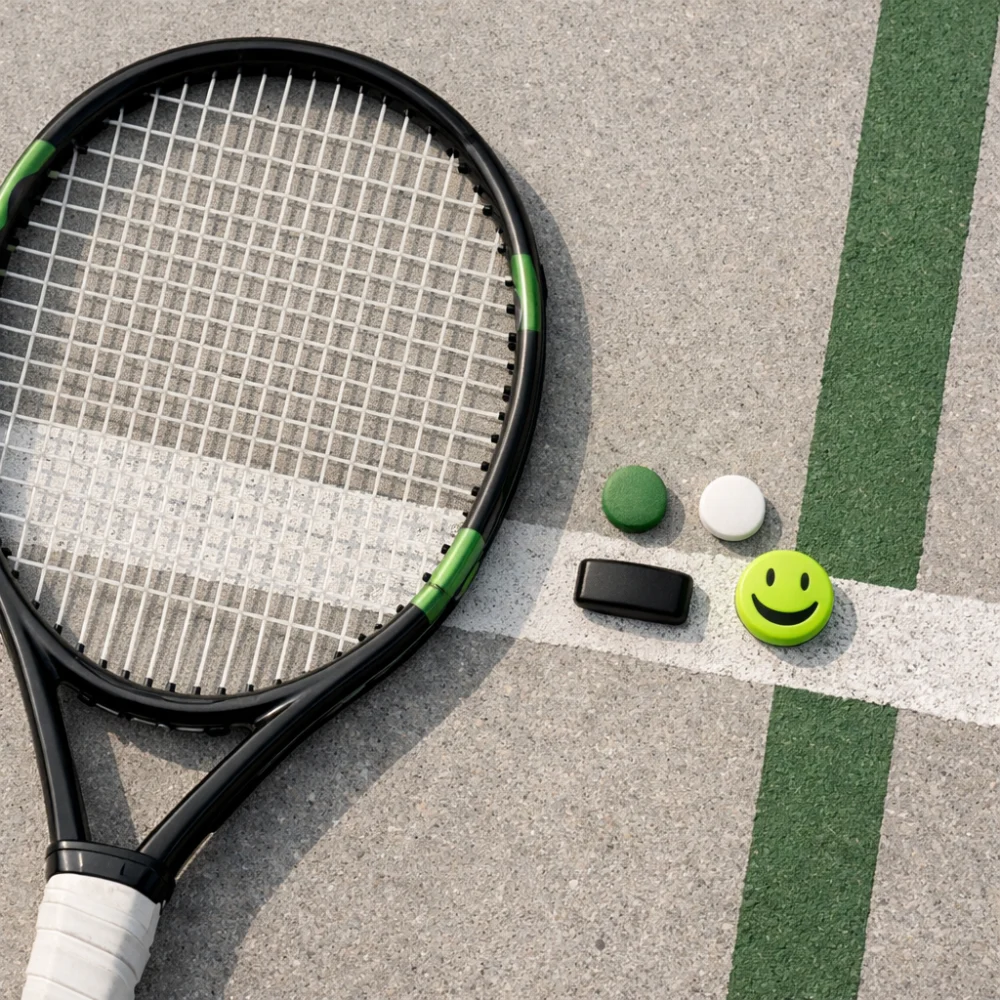
Tennis racket dampeners are small accessories fitted between the strings to change the feel of contact and reduce the sharp vibration some players notice. They are a simple, low-cost category, but the right choice still depends on how you want the racket to feel rather than on looks alone.
If you are buying one for the first time, it helps to think about comfort, string pattern and how much feel you want to keep from the racket. Some players want a softer sensation; others prefer to preserve as much feedback as possible.
Because dampeners are easy to overlook, buyers often focus on the shape or colour and ignore the bigger question of whether the accessory suits their playing preference. A little comparison now can save you from choosing something that changes the racket feel more than you expected.
What should I look for in a tennis racket dampener?
The best starting point is how you want the racket to feel at impact. A dampener can soften the ping or sharpness many players dislike, but it should not be treated as a performance upgrade in itself. The main trade-off is between a quieter, softer feel and retaining more of the direct string feedback some players prefer.
| Feature | What it means | Why it matters | What to check |
|---|---|---|---|
| Fit | How the dampener attaches to the strings | If it does not sit securely, it may not stay in place during play | Check that it is designed for tennis racket strings and suits your string spacing |
| Feel change | How much vibration and string noise it reduces | Different players want different levels of softness and feedback | Look for a style that matches whether you want a subtle or more noticeable change |
| Shape | The physical design of the dampener | Shape can affect placement, contact area and personal preference | Choose a shape you find easy to fit and comfortable to use |
| Material | Usually a flexible accessory material | Material influences grip on the strings and overall feel | Check the product page for the material description and finish |
| Pack size | Whether it is sold singly or in multiples | Useful if you like to keep spares or share accessories | Confirm how many are included before buying |
Key decision criteria explained
Attachment and fit
Most buyers should first check that the dampener is intended for tennis racket strings and can be positioned securely. A secure fit matters more than decorative design, because a loose accessory may shift or fall out. Specifications vary by model, so always check the individual product page before buying.
How much feel you want to keep
Some dampeners reduce the sharp vibration sensation quite noticeably, while others make only a small difference. If you like the direct response of the strings, choose a subtler style. If you mainly want to reduce the high-pitched sound and harshness, a more noticeable dampening effect may suit you better.
Shape and size
Common designs vary in outline, surface area and where they sit on the string bed. The practical question is not whether a shape is fashionable, but whether it is easy to place and whether it gives the feel you want. A compact design may be less intrusive, while a larger one may make its presence more obvious.
Material and finish
Most shoppers will be choosing between flexible, simple accessories rather than technical equipment. A smooth finish may feel neat and low-profile, while a more textured design may appeal if you want a firmer grip on the strings. Check the product description for the material rather than assuming all dampeners behave the same.
Common types and variants
The category is fairly narrow, but there are still a few common variations. Simple round or oval dampeners tend to suit buyers who want a minimal change and an unobtrusive look. More distinctive shapes may appeal to players who want something easier to spot or simply prefer a certain style.
Single dampeners suit most players who only need one accessory for a racket. Multipacks may be better if you want spares, share equipment within a family or prefer to have replacements available. The limitation is that a larger pack does not automatically mean a better match for your playing preference.
Which dampener suits different buyers?
| Buyer need | What to prioritise | Why |
|---|---|---|
| Beginner | Easy fit and a straightforward design | It keeps the choice simple and reduces the chance of choosing an accessory that feels distracting |
| Player sensitive to impact feel | More noticeable dampening effect | They are more likely to value a softer sensation at contact |
| Player who likes direct feedback | Subtle dampening and minimal interference | They may want to keep more of the racket’s original feel |
| Family or frequent replacement buyer | Multipack format | It can be convenient to keep spares in the kit bag |
Common mistakes and misunderstandings
- Choosing only by appearance. A fun shape is fine, but the real question is whether it changes the feel in a way you like.
- Expecting a dampener to transform performance. It is mainly about feel and sound, not a substitute for choosing the right racket or strings.
- Ignoring fit. A dampener that does not sit properly on the string bed is less likely to be satisfying to use.
- Assuming all dampeners feel the same. Different designs can feel noticeably different in use, even when they look similar.
Safety and suitability caveats
Tennis racket dampeners are simple accessories, but they should still be chosen with the racket and string pattern in mind. If you are buying for a junior player, or for a racket with an unusual string layout, check that the product is intended for that kind of use before purchasing. Keep expectations realistic: a dampener can change feel, but it is not a guarantee of comfort or protection.
Maintenance, storage and lifespan considerations
Most dampeners need very little care beyond keeping them clean and storing them with your racket or kit bag. They may wear gradually depending on use, so it is sensible to check whether the accessory still sits securely and feels as expected. If you like to keep spares, a multipack can make that easier without adding much bulk.
How to compare options efficiently
- Decide whether you want a subtle change or a more noticeable reduction in vibration and string noise.
- Check that the dampener is suitable for tennis racket strings and that the attachment style looks practical for your racket.
- Compare shape, size and material rather than relying on colour alone.
- Choose between a single item and a multipack based on whether you want a spare.
- Read the individual product page carefully for any model-specific details.
Summary buyer decision checklist
- Does the dampener suit the way you want the racket to feel?
- Is the attachment style appropriate for your racket’s string bed?
- Do you prefer a subtle or more noticeable feel change?
- Would a single item or multipack be more practical?
- Have you checked the individual product page for model-specific details?
Frequently asked questions
Do tennis racket dampeners change how the racket plays?
They mainly change the feel and sound at contact, rather than the core performance of the racket. Some players notice a softer sensation, while others feel only a small difference. The effect is subjective, so it is best to think of a dampener as a comfort and feel accessory.
Will any dampener fit any tennis racket?
Not necessarily. Most are designed for use with tennis racket strings, but fit can still depend on the spacing and the way the dampener attaches. It is worth checking the product description before buying rather than assuming all models are interchangeable.
Should I choose a round shape or a novelty shape?
Either can work if it suits your preference. A simpler shape is often the easiest place to start if you want a minimal change and a low-profile look. Novelty shapes may appeal if you want something more visible or simply prefer the style.
Do dampeners make the racket quieter?
They can reduce the sharp string sound that some players hear at impact, but the result varies by model and by player perception. If sound reduction is your main aim, check the product details carefully and be realistic about the level of change.
Can a beginner use one?
Yes. Beginners often choose dampeners because they are simple accessories and easy to fit. The main thing is to avoid overthinking the purchase and focus on whether you want more or less feedback from the racket.
Is it better to buy one or a pack?
That depends on how you use your kit. A single dampener is enough for most players, while a pack can be useful if you want spares or like to keep one in a bag. A larger pack is convenient, but it should not be the deciding factor unless you need extra pieces.

