
Document Scanners
Document Scanners are used to turn paper documents into digital files that can be stored, shared, searched and organised on a computer or compatible device. Whether you are sorting home paperwork, scanning business documents, archiving receipts, digitising forms or reducing desk clutter, the right scanner can make document handling much easier.
This category includes document scanners for different homes, offices, students, businesses and record keeping needs. Depending on the product, you may find flatbed scanners, sheet fed scanners, portable scanners, receipt scanners, duplex scanners, wireless scanners and compact desktop scanning devices where listed.
- Document Scanners
VIISAN S21 Large Format Book Scanner A2, 26MP, Windows and macOS
Original price was: £330.00.£299.98Current price is: £299.98. *View On Amazon* - Document Scanners
Jourist Book Cradle for Overhead Scanners and Book Scanners
£24.95 *View On Amazon* - Document Scanners
Innex DC500 13MP 4K USB Document Camera, Webcam and Scanner
£155.00 *View On Amazon* - Document Scanners
Portable 900DPI Image Scanner with Case, Scan Wand for A4 Documents and Photos (Black)
£67.19 *View On Amazon* - Document Scanners
Savornest Document Camera Book Scanner 23MP HD A3 with OCR, USB SDK/TWAIN
£199.00 *View On Amazon* - Document Scanners
Tera D5100Y USB Wired Handheld 1D 2D QR Barcode Scanner
Original price was: £26.89.£25.66Current price is: £25.66. *View On Amazon* - Document Scanners
Portable Handheld Scanner for Pictures, Receipts and A4 Documents, Silver
£48.83 *View On Amazon* - Document Scanners
CZUR ET Max Document Scanner with 38MP UHD Camera, 410 DPI
£799.00 *View On Amazon* - Document Scanners
PenPower WorldPenScan Go Digital Highlighter and Translator Pen
£119.95 *View On Amazon* - Document Scanners
VIISAN S21 A2 Overhead Scanner 23MP 600dpi Document & Book Scanner
£309.00 *View On Amazon*




What Are Document Scanners?
Document scanners are devices that capture the contents of paper documents and convert them into digital images or files. They are commonly used with computers, laptops, mobile devices or network setups depending on the model and compatibility.
Some scanners are designed for single pages, while others can handle multiple sheets through an automatic document feeder where listed. Some are better for photos, books and fragile papers, while others are better for fast office paperwork.
The right choice depends on what you need to scan, how often you scan and how you want to store the finished files.
What Document Scanners Are Used For
Document scanners can be used for invoices, receipts, letters, contracts, schoolwork, ID copies, forms, certificates, notes, reports, manuals, business records and home administration.
For home users, a scanner can help organise bills, warranties, family records and old paperwork. For offices, it can support digital filing, email attachments, finance records and customer documentation. For students, it can help capture notes, handouts and assignment paperwork.
Scanners can also be useful for people who want to reduce paper storage, create backups of important documents or send clear copies without relying on phone photos.
How To Choose The Right Document Scanner
Start with the type of documents you scan most often. If you scan loose sheets regularly, a sheet fed scanner or scanner with an automatic document feeder may be useful where listed. If you scan books, thicker items, fragile papers or photos, a flatbed scanner may be more suitable.
Next, think about volume. Occasional home scanning may only need a simple compact scanner, while regular office scanning may need faster feeding, duplex scanning and better paper handling where listed.
Finally, check compatibility. Make sure the scanner works with your computer, operating system, software and connection type. USB, wireless and network scanning options can vary by product.
Key Features To Compare
Scanner type is one of the first features to compare. Flatbed scanners, sheet fed scanners and portable scanners all suit different jobs.
Resolution may matter if you need detailed scans where listed. Basic document scanning often focuses on clear text, while photos, diagrams and detailed records may need higher quality settings depending on the product.
Duplex scanning can be useful where listed because it allows both sides of a page to be scanned. This can save time when scanning double sided documents.
Automatic document feeders can make larger scanning jobs easier where included. Instead of placing each sheet manually, you may be able to scan a stack of pages, depending on the product and paper condition.
Software features may also matter. Some scanners may include OCR, file organisation tools, scan to PDF options or cloud related features where listed. Always check what is included and what requires separate software or account setup.
Flatbed Scanners Compared With Sheet Fed Scanners
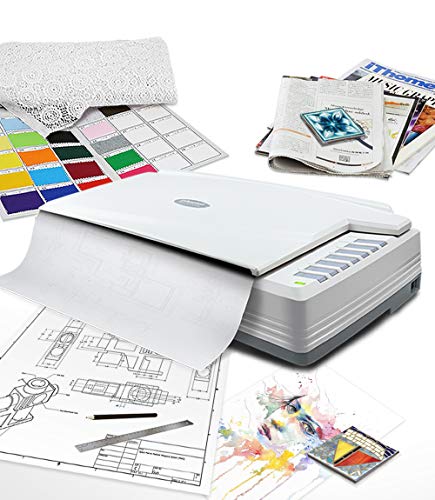
Flatbed scanners have a glass surface where the document is placed flat for scanning. They can be useful for photos, certificates, books, delicate papers and items that cannot be fed through rollers.
Sheet fed scanners pull pages through the device. They can be more practical for scanning lots of loose documents, invoices or office paperwork where the paper is suitable.
The trade off is flexibility against speed. A flatbed scanner can handle a wider range of item types, while a sheet fed scanner can be more efficient for repeated document scanning.
Portable Scanners Compared With Desktop Scanners
Portable document scanners are usually compact and easier to move between locations. They can be useful for travel, field work, students, mobile workers and small desks where space is limited.
Desktop scanners usually stay in one place and may offer larger paper handling, better stability or more office focused features where listed.
The right choice depends on how and where you scan. If the scanner stays beside a computer, a desktop model may be practical. If you need to scan away from the desk, a portable scanner may be more useful.
Document Scanners Compared With All In One Printers
All in one printers often include scanning, printing and copying in one device. They can be convenient for general home or office use where space and budget matter.
A dedicated document scanner is usually chosen when scanning is the main priority. It may offer better document feeding, portability, scan workflow or software features depending on the product.
The trade off is convenience against focus. An all in one printer can handle several tasks, while a document scanner may be better suited to regular scanning and digital filing.
Beginner Regular User And Experienced User Guidance
Beginners should focus on a scanner that is easy to connect, simple to use and suitable for common document types. Clear software, straightforward buttons and basic PDF scanning can be more useful than complex settings.
Regular users may want to compare scan speed, duplex support, feeder capacity where listed, file format options, software tools and how easily scans can be saved to folders.
Experienced users often look more closely at OCR quality where included, network support, colour handling, paper size compatibility, scan profiles, driver support and integration with existing filing workflows.
Use Cases By Setup
For home paperwork, a document scanner can help organise letters, bills, receipts, warranties, forms and personal records.
For small offices, scanners can support digital filing, invoice handling, customer records, signed forms and shared document storage.
For students, compact scanners can help digitise notes, worksheets, research pages and handouts where suitable.
For finance and bookkeeping, receipt scanning and PDF organisation may be useful where listed. Clear naming and folder habits can make records easier to manage.
For mobile workers, portable scanners can make it easier to capture documents away from the office where compatible.
For archiving, flatbed scanners may be useful for older papers, certificates or items that need careful handling.
Fit Size And Desk Compatibility
Before choosing a document scanner, think about where it will sit. Some scanners need desk space for paper feeding, lid opening, cable access or output trays where listed.
A compact scanner can suit small desks, bedrooms and home offices, while a larger scanner may be more practical for frequent office scanning.
If you need to store the scanner between uses, check its size, weight and whether it can be packed away easily. For shared offices, consider whether several people need access to it.
Cable length, power access and computer placement can also affect how easy the scanner is to use day to day.
Connectivity And Device Compatibility
Document scanners may connect by USB, WiFi, network cable or other methods where listed. The right connection depends on your computer, office layout and whether more than one person needs to use the scanner.
USB scanners can be simple for one computer setup. Wireless or network scanners may be more flexible where compatible, but they may need extra setup.
Check operating system support carefully. Some scanners may support Windows, macOS, Chromebook or mobile devices where listed, but compatibility can vary.
If software is required, check whether it is included, downloadable or compatible with your device before buying.
File Formats OCR And Software
Document scanners may save files as PDF, JPEG or other formats where supported. PDF is often useful for documents, while image formats may suit photos, diagrams or simple visual records.
OCR means optical character recognition. Where included, OCR can help turn scanned text into searchable or editable text, depending on the software and scan quality.
Not every scanner includes OCR or advanced document management tools. If searchable PDFs, batch naming, cloud uploads or email scanning matter, check the product details carefully.
Software can make a big difference to daily use. A good scanner should fit the way you actually organise files.
Paper Handling And Document Condition
Paper handling matters if you scan different document types. Thin paper, folded sheets, receipts, thick cards, old documents and glossy paper may behave differently.
Sheet fed scanners usually work best with suitable loose pages in good condition. Fragile, creased, stapled or bound items may be better suited to a flatbed scanner where appropriate.
Always remove staples, clips and loose items before feeding paper into a scanner unless the product instructions say otherwise. This helps reduce jams and damage.
If you scan different paper sizes, check supported sizes where listed before choosing.
Privacy Security And Practical Considerations
Scanned documents may contain personal, financial or business information, so privacy matters. Store digital files securely and avoid leaving sensitive documents on shared computers or public devices.
If a scanner connects to cloud services or shared folders where listed, check where files are saved and who can access them. Use passwords and account permissions where appropriate.
For business use, follow any data handling rules that apply to your organisation. A scanner can make document handling easier, but the files still need to be stored responsibly.
Physical paperwork should also be handled carefully. Shred or store originals securely where needed.
Safety And Setup Considerations
Document scanners should be placed on a stable surface with enough space for paper movement and cables. Avoid placing scanners where they may be knocked, pulled by cables or exposed to liquids.
Use the correct power adapter and cables supplied or clearly compatible where listed. Do not use damaged cables or loose plugs.
Keep paper paths clear and avoid forcing documents through the scanner. If a jam occurs, follow the product guidance rather than pulling roughly.
For shared spaces, route cables neatly to reduce trip hazards and keep the scanner area tidy.
Care Cleaning And Maintenance
Document scanners work better when they are kept clean and dust free. Dust, paper fibres and marks on the scanning surface can affect scan clarity.
For flatbed scanners, keep the glass clean using suitable methods and follow product guidance. Avoid harsh cleaners unless allowed by the instructions.
For sheet fed scanners, rollers and paper paths may need occasional cleaning where recommended. Regular maintenance can help reduce misfeeds and keep scans more consistent.
Store portable scanners in a case or safe drawer where suitable, and avoid placing heavy items on top of them.
Useful Accessories To Consider
Useful accessories for document scanners may include USB cables, power adapters where compatible, storage cases, cleaning cloths, document wallets, file folders, external hard drives, USB flash drives and cloud storage options where suitable.
For office setups, cable management clips, desk organisers and labelled folders can help create a smoother scanning workflow.
For archiving, external storage or backup drives can be useful so scanned documents are not only kept on one computer.
For portable scanning, a laptop bag or protective pouch can help keep the scanner and cables together.
Why Buy From YPC?
At YPC, we understand active lifestyles and the need for practical products that work in real use. Document scanners should be chosen for compatibility, scanning type, paper handling, software support and the way documents will actually be digitised and stored.
YPC brings together a wide range of computer, electronics and office products so you can compare available document scanners by use, connection, features and practical suitability. Browse the Document Scanners category to compare the range and choose the right scanner for home paperwork, office records, study, archiving or everyday digital filing.
FAQs
What is a document scanner used for?
A document scanner is used to turn paper documents into digital files. It can be used for letters, invoices, receipts, forms, notes, records, certificates and general paperwork.
What type of document scanner should I buy?
Choose based on what you scan most. Flatbed scanners suit books, photos and delicate documents, while sheet fed scanners suit regular loose paperwork where compatible.
What is a duplex document scanner?
A duplex document scanner can scan both sides of a page where listed. This can be useful for double sided forms, contracts, letters and office paperwork.
Is a document scanner better than a printer scanner?
A dedicated document scanner may be better for regular scanning, faster workflows or document handling where listed. A printer scanner can be useful if you also need printing and copying.
Can document scanners create PDF files?
Many document scanners can create PDF files where supported by the scanner or software. Check the product details if PDF scanning is important.
What does OCR mean on a scanner?
OCR stands for optical character recognition. Where included, it can help turn scanned text into searchable or editable text, depending on software and scan quality.
Can I use a document scanner with a laptop?
Yes, many document scanners can be used with laptops where compatible. Check the connection type, operating system support and whether any software or driver is needed.
How should I look after a document scanner?
Keep it clean, dry and dust free. Follow the product guidance for cleaning the glass, rollers or paper path, and avoid forcing damaged or unsuitable paper through the scanner.
Find out more with our Document Scanner Buyers Guide.
Looking for more options?
Browse our full range of Printers for other great choices to suit your space, goals, and budget.
 Getting ready for Summer? View our Home and Garden Products

Heading outdoors this winter? Take a look at our Outdoor Clothing.