
Agility Ladders and Cones
Agility ladders and cones are training tools used to improve footwork, coordination, reaction speed, movement control and fitness drills. This category is ideal if you want equipment for football, rugby, tennis, boxing, martial arts, athletics, bootcamp sessions, PE lessons, home workouts or general fitness training.
The right agility ladder or cone set depends on where you train, how much space you have and the type of drills you want to practise. A ladder is useful for footwork patterns and quick steps, while cones are better for marking routes, turns, shuttle runs and movement zones.
- Agility Ladders and Cones
YGORTECH 35 Piece Agility Hurdles Training Equipment Set with Storage Bag
£36.99 *View On Amazon* - Agility Ladders and Cones
50 Pcs Football Training Cones with Mesh Carry Bag
£18.04 *View On Amazon* - Agility Ladders and Cones
ND Sports Agility Ladder Football Training Set with 10 Rungs and Carry Bag
£16.99 *View On Amazon* - Agility Ladders and Cones
PATIKIL 9 Inch Spot Markers, 12-Piece Non-Slip Floor Dots, Red/Blue
£18.99 *View On Amazon* - Agility Ladders and Cones
Trukafie Set of 6 Dog Agility Cavaletti Obstacles with Poles
£20.99 *View On Amazon* - Agility Ladders and Cones
Hikeen 2-Pack Agility Ladder with Carry Bag, Black
£29.99 *View On Amazon* - Agility Ladders and Cones
PATIKIL 12 Inch Red Spot Markers, 6 Pack Floor Dots
£14.89 *View On Amazon* - Agility Ladders and Cones
MAXVINI Football Goals for Kids 6×4 FT Pop Up Goal for Garden, 2 × Portable Soccer Goal Set with Football Training Equipment for Kids Foldable Net with Speed Agility Ladder Disc Cones & Carry Bag
Original price was: £59.99.£56.08Current price is: £56.08. *View On Amazon* - Agility Ladders and Cones
ND Sports Training Disc Cones 25 or 50 Pack, Multi-Colour
£8.99 *View On Amazon* - Agility Ladders and Cones
FORZA Football SuperCone Training Marker Domes, Pack of 20, 14 cm
£31.99 *View On Amazon* - Agility Ladders and Cones
Fitness Health 10 Hexagon Training Cones, Mixed Colours
£9.99 *View On Amazon* - Agility Ladders and Cones
FORZA Agility Rings Pack of 12 Pink Training Rings
£24.99 *View On Amazon* - Agility Ladders and Cones
Kosma 15-Piece Adjustable Agility Hurdle Set with Carry Bag
£19.99 *View On Amazon* - Agility Ladders and Cones
12-Pack Agility Training Rings, 45 cm Speed Hoops with Storage Bag
£19.99 *View On Amazon* - Agility Ladders and Cones
3-in-1 Agility Ladder, 12 Rungs, 4.8 m Speed Training Ladder with Bag
£21.99 *View On Amazon* - Agility Ladders and Cones
BREEZENEST 5-Piece Agility Training Set with Removable PVC Slalom Poles
£25.99 *View On Amazon* - Agility Ladders and Cones
Feeberse Football Training Cones, 25 Pack Sports Marker Cones
£18.99 *View On Amazon* - Agility Ladders and Cones
Axceroh Tangle-Free Agility Ladder with 12 Fixed Rungs and Carry Bag
Original price was: £21.00.£19.99Current price is: £19.99. *View On Amazon* - Agility Ladders and Cones
10-Rung Reflective Nylon Agility Ladder with Carry Bag
£15.99 *View On Amazon* - Agility Ladders and Cones
Football Training Set with Agility Ladder, Parachute, Cones and Rings
£16.99 *View On Amazon*


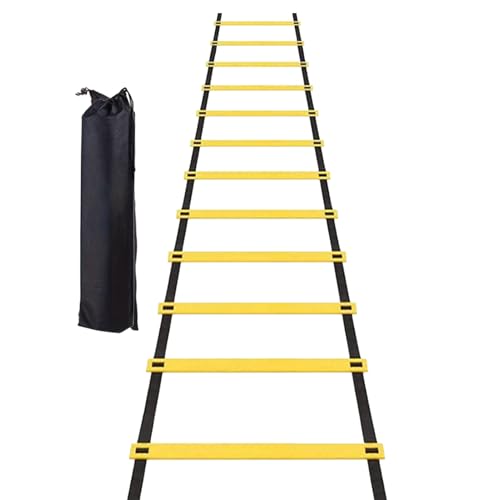


What Are Agility Ladders And Cones Used For?
Agility ladders and cones are used to create structured movement drills. They help mark out training areas, guide foot placement, set up speed exercises and make workouts more varied.
They are commonly used by coaches, personal trainers, sports clubs, schools, athletes, martial artists and home fitness users. They can support warm ups, conditioning, reaction drills, sprint practice, footwork training and change of direction exercises.
How To Choose The Right Agility Ladder Or Cone Set
Start with the training space. If you train indoors, in a garage or on a patio, a shorter ladder or smaller cones may be more practical. If you train on grass, sports pitches or larger outdoor areas, a longer ladder and a bigger cone set can give more drill options.
Durability is one of the most important buying factors. Ladders may be stepped on, dragged, folded and packed away repeatedly. Cones may be knocked over, stood on or used in wet grass. Look for equipment that suits the surface and level of use.
Visibility also matters. Bright cones and clear ladder rungs are easier to see during fast drills, especially outdoors or in group training. If the equipment is hard to see, drills become less smooth and less safe.
Agility Ladder Or Training Cones?
An agility ladder is best for footwork drills. It helps you practise fast feet, rhythm, coordination and controlled steps. It is useful for sports where quick foot placement matters, such as football, tennis, boxing, rugby and martial arts.
Training cones are more versatile for marking space. They can be used for shuttle runs, sprint starts, slalom drills, turning points, passing drills, warm ups, circuits and coaching layouts.
The best setup often includes both. The ladder develops footwork patterns, while cones help create routes, targets and movement challenges.
Flat Cones, Marker Cones Or Tall Cones?
Flat cones are useful when you want low profile markers that are less likely to trip people. They are practical for indoor sessions, sports pitches, warm ups and drills where players move close to the markers.
Marker cones are usually small, stackable and easy to carry. They are useful for setting out zones, grids, turning points and group drills.
Tall cones are easier to see from a distance and can be useful for outdoor coaching, sprint drills and larger training areas. The trade off is that they take up more storage space and may be easier to knock over.
Key Features To Compare
When comparing agility ladders and cones, look at length, rung spacing, material, visibility, storage bag, cone height, cone quantity, flexibility, surface suitability and how easy the equipment is to pack away.
For agility ladders, rung spacing matters because it affects the rhythm and difficulty of footwork drills. Adjustable rungs can be useful if you want to change the challenge or adapt drills for different users.
For cones, quantity matters. A small set may be enough for simple home workouts, while coaches and clubs may need larger sets for group sessions, pitches and multiple drill stations.
Best For Football, Boxing Or General Fitness?
For football and rugby, cones are useful for shuttle runs, passing grids, turning drills and acceleration work. Agility ladders can help with fast feet and coordination.
For boxing, kickboxing and martial arts, agility ladders can help with foot placement, rhythm and movement control. Cones can be used for angle changes, reaction drills and circuit training.
For general fitness, both ladders and cones can make workouts more interesting. They can be used for warm ups, cardio circuits, interval training and bodyweight movement drills.
Beginner, Coach Or Sports Club Use?
Beginners should look for simple, easy to set up equipment that can be used for short drills. A basic ladder and a small set of cones can be enough to start.
Coaches may need more cones, stronger storage bags and equipment that is easy to transport between sessions. Bright colours and quick setup are especially useful when working with groups.
Sports clubs may benefit from larger sets, durable cones and multiple ladders so several players can train at once. Equipment that packs away neatly can save time at the end of a session.
Indoor And Outdoor Training
Agility ladders and cones can be used indoors or outdoors, but the surface matters. Smooth floors, sports halls, grass, artificial turf and driveways all feel different underfoot.
On grass, cones may be easier to use than ladders in wet or uneven conditions. Indoors, low profile cones and flat ladders may be more practical, provided the equipment does not slip.
Make sure the training area is clear before starting. Remove obstacles, check the surface and leave enough space to slow down safely after fast drills.
Using Agility Ladders And Cones Safely
Agility drills can involve quick footwork, turning, sprinting and sudden changes of direction, so start at a controlled speed before increasing intensity.
Good movement matters more than rushing. If your feet keep catching the ladder or you keep slipping around cones, slow down and improve control before going faster.
Wear suitable footwear for the surface and avoid using cones or ladders where they could create a trip hazard for other people. Stop if you feel sharp pain, dizziness, instability or unusual discomfort.
Useful Accessories To Consider
Useful accessories can include speed hurdles, resistance bands, skipping ropes, footballs, reaction balls, stopwatches, gym timers, sports cones, carry bags, water bottles and training bibs.
A stopwatch or timer can help structure intervals. Speed hurdles can add jumping and coordination drills. A carry bag makes cones and ladders easier to store and transport.
Choose accessories around the sport or workout you actually do, not just the biggest training kit available.
Why Buy Agility Ladders And Cones From YPC?
At YPC, we understand active lifestyles and the need for practical fitness equipment that fits real routines. Agility ladders and cones should be easy to set up, visible, durable and suitable for the way you actually train.
Browse the Agility Ladders and Cones range, compare the options and choose the training equipment that fits your sport, fitness goals and workout space.
Agility Ladders And Cones FAQs
What are agility ladders and cones used for?
Agility ladders and cones are used for footwork drills, speed training, coordination, reaction exercises, warm ups, sports coaching and fitness circuits.
Are agility ladders good for beginners?
Yes, agility ladders can suit beginners if drills start slowly and focus on control. Simple step patterns are a good starting point before increasing speed.
What do training cones help with?
Training cones help mark out routes, zones, turning points, sprint distances and drill areas. They are useful for sports training, coaching and fitness workouts.
Is an agility ladder better than cones?
They do different jobs. An agility ladder is better for footwork patterns, while cones are better for marking space, turns and movement routes.
What sports use agility ladders?
Agility ladders are used in football, rugby, tennis, boxing, martial arts, athletics, basketball and general fitness training.
What sports use training cones?
Training cones are used in football, rugby, athletics, tennis, bootcamp workouts, PE lessons, martial arts, fitness circuits and team coaching sessions.
How long should an agility ladder be?
The right length depends on the space and drills. Shorter ladders suit home workouts and indoor use, while longer ladders allow more varied footwork patterns.
Are flat cones better than tall cones?
Flat cones are useful when you want low profile markers that are less likely to trip people. Tall cones are easier to see from a distance and can suit outdoor coaching.
Can agility ladders improve speed?
Agility ladders can help practise foot speed, rhythm and coordination, but speed also depends on strength, technique, fitness, sport skill and consistent training.
Can cones be used for home workouts?
Yes, cones can be used for home workouts if you have enough safe space. They are useful for shuttle runs, turning drills, circuits and movement challenges.
Can agility ladders be used indoors?
Yes, agility ladders can be used indoors on suitable surfaces. Make sure the ladder does not slip and there is enough space around the drill area.
What should I look for in an agility ladder?
Look at length, rung spacing, material, visibility, adjustability, storage bag and whether the ladder suits indoor, outdoor or sports club use.
What should I look for in training cones?
Look at cone height, flexibility, colour, quantity, stackability, durability and whether the cones suit the surface and type of training.
Do agility ladders and cones need much storage space?
No, most ladders fold or roll up, and cones usually stack together. A carry bag can make storage and transport easier.
How do I care for agility ladders and cones?
Wipe them clean after outdoor use, let wet equipment dry properly, check for cracks or damage and store everything together so pieces do not get lost.
 Getting ready for Summer? View our Home and Garden Products

Heading outdoors this winter? Take a look at our Outdoor Clothing.