
Dash Cams
Dash cams are in vehicle cameras that record the road while you drive. This category is ideal if you want extra reassurance on UK roads, clearer evidence after an incident, or a practical way to record journeys, traffic situations and unexpected events.
The right dash cam depends on how you drive, where the camera will be fitted and what level of recording detail you need. A basic front facing dash cam may suit everyday driving, while a front and rear dash cam can give a wider view of what happens around the vehicle.
- Dash Cams
Hupejos Dash Cam 4 Channel 4K 360° Car Camera N500
Original price was: £249.99.£199.96Current price is: £199.96. *View On Amazon* - Dash Cams
WOLFBOX G930 10 Inch Rear View Mirror Camera with 5.8GHz WiFi, 4K Dash Cam Front and Rear with WDR, Touch Screen Rearview Mirror Backup Camera, Parking Monitor, Reverse Assist, Includes 64GB Card and GPS
Original price was: £169.99.£154.99Current price is: £154.99. *View On Amazon* - Dash Cams
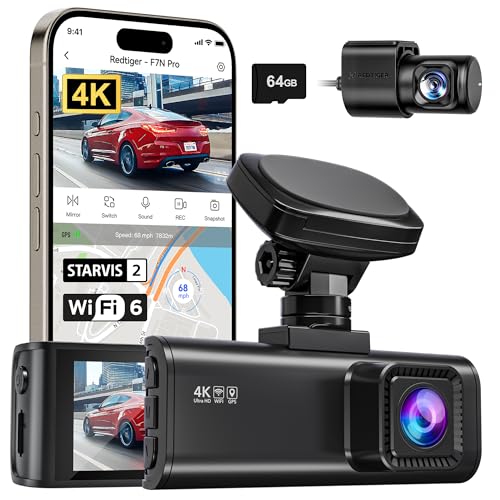
REDTIGER 4K Dash Cam Front and Rear, F7N Pro, 64GB Card Included, Built in WiFi GPS, 3.18 Inch IPS Screen
Original price was: £139.99.£99.99Current price is: £99.99. *View On Amazon* - Dash Cams
Vantrue N5S 4 Channel 360 Degree All Sides Dash Cam
Original price was: £359.99.£329.99Current price is: £329.99. *View On Amazon* - Dash Cams
2K Mirror Dash Cam 9.66 Inch 3 Channel Front Rear Inside View Mirror Camera with Night Vision, G Sensor, Parking Assistance, App Control, 24H Parking Monitor and 64G SD
Original price was: £48.99.£46.99Current price is: £46.99. *View On Amazon* - Dash Cams
EYPINS Dash Cam Front and Rear 2K Front Dashcam, 1080P Rear Car Camera with 32GB SD Card, WiFi App Control, 24 Hour Parking Mode, Loop Recording and G Sensor
Original price was: £29.99.£23.99Current price is: £23.99. *View On Amazon* - Dash Cams
4 Channel Dash Cam Front and Rear Inside 4K 2K 360 Degree Dash Camera for Cars with WiFi, GPS, Night Vision, 24/7 Parking Mode, 64GB DVR, G Sensor
Original price was: £99.99.£64.99Current price is: £64.99. *View On Amazon* - Dash Cams
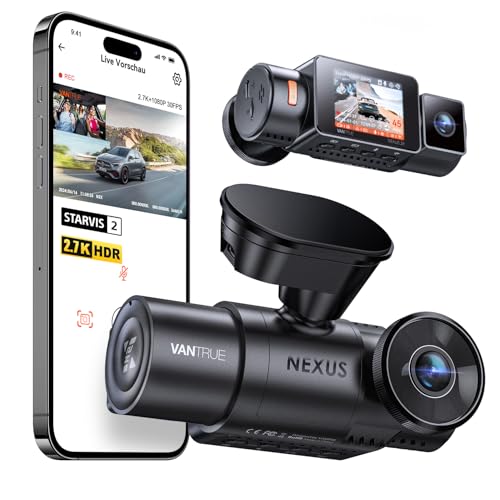
VANTRUE N2X Dash Cam Front Inside 2.7K 1080P Dual HDR, STARVIS 2, 2.5K 60FPS, 5G WiFi, GPS, Night Vision, Voice Control, Car Dash Cam, G Sensor, 24 7 Parking Mode, Supports 512GB
Original price was: £215.99.£169.99Current price is: £169.99. *View On Amazon*




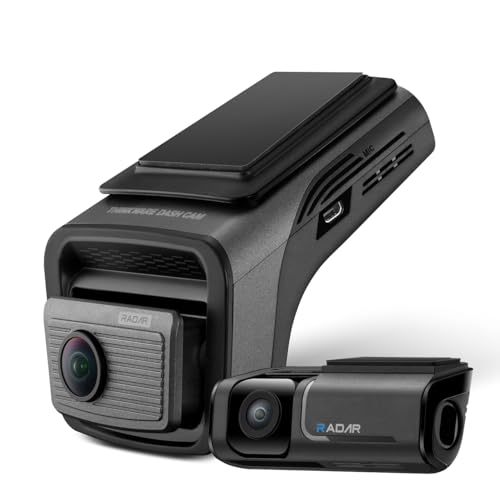

What Is A Dash Cam Used For?
A dash cam records video from inside your vehicle, usually through the windscreen. It can capture road position, traffic behaviour, number plates, weather conditions and the sequence of events before and after an incident.
Dash cams are commonly used by commuters, new drivers, delivery drivers, company vehicle users, taxi drivers, van owners, family car owners and anyone who wants a clearer record of what happened on the road.
How To Choose The Right Dash Cam
Start with the view you want to record. A front facing dash cam records the road ahead and is often the simplest option. A front and rear dash cam records both directions, which can be useful if you want more coverage around the vehicle.
Video quality is one of the most important buying factors. Clearer footage can make it easier to see road signs, traffic movement and number plates, especially in poor light. However, higher resolution footage may also need more storage, so memory card compatibility matters too.
Ease of use is also important. A dash cam should start recording reliably, save footage clearly and be simple to manage. Features such as loop recording, event detection, GPS, Wi-Fi, app support, parking mode and night recording may be useful, depending on how you plan to use it.
Front Dash Cam Or Front And Rear Dash Cam?
A front dash cam is usually the easiest and most affordable choice. It records the road ahead and suits drivers who mainly want a straightforward record of everyday journeys.
A front and rear dash cam gives broader coverage by recording behind the vehicle as well. This can be useful for motorway driving, parking incidents, rear end collisions and busy roads. The trade off is that installation may take longer and there may be more cables to manage.
For many drivers, a front dash cam is a good starting point. For higher mileage drivers or anyone wanting wider coverage, a front and rear setup may be more suitable.
Key Features To Compare
When comparing dash cams, look at video resolution, viewing angle, low light performance, storage support, loop recording, GPS, Wi-Fi, screen size, app control, parking mode and how the camera is powered.
Loop recording is useful because the dash cam can overwrite older footage when the memory card is full. Event detection may help save important clips when sudden movement or impact is detected. GPS can record location and journey data where supported.
Parking mode can be useful if you want the camera to monitor the vehicle while parked, but some setups may need hardwiring or additional power management. Always check the product details before assuming parking mode will work in every vehicle.
Installation And Everyday Use
A dash cam should be positioned so it records clearly without distracting the driver or blocking the view through the windscreen. Cable routing, power supply and windscreen placement all affect how tidy and practical the setup feels.
Some dash cams plug into a vehicle power socket, while others may be hardwired for a cleaner installation or parking mode support. Plug in models are usually easier for beginners, while hardwired setups can look neater but may need more care when fitting.
If you use a dash cam in a work vehicle or shared vehicle, privacy responsibilities may be more involved because the camera can record people, passengers, vehicles and locations. The safest approach is to use footage responsibly and check what applies to your situation.
Beginner, Commuter Or High Mileage Driver?
Beginners should look for a simple dash cam with clear recording, automatic start up and easy footage access. It should be reliable without feeling complicated.
Commuters may want better low light performance, GPS, app access and enough memory card support for regular journeys. High mileage drivers may benefit from front and rear recording, stronger storage support, dependable mounting and clear footage in different weather and lighting conditions.
The best dash cam is not always the most feature packed one. It is the one that records clearly, fits your vehicle properly and suits the way you drive.
Why Buy Dash Cams From YPC?
At YPC, we have used a lot of outdoor and vehicle related equipment ourselves in real activity settings, so we understand why practical reliability matters. A dash cam needs to be simple to use, easy to live with and capable of recording useful footage when it matters.
Browse the Dash Cams range, compare the options and choose the camera setup that fits your vehicle, your driving and your need for road recording.
Dash Cam FAQs
What does a dash cam do?
A dash cam records video from inside your vehicle, usually through the front windscreen. It can help capture journeys, road incidents, traffic behaviour and unexpected events while driving.
Is a front dash cam enough?
A front dash cam may be enough if you mainly want to record the road ahead. A front and rear dash cam gives wider coverage and may be more useful if you want footage from behind the vehicle as well.
What should I look for in a dash cam?
Look at video quality, viewing angle, low light performance, storage support, loop recording, GPS, Wi-Fi, parking mode, power connection and how easy it is to access saved footage.
Do dash cams record when the car is parked?
Some dash cams offer parking mode, but it depends on the model and power setup. Parking mode may need hardwiring or a suitable power source, so always check the product details.
Do I need a memory card for a dash cam?
Most dash cams need a memory card to store footage. Check the supported card type, capacity and speed because higher quality recording can fill storage more quickly.
Is GPS useful on a dash cam?
GPS can be useful because it may record location and journey data alongside the footage. This can help provide more context, but not every driver needs it.
Can dash cam footage help with insurance claims?
Dash cam footage may help show what happened during an incident, but it does not guarantee any particular claim outcome. Clear, relevant footage is more useful than poor quality or incomplete footage.
Are Wi-Fi dash cams worth it?
Wi-Fi can make it easier to view, download or share clips through an app without removing the memory card. It is useful for convenience, but recording quality and reliability should still come first.
Where should a dash cam be fitted?
A dash cam should be fitted where it has a clear view of the road without blocking the driver’s view or causing distraction. Windscreen position, cable routing and secure mounting all matter.
Is a hardwired dash cam better than a plug in dash cam?
A hardwired dash cam can look neater and may support parking mode more effectively. A plug in dash cam is usually easier to fit and move between vehicles. The better choice depends on your vehicle and how permanent you want the setup to be.
Dash Cams Buyers Guide
This Buyers Guide explains key differences between dash cam types and outlines the main factors to consider when choosing a model for recording driving footage.
 Getting ready for Summer? View our Home and Garden Products

Heading outdoors this winter? Take a look at our Outdoor Clothing.