
Quick Summary
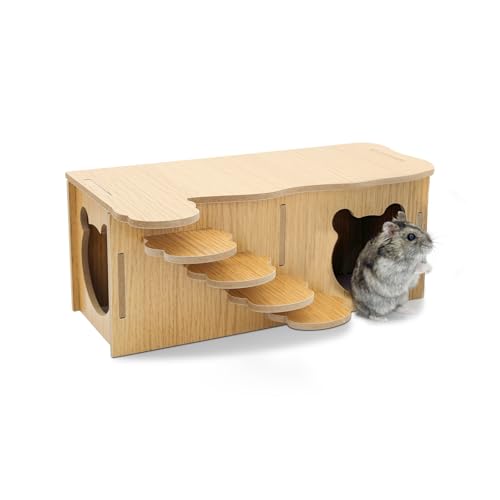
The LuckyOpt Wooden Hamster Hideout is a small animal house with 2 rooms and a climbing ladder. It is designed as a hideaway and climbing accessory for dwarf hamster, rat, gerbil and mouse, with a top viewing platform and a roof space that can be used for a food bowl.
The house has a smooth surface and is described as suitable for cleaning with a wet cloth or by washing with water, as long as it is not soaked. The doorway is about 5 cm wide, so size and fit are important before choosing an offer.
Key Details
| Detail | Verified information and buyer relevance |
|---|---|
| Brand | LuckyOpt. |
| Product type | Wooden hamster hideout for small animals. |
| Rooms | 2 rooms, offering separate hideaway spaces. |
| Ladder | Includes a small climbing ladder for access to the top platform. |
| Door size | About 5 cm, so the opening needs to suit the intended pet. |
| Cleaning | Wipe with a wet cloth or wash with water; do not soak. |
| Intended animals | Dwarf hamster, rat, gerbil and mouse are named as intended uses. |
What to Compare Before Buying
- Opening size: The doorway is about 5 cm wide. Check that this suits the animal you plan to house.
- Space in the enclosure: The hideout has 2 rooms plus a ladder and top platform, so allow enough room in the habitat.
- Cleaning routine: The surface is meant to be wiped or washed, but not soaked, so compare that with how you prefer to clean enclosure items.
- Intended pet: The named uses include dwarf hamster, rat, gerbil and mouse. It is not described for larger animals.
Before You Decide
Check the doorway size, the available space in the cage or enclosure, and whether the hideout suits the animal you have in mind. Also make sure you are happy with the stated cleaning method and that the selected item matches the intended pet type.
Natural Shelter and Play Setup
A hideout with a ladder and top platform gives you a simple way to arrange a small enclosure layout. The roof space can be used for a food bowl, which helps keep a feeding spot separate from the bedding area. That makes it easier to plan where the animal rests, climbs and eats within the same house.


