
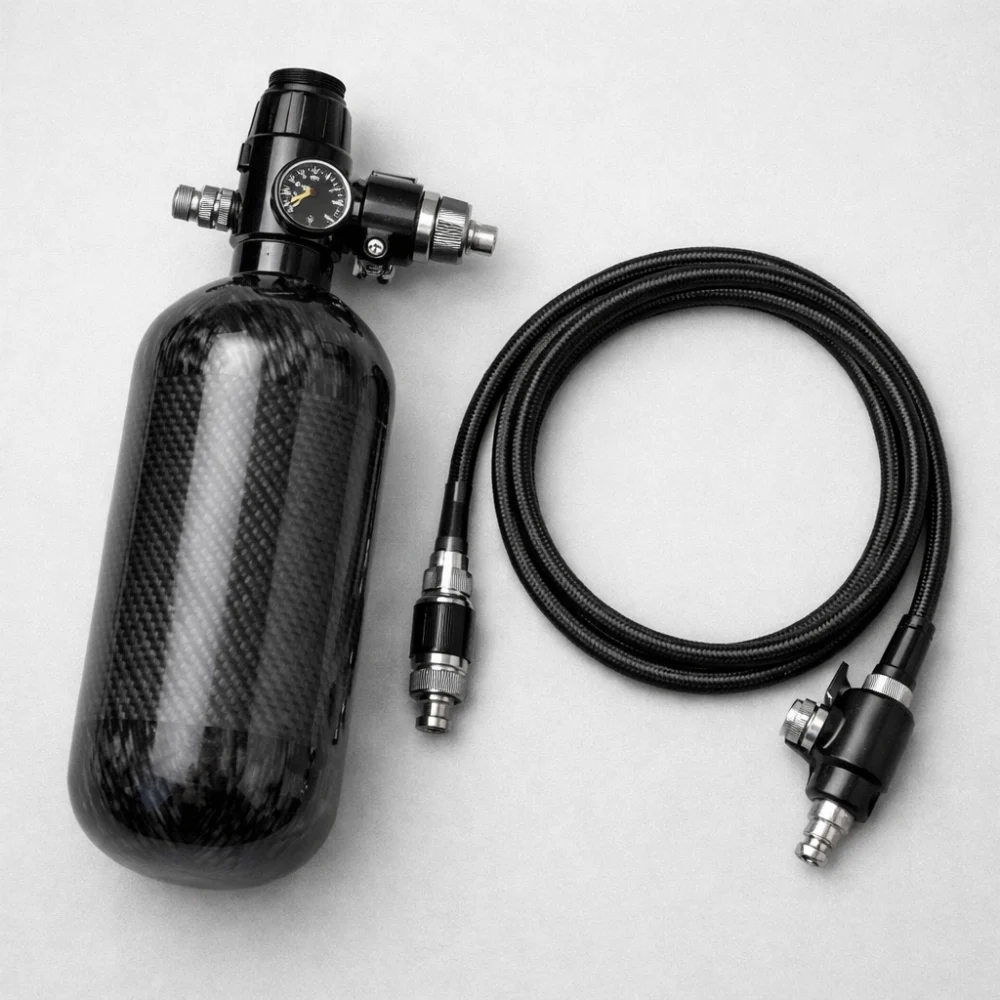
Airsoft HPA tanks are a core part of a high-pressure air setup, so the main buying job is choosing a tank that matches your marker, your fill method and how you plan to play. The details can look similar at first glance, but small differences in capacity, pressure rating and fittings can make a big difference to convenience.
This guide keeps the decision practical. It explains what matters most, what is easy to misunderstand and how to compare options without getting lost in technical labels.
What should you focus on when choosing an airsoft HPA tank?
The best starting point is compatibility: make sure the tank, regulator and connector setup match the rest of your HPA system. After that, compare capacity and fill pressure, because those usually have the biggest effect on runtime, weight and how often you need to refill. The right choice is usually the one that fits your playing style and carrying preference rather than the largest or most expensive option.
Specifications vary by model, so always check the individual product page before buying.
| Feature | What it means | Why it matters | What to check |
|---|---|---|---|
| Capacity | How much air the tank can hold | Affects how long you can play between fills and how bulky the tank feels | Choose a size that suits your marker use, carry style and expected fill frequency |
| Fill pressure | The maximum pressure the tank is designed to hold | Influences how much usable air is available in the tank system | Match the pressure rating to your fill equipment and the product listing |
| Material | Usually aluminium or composite-style construction in this category | Can affect weight, handling and the overall size of the setup | Check the product description for the material used and any weight-related details |
| Threads and fittings | The connector style on the tank and associated setup | Compatibility issues are common if fittings do not match | Confirm thread type and any regulator or bottle interface requirements |
| Tank format | The overall bottle shape and profile | Changes how easily the tank carries and fits in a setup | Look at dimensions and intended use rather than assuming all similar-looking tanks feel the same |
Key decision criteria
Capacity and practical runtime
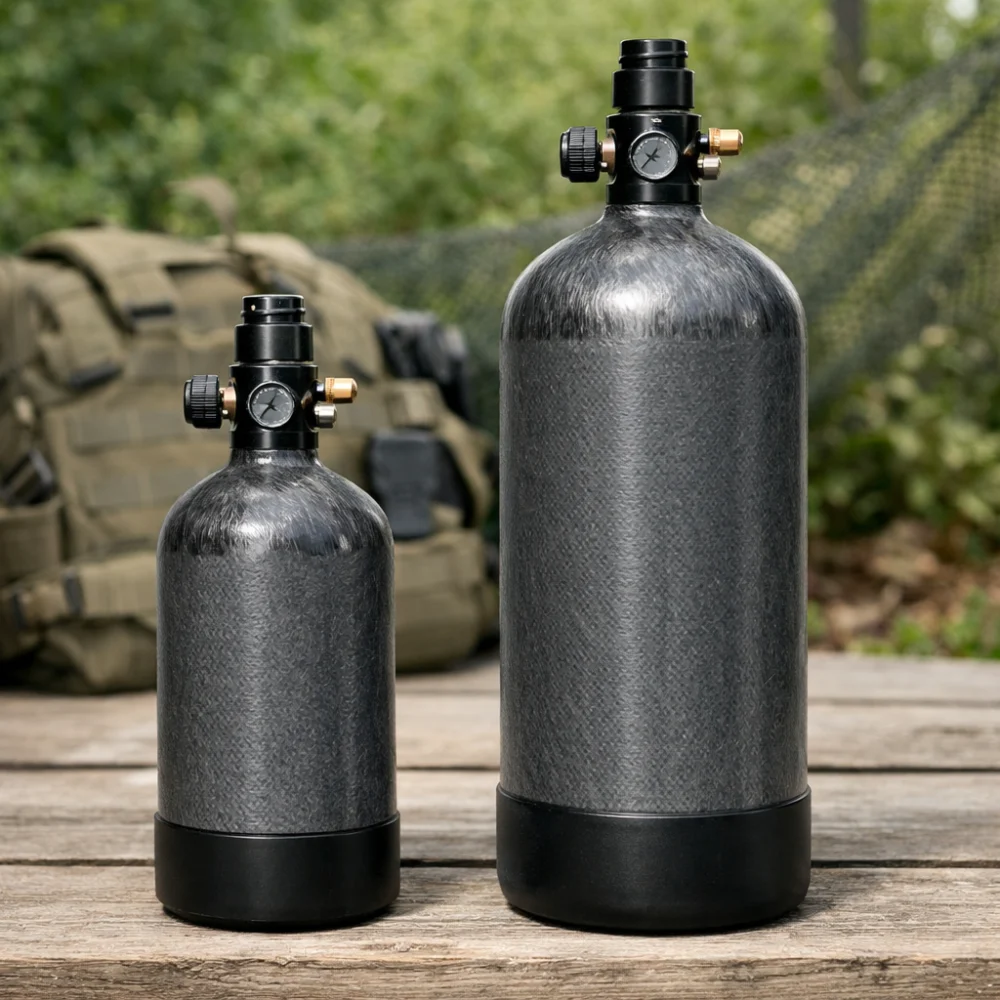
Capacity is one of the simplest ways to narrow the choice. A larger tank may reduce refill frequency, but it also usually means more weight and more bulk to carry. Smaller tanks are often easier to handle and can suit lighter setups, but they may need refilling more often.
Think about how long you normally play, whether you prefer a compact setup and how often you have convenient access to a fill source.
Fill pressure and system matching
Pressure rating matters because it needs to suit the rest of the air system you are building. Buyers sometimes focus only on size, but the pressure rating and compatible filling arrangement are just as important. If the tank and fill setup do not align properly, the system may not be suitable for your intended use.
Weight, shape and carrying comfort
Tank weight and shape affect how the setup feels in use, especially if the tank is carried on the marker or in a remote arrangement. A compact tank can be easier to move around with, while a larger one can feel less comfortable over a long session. The trade-off is usually between portability and how often you want to top up.
Thread type and accessory compatibility
Connection details are easy to overlook and are often the source of avoidable returns. Check the thread type, any regulator arrangement and whether the product is intended to work with the rest of your HPA setup. Do not assume that a similar-looking tank will fit because the listing looks close enough.
Product types and variants
Within this category, the main differences are usually about construction, size and pressure rating rather than dramatic product-type changes. That means the comparison is less about choosing a completely different kind of item and more about choosing the right balance of capacity, weight and compatibility.
- Smaller tanks: suit buyers who want a lighter, more compact setup, but they may need refilling more often.
- Larger tanks: suit buyers who want more usable air between fills, but they are usually less compact to carry.
- Different material constructions: may change weight and handling, so check the listing rather than assuming all tanks feel the same.
Which tank suits which kind of buyer?
| Buyer need | What to prioritise | Typical trade-off |
|---|---|---|
| Compact setup | Smaller size, lower carry burden, suitable fittings | More frequent refills |
| Longer sessions | Greater capacity and a pressure rating that suits the system | More weight and bulk |
| First-time HPA buyer | Clear compatibility information and straightforward fitting details | May need to spend more time checking the system as a whole |
| Upgrade buyer | Better match to existing marker, regulator and carry setup | Compatibility still needs careful checking |
| Gift buyer | Broadly compatible, clearly described tank details | The recipient’s exact setup still matters |
Common mistakes and misunderstandings
- Choosing by size alone: capacity matters, but it is only one part of the decision. Check pressure rating, fittings and the rest of the setup as well.
- Assuming fittings will match: thread type and connector details can vary. Verify the exact listing before buying.
- Ignoring the carrying feel: a tank that looks fine on paper may feel awkward in use if it is too bulky for your setup.
- Overlooking fill requirements: make sure you have a suitable way to fill and use the tank within your setup.
Safety and suitability caveats
HPA tanks are pressurised equipment, so buyers should only choose products that are clearly described and suitable for their intended airsoft use. Avoid guessing on compatibility or using a tank outside the setup it was designed for. If a listing leaves out important details, treat that as a reason to pause and check rather than a reason to assume it will work.
Maintenance, storage and lifespan considerations
For most buyers, the practical care questions are simple: keep the tank clean, store it properly and follow the product information for any inspection or replacement guidance. Do not store pressurised equipment carelessly or assume all tanks have the same upkeep needs. If you expect frequent use, think about how easy the tank will be to manage as part of your regular kit.
How to compare options efficiently
- Start with your actual use: occasional skirmishes, longer sessions or a compact loadout.
- Check compatibility first: fittings, regulator arrangement and the rest of your HPA setup.
- Compare capacity and pressure rating, then weigh that against size and handling.
- Review the product page for any model-specific details before buying.
- Choose the option that fits your setup without relying on assumptions from similar listings.
Summary buyer decision checklist
- Does the tank match your airsoft HPA setup?
- Is the capacity right for how long you want to play between fills?
- Is the pressure rating suitable for the system you are using?
- Do the fittings and thread details match the rest of your kit?
- Is the size and weight comfortable for your intended use?
- Have you checked the individual product page for model-specific details?
Frequently asked questions
Do I need to match the tank to my marker exactly?
You need to match it to the wider HPA setup, including fittings and any regulator arrangement, rather than to the marker alone. That is why compatibility checks matter so much in this category. The product page should make the intended connection details clear enough to compare.
Is a larger tank always better?
Not necessarily. A larger tank can reduce refill frequency, but it can also make the setup heavier and less convenient to carry. Many buyers are better served by choosing the smallest tank that still suits their session length and setup needs.
Why do similar tanks have different fittings?
Different products can use different thread types or connection details, even when they look similar from the outside. That is one of the most common reasons buyers need to double-check a listing. Always compare the exact product information instead of relying on appearance alone.
Can I judge a tank just by the photos?
Photos are useful for size and shape, but not enough for compatibility. The written product details are what you need for fitting, pressure rating and capacity checks. Use the images as a visual guide, not as the final decision tool.
What matters more: capacity or pressure rating?
Both matter, but for different reasons. Capacity affects how long the tank may last between fills, while pressure rating and compatibility affect whether the tank is suitable for your setup at all. If you are deciding between two otherwise suitable options, capacity often becomes the practical tie-breaker.
Should first-time buyers start with the biggest tank available?
Usually not. A first-time buyer often benefits more from a tank that is straightforward to carry and clearly compatible with the rest of the setup. Bigger is only useful if it genuinely suits the way you plan to use the kit.

