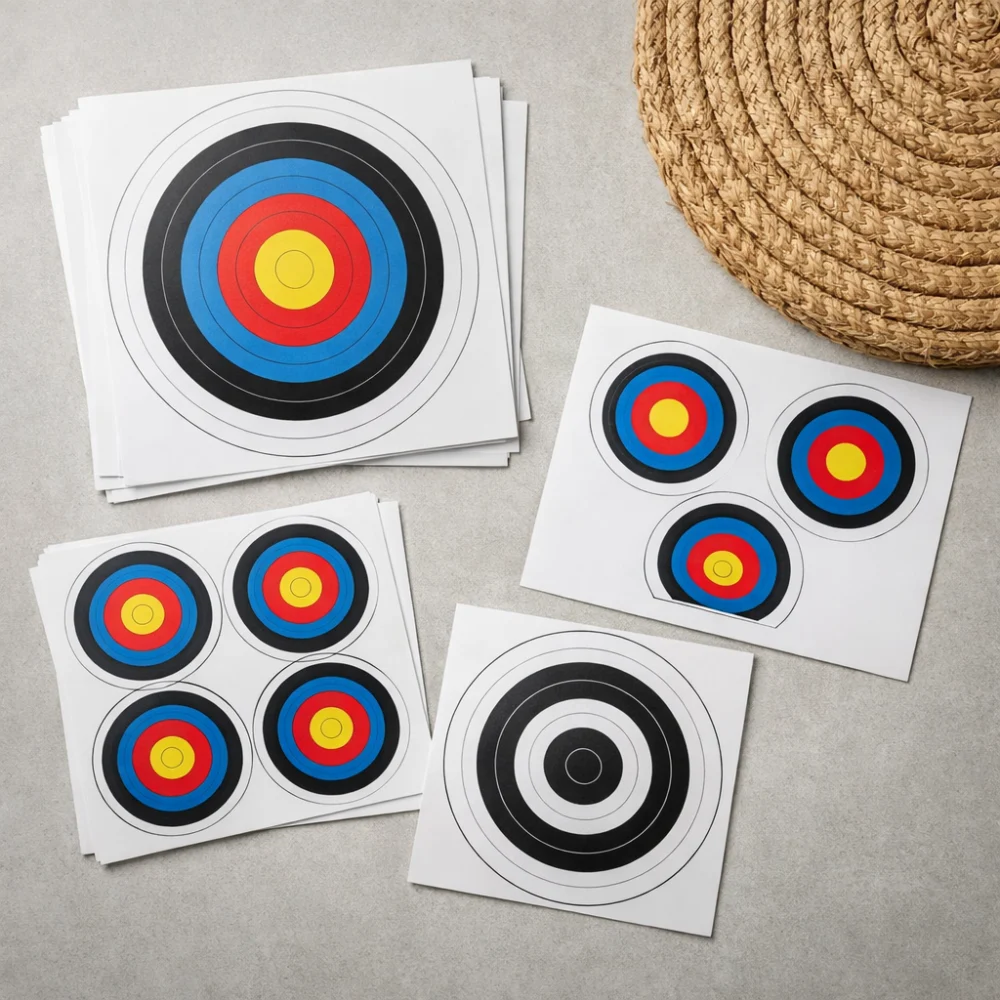
Archery paper targets are a simple, practical choice for practice sessions, home setups and target-face replacement. They are usually bought for the way they present a clear aiming point, make shot placement easy to read and suit a range of bows and distances.
If you are comparing options, the main question is not simply which target face looks similar. It is whether the size, ring layout, paper strength and mounting method suit your shooting space and your usual practice routine.
Specifications vary by model, so always check the individual product page before buying.
What should you look for in archery paper targets?
The right paper target depends on how you shoot, where you shoot and how often you want to replace the face. A simple rule is to start with the target size and aiming layout, then check how the face is meant to be fixed in place. The most useful choice is usually the one that matches your practice distance, your arrow setup and the surface you will attach it to.
| Feature | What it means | Why it matters | What to check |
|---|---|---|---|
| Target size | The overall dimensions of the paper face | Affects visibility, aiming comfort and how much scoring area you have | Match the face size to your shooting distance and the space you have available |
| Ring layout | The number and style of scoring rings or aiming marks | Changes how easy it is to focus on a centre point and read groups | Choose a layout that suits practice, scoring or tuning work |
| Paper strength | How well the face resists tearing from repeated shots | A stronger face can last longer, especially in regular practice | Check whether the paper is described as standard, heavy-duty or replacement-face use |
| Mounting method | How the target is fixed to a backstop or boss | Affects convenience and whether the face stays flat | Look for pins, adhesive backing or another fixing method that suits your setup |
| Pack size | How many faces are included | Useful if you practise often and want replacements ready | Compare the pack quantity with how quickly you expect to use them |
Key decision criteria explained
Size and visibility
A larger face can be easier to see from a distance, while a smaller face may be better for closer practice or for concentrating your shot placement. The key is to avoid choosing a face that feels too cramped for your setup or too large for the distance you normally use. If you shoot in a limited space, the target should still be easy to read without dominating the whole backstop.
Scoring rings and aiming style
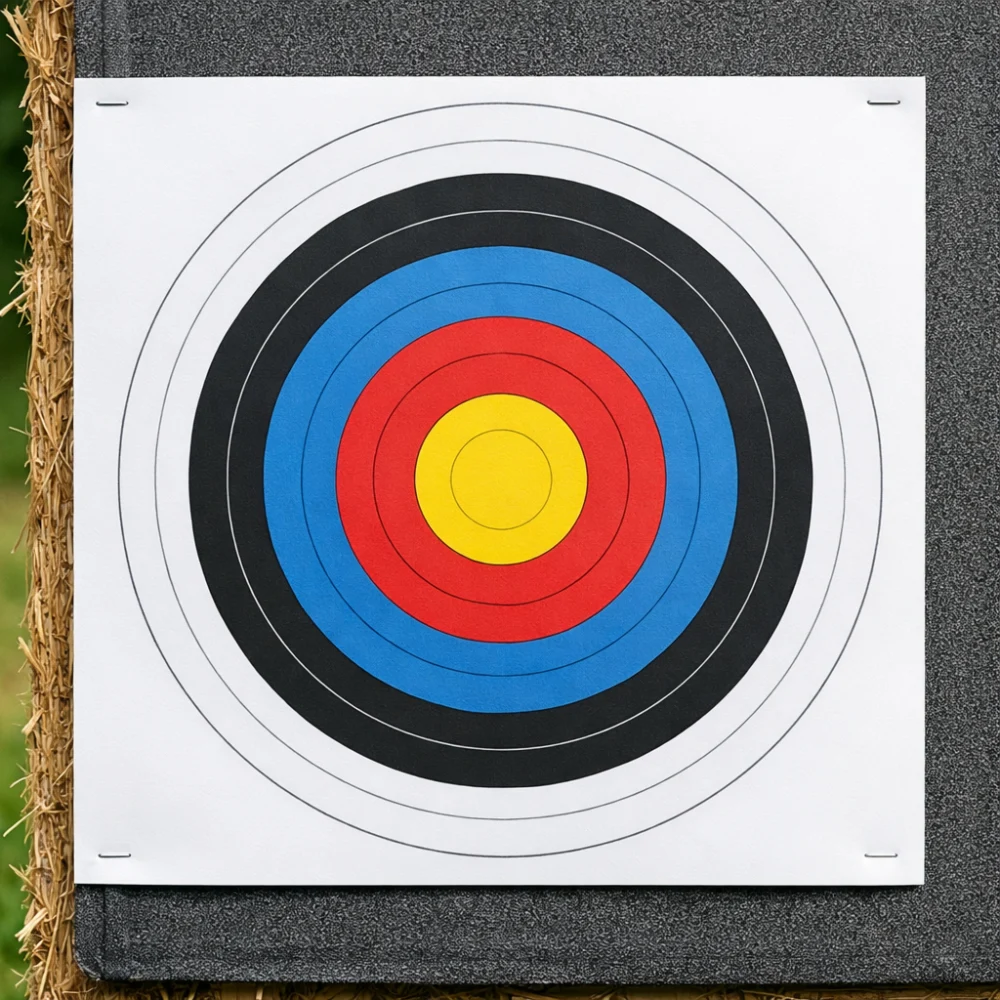
Some paper targets are designed around clear concentric rings, while others use a more basic single spot or multi-spot layout. A clearer ring system can help with scoring practice and consistency, while a simpler face may suit general shooting. Think about whether you want a face for casual repetition, score checking or drill work.
Paper durability
Paper targets are consumable items, so durability affects how often you replace them. Heavier paper or reinforced styles may hold up better to repeated shots, but the trade-off is often less flexibility and sometimes a higher cost per face. If you shoot frequently, a more durable face may reduce how often you need to change it, but it is still worth checking the individual product page before buying.
Mounting and replacement
How the face is attached matters more than many buyers expect. A neat mounting method helps keep the target flat and readable, which can make practice feel more consistent. Consider whether you want simple pin fixing, adhesive backing or another format that suits your boss, backstop or practice board.
Pack quantity and value
Paper faces are often bought in packs because they are replaced regularly. A larger pack may suit a frequent practice routine, while a smaller pack can be enough for occasional shooting or for trying a new size before committing. Specifications vary by model, so always check the individual product page before buying.
Common paper target types and variants
Within this category, the main differences are usually about the face layout rather than a completely different product style.
- Single-spot faces: useful for straightforward aiming and general practice.
- Multi-spot faces: helpful when you want several aiming points on one sheet.
- Ringed scoring faces: better for checking grouping and practising score-based shooting.
- Replacement target sheets: sensible when you already have a compatible backing or target boss.
The right variant depends on whether you are focusing on repetition, scoring, group work or simple backyard practice.
Which type suits different buyers?
| Buyer need | What to prioritise | Why |
|---|---|---|
| Beginner practice | Clear aiming marks and easy mounting | Makes it simpler to build consistency without fussing over setup |
| Regular home practice | Durability and pack quantity | Frequent shooting uses up faces quickly, so replacements matter |
| Score or group checking | Distinct rings and a face size that is easy to read | Helps you compare shots clearly |
| Small shooting space | Compact face size and a layout that stays visible at your usual distance | Prevents the target from feeling oversized for the area |
| Buying replacements | Matching the fixing method and target dimensions | The replacement face needs to fit the backing you already use |
Common mistakes and misunderstandings
- Choosing on size alone: a bigger face is not always better if it does not suit your distance or setup.
- Ignoring the fixing method: a target face that is awkward to mount can be annoying to keep straight.
- Assuming all paper is the same: thickness and finish can change how long a face stays usable.
- Forgetting the backing: a paper target still needs a suitable boss, board or backstop.
- Buying a large pack without checking fit: it is better to confirm the size and layout first if you are replacing an existing target face.
Safety and suitability caveats
Paper targets are only one part of a safe archery setup. Make sure the target face is appropriate for the bow, arrows, distance and backstop you are using, and do not rely on the paper alone to stop arrows. If you are buying for a shared or new practice space, it is sensible to confirm the target face and backing are suitable for the intended use.
Maintenance, storage and lifespan
Paper targets do not usually need complex care, but they do benefit from dry storage and careful handling. Keep spare faces flat and away from damp so they remain easier to mount and read. Because they are consumable, it helps to think in terms of replacement frequency rather than long-term ownership.
How to compare options efficiently
- Start with how and where you shoot.
- Choose the face size and layout that suit your distance and aiming style.
- Check the mounting method and whether it fits your backing or boss.
- Compare durability and pack quantity against how often you practise.
- Read the individual product page for the exact dimensions and any model-specific details.
Summary buyer decision checklist
- Does the target size suit your shooting space and distance?
- Does the ring layout or aiming pattern match your practice goal?
- Will the face attach neatly to your existing backing or boss?
- Is the paper strength suitable for how often you shoot?
- Do you need a replacement face or a larger multi-pack?
- Have you checked the individual product page for model-specific details?
Frequently asked questions
What are archery paper targets used for?
They are used for practising aim, checking grouping and replacing worn target faces. Many buyers choose them for straightforward training because they are easy to understand at a glance. They are especially useful when you want a clear scoring or aiming surface.
Are paper targets suitable for beginners?
Yes, they can be a simple choice for beginners because the aiming point is easy to see and the setup is usually straightforward. The main thing is to choose a size and mounting method that fits your practice space. A clear, uncomplicated face often makes early sessions less distracting.
How do I know which size to buy?
Think about your shooting distance, the area you have available and how large you want the aiming zone to feel. A face that is too small can be hard to read, while one that is too large may be awkward in a compact space. Matching the size to your setup is usually more important than choosing the largest sheet available.
Do I need a special backing for paper targets?
You normally need some form of backing, boss or board to support the paper face. The exact fixing method depends on the product, so it is worth checking whether it uses pins, adhesive or another attachment style. A compatible backing helps the face stay flat and readable.
What is the difference between a single-spot and multi-spot target?
A single-spot target gives you one main aiming point, while a multi-spot design gives you several. Multi-spot faces can be useful when you want to shoot several arrows at separate points without crowding the centre. Single-spot faces are often simpler for general practice.
How often will I need to replace a paper target?
That depends on how often you shoot, the arrows you use and how quickly the face tears. Paper targets are consumables, so frequent practice usually means more regular replacement. Choosing a stronger face or a larger pack can make ownership easier if you shoot often.
Can I use the same paper target for different bows?
Sometimes, but you should check whether the size, backing and general suitability match the bow and arrows being used. The target face itself may be fine, but the overall setup still needs to suit the kind of shooting you are doing. It is best to check the product details for any limits or intended use notes.