
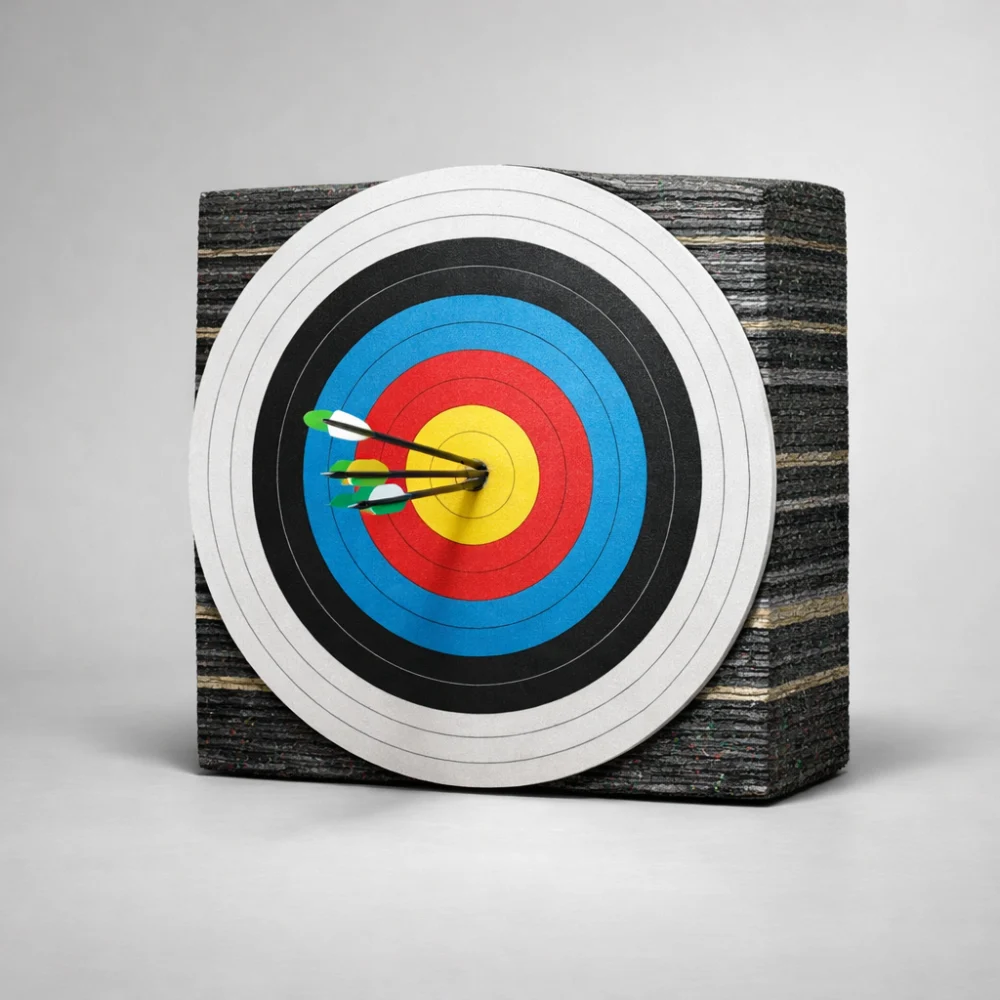
Archery target bosses are the part of your setup that stops the arrow and gives you a consistent face to shoot at during practice. The right choice depends on what bow you use, how often you shoot and whether you want something lighter to move around or something more substantial for repeated sessions.
Buyers often compare target bosses by material, size and how easy they are to replace or move. That sounds simple, but the best choice is usually about matching the boss to your arrows, your shooting distance and the kind of practice you actually do.
If you are replacing an old boss, the main question is usually whether you want the same format or a different one that better suits your bow and space. If you are buying for the first time, focus on the type of target face, the stopping medium and how much wear you expect from regular use.
What should I look for in an archery target boss?
Start with the target boss material and how it matches your arrows and bow type, then look at the size, portability and how the boss is built up. A good buying decision is usually the one that balances stopping power, ease of use and durability for your level of practice. Specifications vary by model, so always check the individual product page before buying.
| Feature | What It Means | Why It Matters | What To Check |
|---|---|---|---|
| Material | The stopping medium used inside the boss | Affects how arrows are absorbed, how easy arrow removal feels and how the boss wears | Look for the material description and whether it suits your bow and arrow type |
| Size and shape | The overall face and body format | Changes how much aiming area you get and how easy it is to place in your space | Check the dimensions and whether the shape matches your practice area |
| Portability | How easy the boss is to move or store | Important if you set up and pack away often | Consider weight, handles and whether it is manageable for one person |
| Durability | How well the boss stands up to repeated use | Helps control how often you need to replace it | Look for build style, density or layering details where provided |
| Arrow removal | How easily arrows can be pulled from the target | Can affect comfort and how quickly you can shoot again | Read the product description for notes on arrow-friendly construction |
Key decision criteria
Material and stopping medium
Different boss materials suit different shooting habits. Some are chosen for lighter handling and ease of movement, while others are better for more regular practice because they tend to cope better with repeated hits. The trade-off is usually between portability, arrow stopping behaviour and how quickly the boss shows wear.
Size and target presentation
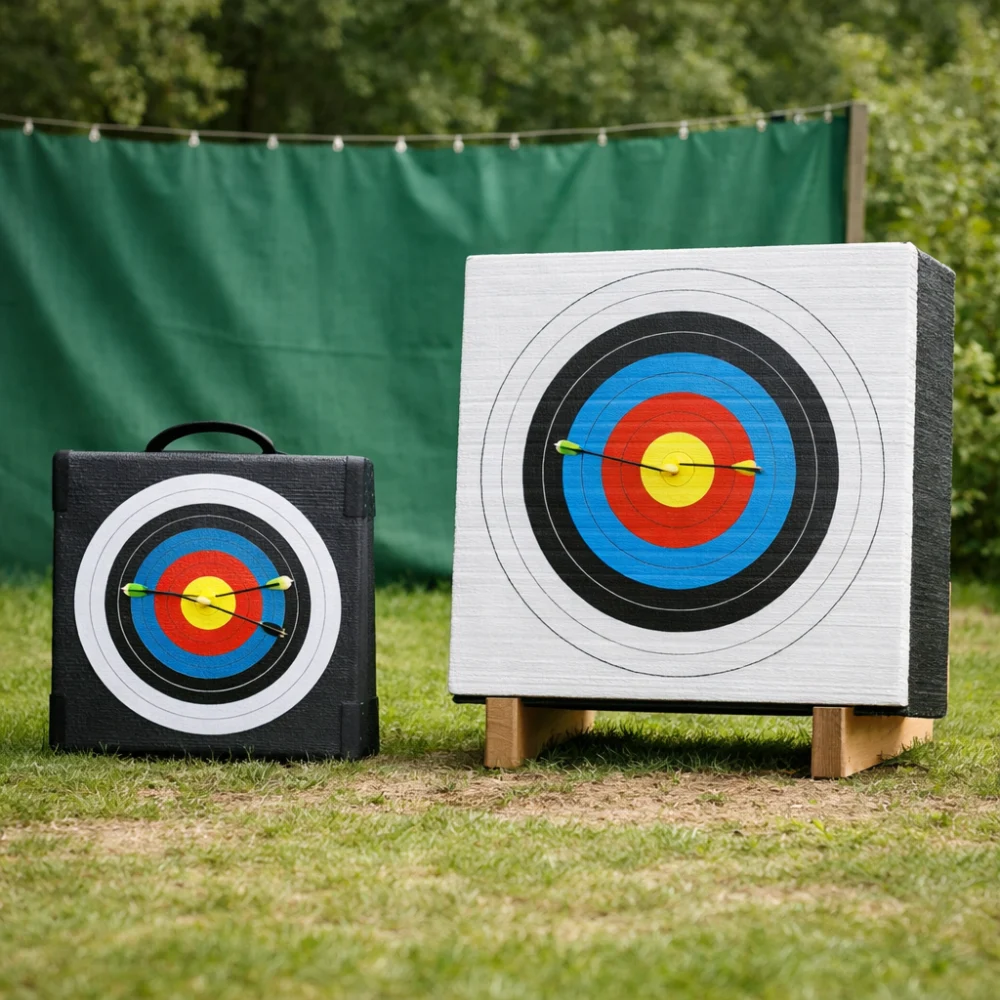
A larger boss can be easier to use when you are practising at home or when you want a forgiving aiming area. A smaller or more compact option may be easier to store and move, but it can feel less generous when you are building confidence. Think about the shooting distance you normally use and how much room you have around the target.
Bow type and arrow suitability
Archery target bosses are often chosen with a particular style of shooting in mind, but that does not mean every boss suits every setup. Recurve, compound and traditional bow users may value different levels of stopping power and surface behaviour. Check the product page for any stated guidance about bow type or arrow suitability, and avoid assuming compatibility from appearance alone.
Portability and setup
If you move your target often, portability matters as much as stopping performance. A boss that is easy to carry and place can make practice much more convenient, especially for home use. If the target will stay in one position, you may prefer something less mobile but more substantial.
Types and variants within this category
This category commonly includes different target boss constructions rather than a single standard format. The practical differences usually come down to the material inside the boss, the way it is layered or bundled and the overall shape.
- Straw or traditional-style bosses: Often chosen for a classic feel and a simple target setup. They may suit traditional archery practice, but buyers should check how they are built and how they behave with their arrows.
- Foam bosses: Often selected for lighter handling and a modern practice feel. They can be convenient for regular home use, but the exact stopping behaviour depends on the specific construction.
- Layered or bundled bosses: These may offer a different balance of density and service life. They are worth considering if you want a boss that is easier to replace in sections or that feels more robust for repeat shooting.
Which type suits different buyers?
| Buyer need | What to prioritise | Why |
|---|---|---|
| Home practice | Manageable size, easy setup, suitable stopping medium | Convenience matters when the target is moved or stored often |
| Frequent practice | Durability, consistent arrow removal, suitable density | Regular use puts more strain on the boss |
| Traditional archery | Construction that matches your arrows and style of shooting | Some bosses feel more natural for traditional setups |
| Limited space | Compact dimensions and easier handling | Space affects where and how safely you can place the target |
| Gift or first purchase | Clear compatibility information and simple handling | Beginners benefit from straightforward, low-guesswork choices |
Common mistakes to avoid
- Choosing by size alone: A bigger boss is not automatically better if it is awkward to move or does not suit your shooting style.
- Ignoring bow and arrow fit: What works well for one setup may not be the right choice for another, so check the product page carefully.
- Assuming all foam or straw bosses behave the same: Construction details change how the boss feels in use and how long it lasts.
- Overlooking storage space: A target that is fine in use may still be inconvenient if it is difficult to store between sessions.
Safety and suitability caveats
Choose a boss that is appropriate for your intended archery use and the space where you shoot. Make sure the setup you buy is suitable for the arrows and bow style you plan to use, and place it in a controlled area with a safe backstop or clear surrounding space as needed. Do not rely on appearance alone to judge suitability.
Maintenance, storage and lifespan
Target bosses usually last longer when they are stored dry, kept out of prolonged weather exposure where that matters, and used within their intended purpose. Some types are easier to rotate, replace or reposition than others, which can affect how evenly they wear. If a boss is intended for repeated outdoor use, think about how easily you can move it or protect it between sessions.
How to compare options efficiently
- Decide where and how often you will shoot.
- Choose a boss material or construction that fits that use.
- Check the size, handling and storage demands.
- Compare any stated suitability notes for your bow and arrows.
- Read the individual product page for the details that matter most to your setup.
Summary buyer decision checklist
- Does the boss suit your bow type and arrows?
- Is the size suitable for your space and practice distance?
- Will you be able to move, store and set it up comfortably?
- Does the construction match how often you expect to use it?
- Have you checked the individual product page for specific suitability details?
Frequently asked questions
What is an archery target boss for?
It provides a dedicated surface or body for stopping arrows during practice. Buyers use them to create a consistent target setup at home, on a range or in a controlled practice area.
Is a foam boss better than a straw boss?
Not always. Foam can be convenient for some buyers, while straw-style bosses may suit those who prefer a more traditional feel. The better choice depends on your bow, arrows and how you plan to use the target.
Do I need a large boss for beginners?
A larger boss can feel more forgiving, but size is only one part of the decision. Beginners should also consider how easy the boss is to place, whether it suits their space and whether it matches their bow setup.
Can I use one boss for different bow types?
Sometimes, but only if the product information supports that use. Different bow styles and arrow types can place different demands on a target, so check the individual product page before assuming it will suit every setup.
How do I know when a boss needs replacing?
Look for clear signs of wear, reduced stopping performance or damage that makes the target less suitable for safe practice. The useful life of a boss depends on how often it is used and how it is stored.
What should I compare first when shopping?
Start with material, size and any suitability notes for your equipment. Those three checks usually narrow the choice more quickly than focusing on appearance or shape alone.

