
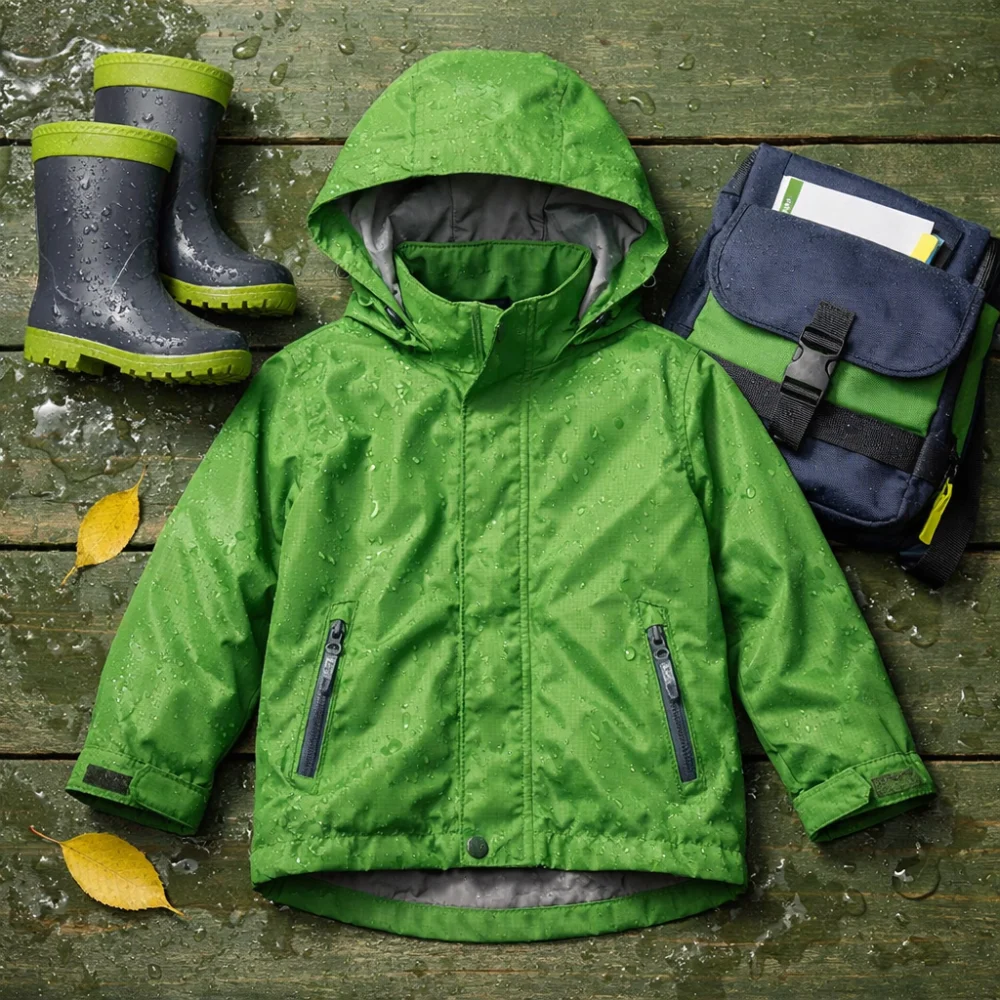
Kids waterproof jackets are designed for wet weather, muddy paths and unpredictable days outdoors. The main job is simple: help keep rain out while still being comfortable enough for a child to wear for school, play and family outings.
Choosing one is mostly about matching the jacket to how it will be used. Some children need a lightweight shell for carrying in a bag, while others need a more hard-wearing coat for frequent rain and active use.
Because waterproof jackets can vary a lot in feel, warmth and coverage, it helps to look beyond the label and compare the details that affect comfort and practicality.
What should you look for in a kids waterproof jacket?
The best starting point is the balance between weather protection, comfort and everyday ease of use. A jacket that keeps out rain but is too hot, stiff or awkward to fasten may not get worn often. For many buyers, the key choice is whether the jacket is mainly for occasional showers, regular school use or longer outdoor sessions.
Specifications vary by model, so always check the individual product page before buying.
| Feature | What It Means | Why It Matters | What To Check |
|---|---|---|---|
| Waterproof protection | How well the jacket is intended to shed rain | It affects how suitable the jacket is for steady rain versus light showers | Look for the product description and any waterproof wording on the individual page |
| Breathability | How well moisture from inside the jacket can escape | Important for active children who may get warm quickly | Check whether the jacket is described as breathable or suited to active use |
| Weight and packability | How easy the jacket is to carry or store | Useful for school bags, travel and changeable weather | See whether it is a lightweight shell or a bulkier coat |
| Lining and warmth | Whether the jacket is unlined, lightly lined or more insulating | Changes how comfortable it is in cool weather | Check if it is for wet weather only or for colder days too |
| Hood and coverage | How much of the head, neck and body is protected | Better coverage can help in heavier rain and wind | Look for hood shape, longer hems and whether cuffs and fastenings reduce gaps |
| Ease of use | Zips, poppers, cuffs and adjustments | Important for children dressing themselves | Check closure type, pocket placement and whether the fit looks simple to manage |
Key decision criteria explained
Weather protection
Waterproof jackets are about more than a water-resistant finish. For regular wet-weather use, buyers usually want a jacket that is clearly intended to handle rain rather than just light drizzle. The trade-off is that more protective jackets can sometimes feel less airy or less soft than lighter layers.
Breathability and comfort
Children often move between walking, running and standing around, so comfort matters as much as rain protection. A jacket that traps too much warmth can feel clammy, especially over school clothes or during active play. Breathability becomes more important if the jacket will be worn for longer periods.
Fit and room for layers
Kids waterproof jackets are often bought with layering in mind. A slightly more generous fit can make it easier to wear a jumper underneath, but an oversized jacket may feel cumbersome. Check the size guidance carefully and think about whether the jacket is meant to be worn over thicker clothes.
Length and coverage
Shorter jackets can feel lighter and easier to move in, while longer styles may offer more coverage in wind and rain. There is a practical trade-off between freedom of movement and how much of the body is protected. For everyday use, the right choice often depends on whether the child is mainly walking, cycling, playing or sitting still.
Fastenings and adjustability
Simple zips, cuffs and hems can make a jacket much easier to live with. Adjustable details may help improve comfort and reduce gaps, but too many features can make a jacket harder for younger children to manage independently. Choose the level of adjustment that matches the child’s age and routine.
Common types and variants
Within this category, the most useful distinction is usually between lightweight rain jackets and more substantial waterproof coats. Lightweight options are often easier to carry and better for changing weather, while heavier styles may feel more protective or more suitable for cold, wet days.
Some waterproof jackets are designed to be worn on their own, while others are part of a set or paired with additional outerwear layers. If a product looks like it includes matching pieces or extra coverage, confirm exactly what is included on the product page rather than assuming.
Which jacket suits which need?
| Buyer need | What to prioritise | Why |
|---|---|---|
| School runs and general daily wear | Comfort, easy fastening and enough room for layers | The jacket needs to be practical to wear often, not just protective in theory |
| Outdoor play and active use | Breathability, movement and durable feel | Children can get warm quickly when moving around |
| Travel or keeping a jacket in a bag | Lightweight design and simple packing | Convenience matters when the weather changes suddenly |
| Cold, wet conditions | Coverage and warmth as well as waterproofing | A wet-weather layer alone may not be enough on colder days |
| Hand-me-down or growing room | Fit guidance and layering space | Kids outgrow jackets quickly, so the fit needs to be sensible without becoming awkward |
Common mistakes to avoid
- Choosing by appearance alone and overlooking fit, fastening and hood coverage.
- Assuming a jacket that keeps out rain will also feel warm enough on its own.
- Buying a very large size without checking whether it will still be comfortable to move in.
- Forgetting to think about how the jacket will be used most often, such as school, play or travel.
- Not checking whether a product is a standalone jacket or part of a larger set.
Safety and suitability caveats
For children, the practical question is usually whether the jacket is suitable for the planned activity and weather, not whether it sounds technical. Make sure the fit allows normal movement and that the hood, fastening and cuffs are comfortable for the child wearing it. If a child has specific sensitivities to fabrics, weight or layering, check the product details carefully before buying.
Maintenance and storage
Waterproof jackets tend to last longer when they are dried and stored properly after wet use. Follow the care information on the individual product page or label, because cleaning requirements can vary. If a jacket is being used regularly, it is also sensible to check whether it will be easy to hang, pack and keep ready between uses.
How to compare options efficiently
- Decide where the jacket will be used most often: school, play, travel or all-day outdoor time.
- Choose the style that fits that use, from lighter rainwear to more substantial coverage.
- Compare the comfort details: fit, lining, hood, fastening and room for layers.
- Check whether breathability or packability matters more than extra coverage.
- Read the individual product page carefully for the exact features and included items.
Summary buyer decision checklist
- Is the jacket suitable for the weather and activity you have in mind?
- Will the child be able to move, dress and undress comfortably?
- Is there enough room for layers without the jacket feeling too bulky?
- Does the hood and overall coverage suit the intended use?
- Have you checked the product page for the exact construction and included items?
Frequently asked questions
Do kids waterproof jackets need to be fully waterproof or just water-resistant?
That depends on how the jacket will be used. For regular wet weather, many buyers prefer a jacket that is clearly intended for proper rain protection rather than light showers only. If the jacket will mostly be worn for brief spells outdoors, a lighter option may be enough.
Should I buy a jacket with room to grow?
A little room for layers can be useful, but too much extra size may make the jacket uncomfortable or awkward to wear. It is usually better to allow practical layering space rather than choosing a much larger coat that hangs badly. Check the size guidance on the product page carefully.
Are lined waterproof jackets always better?
Not always. Lining can add comfort and warmth, but it can also make the jacket bulkier and less suitable for mild weather. An unlined jacket may be more versatile if it will be worn across a wider range of conditions.
What matters more, breathability or waterproofing?
Both matter, but the right balance depends on use. If a child will be active, breathability can make the jacket much more comfortable. If the jacket is mainly for sitting in heavy rain, protection may matter more than airflow.
Can a waterproof jacket replace a coat?
Sometimes, but not always. A waterproof jacket is good for keeping rain out, but it may not provide enough warmth for colder days unless it is lined or layered properly. Think about weather, not just rain.
How do I know if a jacket is practical for everyday use?
Look at the details that affect daily wear: easy fastening, sensible fit, enough coverage and comfort over layers. A jacket that is simple to put on and take off is often the one that gets worn most.

