
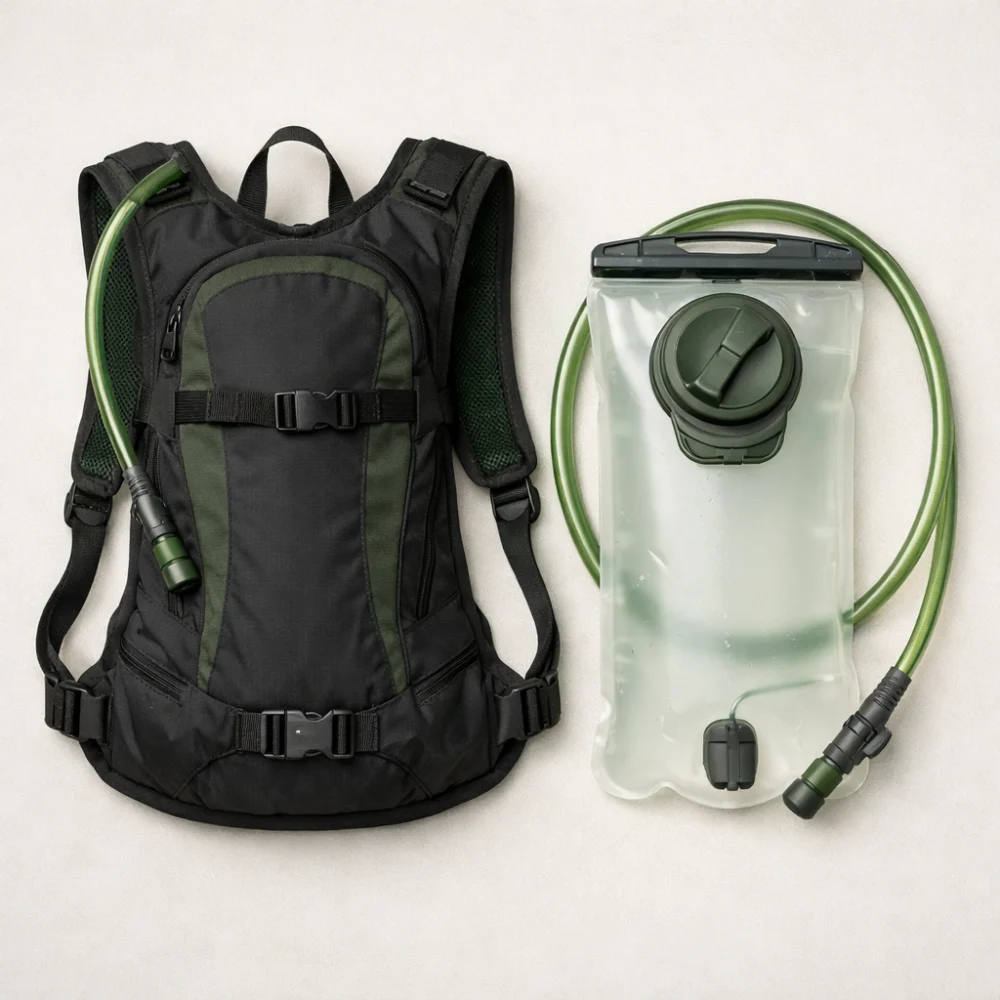
Hydration packs are a convenient way to carry water while keeping your hands free. They are often chosen for walking, running, cycling, hiking and other active use where stopping for a bottle is awkward.
The right choice depends on how far you plan to go, how much water you want to carry and how much comfort you need while moving. Some buyers want the simplest possible reservoir-and-hose setup, while others prefer a pack with storage for small essentials as well.
This guide focuses on the buying decisions that matter before you choose a hydration pack, so you can compare options with less guesswork.
What should I look for in a hydration pack?
Start with capacity, fit and comfort, then check the reservoir style and any extra storage you actually need. A smaller, lighter pack may feel easier for short sessions, while a larger pack can suit longer outings if you are willing to carry the extra bulk. The main trade-off is usually between carrying more water and keeping the pack light and unobtrusive.
| Feature | What It Means | Why It Matters | What To Check |
|---|---|---|---|
| Water capacity | How much liquid the pack or reservoir is designed to hold | Affects how long you can stay out without refilling | Choose a size that matches your route, pace and access to refills |
| Fit and adjustability | How the pack sits on your body and how easily it can be tightened or loosened | A poor fit can bounce, rub or feel unstable when you move | Look for straps, adjusters and a shape suited to your torso or chest |
| Carrying style | Backpack-style pack or closer-fitting vest-style design | Changes how the weight feels and how much freedom of movement you have | Think about whether you want a more secure carry or more storage space |
| Reservoir and hose | The water bladder, tube and mouthpiece setup | Influences convenience, cleaning and ease of drinking on the move | Check access for filling, hose length and how easy parts are to clean |
| Storage pockets | Space for keys, phone, snacks or small essentials | Useful if you want one item to cover both hydration and carry needs | Confirm pocket layout rather than assuming there is enough room |
| Ventilation | How the pack is shaped or padded to help airflow | Can affect comfort on warmer days or during harder effort | Look for breathable panels if heat build-up matters to you |
Key decision criteria explained
Capacity
Capacity is one of the first decisions to make because it shapes the size, weight and usefulness of the pack. A larger reservoir can reduce the need to refill, but it may feel heavier and less compact. If you usually go out for short sessions, a smaller setup may be more comfortable than carrying water you do not need.
Fit and stability
A hydration pack should stay close to the body and move with you rather than swing around. Adjustable straps, a close fit and the right style for your activity all help with stability. For more active use, a shape that reduces bounce can matter as much as raw capacity.
Drink system
Most buyers care about how easy it is to take a drink without interrupting movement. The hose, bite valve or mouthpiece design affects convenience, but it also affects cleaning and drying. Specifications vary by model, so always check the individual product page before buying.
Storage layout
Some hydration packs are mainly for water, while others include pockets for a phone, gels, keys or small tools. Extra storage is useful if you want to travel light without carrying a separate bag. The trade-off is that more storage can mean a bulkier pack.
Cleaning and care
If you plan to use the pack often, think about how easy it will be to rinse, dry and store. Reservoirs and hoses can be awkward to clean if the opening is narrow or if parts are difficult to separate. A simpler design can be easier to maintain, even if it offers fewer extras.
Product types and variants
Hydration packs tend to fall into a few practical styles.
- Minimal hydration vests suit runners and fast-moving users who want a closer fit and less bulk.
- Backpack-style hydration packs suit buyers who want a more familiar carry feel and often more room for extras.
- Reservoir-only systems suit people who mainly want water carry and do not need much storage.
- Hydration packs with pockets and organisers suit longer outings where small essentials need to stay with you.
The main limitation is that a style built for low weight may not offer much storage, while a more versatile pack may feel less streamlined.
Which hydration pack suits different needs?
| Buyer need | Features to prioritise | Why it helps |
|---|---|---|
| Short runs or training sessions | Lightweight fit, secure straps, easy drink access | Helps keep movement free and avoids unnecessary bulk |
| Walking or hiking | Comfort, stable carry, sensible storage, practical capacity | Balances water supply with room for essentials |
| Cycling or fast-paced activity | Close fit, bounce reduction, easy hose routing | Improves stability when body movement is frequent |
| Longer outings | Higher capacity, comfortable straps, easier cleaning | Supports longer time away from a refill point |
| Everyday or mixed use | Simple pack layout, useful pockets, manageable weight | Makes the pack more versatile outside one sport |
Common mistakes and misunderstandings
- Choosing by water capacity alone. Capacity matters, but fit and comfort can matter more if you will wear the pack for a long time.
- Assuming every pack has the same storage. Some are almost all hydration and others are closer to a small backpack.
- Overlooking cleaning. A pack that is awkward to rinse or dry may be less pleasant to use regularly.
- Buying too much pack for the job. Extra space can add weight and bulk when you only need a simple drink system.
Safety and suitability caveats
Check that the pack suits the activity you plan to do and that the fit is comfortable before regular use. If you will carry it during vigorous movement, think about stability, strap comfort and how the hose or mouthpiece will sit while you move. For any model, check the product page details carefully so you know what is included and what needs to be bought separately.
Maintenance, storage and lifespan considerations
Hydration packs usually last better when they are cleaned and dried properly after use. If a reservoir stays damp for too long, it can be less pleasant to store and may need more care between outings. Before buying, consider whether you are happy to rinse the bladder, hose and mouthpiece regularly and whether the opening is easy enough for that routine.
How to compare hydration packs efficiently
- Decide how you will use it most often: short runs, walks, rides or longer outings.
- Pick a capacity range that matches that use without adding unnecessary weight.
- Compare fit, stability and carrying style before looking at extras.
- Check the reservoir, hose and cleaning access on each individual product page.
- Only then compare storage pockets and comfort features that are useful to you.
Summary buyer decision checklist
- Does the pack suit the activity you will use it for most?
- Is the capacity enough without feeling larger than you need?
- Will the fit stay stable and comfortable when you move?
- Is the drink system easy for you to use and clean?
- Do the storage pockets match what you want to carry?
- Have you checked the individual product page for the exact included parts?
Frequently asked questions
Are hydration packs better than carrying a bottle?
They are better for some situations, especially when you want hands-free drinking or need to move continuously. A bottle can be simpler for short, low-intensity use, while a pack becomes more useful when convenience and stability matter.
What size hydration pack should I buy?
Choose the smallest size that still suits your typical outing. If you carry one for short sessions, a compact option may be enough; for longer use, a larger reservoir may make more sense. The right size depends on how far you go and how often you can refill.
How important is fit?
Very important, because a poor fit can make the pack feel awkward even if the rest of the design is good. Look for enough adjustment to keep the pack close to your body without creating pressure points.
Do all hydration packs include a reservoir?
Not always, so it is worth checking the product details carefully. Some listings include the bladder and hose, while others may focus on the pack itself or vary by model.
Are hydration packs hard to clean?
They can be easy or fiddly depending on the opening, hose setup and how much access you have to the reservoir. If easy cleaning matters to you, look for a design that is straightforward to rinse and dry.
Can I use a hydration pack for more than one activity?
Often yes, provided the fit and capacity suit each activity. A versatile pack can work across walking, cycling and general outdoor use, but the best shape for one activity may not be ideal for another.

