
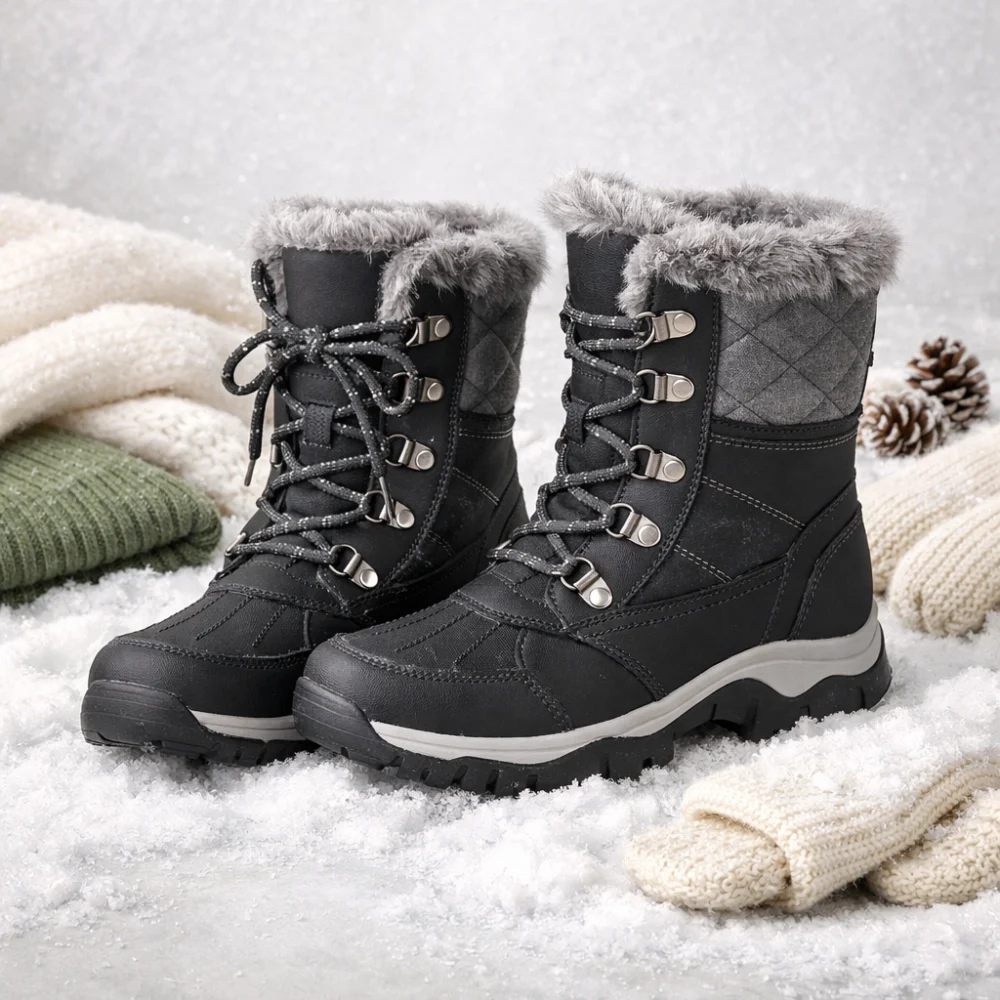
Women’s snow boots are designed for winter days when ordinary footwear feels too cold, too wet or too slippery. Buyers usually want a pair that is warm, comfortable and practical for getting about in snow, slush and cold rain, but the right choice depends on how harsh the weather is and how you plan to wear them.
This guide helps you compare the features that matter most before you buy. It focuses on the real trade-offs: warmth versus weight, height versus flexibility, and weather protection versus everyday comfort.
What should you look for in women’s snow boots?
The best starting point is your likely winter use. If you only need boots for short trips, a lighter, easier-to-wear style may be enough; if you expect deeper snow or longer time outdoors, you will usually want more protection around the foot and lower leg. The most useful features are warmth, water resistance, tread, fit and ease of getting them on and off. Specifications vary by model, so always check the individual product page before buying.
| Feature | What it means | Why it matters | What to check |
|---|---|---|---|
| Warmth | How much insulation and lining the boot provides | Helps feet stay comfortable in cold conditions | Lining type, intended season and whether the boot is meant for very cold weather or milder winter use |
| Water resistance | How well the boot handles snow, slush and wet ground | Dry feet are often the main reason to choose snow boots | Product description wording around waterproof or water-resistant use, plus any care advice |
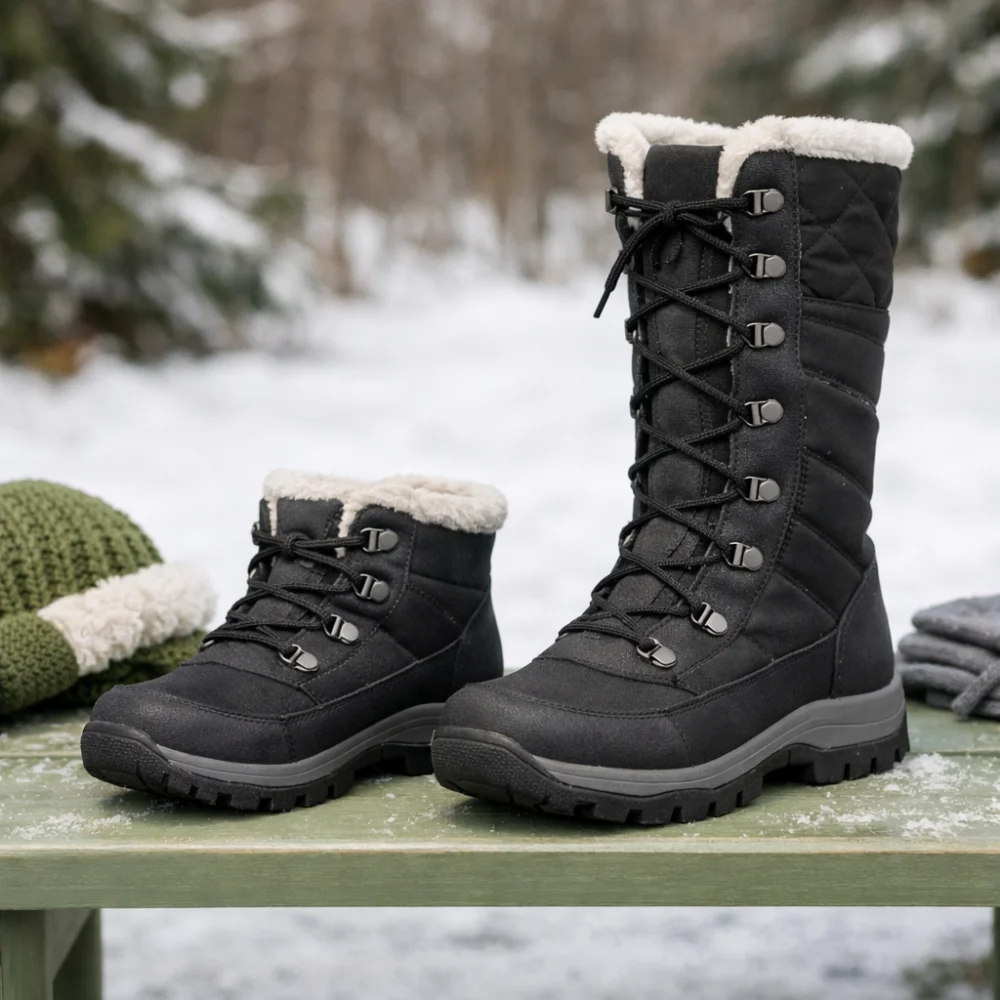
| Height | How far the boot rises up the ankle or leg | Higher boots can help with snow and splashes, but may feel less flexible | Where the boot sits on the leg and whether that suits your usual conditions |
| Tread and grip | The shape and depth of the outsole pattern | Can improve confidence on wet or slippery surfaces | Sole description and whether the tread looks suitable for the ground you walk on most often |
| Fit and fastenings | How the boot shapes around the foot and how it closes | A secure but comfortable fit helps with walking and warmth | Lacing, zip or pull-on design, plus any notes about width or room for winter socks |
Key decision criteria explained
Warmth and insulation
Snow boots are often chosen for warmth first, but more insulation is not always the right answer. A very warm boot may feel too heavy or too hot for everyday errands, while a lighter boot may be more practical if you are mostly moving between car, shop and home. Think about how long you will be outside and how cold your conditions usually are.
Waterproofing and snow protection
For winter footwear, the way the boot handles moisture is often as important as warmth. Snow can melt into slush, and wet feet quickly become uncomfortable. Look for clear product wording about waterproofing, water resistance and how high the boot comes up the leg. If you expect wet pavements more than deep snow, you may not need a very tall boot.
Height and coverage
Lower boots are usually easier to walk in and may feel more versatile, while taller boots can help keep snow out when conditions are deeper. The trade-off is flexibility and sometimes weight. Height also affects how easy it is to tuck trousers in or wear the boot with thicker winter socks.
Grip and stability
Winter ground can be uneven, wet or compacted underfoot. A deeper tread may help than a smoother sole, but the right outsole still depends on where you will use the boots most. If you mainly walk on cleared paths and pavements, comfort may matter more than aggressive tread.
Fit, socks and closure style
A snow boot should leave enough room for comfortable winter socks without feeling loose. A secure heel and midfoot fit help reduce rubbing, while easy fastenings make the boots simpler to use in cold weather. Consider whether you prefer laces for adjustability, a zip for convenience or a pull-on style for speed.
Common styles and variants
Women’s snow boots are usually chosen by height and overall feel rather than by very technical differences. Some are ankle-height and easier for everyday wear, while others are mid-calf or higher for more coverage in snow. Some lean towards a softer, lined comfort boot, while others are built with a more outdoor-focused shape and sole. The main limitation of any single style is that it tends to suit one winter use better than all of them.
Which snow boots suit different buyers?
| Buyer need | What to prioritise | Why this helps |
|---|---|---|
| Everyday winter commuting | Comfort, easy fastening and moderate warmth | Useful for repeated short wears and indoor-outdoor transitions |
| Snowy walks and outdoor time | More coverage, better grip and stronger weather protection | Helps when you spend longer in colder, wetter conditions |
| Occasional cold-weather use | Lighter weight and simpler fit | Often easier to live with if you only wear them a few times each season |
| Gift buying | Adjustable fit and versatile styling | Reduces the chance of choosing a boot that feels too specialised |
Common mistakes and misunderstandings
- Choosing warmth alone. A very warm boot is not automatically the most useful if it is too bulky for everyday use.
- Ignoring fit with winter socks. Snow boots often need a little extra room, but too much space can make them feel loose.
- Assuming all winter boots are equally weatherproof. Check the product wording carefully, because protection levels can differ.
- Overlooking the sole. A boot may look suitable for snow but still feel poor on wet pavements if the tread is not right for your use.
Safety and suitability caveats
Snow boots can improve comfort in cold weather, but they are not a guarantee of safe footing on ice or all winter surfaces. Choose footwear that suits the ground you actually expect to walk on, and check the product page for any limits or care advice. If you need boots for a specific outdoor activity, make sure the style is intended for that use rather than assuming any winter boot will be suitable.
Maintenance, storage and lifespan
Winter boots often last longer when they are allowed to dry naturally after use and are stored somewhere cool and dry. If a boot has a specialist upper, lining or finish, it may need simple cleaning or treatment to help it keep performing as intended. Think about upkeep before you buy: easier-care boots are often more practical if they will be worn frequently in wet weather.
How to compare options efficiently
- Start with your main use: short errands, longer walks or regular winter wear.
- Decide how much warmth and leg coverage you actually need.
- Compare water resistance, tread and fastening style before you look at appearance.
- Check fit details carefully, especially if you plan to wear thicker socks.
- Read the individual product page for any model-specific notes before making a choice.
Summary buyer decision checklist
- Will I wear these for short everyday use or longer outdoor time?
- Do I need ankle-height, mid-calf or taller coverage?
- Is warmth, waterproofing or grip my top priority?
- Will the fit work with winter socks?
- Is the fastening style convenient for how I will use the boots?
- Does the sole look suitable for the surfaces I walk on most?
Frequently asked questions
Are snow boots the same as winter boots?
Not always. Snow boots usually suggest stronger protection against snow, slush and cold conditions, while winter boots can cover a wider range of styles. The exact difference depends on the individual product, so it is worth checking the description rather than relying on the name alone.
Do I need waterproof snow boots?
If you expect snow, slush or wet pavements, waterproof or water-resistant protection is usually one of the most useful features to look for. If your winter use is limited and mostly dry, you may be able to prioritise comfort and ease of wear instead. The right answer depends on where and how often you will wear them.
How should snow boots fit?
They should feel secure at the heel and midfoot without pinching the toes. Many buyers also want a little extra space for winter socks, but not so much that the foot slides around. If the product page gives fit notes, those are worth checking closely.
Are taller snow boots always better?
Not necessarily. Taller boots can give more coverage in deeper snow, but they may also feel heavier or less flexible for everyday use. If you mainly walk on cleared paths or in town, a shorter style may be more convenient.
What kind of sole is best for snow boots?
A grippier outsole is usually helpful, especially on wet or slushy ground. That said, no sole can remove all slip risk, so it is better to choose a tread that suits your typical surfaces than to assume one pattern works everywhere. Check the sole description and product images together.
Can I wear snow boots every day?
Often, yes, if the fit and weight suit you. Some pairs are designed to be practical for regular winter wear, while others are more specialised for cold conditions or outdoor time. Daily use is usually easiest with a boot that balances warmth, comfort and convenience.
What should I check before ordering online?
Check the boot height, fastening type, fit guidance and any notes about weather protection. If you are between sizes or expect to wear thick socks, that can affect the choice. Specifications vary by model, so always check the individual product page before buying.

