
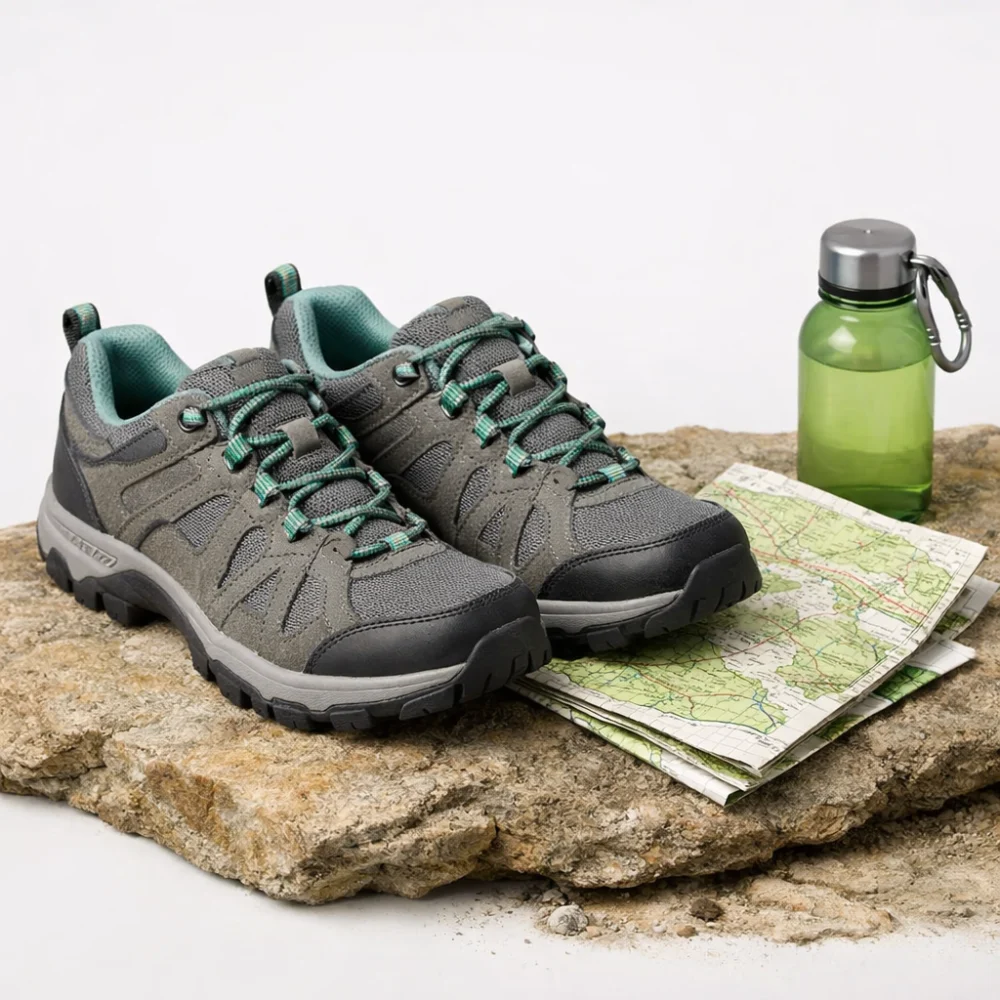
Women’s hiking shoes are a practical choice for walkers who want more support and protection than everyday trainers, but less bulk than hiking boots. They suit a wide range of routes, from local paths and weekend rambles to longer days on mixed ground.
The right pair depends less on the label and more on how you walk. Fit, outsole grip, water resistance, cushioning and upper support all affect comfort and confidence, especially once the ground turns uneven or wet.
Because product details vary, it helps to compare the shoes against your usual conditions rather than choosing by appearance alone. Specifications vary by model, so always check the individual product page before buying.
What should I look for in women’s hiking shoes?
Start with the kind of walking you do most often. If you mainly walk on tracks and well-kept paths, a lighter, more flexible shoe may be enough; if you regularly meet mud, steep ground or rougher terrain, you may want more protection and support. The main trade-off is usually between lightness and structure, or between weather resistance and breathability.
A good shortlist usually comes down to fit, grip, underfoot feel and how much protection you want from rain, stones and uneven ground. If you compare those four points first, it becomes much easier to ignore features that do not affect your actual use.
Quick comparison framework
| Feature | What it means | Why it matters | What to check |
|---|---|---|---|
| Fit | How the shoe sits around the heel, midfoot and toe area | Comfort and stability depend on the shoe matching your foot shape | Look for sizing guidance, width notes and whether the shape suits your foot |
| Outsole grip | The tread pattern and rubber contact with the ground | Important for confidence on mud, rock, wet paths and mixed surfaces | Check whether the shoe is described as suitable for the ground you walk on |
| Support | How much structure the shoe gives underfoot and around the upper | More support can help on uneven routes, but may feel less flexible | Compare the level of stiffness, ankle freedom and overall build |
| Weather resistance | How well the shoe deals with rain, damp grass and puddles | Useful in the UK, but added protection can reduce breathability | Check whether the shoe is water-resistant or waterproof, and what that means on the product page |
| Cushioning | How soft or firm the midsole feels | Affects comfort on long days and how stable the shoe feels | Look for comments on comfort, underfoot feel and use case rather than assuming more cushioning is always better |
| Weight and flexibility | How easy the shoe feels when walking | Lighter shoes can feel quicker and less tiring, while stiffer shoes can feel more protective | Consider whether you want agility or a more planted feel |
Key decision criteria explained
Fit is the starting point
Even a well-made hiking shoe is a poor choice if the fit is wrong. You want enough room for toes to move, a secure heel and no obvious pressure points across the instep or sides of the foot. If you often buy outdoor footwear, pay attention to whether a brand tends to run narrow, roomy or somewhere in between.
Fit also affects how the shoe feels later in a walk, when feet may swell slightly. A shoe that seems fine at home can feel cramped after a few miles, so it is worth checking any fitting advice on the product page.
Grip should match the terrain
Hiking shoe tread can look similar across products, but not all outsoles are aimed at the same conditions. A shoe that works well on dry country paths may feel less secure in mud, while a more aggressive tread can feel less smooth on pavements and firm tracks. Think about the ground you walk on most often, not the hardest route you might ever attempt.
Water protection and breathability need balancing
Waterproof or water-resistant options can be useful in wet weather and on damp ground, but they may feel warmer than more breathable shoes. If your walks are often in mild conditions, ventilation may matter more than full weather protection. If you walk in the rain or through wet grass regularly, protection may matter more than maximum airflow.
Support and flexibility should suit your pace
Some walkers prefer a more structured shoe for stability, while others want a lighter, more flexible feel. More structure can help when the ground is uneven or when you carry a heavier daypack, but it can feel less natural for casual walking. More flexibility can feel comfortable and easy from the first wear, but may offer less reassurance on rougher routes.
Cushioning is not the same as stability
Soft cushioning can feel comfortable, but it does not automatically mean the shoe will suit longer or rougher walks. Some buyers prefer a firmer base because it feels more controlled on uneven surfaces. If you are comparing several options, try to judge the overall balance rather than assuming the softest shoe is the most suitable.
Common types and variants
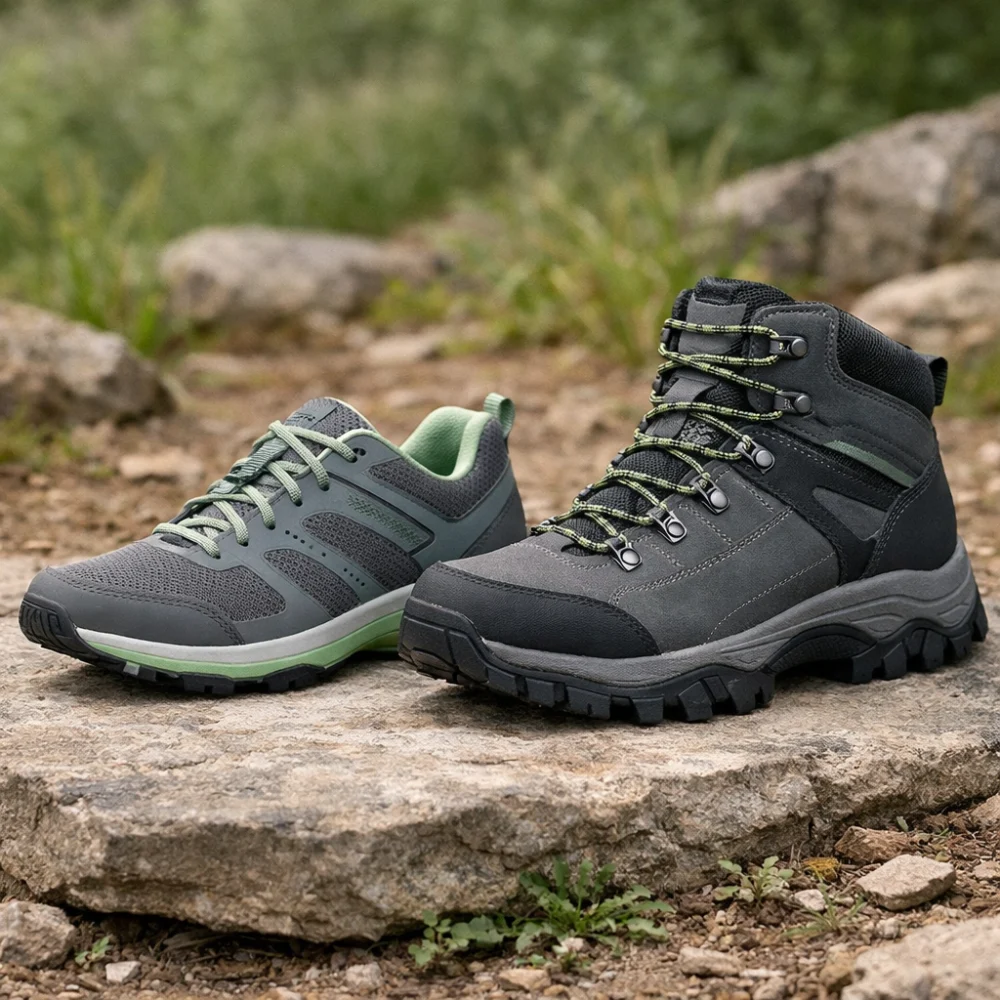
Within women’s hiking shoes, the most useful differences are usually about build and intended use rather than dramatic category splits.
- Lightweight hiking shoes: Often chosen for easier paths, travel and everyday versatility. Their main limitation is that they may give less protection on rougher ground.
- More robust hiking shoes: Better suited to uneven terrain or longer days when you want more structure. Their main limitation is that they can feel heavier or less flexible.
- Waterproof or weather-resistant shoes: Useful for wetter conditions and muddy walking. Their main limitation is reduced breathability compared with lighter, more open designs.
- Breathable walking-focused shoes: Good for warmer weather or mainly dry routes. Their main limitation is less protection from persistent wet ground.
Which features suit different buyers?
| Buyer need | What to prioritise | Why |
|---|---|---|
| Mostly local walks and town-to-trail use | Comfort, lighter feel and reliable everyday fit | You may value versatility more than maximum protection |
| Regular wet-weather walking | Weather resistance, grip and easy-to-clean materials | UK conditions can make damp ground and puddles a frequent issue |
| Rockier or uneven routes | Support, outsole grip and a more protective build | Extra structure can feel more secure on irregular ground |
| Longer day walks | Fit, cushioning balance and secure heel hold | Comfort over many hours depends on pressure-free fit as much as softness |
| Warm-weather or fast-paced walking | Breathability and flexibility | Reduced bulk can help the shoe feel lighter and less tiring |
Common mistakes to avoid
- Choosing by appearance only: A shoe can look suitable but still be the wrong shape, weight or stiffness for your walking.
- Assuming waterproof means perfect in every condition: Weather resistance helps, but it does not replace good fit or make a shoe ideal for all routes.
- Overlooking width and toe room: Small fit issues can become uncomfortable on longer walks.
- Picking too much support for easy use: A heavily structured shoe may feel unnecessary if you mostly walk on smooth paths.
- Ignoring your usual socks: The fit can change once you wear the socks you actually hike in.
Safety and suitability caveats
Women’s hiking shoes are designed for walking and hiking, but individual models vary in support, weather protection and terrain suitability. A shoe that is comfortable on flat paths may not be the right choice for steep, muddy or technical ground. Check the product page carefully if you need a more protective or more weather-resistant option.
If you have a foot shape that usually needs special fitting attention, it is sensible to read sizing and fit details closely before buying. For any model, the safest approach is to judge the shoe against the exact kind of walking you plan to do rather than the broad category name.
Care, storage and lifespan considerations
Hiking shoes tend to last longer when you keep them clean, dry them naturally and store them away from prolonged damp or heat. Mud and grit can affect comfort and appearance, so it is sensible to remove debris after walks. Some models may need more attention than others depending on the materials used.
Replacement timing depends on how often you walk, the terrain and the condition of the sole, upper and cushioning. If grip starts to feel reduced or the upper loses its support, it may be time to look again.
How to compare options efficiently
- Decide where you walk most often and how demanding the ground usually is.
- Choose the general type: lighter and more flexible, or more protective and structured.
- Compare fit, grip, weather resistance and cushioning before looking at secondary features.
- Think about the trade-offs: breathability versus protection, or agility versus support.
- Check the individual product page for the specific fit notes and material details.
Summary buyer checklist
- Does the shoe suit your usual terrain?
- Is the fit shape likely to work for your foot?
- Do you want weather resistance or more breathability?
- Is the level of support appropriate for your walks?
- Will the cushioning and flexibility match how long you wear them?
- Have you checked the product page for model-specific details?
Frequently asked questions
Are women’s hiking shoes the same as walking shoes?
Not always. Hiking shoes are often built with more grip and protection than everyday walking shoes, although the difference can vary by model. If you walk on rougher ground or in wetter conditions, the hiking-focused build may be useful.
Do I need waterproof hiking shoes?
Only if you regularly walk in wet weather, damp grass or muddy conditions. Waterproof shoes can be very useful, but they may feel warmer and less breathable than lighter alternatives. If most of your walks are dry, breathability may matter more.
Should I choose hiking shoes or hiking boots?
That depends on the level of support and protection you want. Shoes usually feel lighter and more flexible, while boots typically offer more coverage and structure. For many day walks, shoes are enough; for rougher or wetter routes, boots may be worth comparing too.
How should hiking shoes fit?
They should feel secure at the heel, comfortable through the midfoot and roomy enough at the toes. There should be no painful pinching or obvious rubbing when you try them on. If the product page gives fit guidance, use it as part of the decision.
Can I use trail shoes instead?
Sometimes, yes. Trail shoes can suit lighter, faster walking on less demanding ground, but they may not give the same protection or support as hiking shoes. If you often walk on uneven paths or in poor weather, compare the two categories carefully.
What matters more: cushioning or grip?
Both matter, but the more important one depends on your route. Grip becomes especially important on wet, muddy or loose ground, while cushioning can matter more on longer walks. A balanced shoe usually works better than one that excels in only one area.
How do I narrow down several similar options?
Use the fit and terrain first, then compare weather resistance, support and comfort. When two shoes look similar, the deciding factor is often the one that best suits the way you actually walk. If in doubt, check the individual product page for the most specific information.

