
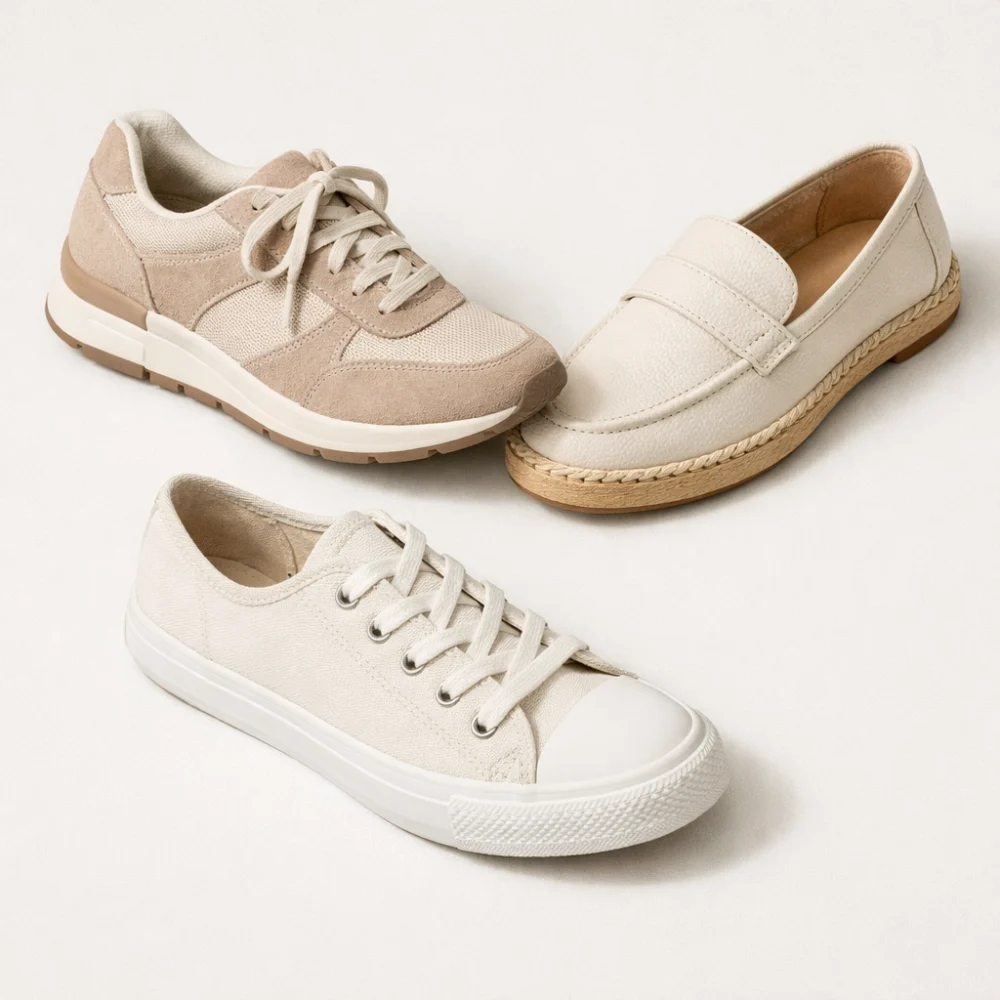
Women’s casual shoes cover a broad mix of everyday footwear, so the main challenge is not finding a style, but choosing one that fits how you actually wear shoes. Some pairs are made for easy all-day use, while others lean more towards smart-casual styling or lighter, relaxed wear.
This guide helps you narrow the choice by comfort, fit, material, fastening and intended use. If you are comparing similar-looking options, the important differences are often in how secure they feel, how much support they offer and how easy they are to live with.
What should you look for in women’s casual shoes?
The best starting point is to match the shoe to your routine. If you want something for quick everyday wear, a slip-on style may suit you, while lace-up shoes can give a more adjustable fit. Materials, sole feel and toe shape also matter because they affect comfort, flexibility and how the shoe works with different outfits.
A good casual shoe should feel easy to wear without demanding much thought, but the right choice depends on whether you value convenience, a neater look, or a bit more hold on the foot. Specifications vary by model, so always check the individual product page before buying.
| Feature | What it means | Why it matters | What to check |
|---|---|---|---|
| Fastening | Slip-on, lace-up, or other closure style | Affects convenience and how securely the shoe fits | Whether you want quick on-off wear or more adjustment |
| Upper material | The main material on the top of the shoe | Influences comfort, appearance and care needs | How the material may feel, breathe and clean |
| Sole feel | How flexible or substantial the sole seems | Changes comfort for standing, walking and daily use | Whether the shoe is likely to suit light or more regular wear |
| Toe shape | The shape and room at the front of the shoe | Can affect comfort, especially for longer wear | Whether you prefer a roomier or neater front profile |
| Style level | How casual or smart the shoe looks | Helps match the shoe to work, leisure or travel | Whether it fits the outfits you wear most often |
Key decision criteria explained
Fit and adjustability
Fit is the most important factor because casual shoes are often worn for long periods. Lace-up shoes usually give more room to fine-tune the fit, while slip-on styles are easier to wear but may feel less adjustable. If you often struggle with pressure across the top of the foot or around the heel, the fastening style matters as much as the size.
Comfort for everyday wear
Comfort is not just about softness. It also depends on whether the shoe feels stable, whether the front has enough room and whether the sole suits the amount of walking you do. A shoe that feels fine for short errands may be less suitable for a full day out.
Material and care
Different uppers can change the look and upkeep of the shoe. Canvas, knit-like uppers and other casual finishes often feel relaxed and lightweight, while smoother materials may look a little neater. Think about how often you will wear them, how easy they are to clean and whether they need more careful storage.
Style versus versatility
Some casual shoes are designed to blend with many outfits, while others are more distinctive. A simple design can be easier to wear repeatedly, but a more decorative shoe may suit a specific look better. The trade-off is usually between flexibility and personality.
Common types and how they differ
Within women’s casual shoes, the main differences are usually in the shape and fastening rather than in a single technical feature.
- Slip-on casual shoes are easy to put on and remove. They suit shoppers who value convenience, though they may not feel as adjustable as lace-up styles.
- Lace-up casual shoes offer a more controlled fit. They can be a better choice if you want the shoe to feel more secure or adaptable.
- Loafer-style casual shoes often look a little smarter while staying relaxed. They can suit everyday wear but may feel less sporty than trainer-inspired designs.
- Canvas and lightweight casual shoes tend to feel informal and easy-going. They are often chosen for relaxed everyday use rather than heavier wear.
- Trainer-inspired casual shoes can suit people who want a familiar, casual look with an easy-wearing feel.
Which type suits different buyers?
| Buyer need | What tends to matter most | Often a good direction |
|---|---|---|
| Quick everyday wear | Ease of getting shoes on and off | Slip-on styles |
| More secure fit | Adjustability across the foot | Lace-up styles |
| Smart-casual use | Cleaner appearance and versatility | Loafer-style or simple low-profile shoes |
| Relaxed weekend wear | Comfort and easy styling | Canvas or lightweight casual shoes |
| Frequent walking | Stable feel and all-day comfort | Styles with a more substantial sole and secure fit |
Common mistakes and misunderstandings
Choosing by appearance alone can lead to shoes that look right but feel wrong after an hour or two. It is usually better to decide on fit and intended use first, then narrow by style.
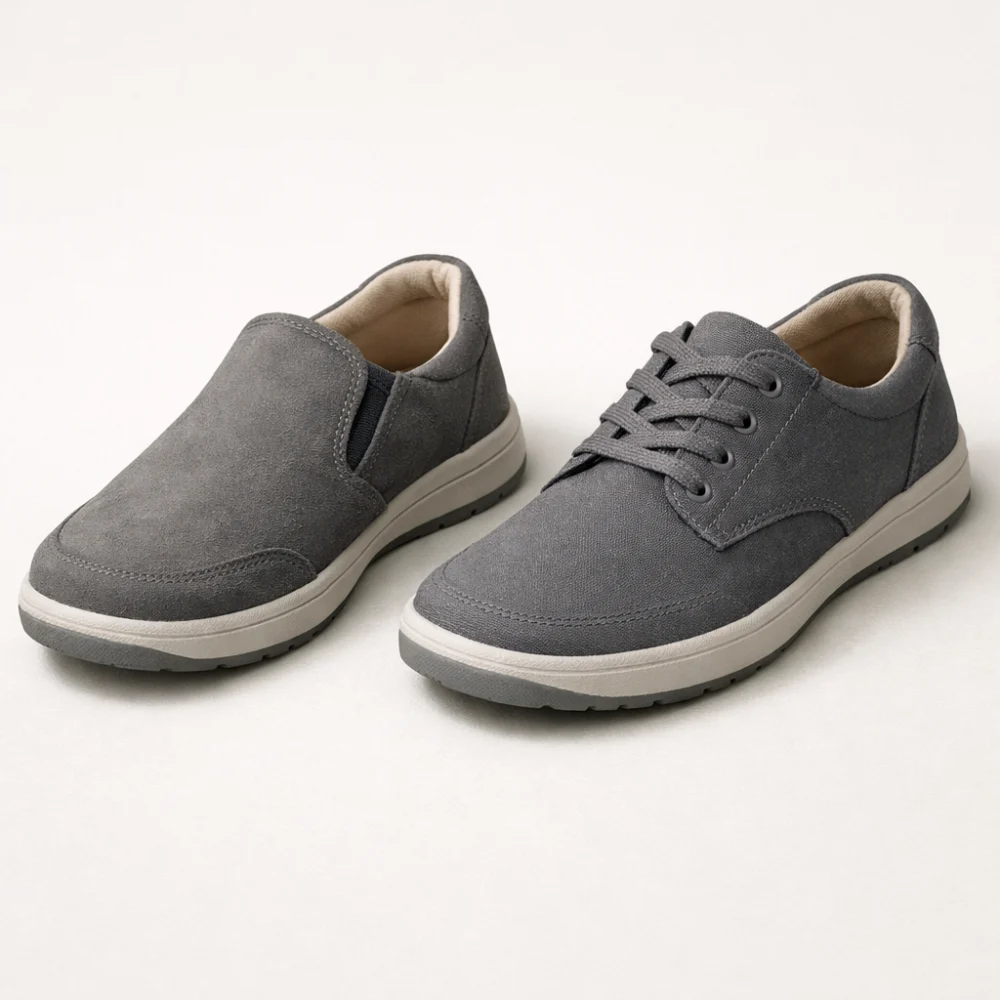
Assuming all casual shoes feel the same is another common mistake. Two similar-looking shoes can differ in toe room, support and fastening, which changes how they wear in practice.
Ignoring how often they will be worn can also cause problems. A pair for occasional wear may not need the same level of comfort or durability as a pair you expect to wear most days.
Suitability and care considerations
Before buying, think about where the shoes will be worn and how much walking they will need to handle. A shoe that suits indoor or short everyday use may not be the best option for long days out or varied terrain. Check the product description for any guidance on materials, cleaning and intended use.
For storage, keep casual shoes in a dry place and allow them to air between wears if needed. If a shoe has lighter materials or decorative finishes, it may need a little more care than a plain everyday pair.
How to compare options efficiently
- Start with the main use: everyday errands, work, travel or relaxed weekend wear.
- Choose the right type of closure: slip-on for convenience, lace-up for adjustability.
- Compare material and sole feel for comfort and upkeep.
- Check whether the shape and overall style suit the clothes you wear most often.
- Read the individual product page carefully for size guidance and any model-specific details.
Summary buyer decision checklist
- Does the shoe match your main reason for buying it?
- Do you prefer slip-on convenience or a more adjustable lace-up fit?
- Will the style work with your usual outfits?
- Does the toe shape and overall feel suit longer wear if needed?
- Are the materials and care needs realistic for how often you will use them?
- Have you checked the product page for any model-specific details?
Frequently asked questions
Are casual shoes suitable for all-day wear?
Some are, but not all. All-day comfort depends on the fit, sole feel and how much support the shoe gives you, so it is worth checking the product details rather than assuming every casual shoe will suit long wear.
What is the main difference between slip-on and lace-up casual shoes?
Slip-on shoes are quicker to wear, while lace-up shoes usually allow more adjustment across the foot. If fit varies a lot for you, lace-up styles can be easier to fine-tune.
Are canvas casual shoes a good everyday choice?
They can be, especially for relaxed wear and lighter outfits. They are usually chosen for easy, informal styling, but the best choice depends on how much support and structure you want.
How do I choose between a smarter and a more relaxed style?
Think about your most common outfits and where you will wear the shoes. A simpler, neater design often gives more versatility, while a more relaxed style may feel better for informal use.
Should I buy casual shoes in the same size as my trainers?
Not automatically. Different styles can fit differently, so it is better to check the product page and any size guidance for the individual shoe rather than relying only on another category’s fit.
What should I check if I wear casual shoes often?
Focus on comfort, fit, material and how easy they are to maintain. If you expect frequent use, it is worth paying attention to the overall feel of the shoe rather than just the look.
Do decorative details matter when choosing casual shoes?
They can, because details affect how versatile the shoe is and how easy it may be to match with different clothes. A simpler design is often easier to wear in more settings.

