
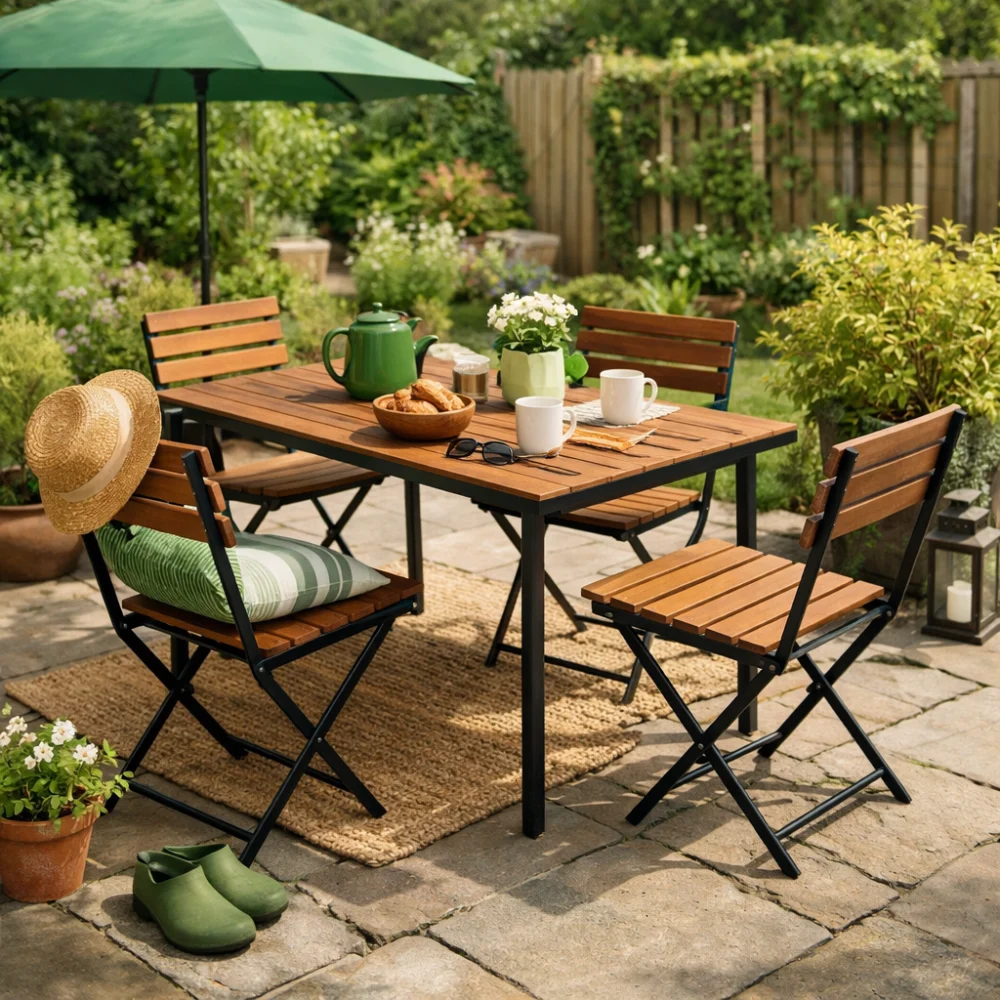
Garden tables do more than hold food and drinks. They help define how you use an outdoor space, whether that means relaxed coffee in a small courtyard, family meals on a patio or a practical surface for occasional entertaining.
This guide focuses on the buying decisions that matter most: size, shape, material, stability, storage and how the table fits with your existing garden furniture. It is aimed at shoppers who want a sensible way to narrow the choice without getting lost in product details.
Because garden tables vary widely, the main task is to match the table to your space and how you plan to use it. Specifications vary by model, so always check the individual product page before buying.
What should you look for when choosing a garden table?
Start with the basics: where it will sit, how many people you want to seat and whether you need it for dining, drinks or occasional use. A larger table is not automatically better if it leaves too little room to move around, while a compact table can be more useful in a small garden or balcony. The main trade-off is between generous surface area and easy placement.
| Feature | What It Means | Why It Matters | What To Check |
|---|---|---|---|
| Size and footprint | The overall space the table takes up | It affects how many people can sit comfortably and how well the table fits the area | Measure the available space and leave room for chairs and movement |
| Shape | Round, square, rectangular or another format | Different shapes suit different layouts and social uses | Think about room layout, corner placement and how people will gather around it |
| Material | The main construction of the frame and top | It influences appearance, upkeep and how the table feels in use | Check what the product page says about the frame and surface materials |
| Foldability or storage | Whether the table folds or stores away easily | Useful if space is limited or the table will not stay outside all year | Look for folding details and consider where it will be stored |
| Stability | How firmly the table stands during everyday use | Important for dining, drinks and uneven outdoor ground | Review the base design and consider whether the table will sit on paving, decking or grass |
| Practical features | Extras such as a parasol opening or easy-clean surface | These can make the table more convenient for your routine | Check that any extra feature is useful for your setup, not just a nice-to-have |
Key decision criteria explained
Size and seating plan
The most important question is not just how many people the table can theoretically seat, but how you want the space to feel. A table for everyday family meals needs a different footprint from one used for drinks or occasional guests. If you are buying for a compact patio or balcony, leaving circulation space often matters as much as the tabletop itself.
Shape and layout
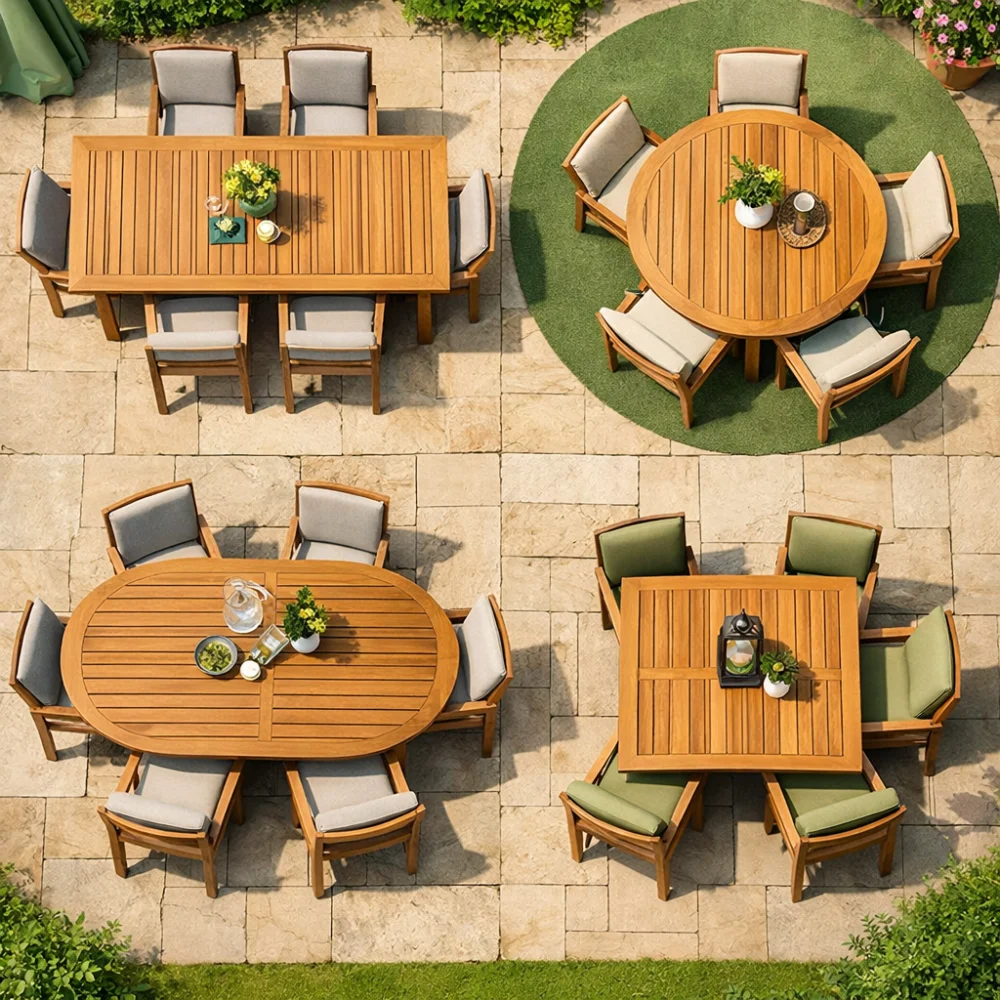
Round and square tables often suit smaller areas or more informal use, while rectangular tables can work well for longer seating arrangements. The right shape depends on the room you have and how people will approach the table. A shape that fits neatly against a wall or corner may be more practical than one that looks larger but is awkward to use.
Material and maintenance
Garden tables are often chosen for how much care they need as well as how they look. Some finishes are easier to wipe clean, while others may need more attention to keep them looking presentable outdoors. Consider whether you want something low-maintenance for regular use or are happy to do a little more upkeep for a particular style.
Folding, storage and portability
If the table will only be used at certain times of year, or if you need to free up space, a folding or easily moved table can be a practical choice. Heavier tables can feel reassuringly solid, but they are less convenient if you plan to reposition them often. Think about who will move it, where it will be stored and how often that will happen.
Extra features
Some tables include practical details that suit particular setups, such as an opening for a parasol or a surface that is easier to clean after meals. These features are only useful if they match your way of using the table. If you will not use them, do not let them distract from the basics of size, shape and build.
Garden table types and variants
There are a few common garden table styles, and each has a different strength.
- Dining tables are suited to meals and longer gatherings, but they usually need more space.
- Bistro tables are compact and work well for smaller seating areas, though they are less suitable for larger groups.
- Folding tables are useful where storage matters, but they may be less permanent in feel than a fixed table.
- Side tables are handy for drinks, plants or a small serving surface, but they are not a substitute for a main dining table.
The best type depends on whether you are creating a dining area, a casual seating spot or a flexible occasional-use space.
Which garden table suits different buyers?
| Buyer need | What tends to matter most | Likely trade-off |
|---|---|---|
| Small garden or balcony | Compact footprint, easy movement, tidy shape | Less surface space for food and accessories |
| Family dining | Enough room for plates, drinks and comfortable seating | Requires more outdoor space |
| Occasional entertaining | Flexible size and easy storage | May not feel as substantial as a permanent dining table |
| Low-maintenance buying | Simple care and easy-clean surfaces | Fewer decorative choices in some styles |
| Mixed-use garden space | Balanced size, practical layout and portability | May not be ideal for one very specific task |
Common mistakes and misunderstandings
- Choosing by appearance alone. A table can look right online but still be awkward in the space. Measure carefully and think about how chairs, doors and walkways will work around it.
- Assuming bigger is better. A table that dominates the area can make the whole space less comfortable. In many gardens, a slightly smaller table is easier to live with.
- Overlooking storage needs. If the table will not stay outside permanently, storage matters just as much as style. Folding or more manageable designs can make seasonal use simpler.
- Ignoring how it will be used. A drinks table, dining table and occasional side table solve different problems. Matching the type to the use is usually more important than any single feature.
Safety and suitability caveats
Check that the table suits the surface it will stand on, especially if your patio or decking is uneven. If you want to use a parasol, make sure the product page clearly states that the table has the right opening or support for that purpose. For outdoor furniture, it is also sensible to consider wind exposure, storage and general stability rather than assuming every model will behave the same way.
Maintenance, storage and lifespan considerations
A garden table’s ease of care can affect how satisfied you feel with it over time. Some tables will need only regular wiping, while others may need more attention after bad weather or seasonal use. If you plan to leave the table outside, consider whether it is designed for that routine and whether you have a sensible storage plan for winter or long wet periods.
It is also worth thinking about chair storage, covers and how often the table will be moved. A table that is simple to maintain and store may be more practical than one with a more elaborate finish that needs extra care.
How to compare garden tables efficiently
- Decide how you will use the table most often.
- Measure the space and work out the footprint you can comfortably allow.
- Choose the most suitable shape and style for that layout.
- Compare the practical features that matter to you, such as folding, cleaning and stability.
- Read the individual product page carefully and check any model-specific details.
Garden tables buyer checklist
- Have I measured the space, including room for chairs and movement?
- Does the shape suit the area and the way I want to use it?
- Is it intended for dining, drinks or occasional use?
- Do I need easy storage or a folding design?
- Will the material and finish suit the amount of care I am willing to give it?
- Does it have any features I will genuinely use?
- Have I checked the individual product page for model-specific details?
Frequently asked questions
What size garden table do I need?
Start with the space you actually have, then think about how many people will use it most often. A table that feels generous indoors may be too large once you add chairs and movement space outdoors. Measuring the area first usually makes the decision much easier.
Is a round or rectangular garden table better?
Neither is always better; they suit different layouts. Round tables can feel sociable in smaller spaces, while rectangular tables often work well for longer seating areas. The best choice is the one that fits your space and seating plan without crowding it.
Do I need a folding garden table?
Only if storage or flexibility matters to you. Folding tables are useful in smaller gardens or for seasonal use, but fixed tables can feel more permanent and substantial. Think about how often you will move or store the table.
What material is easiest to look after?
That depends on the finish and how you plan to use the table. If low maintenance is important, focus on surfaces that are easy to wipe down and suits outdoor use. The product page should tell you enough to compare the level of care involved.
Can I leave a garden table outside all year?
Some tables are better suited to outdoor storage than others, but that does not mean every table is ideal for permanent exposure. Weather, shelter and storage all matter, so check the product information and plan for the conditions in your garden.
What is the difference between a garden table and a patio table?
In shopping terms, the words are often used in a similar way. The more important point is whether the table suits your outdoor space, seating and upkeep preferences. Focus on the features rather than the label.

