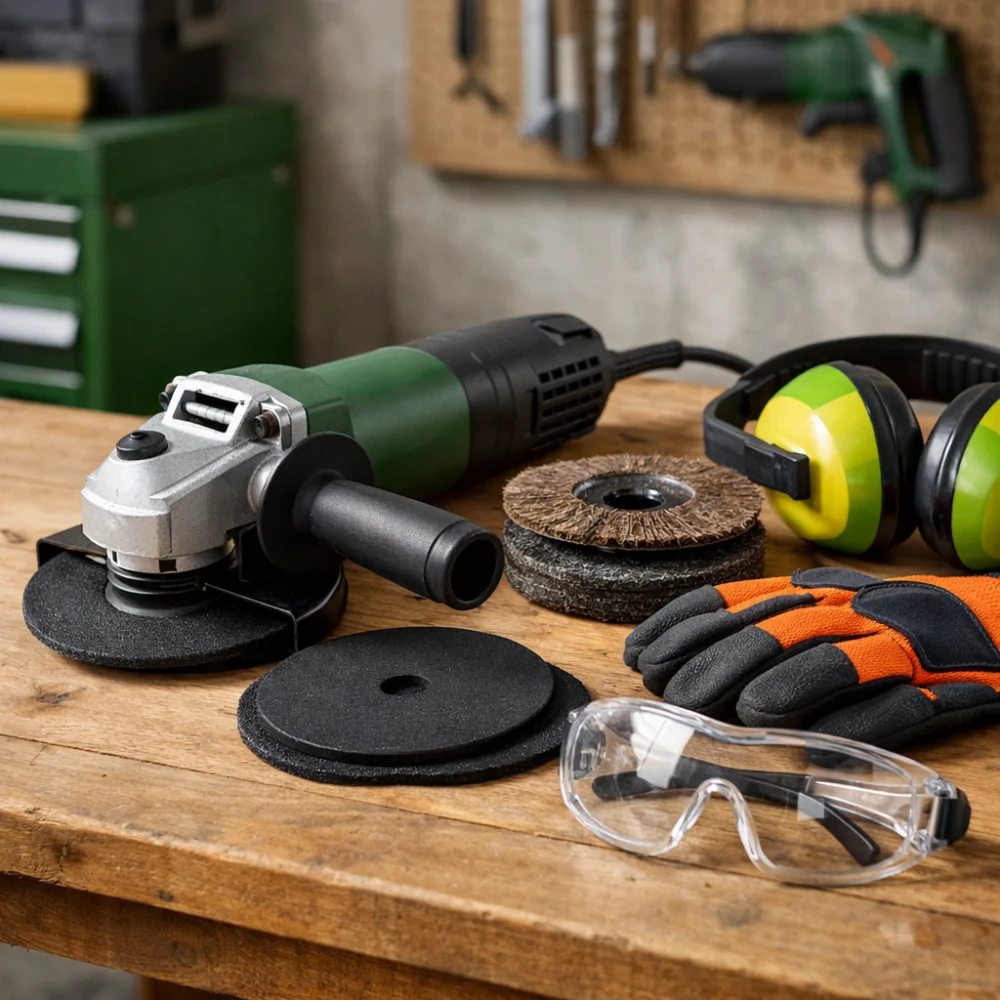
Angle grinders are versatile DIY and trade tools used with the right accessory for jobs such as cutting metal, removing rust, smoothing welds, shaping stone or tidying up masonry. The tricky part is choosing a model that suits the work you actually do, rather than buying on power alone.
This guide helps you compare the main buying factors clearly: power source, disc size, speed control, comfort and the type of tasks you expect to tackle. It also covers the practical checks that matter before you choose accessories and start work.
If you are replacing an older grinder, upgrading for heavier use or buying one for occasional home projects, it helps to separate cutting needs from grinding needs first. That usually makes the rest of the decision much simpler.
What should you look for in an angle grinder?
Start with the material and task you need to handle, then match the grinder to that job. A smaller, lighter grinder can be easier to control for shorter tasks, while a more capable tool may suit regular cutting or grinding work better. The main trade-off is usually between compact handling and the extra capacity needed for demanding jobs.
Specifications vary by model, so always check the individual product page before buying.
| Feature | What it means | Why it matters | What to check |
|---|---|---|---|
| Power source | Corded or cordless operation | Affects freedom of movement, runtime and where the tool can be used | Whether you need mains convenience for longer sessions or battery flexibility for site and outdoor use |
| Disc size | The diameter of the disc the grinder is designed to take | Influences reach, cutting depth and handling | That the tool matches the disc size you plan to use |
| Speed control | Whether the tool offers a fixed speed or adjustable speed | Helps when different accessories or materials need a gentler approach | Whether variable speed would make the tool more versatile for your tasks |
| Grip and handling | Body shape, auxiliary handle and overall balance | Affects comfort and control during longer or more precise work | How the tool is held and whether it looks suitable for the way you work |
| Accessory fit | The discs and accessories the grinder can use | Determines what jobs you can actually do with the tool | That compatible accessories are available for cutting, grinding or finishing |
Key decision criteria
Corded or cordless
Corded grinders are generally chosen for uninterrupted working and dependable power from the mains. Cordless models suit jobs where a cable would be awkward or where portability matters more. The main trade-off is convenience at the point of use versus the need to manage batteries and charging.
Disc size and task fit
Disc size affects how the grinder feels and what it is best suited to. Smaller grinders are often preferred where control and compactness matter, while larger formats may be better for more demanding cutting or grinding tasks. Check the size the model supports and make sure the accessories you want are made for it.
Speed and control
Some grinders offer variable speed, which can be useful when different materials or accessories need a different approach. That can make one tool more adaptable, but it is not essential for every buyer. If you only expect straightforward cutting or rough grinding, a simpler model may be enough.
Comfort and control
Angle grinders are handheld tools, so comfort matters. Look at the main grip, whether an auxiliary handle is included and whether the body shape seems practical for the kind of work you do. A tool that feels easier to steady is often less tiring and easier to guide accurately.
Common grinder types and variants
Most buyers will be comparing a few broad variants rather than entirely different products. The most common split is between corded and cordless tools, followed by smaller and more powerful grinder formats. Some models are aimed at general-purpose use, while others focus more on compact handling or heavier-duty work.
- Corded grinders suit longer sessions and workshop use where a socket is available.
- Cordless grinders suit moving around a job or working where cables would get in the way.
- Compact grinders can be easier to handle for tighter spaces and lighter tasks.
- Heavier-duty grinders may suit more regular cutting or grinding, but can feel less nimble.
Which angle grinder suits your needs?
| Buyer need | What to prioritise | Typical trade-off |
|---|---|---|
| Occasional home DIY | Simple handling, straightforward controls and a format that feels comfortable | May not offer the same flexibility as a more advanced model |
| Regular cutting or grinding | More robust build, suitable power source and accessories that match the work | May be larger, heavier or less convenient to carry |
| Work in different locations | Portability and cordless convenience, if runtime suits your tasks | Battery management becomes part of the decision |
| Precision or finishing tasks | Good control, manageable size and, where useful, variable speed | Smaller or lighter tools may be less suited to aggressive material removal |
Common mistakes and misunderstandings
- Choosing by power figure alone. Power matters, but handling, disc size and task fit matter just as much.
- Buying the wrong power source. A corded tool may be awkward if you need to move around a lot, while cordless may be less convenient for long uninterrupted use.
- Ignoring accessory compatibility. The grinder is only as useful as the discs and accessories it can take.
- Overlooking comfort. A tool that is hard to hold or control can be tiring even if it looks capable on paper.
Safety and suitability caveats
Angle grinders can be used on a wide range of materials, but the right accessory and setup depend on the specific task. Do not assume that one grinder or disc is suitable for every job. Check the product page for the intended use, the supported accessories and any limits on what the tool is designed to handle.
It is also worth thinking about the space you will work in, the amount of control you need and whether the tool feels appropriate for your experience level. A smaller or simpler grinder may be easier to manage for occasional use, while more capable tools may suit buyers who already know the kind of work they plan to do.
Maintenance, storage and ownership considerations
Grinders are easier to live with when you think about upkeep before buying. Consider where the tool will be stored, whether you will need to keep batteries charged, and how often you expect to clean dust and debris from the tool and accessories. Good storage also helps keep discs and other consumables in usable condition.
If you expect regular use, it makes sense to check whether replacement accessories are easy to source and whether the grinder format suits the way you already organise your tools.
How to compare angle grinders efficiently
- Decide what you will mainly use the grinder for: cutting, grinding, finishing or mixed tasks.
- Choose between corded and cordless based on where and how long you will work.
- Check the disc size, grip and accessory fit against the tasks you expect to do.
- Look for useful extras such as variable speed only if they match your use case.
- Read the individual product page carefully before buying.
Summary buyer decision checklist
- Have I matched the grinder to the main job I need it for?
- Do I need corded power, cordless freedom or either?
- Is the disc size appropriate for the tasks I expect to do?
- Will the tool feel comfortable and controllable in my hands?
- Are the accessories I need compatible with the grinder?
- Have I checked the individual product page for the exact specifications?
Frequently asked questions
What is an angle grinder used for?
An angle grinder is a handheld power tool used with the right accessory for cutting, grinding, cleaning and finishing work. People use them on a range of materials, but the exact job depends on the disc or attachment fitted.
Should I choose a corded or cordless angle grinder?
Choose corded if you want continuous mains power and expect longer sessions. Choose cordless if mobility and working away from a socket matter more. The better option depends on where you plan to use the tool most often.
Does a bigger grinder always mean a better grinder?
No. A bigger format may suit tougher work, but it can be less convenient for smaller or more precise jobs. The best choice is the one that matches the task rather than the most powerful-looking option.
Is variable speed worth having?
It can be useful if you expect to use different accessories or work across different materials. If you only need straightforward cutting or grinding, a fixed-speed model may be perfectly adequate.
What should I check before buying accessories?
Check that the accessories are made for the grinder’s supported size and intended use. You should also make sure the accessory suits the material you plan to work on.
Can one grinder do every job?
Some grinders are versatile, but no single model is ideal for every task. The accessory, the format and the level of control you need all affect suitability.