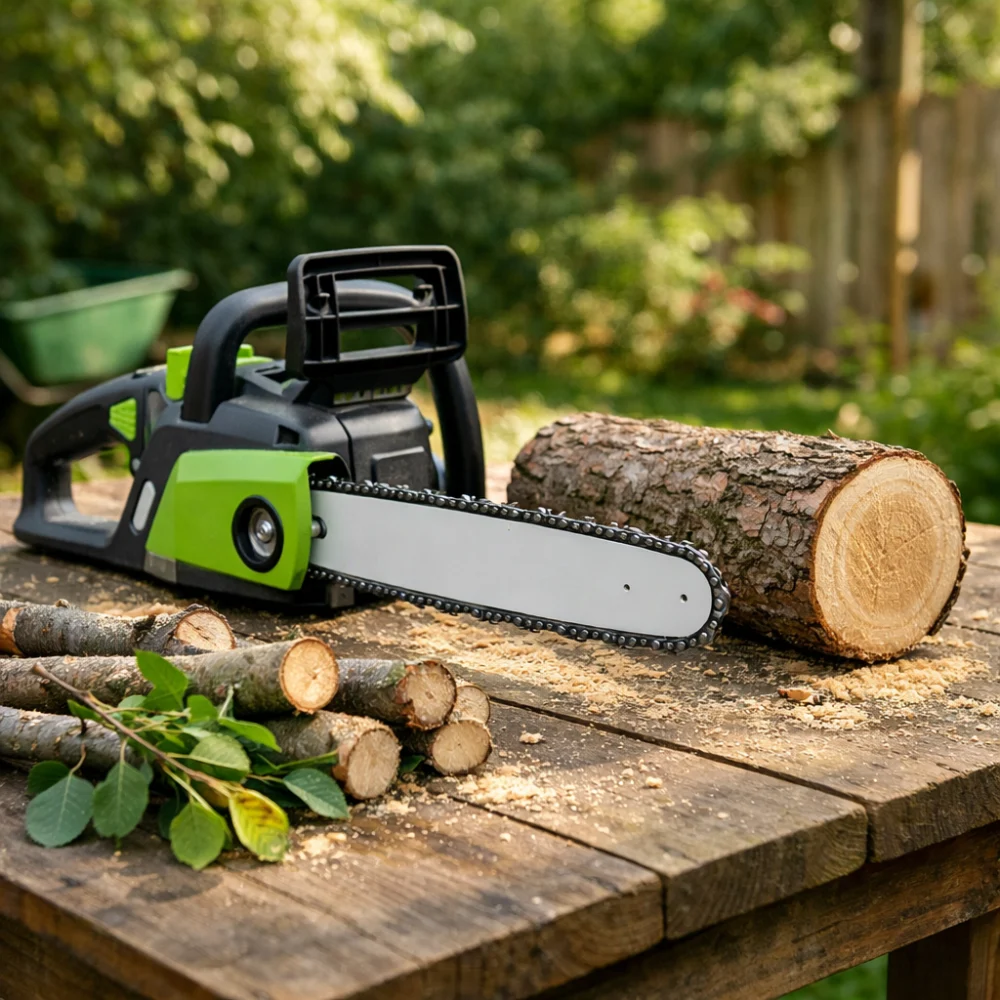
Chain saws cover a wide range of jobs, from trimming branches and cutting firewood to tackling thicker timber. The right choice depends less on the category name and more on how often you will use it, what you need to cut and how much control you want while working.
If you are comparing options for the first time, it helps to separate light domestic tools from more capable machines and then look at the details that affect handling, runtime and maintenance. That makes it easier to choose a saw that suits the task without paying for capacity you will not use.
Specifications vary by model, so always check the individual product page before buying.
What should you look for in a chain saw?
The best starting point is the work you actually need to do. A small saw can be easier to handle for pruning and occasional garden jobs, while a larger saw may suit thicker logs or more frequent cutting. The main trade-off is usually between power, weight and ease of control.
It also helps to think about the power source, the size of the cutting bar and how the chain is maintained. Those factors affect not only cutting ability but also portability, noise, storage and how often you will need to stop and adjust the tool.
| Feature | What it means | Why it matters | What to check |
|---|---|---|---|
| Power source | How the saw is powered, such as battery, mains electric or petrol | Shapes portability, runtime, noise and typical job suitability | Whether you need cordless freedom, continuous power or a lighter domestic tool |
| Bar length | The length of the cutting bar that guides the chain | Influences the size of timber the saw can handle comfortably | Match the bar length to the kind of wood you plan to cut |
| Weight and balance | How heavy the saw feels and how the weight is distributed | Important for control, fatigue and confidence during use | Consider whether you will use it overhead, for long periods or only occasionally |
| Chain tensioning | The way the chain is tightened and adjusted | Affects convenience and how often you may need to stop and check it | Look for a system you can manage comfortably |
| Oil lubrication | How the chain and bar are lubricated during use | Helps reduce wear and supports smoother cutting | Check how lubrication is supplied and how the reservoir is filled |
| Intended workload | The type and frequency of cutting the saw is designed for | Prevents under-specifying a tool for heavier jobs or overbuying for light tasks | Compare the product description with your real workload |
Key decision criteria explained
Power source
Battery saws are usually appealing if you want less noise, easier starting and simpler storage. Mains electric models suit buyers who work close to a power supply and want a straightforward option for occasional use. Petrol saws are generally chosen for more demanding or remote work, but they bring more upkeep and can feel less convenient for small garden jobs.
Bar length and cutting capacity
Bar length is often one of the clearest clues to what a saw can handle, but longer is not automatically better. A longer bar can help with thicker timber, yet it may also make the tool heavier and less nimble. For lighter pruning and general garden work, a more compact saw is often easier to control.
Weight, balance and comfort
Weight matters because a saw that feels manageable on paper may still become tiring in practice. Balance can be just as important as the stated weight, especially if you will be making repeated cuts or working at awkward angles. If you are unsure, compare how the tool is described for handling rather than focusing only on raw power.
Chain adjustment and maintenance
Some saws make chain tensioning and general upkeep more convenient than others. That can be useful if you prefer a simpler ownership experience or expect to use the tool regularly. Check whether the product page explains how the chain is adjusted and how the lubrication system is managed.
Which type of chain saw suits different buyers?
Different buyers usually need different balances of convenience, control and cutting capacity. The table below shows how typical needs can point you towards a suitable type.
| Buyer need | What to prioritise | Why it helps |
|---|---|---|
| Occasional garden pruning | Light weight, easy handling and straightforward maintenance | Makes short tasks less tiring and easier to manage |
| Cutting firewood or larger branches | More cutting capacity and comfortable control | Helps the saw cope with thicker material without feeling underpowered for the job |
| Working away from mains power | Battery or petrol power source | Improves mobility when sockets are not convenient |
| Lower-noise, simpler use | Electric or battery operation | May feel easier to store and start for routine domestic use |
| Frequent use or heavier workloads | Durability, lubrication, balance and capacity suited to the task | Reduces frustration from choosing a tool that is too light-duty |
Common mistakes to avoid
- Choosing on bar length alone. Longer bars can increase capability, but they also affect weight and handling.
- Buying more power than you need. A heavier saw may be less comfortable if your jobs are mostly light pruning.
- Ignoring maintenance convenience. If you expect regular use, simple tensioning and lubrication can make ownership easier.
- Forgetting the work environment. Access to mains power, noise sensitivity and storage space can all influence the most practical choice.
- Assuming one saw suits every task. A tool that is ideal for small branches may not be the right option for thicker timber.
Safety and suitability caveats
Chain saws are practical tools, but they are also more demanding than many garden power tools. Think carefully about who will use the saw, the size of the work and whether the tool feels appropriate for your experience level. Specifications vary by model, so always check the individual product page before buying.
It is also sensible to consider whether the saw is intended for domestic garden work or more regular, heavy-duty cutting. The product description should make clear the basic limits of the tool, even if the exact detail varies.
Maintenance, storage and ownership considerations
Most chain saws need some routine attention, even when the job list is modest. Chain lubrication, chain tension and clean storage all affect how smoothly the tool remains to use. Battery models also bring charging and storage considerations, while petrol models usually involve more ongoing upkeep.
If you want a lower-effort ownership experience, compare how much setup and regular attention each model is likely to need. That can be just as important as cutting capacity for buyers who only use the saw occasionally.
How to compare chain saws efficiently
- Start with the main job: pruning, cutting logs, occasional garden maintenance or heavier timber work.
- Choose the most suitable power source for where and how you will use the saw.
- Compare bar length, weight and balance together rather than in isolation.
- Check how chain tensioning and lubrication are handled.
- Read the individual product page carefully for the model’s intended use and practical limits.
Summary buyer decision checklist
- Have you matched the saw to the size of the work you actually need to do?
- Does the power source suit your access to mains power and your preference for portability?
- Is the bar length appropriate for the timber you plan to cut?
- Will the weight and balance feel manageable for your typical tasks?
- Are chain adjustment and lubrication simple enough for your comfort level?
- Does the product page describe the saw as suitable for your intended type of use?
Frequently asked questions
Is a battery chain saw enough for garden use?
For many domestic garden tasks, a battery saw can be a practical choice because it is easy to move around and generally simpler to start. Whether it is enough depends on how much cutting you need to do and how thick the material is. Check the product description for the tool’s intended workload rather than assuming all battery saws are the same.
What bar length should I choose?
Choose a bar length that suits the timber you plan to cut, but avoid going larger than you need. A shorter, more manageable saw is often easier for pruning and occasional jobs, while a longer bar can help with thicker wood. The right balance depends on both capacity and comfort.
Are petrol chain saws only for professionals?
Not necessarily, but they are often more suitable where extra cutting capacity or greater mobility is needed. They usually involve more upkeep and can be less convenient for smaller domestic jobs. If you only need a saw occasionally, a simpler option may be easier to live with.
How important is chain tensioning?
It matters because chain tension affects day-to-day convenience and the way the saw is maintained between uses. A straightforward tensioning system can make ownership easier, especially if you are not very experienced. Check the product page to see how adjustment is handled.
Should I prioritise power or weight?
For many buyers, control and comfort matter as much as raw power. A heavier saw may be more capable, but if it feels awkward to handle you may find it less useful in practice. The best choice is usually the one that fits your task without being excessive.
What else should I check before buying?
Look at the power source, bar length, weight, maintenance needs and the kind of work the saw is meant for. It is also worth checking what the product page says about intended use, because that often gives the clearest clue to suitability. If you expect regular use, convenience details become more important.