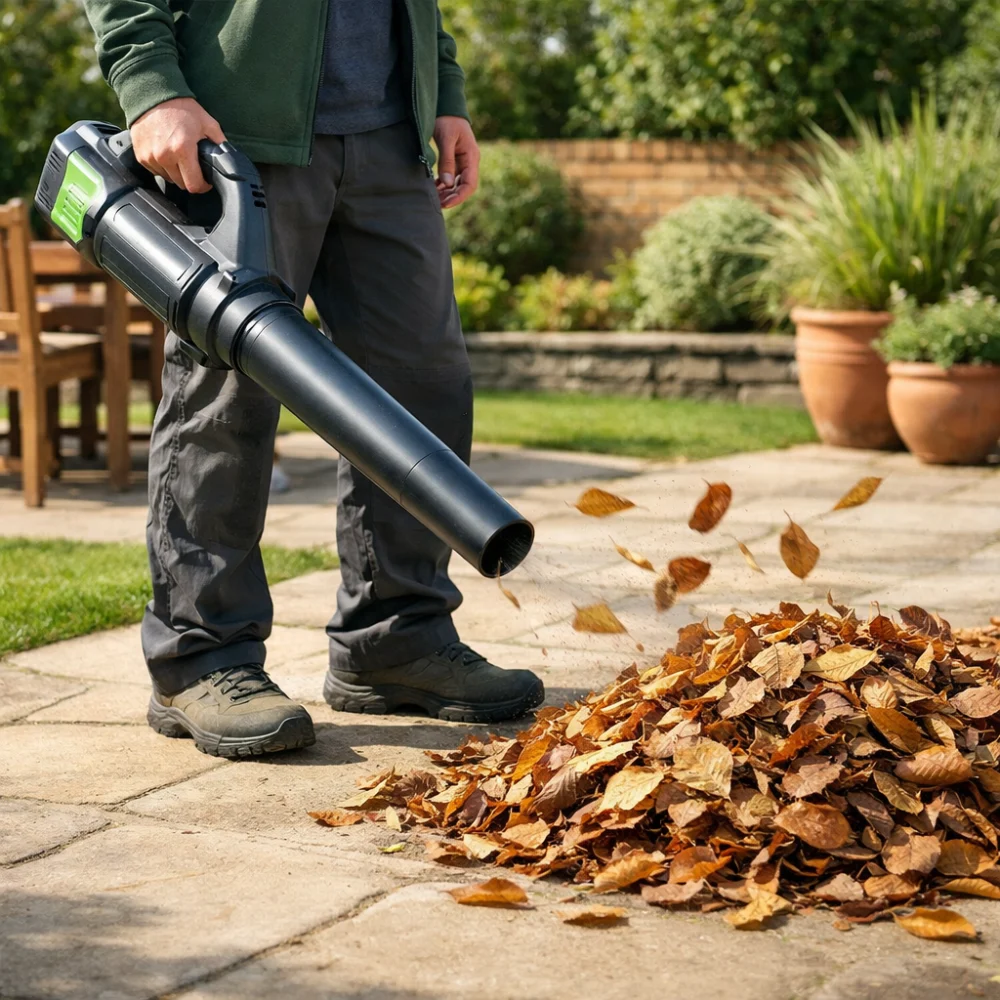
Leaf blowers are designed to move leaves, light debris and cuttings more quickly than sweeping by hand. They can be useful for clearing lawns, paths, patios, driveways and corners where garden waste tends to collect.
Choosing one is usually about matching the tool to your space and the kind of debris you deal with. The main decisions are power source, whether you want blow-only or vacuum functions, and how much weight and noise you are willing to live with.
Because these tools vary a lot by model, it helps to focus on the job rather than the headline number alone. Specifications vary by model, so always check the individual product page before buying.
What should I look for in a leaf blower?
The best starting point is to decide how you will use it. A small patio or tidy driveway may only need a lighter blower for dry leaves, while a larger garden or mixed debris may benefit from more airflow, longer runtime or a vacuum and mulching function. The most useful choice is usually the one that balances reach, ease of handling and enough clearing power for your space.
Do not compare leaf blowers only by one figure such as speed. Overall usefulness depends on how the tool feels in use, how long it can run, how easy it is to carry and whether it suits the type of debris you need to clear.
| Feature | What it means | Why it matters | What to check |
|---|---|---|---|
| Power source | Corded electric, cordless battery or petrol-style power | Affects convenience, range and how long you can work | Where you will use it, how far from a socket you need to go and whether battery charging is acceptable |
| Blow-only or vacuum | Some tools only shift debris; others can also collect and mulch it | Determines whether you want simple clearing or added collection | Whether you want to move debris into piles, bag it or reduce it for disposal |
| Weight and balance | How heavy the tool feels and how it sits in the hand | Affects comfort, especially for longer sessions | Tool weight, handle style and whether a shoulder strap or wheels are included |
| Air output | The moving force of the airflow | Influences how well the blower shifts leaves and light garden waste | Whether the product page explains performance in a way that suits your use |
| Noise and disturbance | How loud the tool is in normal use | Important for neighbours, family members and use in quieter areas | Whether the listing gives noise information and whether you need a lower-disturbance option |
| Collection setup | Bag size, emptying method and mulching approach, where relevant | Impacts how often you stop and how much waste you manage at once | Bag capacity, ease of emptying and whether the setup suits your routine |
Key decision criteria explained
Power source
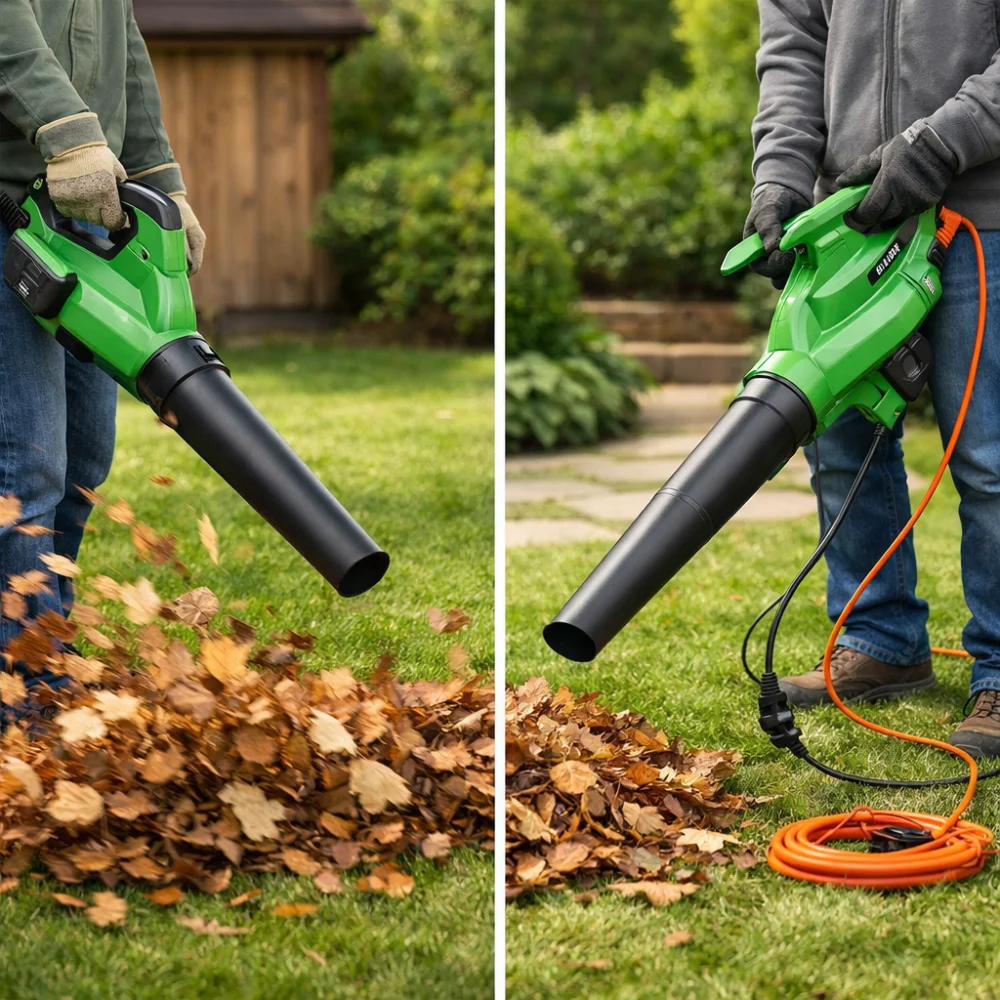
Cordless models offer freedom of movement and are often easier for quick jobs away from a socket. Corded models suit buyers who work near mains power and prefer not to think about charging, while other power setups may suit larger or more demanding jobs if weight and maintenance are acceptable. Your choice should follow your garden layout and how long you expect to work at a time.
Blowing, vacuuming or both
A blow-only tool is usually simpler and quicker if your main task is moving debris into manageable piles. A blower vacuum can suit buyers who want to collect and reduce leaves as they go, but that can add weight and extra handling. If you want a cleaner finish on paths or a way to gather material for the compost heap, the collection side may be useful; if you mainly want speed, simplicity can matter more.
Handling and comfort
Weight, grip and balance affect how tiring the tool feels. A model that is technically powerful but awkward to carry may be less enjoyable to use than a lighter tool that is easier to control. If you expect to work for more than a few minutes at a time, comfort matters almost as much as output.
Control and adjustability
Some leaf blowers offer multiple settings or variable airflow, which can help when you move between delicate areas and heavier leaf build-up. This can make the tool more flexible, but it is worth checking how easy the controls are to use in practice. More settings are not automatically better if you mainly need one straightforward mode.
Noise, neighbours and setting
Noisy tools can be a concern in shared spaces, near neighbours or when you plan to use the blower early or late in the day. If disturbance matters, look for product information that helps you compare noise levels rather than assuming all blowers will feel similar. This is one of the easiest areas to overlook when shopping online.
Leaf blower types and variants
The main variation is usually between blow-only models and blower vacuums. Blow-only tools are simpler and often better if your priority is clearing paths and hard surfaces quickly. Blower vacuums are more suited to buyers who want to gather leaves as well as move them, but they can add bulk and require more emptying.
Another practical distinction is corded versus cordless. Corded models are often appealing for regular use close to the house, while cordless models are better when you want to move freely around a larger garden or use the tool in awkward spots. The right choice depends less on the label and more on how far you need to travel from power and how much convenience you want.
Which type suits different buyers?
| Buyer need | Likely better fit | Why | Watch out for |
|---|---|---|---|
| Small patio or driveway | Lighter, simpler blower | Quick to pick up and use for occasional clearing | Overbuying for power you may never need |
| Large garden with scattered leaves | Cordless or corded model with enough runtime or reach | Helps you cover more ground without constant stopping | Battery duration or cable management |
| Regular leaf collection | Blower vacuum | Useful when you want to gather and bag waste | Extra weight and more emptying |
| Light, frequent tidying | Easy-to-handle blower | Convenience matters more than maximum output | Choosing a tool that feels tiring to use |
| Mixed debris and heavier autumn clearance | More capable model with suitable airflow and control | Better suited to tougher seasonal jobs | Assuming one setting will handle every task equally well |
Common mistakes and misunderstandings
- Choosing by one headline figure alone. Airspeed or output can be useful, but comfort, control and power source often matter just as much in real use.
- Ignoring the size of the space. A tool that suits a small courtyard may feel limiting in a larger garden, especially if it needs frequent recharging or repositioning.
- Forgetting about collection and emptying. If you want to collect leaves, check that the bag and mulching arrangement suit how much debris you usually deal with.
- Overlooking weight. A blower that looks compact may still feel tiring if you plan to use it for longer sessions or at arm’s length.
- Assuming more settings always mean better performance. Extra modes are only helpful if you will actually use them and if the controls are easy to handle.
Safety and suitability caveats
Leaf blowers are best chosen with the intended surface and environment in mind. Some models are better for loose dry leaves, while others are more practical for mixed garden waste or collection tasks. Check what the product page says about the intended use, and be cautious if you need to work around delicate planting, gravel or confined spaces where debris may be blown in unwanted directions.
If you are sensitive to noise, weight or vibration, take those factors seriously before buying. A tool that looks convenient on paper may be less suitable in practice if it is awkward to carry or harder to control than you expect.
Maintenance, storage and ownership considerations
Leaf blowers are generally easier to own when cleaning, storage and power needs fit your routine. Cordless models usually need battery charging and sensible storage for the battery, while corded tools need cable care and somewhere dry to keep them. If the model includes a collection bag or vacuum function, consider how easy it is to empty, clean and store after use.
It is also worth thinking about seasonal use. A blower that is simple to keep ready for occasional jobs may suit many buyers better than a more complex machine that needs extra setup each time.
How to compare options efficiently
- Start with your main job: clearing leaves from a small hard surface, handling a larger garden or collecting debris as you go.
- Choose the power source that fits your space and routine.
- Decide whether you need blow-only or a blower vacuum.
- Compare the practical details that affect use, especially weight, control and collection setup.
- Check the individual product page for the exact features and specifications you need.
Summary buyer decision checklist
- Is your main task simple clearing or leaf collection?
- Will a corded or cordless model suit your garden layout better?
- Is the tool likely to feel comfortable for the length of time you will use it?
- Do the control options match the kind of debris you clear most often?
- Have you checked the emptying, storage and charging or cable needs?
- Does the product information match your intended use rather than just the headline description?
Frequently asked questions
Do I need a blower vacuum or just a leaf blower?
If you mainly want to move leaves into piles, a blow-only model is often the simpler choice. If you prefer to collect debris rather than gather it separately, a blower vacuum may be more convenient. The right answer depends on whether speed or collection is more important to you.
Is cordless always better than corded?
Not necessarily. Cordless models are more flexible, but they depend on battery charging and runtime, while corded models keep going as long as you have access to power. The better option is the one that matches where and how long you plan to work.
How important is weight when choosing a leaf blower?
Weight matters more than many buyers expect, especially if you will use the tool for more than a few minutes. A lighter model can be easier to guide and less tiring overall, but only if it still suits the task you need it for.
Will one leaf blower handle every garden job?
Not always. Some are ideal for light seasonal clearing, while others are better for more frequent or demanding use. It is wiser to match the tool to your most common jobs than to expect one model to do everything equally well.
What should I check before buying online?
Check the power source, whether it blows only or also vacuums, how it is handled, and whether the product page gives enough detail for your space and use. If the listing is brief, look carefully at what is and is not included so there are no surprises when it arrives.
Are leaf blowers suitable for gravel or planted areas?
They can be useful in some situations, but they may also move stones, mulch or debris where you do not want it. If your garden has delicate planting or loose surfaces, choose carefully and think about how controlled the airflow needs to be.