
Pressure washers are useful for tougher outdoor cleaning jobs where a hose and brush would take longer. They can help with patios, paving, driveways, garden furniture, vehicle cleaning and other tasks that need a more targeted spray.
The main buying decision is not simply how powerful the machine looks. It is about matching the type of washer, the water supply or power source, the accessories and the way you plan to use it. A model that suits occasional light cleaning may be very different from one chosen for larger, more frequent jobs.
Because the category covers a wide range of designs, it helps to start with the cleaning task rather than the brand name. That makes it easier to compare features that genuinely affect ease of use, reach and cleaning control.
What should you look for in a pressure washer?
Start with the job you want to do, then narrow the choice by power source, intended frequency of use and how much reach or manoeuvrability you need. A compact machine may be easier to store and move, while a larger model may be more convenient for longer sessions or bigger areas. The most suitable option is usually the one that balances cleaning strength with control, portability and the attachments you are likely to use.
Specifications vary by model, so always check the individual product page before buying.
| Feature | What it means | Why it matters | What to check |
|---|---|---|---|
| Power source | How the washer is powered, such as mains electric or cordless | Affects mobility, run time and where you can use it | Whether you need freedom of movement or a more continuous power supply |
| Cleaning task | The kind of dirt and surface you plan to clean | Different jobs need different levels of control and convenience | Whether the washer suits light domestic cleaning or larger outdoor areas |
| Reach and hose length | How far you can work from the machine and water source | Important for driveways, cars and areas away from a tap or socket | How much repositioning you are willing to do during use |
| Accessories | Items such as lances, brushes or foam application attachments | Can improve comfort, control and versatility | Which accessories are included and which are optional extras |
| Portability and storage | How easy the washer is to move and put away | Useful if storage space is limited or the machine will be carried often | Weight, handle design and whether the unit is bulky for your space |
Key decision criteria
Power source
Most buyers will first decide between a mains-powered model and a cordless one. Mains-powered washers are usually better suited to longer cleaning sessions because they are not limited by battery run time, while cordless designs are more about freedom of movement and convenience in places without easy access to power. The trade-off is usually between uninterrupted use and portability.
Cleaning pressure and control
Pressure affects how forceful the spray feels, but more pressure is not automatically better. The useful question is whether the washer gives you enough control for the surfaces you plan to clean. Too much force for a delicate surface can be inconvenient, while too little may mean more time spent on stubborn dirt.
Water flow and efficiency
How a washer uses water can influence how quickly you cover an area and how long a task feels. Buyers often focus on one figure and overlook the overall balance of spray, control and coverage. It is usually more helpful to compare the complete specification and the intended use than to rely on a single number alone.
Accessories and cleaning methods
Attachments can make a pressure washer much more practical. A lance may help with reach, while a foam attachment or specialist nozzle may be more useful for a particular cleaning method. Check what is included as standard, because accessories can affect value as much as the base machine itself.
Storage, hose management and setup
If you expect to use the washer regularly, the everyday handling matters. Cord storage, hose routing, onboard holders and overall footprint can make a real difference to convenience. A machine that stores neatly and sets up quickly is often easier to live with than one with slightly more headline power but more clutter.
Common pressure washer types and variants
There are a few broad ways pressure washers differ, even within the same category. Compact domestic models are usually aimed at smaller jobs and easier storage. More substantial designs may suit people who clean larger areas or use a washer more often.
Some models are designed around portability, while others prioritise extended reach or extra accessories. If you only clean occasionally, a simpler model may be enough. If you use one across different areas, a more versatile setup may be worth considering, provided it still suits your storage space and handling preferences.
Choosing by buyer need
| Buyer need | What to prioritise | Why | What to avoid overpaying for |
|---|---|---|---|
| Occasional light cleaning | Simple setup, manageable size and easy storage | Convenience usually matters more than extra complexity | Features you are unlikely to use often |
| Cars and outdoor furniture | Good control, suitable accessories and comfortable handling | These jobs often benefit from a more careful, practical approach | Overly bulky machines that are awkward to move around |
| Patios, paving and driveways | Reach, coverage and a setup that is comfortable for longer sessions | Working area and time on task are more important here | Very limited hose or cable reach |
| Limited storage space | Compact footprint and simple storage features | The machine needs to be easy to keep out of the way | Large accessory sets if they create clutter |
Common mistakes and misunderstandings
Focusing only on headline power. A stronger figure does not automatically make a washer better for your use. Consider how controllable it is, how easy it is to handle and whether the accessories suit the job.
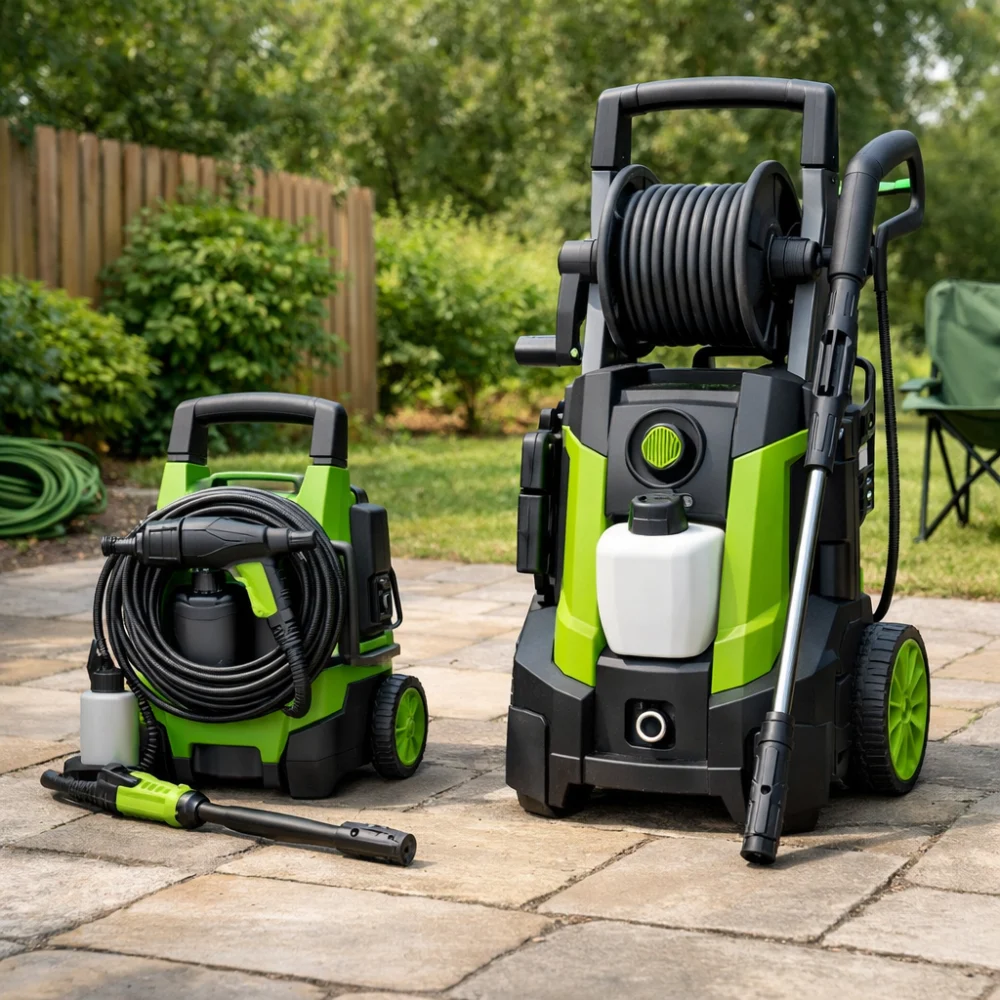
Overlooking the space you have. A pressure washer that is awkward to store or carry may be used less often than a smaller one with a better fit for your home.
Assuming all accessories are included. Some useful items may be sold separately, so it is worth checking what comes in the box before comparing value.
Choosing for one task only. If you plan to use the washer on several surfaces, think about versatility and control rather than a single best-looking feature.
Safety and suitability caveats
Pressure washers should be chosen with the surfaces and jobs in mind, not just the strongest specification. Different materials and finishes can react differently to a concentrated spray, so it is sensible to check whether the washer is appropriate for the surfaces you intend to clean. If you are unsure, the product page and any supplied guidance should help you judge suitability.
It is also worth checking the practical setup requirements before buying, including access to water, power and enough space to work comfortably. That matters just as much as the washer itself.
Maintenance, storage and lifespan considerations
General upkeep can affect how convenient a pressure washer feels over time. Buyers often benefit from thinking about hose storage, cleaning after use and whether accessories will be easy to keep together. If a model relies on batteries or specific consumables, check those requirements in advance so there are no surprises later.
Storage matters too: a dry, tidy place is usually preferable, especially if the washer will not be used all year round. A machine that is straightforward to store and bring back into use is often easier to live with than one with extra parts to manage.
How to compare pressure washers efficiently
- Decide what you want to clean most often.
- Choose the power source and size that fit your space and routine.
- Compare the features that affect control, reach and convenience.
- Check what accessories are included, not just what is possible with extras.
- Read the individual product page carefully before buying.
Summary buyer decision checklist
- Will it suit the surfaces and jobs you have in mind?
- Is the power source practical for where you will use it?
- Does it have enough reach and manageable storage for your space?
- Are the included accessories useful for your cleaning routine?
- Is the balance of size, control and convenience right for how often you will use it?
Frequently asked questions
What is a pressure washer mainly used for?
Pressure washers are mainly used for outdoor cleaning jobs that benefit from a more focused spray than a garden hose alone can provide. They are commonly considered for paving, patios, driveways, garden furniture and vehicle cleaning. The best choice depends on how often you will use it and how much control you need.
Is a cordless pressure washer as good as a mains model?
It depends on what matters most to you. Cordless models can be more convenient where mobility is important, while mains-powered models are often better suited to longer cleaning sessions. The right option comes down to run time, convenience and how far you need to move around.
Do I need lots of accessories?
Not necessarily. Some buyers only need a straightforward machine, while others benefit from accessories that help with reach, foam application or more controlled cleaning. It is usually better to buy the attachments you will actually use than to pay for extras that stay in the box.
Can one pressure washer handle different surfaces?
Many buyers want a single machine for several jobs, but suitability depends on the control the model gives you and the surfaces involved. A versatile washer can be useful if it has sensible accessories and easy handling. Always check whether it suits each task you plan to do.
What should I check before buying online?
Look at the power source, what is included in the box, how easy it will be to store and whether the setup suits your space. It also helps to think about the main cleaning task first, because that makes comparison much simpler.
Why do pressure washer listings look so different?
Pressure washers vary because they are built for different users and tasks. Some are compact and easy to store, while others are set up for more frequent or more demanding cleaning. Comparing them by use case is usually more useful than comparing them by one headline detail alone.