Reciprocating saws are built for cutting in situations where neat finish is less important than getting through the material efficiently. They are commonly chosen for demolition, rough carpentry, renovation work and pruning, especially where access is awkward.
If you are comparing one for the first time, the main decision is not just power. It is how often you will use it, what you plan to cut and whether portability matters more than uninterrupted runtime. That balance usually makes the biggest difference to comfort and satisfaction.
Because this category covers a wide range of models, it helps to focus on the job rather than the headline name alone. Specifications vary by model, so always check the individual product page before buying.
What matters most when choosing a reciprocating saw?
The right starting point is to match the saw to the task. For occasional cutting and easier access, a compact model may be enough, while regular renovation work may justify something more robust. Cordless models offer flexibility, but corded options avoid battery management and are often simpler for longer sessions.
Blade choice, handling and ease of control matter just as much as raw power. A saw that feels balanced and accepts the blades you need is often a better buy than one that simply sounds more powerful on paper.
| Feature | What it means | Why it matters | What to check |
|---|---|---|---|
| Power source | Corded or battery-powered operation | Affects mobility, runtime and convenience | Whether you need untethered use or longer continuous work |
| Size and handling | How compact, heavy or easy to grip the saw feels | Influences comfort and control in tight spaces | Tool length, grip style and whether one-handed use is important |
| Blade compatibility | The types of blades the saw accepts | Determines what materials you can cut effectively | Blade shank fit, replacement availability and intended material types |
| Speed and control | How the saw starts, accelerates and stays controlled | Helps with cleaner control and better handling of mixed materials | Any variable-speed or control features listed on the product page |
| Work type | General cutting, demolition or pruning focus | Different tasks benefit from different designs | Whether the saw is positioned for rough cutting, renovation or garden use |
Key decision criteria explained
Corded or cordless
Corded saws suit buyers who expect longer sessions and do not want to think about charging batteries. Cordless saws are easier to move around a site, use away from power, or take into a garden or loft where sockets are inconvenient. The trade-off is usually between flexibility and uninterrupted run time.
Compact or full-size handling
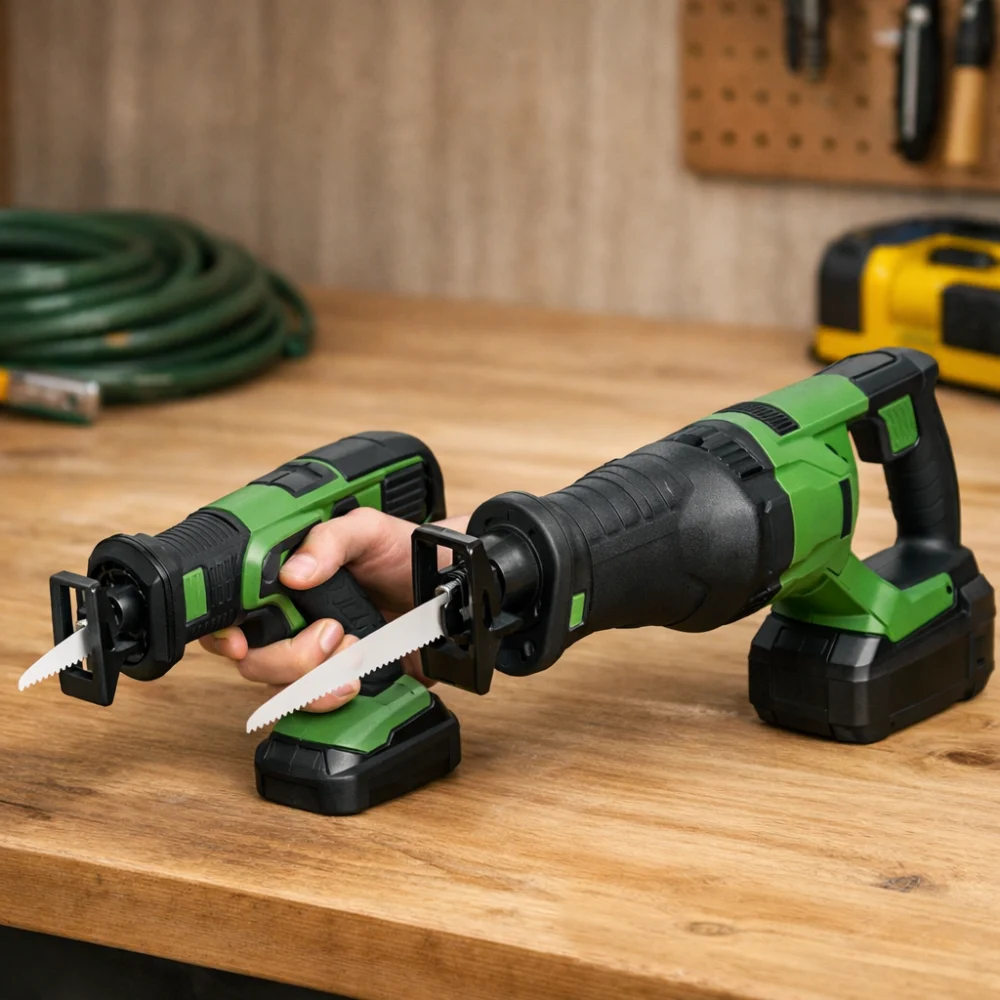
A compact reciprocating saw is often easier to control in confined spaces, overhead positions or one-handed situations. A larger saw may feel more substantial for heavier work, but it can be less convenient where access is limited. Think about where the saw will actually be used rather than choosing size on appearance alone.
Blade fit and intended materials
Blade compatibility is one of the most important checks because the saw and blade together determine what can be cut effectively. Some buyers mainly need wood-cutting blades, while others may need blades suitable for metal or mixed demolition materials. Check the blade shank type and what the product page says about intended use.
Control and comfort
A saw that is easy to hold steadily can make a bigger difference than a marginal increase in power. Look for details that suggest better handling, especially if you expect to work above shoulder height, in awkward corners or for extended periods. Comfort matters because reciprocating saws are usually used in less-than-ideal positions.
Types and variants you are likely to compare
Within this category, the most common distinctions are about power source and size rather than completely different tool classes.
- Corded reciprocating saws are suited to frequent or prolonged use where access to mains power is available.
- Cordless reciprocating saws suit jobs that benefit from mobility, especially on-site work, garden use or quick cutting tasks.
- Compact models are easier to manoeuvre where space is tight, but may be less comfortable for heavier work.
- More substantial models can feel better for tougher or longer jobs, but may be less convenient to handle in awkward spots.
The useful question is not which type is universally better, but which one fits the kind of cutting you expect to do most often.
Which type suits which buyer?
| Buyer need | Likely priority | Why that matters |
|---|---|---|
| Occasional home DIY | Simple handling and straightforward setup | Makes the tool easier to store, carry and use when needed |
| Renovation or demolition work | Durability, control and suitable blade options | Helps the saw cope with mixed materials and longer sessions |
| Garden pruning | Mobility and manageable size | Makes outdoor use easier and less awkward |
| Work in tight spaces | Compact shape and good grip | Improves access where a larger saw may be cumbersome |
| Frequent, longer use | Comfort and power source that suits sustained work | Reduces frustration with charging or handling over time |
Common mistakes and misunderstandings
- Choosing by power alone: a more powerful-looking tool is not always more useful if it feels heavy or awkward in the space you have.
- Overlooking blade fit: the saw matters, but the blade does too. Check that the blades you need are available and appropriate for the material.
- Ignoring how it will be used: demolition, pruning and general DIY can point to different priorities, even within the same category.
- Forgetting about runtime or cable access: cordless convenience and corded endurance each solve different problems, so choose based on your actual working pattern.
Safety and suitability caveats
Reciprocating saws are versatile, but they are not precision finish tools. If you need a clean decorative cut, another saw type may be more suitable. It is also worth checking what materials the product page says the saw and blades are intended for, rather than assuming one blade will suit every job.
For any model, consider the working space, how the tool is held and whether the task involves wood, metal or mixed materials. That gives you a better buying decision than focusing on a single headline feature.
Maintenance, storage and lifespan considerations
General upkeep usually means keeping the saw clean, storing it dry and checking that blades are replaced when worn. Cordless models also add battery care into the picture, while corded models avoid that but still need the cable and plug kept in good condition.
If you expect only occasional use, think about storage size and how easy it will be to keep blades together with the tool. A model that is easy to put away and pick up again is often more practical than one with features you will not use.
How to compare options efficiently
- Start with the job: demolition, pruning, renovation or general rough cutting.
- Decide whether corded power or cordless mobility matters more.
- Check blade compatibility and whether the saw suits the materials you expect to cut.
- Compare size, grip and control if you expect to work in awkward positions.
- Read the individual product page carefully before buying.
Summary buyer decision checklist
- Do I need corded endurance or cordless portability?
- Is the saw suitable for the materials I want to cut?
- Will the size and weight suit the spaces I work in?
- Are compatible blades easy to obtain for my intended jobs?
- Does the product page match the way I plan to use the tool?
Frequently asked questions
What is a reciprocating saw mainly used for?
It is mainly used for rough cutting, demolition work, pruning and other jobs where speed and access matter more than a fine finish. That makes it useful for renovation and outdoor tasks where other saws may be less convenient. The exact best use depends on the blade and the model.
Should I choose corded or cordless?
Choose cordless if you value portability and expect to work away from a socket. Choose corded if you want continuous running without battery management. The better option depends on where and how long you plan to use the saw.
Can a reciprocating saw cut metal and wood?
Many can, but only with suitable blades and within the limits set by the product page. It is important to match the blade to the material rather than assuming one blade will do everything. Specifications vary by model, so always check the individual product page before buying.
Is a compact model better for beginners?
It can be, especially if you want easier handling in small spaces or lighter occasional use. That said, the right choice still depends on the work you plan to do. A beginner who expects frequent heavy cutting may need a more substantial tool.
What should I check before buying blades?
Check the blade shank compatibility, the material the blade is intended for and whether suitable replacements are easy to get. The saw and blade should be considered together because blade choice affects performance and practicality. If you are buying for multiple tasks, it helps to think about which blades you will actually use most.
Are reciprocating saws good for neat cuts?
They can make controlled cuts, but they are generally chosen for versatility and access rather than fine finishing. If appearance and edge quality are the main concern, another saw type may be a better fit. This is one of the most common trade-offs buyers should expect.