
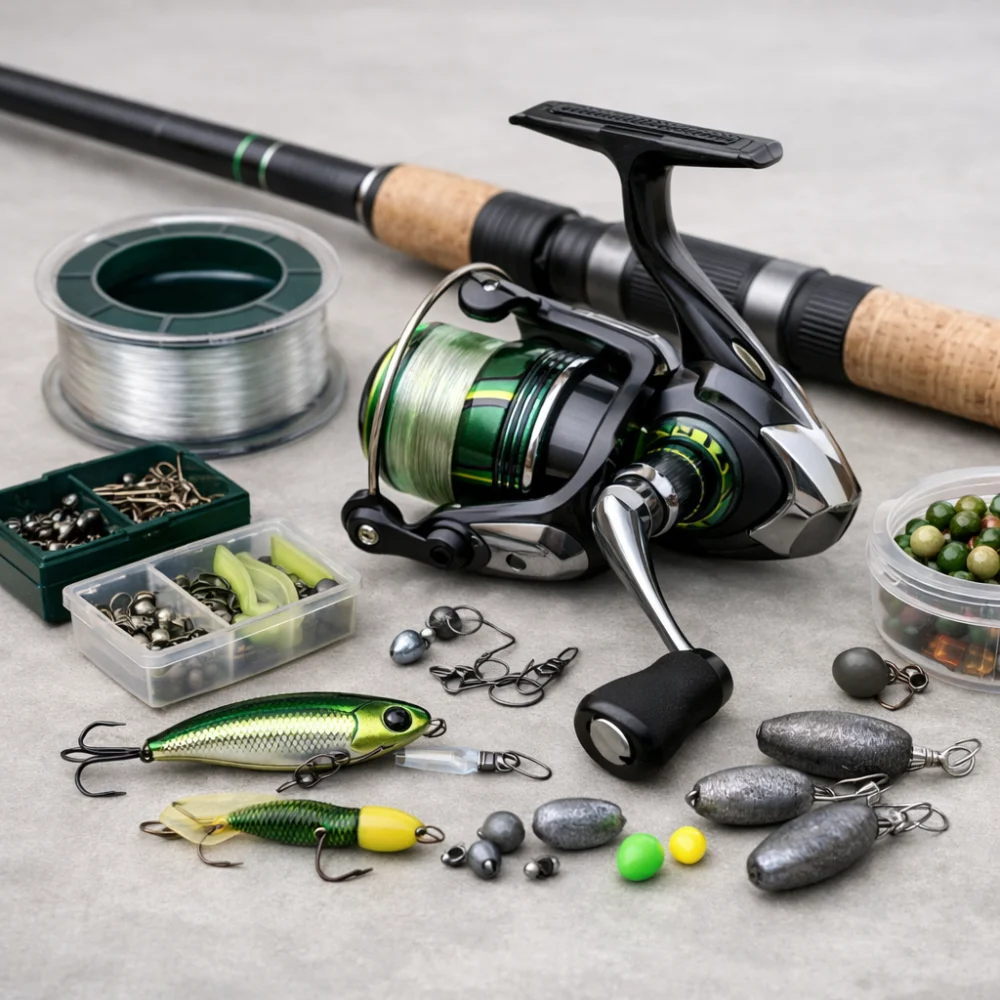
Spinning reels are a familiar choice for many anglers because they are versatile, straightforward to use and suited to a wide range of fishing situations. If you are replacing a reel, setting up a new rod or comparing options for different styles of fishing, it helps to focus on the features that affect handling more than the name on the box.
This guide keeps the decision practical. It explains which characteristics matter most, what often causes confusion and how to compare reels without getting distracted by details that may not make much difference for your kind of fishing.
Specifications vary by model, so always check the individual product page before buying.
What should I look for when choosing a spinning reel?
Start with the reel size, the drag system and whether the reel suits the rod and line you plan to use. A spinning reel should feel balanced on the rod, hold the amount of line you need and give you a retrieve that matches the way you fish. The main trade-off is usually between lighter, more compact reels and larger reels that offer more capacity and a stronger feel.
| Feature | What it means | Why it matters | What to check |
|---|---|---|---|
| Reel size | The overall frame and spool size class | Affects balance, line capacity and how the reel feels on the rod | Match the size to your rod and the sort of fishing you do |
| Drag system | The resistance that helps control line under pressure | Influences how smoothly the reel gives line when a fish runs | Look for a drag type that suits your target fish and preferred control |
| Retrieve ratio | How much line is wound in with each handle turn | Changes retrieve speed and the feel of lure control or line recovery | Check whether you want a quicker or more measured retrieve |
| Line capacity | How much line the spool can hold | Important for the line strength and fishing distance you expect to use | Compare the stated capacity against your planned line choice |
| Handle and body layout | The shape and placement of the handle and reel body | Can affect comfort, left- or right-hand use and overall handling | Confirm the handle arrangement and whether it feels comfortable to operate |
Key decision criteria explained
Reel size and balance
Reel size is one of the easiest ways to narrow the choice. A smaller reel may suit lighter tackle and shorter sessions, while a larger reel may suit heavier line or situations where line capacity matters more. The most useful check is whether the reel looks and feels proportionate to the rod rather than too large or too small for it.
Drag smoothness and control
Drag is not just about strength; it is about how predictably the reel gives line. For many anglers, a smooth, consistent drag is more useful than a very aggressive setting. If you fish with lighter lines or expect sudden runs, the quality of the drag matters as much as the headline size.
Retrieve ratio and winding feel
The retrieve ratio affects how fast line comes back in. Faster ratios can be helpful when you want to gather slack quickly, while slower-feeling reels may give you a more deliberate retrieve. Think about how you fish most often rather than choosing a number in isolation.
Line capacity and line choice
Line capacity matters when you want enough line for the fishing situation, but it should be considered alongside the type of line you intend to use. Braided and monofilament lines can behave differently on the spool, so the stated capacity should be read as a guide rather than a promise of a fixed setup. Specifications vary by model, so always check the individual product page before buying.
Body, spool and handle feel
Comfort matters more than many buyers expect. A reel that feels awkward to wind or unbalanced on the rod can make a short session feel tiring. It is worth checking whether the handle setup, body shape and spool size suit your preferred way of holding and winding the rod.
Common spinning reel types and variants
Within the spinning reel category, the main variations usually come from size, line capacity, drag layout and intended style of fishing rather than from completely different mechanisms. Some reels are aimed at lighter everyday use, while others are built to offer more capacity or a more specialised feel for certain approaches.
- Smaller general-purpose reels may suit lighter tackle and anglers who want an easy, balanced setup.
- Medium-sized reels often suit all-round use where flexibility matters more than specialisation.
- Larger-capacity reels may be a better fit where longer line runs or heavier line choices are expected.
- Variant drag layouts can matter if you prefer a particular feel or have a rod and fishing style that suit one arrangement better than another.
Which spinning reel suits different buyers?
| Buyer need | What to prioritise | Why |
|---|---|---|
| Beginner buying a first reel | Ease of use, comfortable size and simple setup | A straightforward reel is easier to match with a rod and learn from |
| Angler replacing a worn reel | Similar size, same retrieve feel and comparable line capacity | This makes the swap easier and helps keep the rod balanced |
| All-round casual angler | Balanced size, practical drag and sensible capacity | These features usually matter more than specialist extras |
| Buyer targeting heavier setups | Capacity, sturdier feel and drag control | The reel needs to suit the demands of the line and fishing style |
| Gift buyer | General-purpose usability and a familiar layout | A versatile reel is safer when the recipient’s exact setup is not known |
Common mistakes to avoid
- Choosing by size alone. A reel size that looks right on paper may still feel wrong on the rod, so balance matters.
- Ignoring line capacity. If the spool cannot hold the line you plan to use comfortably, the reel may not suit the setup.
- Focusing only on retrieve speed. A fast retrieve is not always better if it does not suit your fishing style.
- Overlooking hand comfort. Small differences in handle feel and winding effort can matter over a full session.
Safety and suitability notes
Spinning reels are generally straightforward to buy, but they still need to suit the rest of the setup. Check that the reel matches your rod, line choice and intended use rather than assuming any spinning reel will do the same job. If you fish in harsher conditions, pay extra attention to the product page details that describe the reel’s intended environment and construction.
Maintenance, storage and lifespan considerations
Any reel will usually last longer if it is kept clean, dried after use and stored carefully between sessions. If you fish regularly, it is sensible to think about how easy the reel will be to wipe down and keep in good condition. Some buyers also prefer a design that is easy to live with over time, rather than one that only looks impressive on first use.
How to compare spinning reels efficiently
- Decide what kind of fishing the reel is for and what rod it will sit on.
- Shortlist the sizes that look proportionate to that setup.
- Compare drag, retrieve feel and line capacity against your needs.
- Check the handle layout and general comfort for your preferred use.
- Read the individual product page carefully before you choose.
Summary buyer decision checklist
- Does the reel size suit your rod and style of fishing?
- Is the line capacity appropriate for the line you plan to use?
- Does the drag feel suitable for the control you want?
- Is the retrieve feel right for your usual fishing approach?
- Does the handle and body layout look comfortable to use?
- Have you checked the individual product page for model-specific details?
Frequently asked questions
What is a spinning reel best used for?
Spinning reels are often chosen because they are versatile and easy to use across many fishing situations. They are a practical option when you want a familiar setup that works with a broad range of rods and techniques. The exact best use depends on the reel size and the rest of the tackle.
How do I know which size spinning reel I need?
The easiest guide is the rod and the kind of fishing you plan to do. A reel should look balanced on the rod and hold enough line for your intended setup without feeling oversized. If you are unsure, compare several nearby sizes and choose the one that seems most proportionate.
Is a faster retrieve ratio always better?
No. A faster retrieve can help you gather line more quickly, but it is not automatically the better choice for every angler. The right retrieve depends on how you fish and how much control or speed you prefer.
Should I prioritise drag or line capacity?
Both matter, but for most buyers the right balance is more important than a single headline feature. Drag affects how the reel behaves under load, while line capacity affects how much line the reel can comfortably carry. Choose the combination that suits your intended use rather than overemphasising one number.
Can I use any spinning reel with any rod?
Not really. A reel may physically fit the rod, but balance, line capacity and overall handling still need to make sense together. It is better to treat the reel and rod as a setup rather than as separate purchases.
What should a first-time buyer focus on most?
Keep the decision simple: choose a sensible size, a comfortable layout and a drag and capacity that suit the rod and line you intend to use. A straightforward reel is often easier to live with than one loaded with features you do not need. The product page should help you confirm the details that matter most.

