
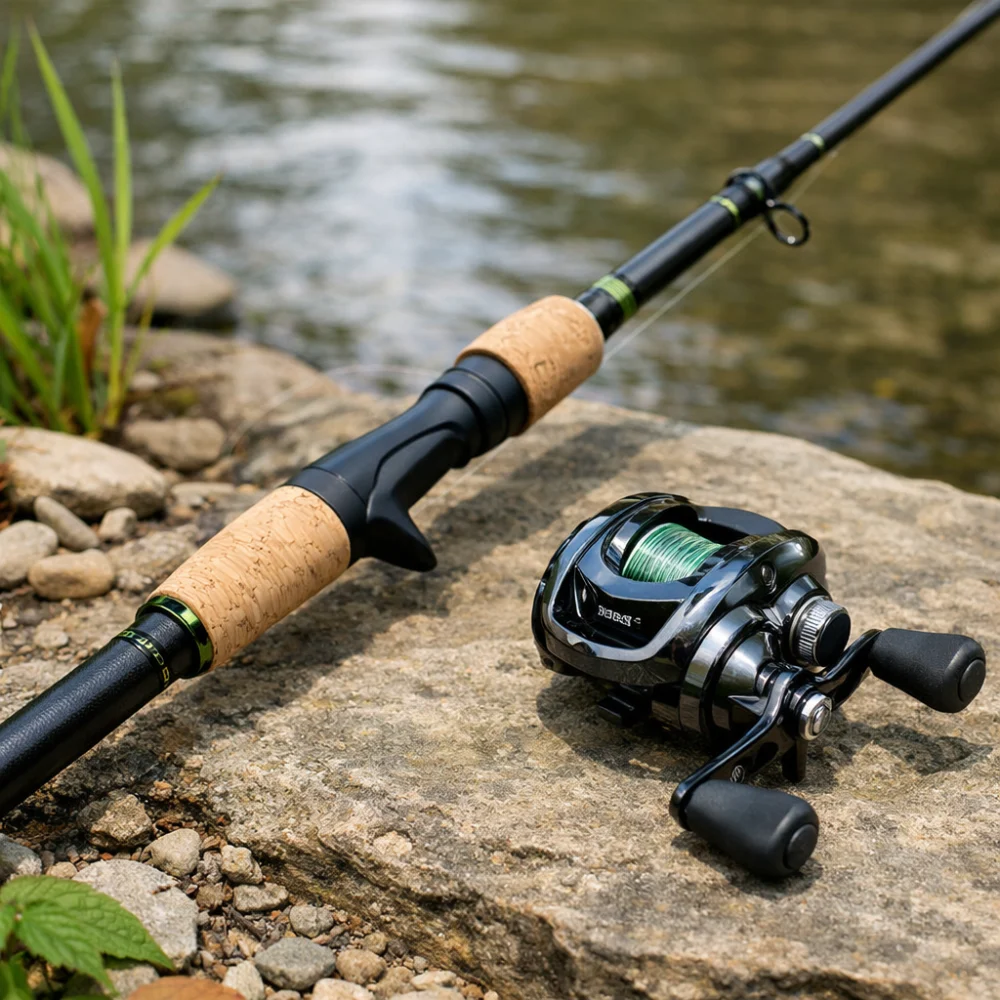
Casting rods are chosen for control, lure presentation and the kind of fishing setup they are designed to work with. If you are comparing rods for lure fishing, predator fishing or general casting use, the main task is to match the rod to your bait or lure weight, fishing method and the reel system you plan to use.
They are not the same as spinning rods, and that difference matters more than many buyers expect. The wrong rod type can make a setup feel awkward, even if the rod itself is well made. Specifications vary by model, so always check the individual product page before buying.
What should you look for in a casting rod?
The best starting point is the fishing style you want to use. After that, compare rod length, casting weight range, action and power, because those features affect how comfortably the rod handles your lure, how accurate it feels and how much control you have during the retrieve.
It also helps to think about where you fish. A shorter rod can feel easier to manage in tight swims or on a boat, while a longer rod may suit distance casting or situations where extra line control is useful.
| Feature | What it means | Why it matters | What to check |
|---|---|---|---|
| Rod type | Whether the rod is intended for casting-style use rather than spinning use | It affects how the rod pairs with your reel and how the setup feels in use | Look for the intended reel style and fishing method on the product page |
| Length | The overall rod length | Influences casting feel, control and how easy the rod is to handle in different spaces | Choose a length suited to boats, banks, tight swims or open water |
| Casting weight | The lure or bait weight range the rod is designed to handle | A rod performs best when your lure sits within its intended range | Match the stated range to the lures or baits you expect to use |
| Action | How and where the rod bends under load | Changes casting feel, sensitivity and how the rod behaves when playing a fish | Check whether the action suits finesse work, general use or more powerful casting |
| Power | The rod’s overall strength class | Affects how much force the rod can apply and how it feels under strain | Consider the size of fish you expect and the resistance of your chosen lures |
| Sections and pack-down | Whether the rod is one-piece, two-piece or travel-friendly | Impacts storage, transport and convenience | Check how easy it is to carry, store and protect |
Key decision criteria explained
Rod length
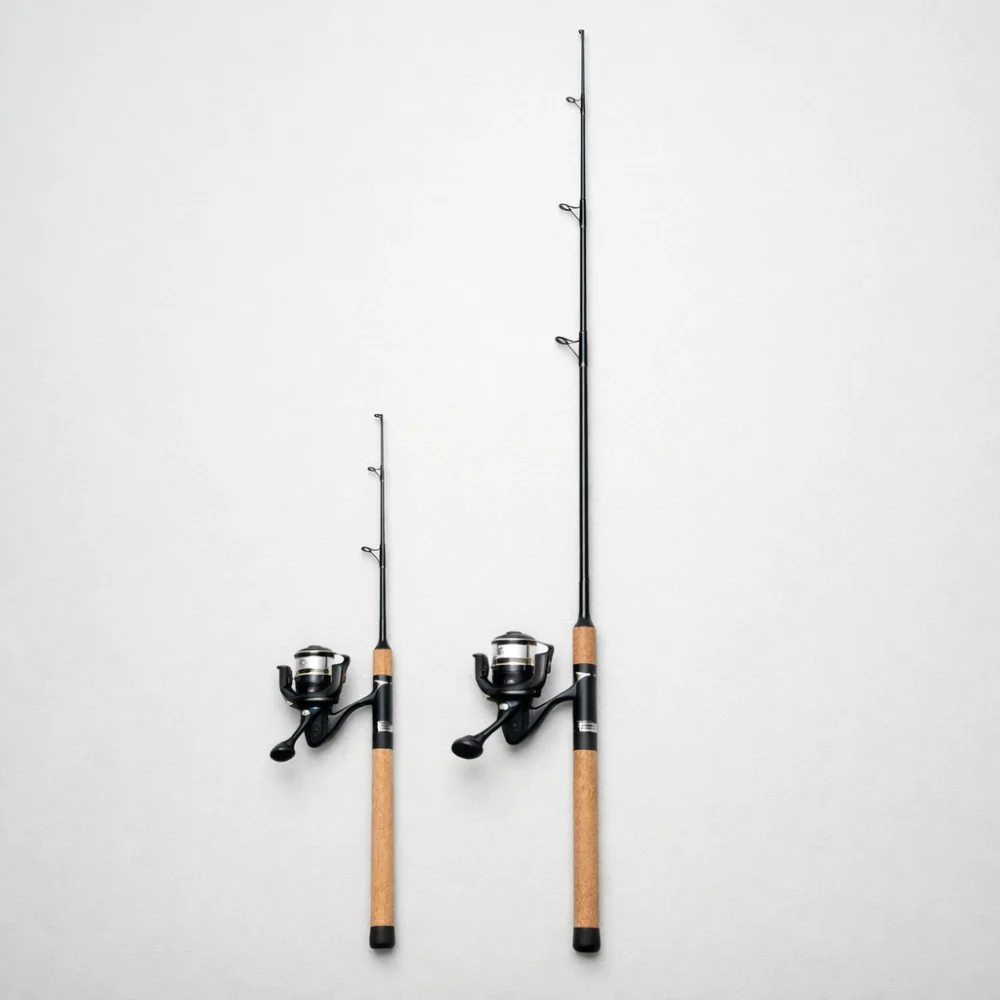
Length is one of the easiest features to understand, but it can change the feel of the whole outfit. Shorter rods are often easier to manoeuvre and can be more convenient in confined spaces, while longer rods may offer more leverage and line control. The trade-off is usually between compact handling and casting or control benefits.
Casting weight range
This is one of the most important checks because it tells you what the rod is designed to handle. If your lure is too light, the rod may feel unresponsive; if it is too heavy, the rod can feel overloaded. That is why the stated range should be treated as a practical guide rather than a loose suggestion.
Action and power
Action describes where the rod bends, while power describes how much resistance it offers. These two ideas are often confused, but they affect different parts of the fishing experience. A faster action may feel sharper and more responsive, while a more moderate action may feel smoother and more forgiving. Power should be matched to the species, lure style and the kind of pressure you expect to apply.
Handle and finish details
Comfortable grip materials, guide layout and overall balance can make a rod easier to fish with for longer periods. These details do not always stand out in a short listing, but they matter when you are using the rod repeatedly. If possible, look for a product page that gives enough detail to judge comfort and build quality.
Common casting rod types and variants
Within this category, buyers will usually be comparing rods by intended use rather than by a single universal design. Some are aimed at lighter lure work, while others are built for stronger applications or more specialised fishing styles.
- Light lure casting rods suit smaller baits and more finesse-focused fishing.
- General-purpose casting rods are often chosen when one rod needs to handle a broader range of everyday lures.
- Heavier-duty casting rods may suit larger baits, stronger lines and more demanding conditions.
- Compact or travel-friendly designs are useful when storage and transport matter as much as on-water feel.
The main limitation is that a rod designed for one style may not feel ideal outside that range. A more specialised rod can be a better tool, but it may also be less forgiving if you want one setup to cover many situations.
Which casting rod suits your needs?
| Buyer need | What to prioritise | Why |
|---|---|---|
| Beginner buyer | Clear casting weight range, straightforward length and a forgiving all-round setup | That makes the first purchase easier to use and easier to match with suitable lures |
| Frequent lure angler | Action, balance and lure range | Regular use makes comfort and matching performance more noticeable |
| Boat or tight-space fishing | Manageable length and easy handling | Space can matter more than maximum reach |
| Travel or storage-conscious buyer | Pack-down convenience and protection in transit | Ease of carrying can matter as much as performance |
| Gift buyer | Versatility and clear product information | A flexible rod is easier to choose when you do not know every detail of the recipient’s setup |
Common mistakes and misunderstandings
- Choosing by price alone can lead to a rod that does not suit the lure weight or fishing style. Fit matters more than headline value.
- Confusing action with power can make comparisons misleading. They describe different performance traits.
- Ignoring reel compatibility can leave you with an awkward setup. Check the intended rod style before you buy.
- Overlooking transport needs can be a problem if you fish from a car, boat or crowded storage area. A more compact rod may be easier to live with.
Safety and suitability caveats
Use the rod only for the fishing style it is designed for, and avoid assuming that one casting rod will suit every lure, every venue or every species. If you are buying for a specific setup, check the individual product details carefully so the rod, reel and line are a sensible match.
Maintenance, storage and lifespan considerations
Casting rods are usually straightforward to care for, but regular storage and cleaning still matter. After use, keep the rod dry, protect the guides and avoid storing it in a way that puts pressure on the blank or joints. If the rod has multiple sections, check that they fit together cleanly and store it in a way that reduces knocks in transit.
Over time, repeated use, transport and exposure to wet or gritty conditions can affect comfort and appearance. A well-chosen rod can last longer in practical terms if it is easy to carry, easy to store and suitable for the way you fish.
How to compare options efficiently
- Decide what kind of fishing you want the rod for.
- Check the rod type and make sure it matches your reel style and setup.
- Compare length, casting weight, action and power against your likely lures.
- Consider handling, transport and storage as part of the decision, not as an afterthought.
- Read the individual product page carefully before buying, especially where specifications vary by model.
Summary buyer decision checklist
- Does the rod match the type of casting setup you want?
- Is the stated casting weight range suitable for your lures or baits?
- Is the length practical for your fishing environment?
- Do the action and power suit your target species and style of use?
- Will the rod be easy to transport, store and care for?
- Have you checked the individual product page for the exact model details?
Frequently asked questions
What is a casting rod used for?
A casting rod is used for fishing setups where controlled lure presentation and casting feel are important. It is commonly considered by anglers who want a rod designed around a baitcasting-style approach rather than a spinning setup.
How do I choose the right casting weight?
Start with the lures or baits you plan to use most often, then look for a rod whose stated range comfortably covers them. If your lure sits outside the intended range, the rod may not perform as expected.
Is a longer casting rod always better?
No. Longer rods can be useful in some situations, but they are not automatically better. The right length depends on your fishing space, the kind of control you want and how you prefer the rod to feel in use.
What is the difference between action and power?
Action describes where the rod bends, while power describes how much resistance the rod offers. Both matter, but they affect different aspects of performance, so it helps to compare them separately.
Can one casting rod do everything?
Some rods are more versatile than others, but no single rod suits every situation equally well. A general-purpose option can be a sensible compromise, though a more specialised rod may feel better for a narrow task.
Do I need to check anything else besides the rod itself?
Yes. The reel style, line choice and intended lures all influence whether the setup will feel balanced and practical. The rod should be assessed as part of the full fishing outfit, not on its own.

