
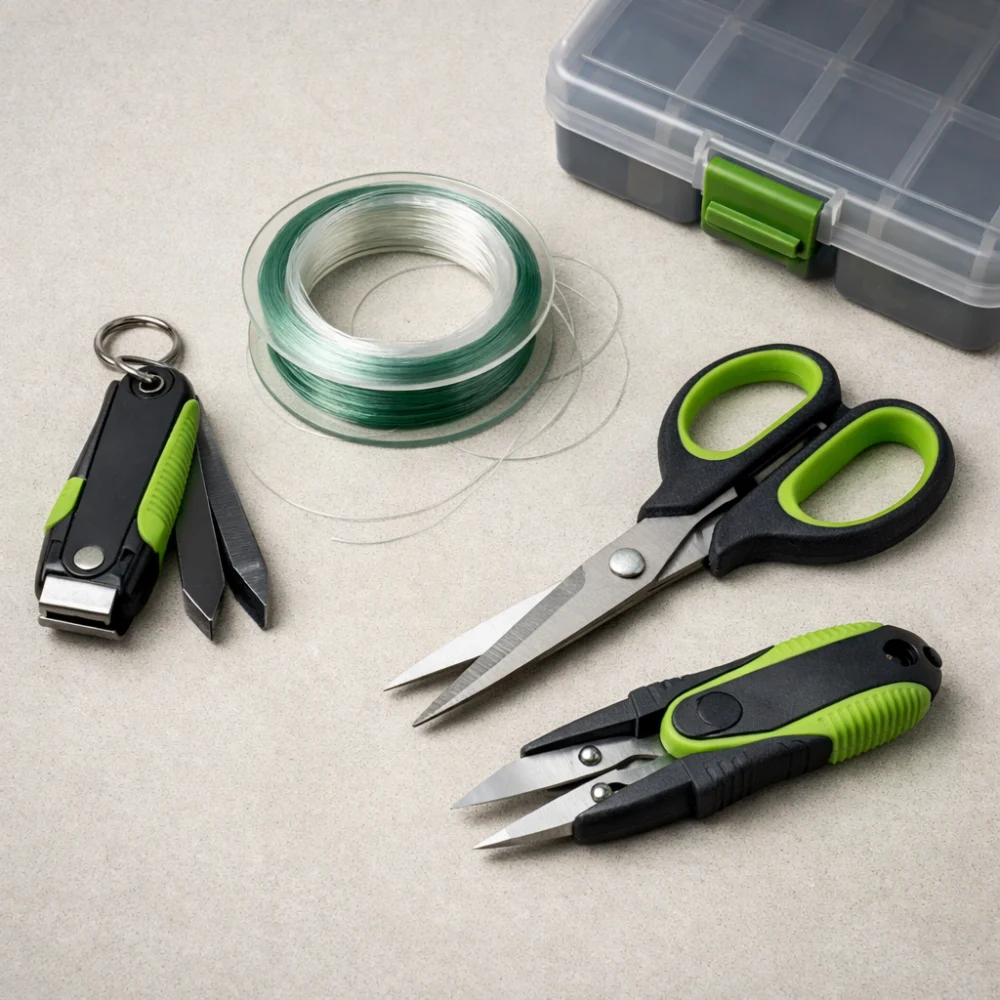
Fishing line cutters and scissors are small tackle tools, but they can make rig changes, leader trimming and knot finishing much easier. The right choice depends on the line you use, how often you fish and whether you want something compact for a pocket or a more substantial tool for the bank, boat or beach.
Because this category covers several closely related tool styles, it helps to compare cutting action, size, grip and durability rather than just choosing by appearance. A tool that feels fine with soft monofilament may be less comfortable with braid, while a very compact cutter may be easier to carry but less convenient for regular use.
For most buyers, the key is to match the cutter to the line type and the way you organise your tackle. If you want one tool for everyday use, look for a sensible balance of sharpness, handling and portability.
What should you look for in fishing line cutters and scissors?
Start with the line you use most often, then think about comfort and convenience. A simple cutter can be ideal for occasional trimming, while anglers who change rigs frequently may prefer a tool with a more secure grip and a cutting edge suited to braid or thicker materials. Specifications vary by model, so always check the individual product page before buying.
| Feature | What it means | Why it matters | What to check |
|---|---|---|---|
| Cutting action | How the blades or jaws meet the line | Affects how cleanly the tool cuts and how easy it feels to use | Whether it is intended for braid, mono or mixed line use |
| Size and portability | How easy the tool is to carry and store | Important for pocket use, tackle boxes and mobile fishing | Overall shape, folding design and whether it suits your carry setup |
| Grip and handling | How securely you can hold it with wet hands | Helps when conditions are cold, damp or busy | Handle shape, finger space and any non-slip design details |
| Material and finish | The construction used for the tool body and blades | Can affect corrosion resistance and long-term feel | Material description and whether the finish suits your fishing environment |
| Extra features | Added functions beyond cutting | May improve convenience, but not everyone needs them | Any hook-eye cleaner, lanyard, retractor or folding feature listed |
Key decision criteria explained
Line type
The biggest difference in use is often the line itself. Braided line can call for a cleaner, sharper cutting edge, while monofilament and fluorocarbon may be easier to trim with simpler scissors. If you use more than one line type, it is sensible to choose a tool that is described for mixed use rather than assuming every cutter will feel the same.
Blade style and cutting edge
Some fishing scissors are designed as straightforward blades, while others use serrated edges or nipper-style jaws. Serrated edges can help with grip on slippery or fine material, but they are not automatically better for every task. Choose the style that suits how you trim line and how precise you want the cut to feel.
Comfort in use
A good tool should feel easy to open, close and control, especially if you are making repeated cuts. Small differences in handle shape, spring action or finger room can matter more than buyers expect. If you fish in cold or wet conditions, a grip that stays usable when damp is worth checking carefully.
Portability and storage
Some buyers want a tool that disappears into a tackle pouch, while others prefer something with a lanyard, retractor or folding form. Portability helps if you move often or carry light, but it should not come at the expense of awkward handling. If the tool will live in a box or bag, consider how easily it can be found and accessed.
Durability and corrosion resistance
Fishing tools are often exposed to moisture, grit and bait residue, so the construction matters. Stainless steel is commonly used, but the important point is whether the tool is suited to the conditions you fish in and whether it is likely to stay easy to clean. If you fish in saltwater or wet environments, check the product description carefully for material and finish details.
Common types and variants
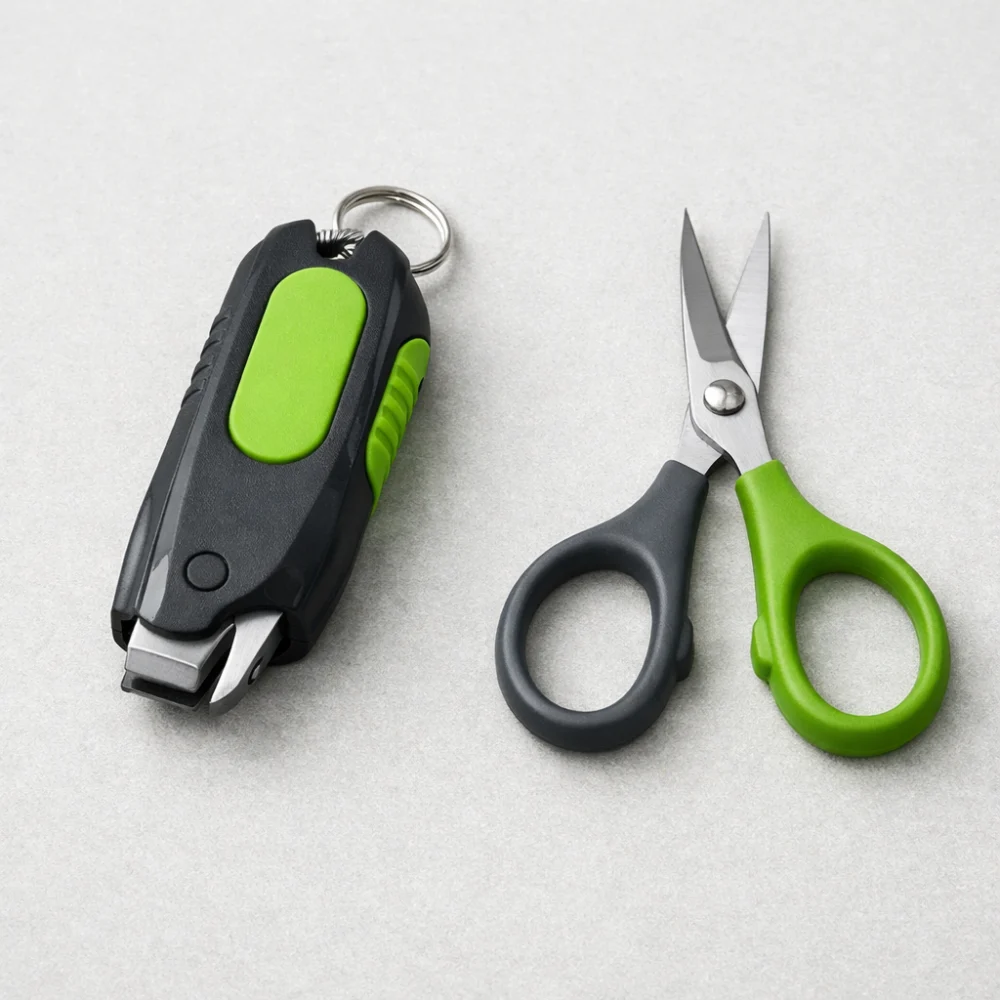
Within this category, the main differences are practical rather than dramatic. Some products are compact line nippers or small scissors for minimal carry, while others are larger fishing scissors with a more substantial cutting handle. Folding designs can be appealing for portability, and some models include small extras such as a lanyard or hook-eye cleaner.
- Compact cutters suit anglers who want something lightweight and easy to stash.
- Fishing scissors suit buyers who prefer a more familiar scissor action and easier handling.
- Multi-feature tools may suit people who want fewer loose items in their tackle bag.
The right variant depends on whether you value compactness, control or extra convenience. A simpler tool is often enough if you mainly trim line, while a more feature-rich one may help if you want everything close at hand.
Which type suits different buyers?
| Buyer need | What to prioritise | Why it helps |
|---|---|---|
| Occasional angler | Simple cutting action and easy storage | Keeps the choice straightforward without paying for features you may not use |
| Frequent rig changer | Comfort, speed and a tool that is easy to hold | Makes repeated trimming less awkward during a session |
| Braid user | A tool clearly suited to cutting braid | Helps avoid frustration with slippery or fine line |
| Traveller or minimalist angler | Compact size and secure storage | Reduces bulk in a pocket, sling or compact tackle system |
| Wet-weather or saltwater angler | Construction and corrosion resistance | Supports easier care and better long-term practicality |
Common mistakes to avoid
- Choosing only by size. A very small tool is easy to carry, but it still needs to feel comfortable and effective in use.
- Assuming all cutters work equally well on braid. Line type matters, so check the intended use rather than guessing.
- Overlooking grip. A tool that is hard to hold can be frustrating, especially with wet hands or when you are working quickly.
- Ignoring storage needs. If it has no lanyard, clip or case, think about where it will live in your kit.
- Buying for extras alone. Added features can be useful, but they should not distract from the main job of cutting line cleanly.
Safety and suitability considerations
These are simple tools, but they still need to suit the way you fish and the conditions you expect. Check the material, grip and intended line type so you do not end up with a tool that feels awkward or underpowered for your usual setup. If you are buying for someone else, think about whether they prefer compact gear or a larger hand-held tool.
Care, storage and expected lifespan
Fishing line cutters and scissors usually last longer when they are dried after use and kept free from grit and residue. In many cases, basic cleaning and dry storage are enough to keep them working well, but any model-specific care guidance should take priority. If a tool has moving parts or a folding design, it is worth checking how it should be stored so it stays easy to open and use.
How to compare options efficiently
- Decide what line you cut most often.
- Choose the tool style that suits your carry preference.
- Check the cutting edge, grip and handling details.
- Look at any extras only after the basics are right.
- Read the individual product page for the final specification match.
Summary buyer decision checklist
- Does it suit your main line type?
- Is it comfortable to hold and easy to control?
- Is the size right for your tackle bag, pocket or pouch?
- Do you need a simple cutter or a model with extra features?
- Is the material and finish appropriate for your fishing conditions?
- Have you checked the individual product page for the exact details?
Frequently asked questions
Are fishing line cutters better than ordinary household scissors?
Usually, yes, because fishing tools are designed with line use in mind and are easier to carry in a tackle kit. Household scissors may work in a pinch, but they are not always as convenient or as suited to braid and wet conditions. The best choice depends on how often you fish and how neatly you want to trim line.
Do I need scissors if I already have pliers?
Not always, but many anglers find scissors or cutters more convenient for quick trimming. Pliers are useful for other tasks, while scissors are often better for neat line cuts. If you want one tool to do several jobs, check whether the product description mentions any added functions.
What matters most for braid?
For braid, the most important thing is that the tool is described as suitable for it. A sharp, well-controlled cutting edge is more important than a flashy design. If you use braid often, avoid assuming a general-purpose cutter will feel equally effective.
Should I choose a folding tool or a fixed one?
Choose folding if compact storage matters most and you want to reduce bulk. Choose fixed if you prefer quicker handling and a more familiar feel. The better option is the one that fits how you actually carry your tackle.
Are extra features worth having?
They can be, if you will use them. A lanyard, retractor or hook-eye cleaner may improve convenience, but a simple tool is often enough for trimming line. Extra features should support the main job rather than replace it.
How do I know whether a cutter is suitable for saltwater use?
Look carefully at the material and finish details on the product page. Saltwater exposure makes cleaning and corrosion resistance more important, so choose a tool that is clearly described in a way that suits those conditions. If that information is not clear, it is worth comparing another option.
What is the main trade-off between compact and larger scissors?
Compact tools are easier to carry, while larger scissors can be easier to hold and use repeatedly. Neither is automatically better. The choice depends on whether portability or handling comfort matters more to you.

