
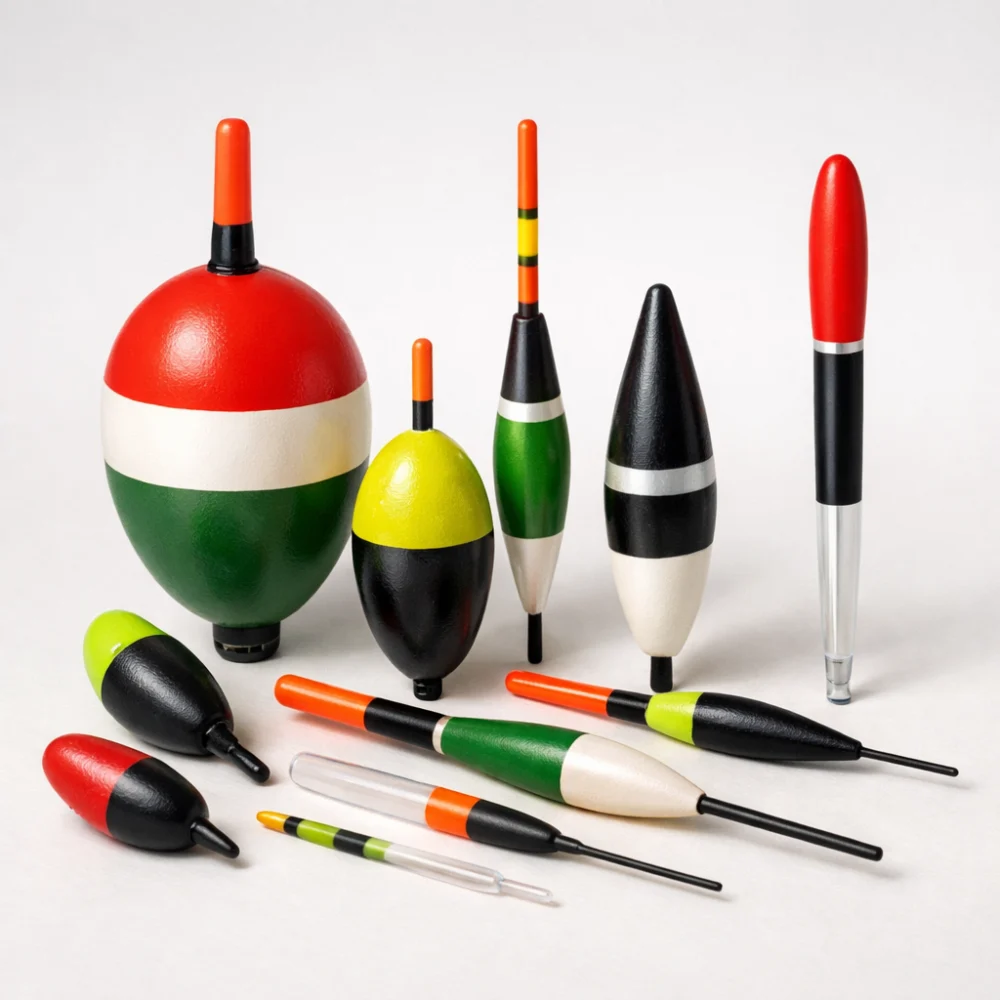
Fishing floats do a simple job, but the right one depends on how you fish. The best choice for a stillwater margin session is not always the same as the best choice for a river, a long-range cast or a delicate bite indication setup.
This guide helps you narrow down the float style, size and visibility that suit your method. It also explains the small details that often affect how well a float performs once it is tied on.
What should you look for in a fishing float?
Start with the fishing situation, then choose the float that matches it. In general, the main trade-off is between sensitivity, stability and casting control: a finer float can show shy bites more clearly, while a more robust float may be easier to cast, read and keep steady in wind or flow.
For most buyers, the most useful starting point is to match the float to the water and the presentation you want. Specifications vary by model, so always check the individual product page before buying.
| Feature | What it means | Why it matters | What to check |
|---|---|---|---|
| Float style | The general shape and setup, such as a fixed or sliding design | It affects how the float casts, holds position and shows bites | Whether it suits the distance, depth and method you plan to use |
| Buoyancy and body size | How much lift the float provides and how large the body is | It changes casting ease, stability and how visible the float is on the water | That the size suits your bait, terminal tackle and water conditions |
| Visibility | How easy the tip or body is to see at range or in poor light | It helps you read bites without straining to see the float | Tip colour, body colour and whether the design suits your usual light conditions |
| Sensitivity | How easily the float registers subtle movements | It matters for cautious fish and careful bite detection | Whether a finer, lighter presentation is more useful than a tougher, more stable one |
| Water conditions | Whether the float is intended for stillwater, slow flow or more disturbed water | It affects stability, drift control and how accurately the bait sits | Whether the design matches the environment you fish most often |
Key decision criteria explained
Fixed or sliding setup
A fixed float is attached at a set point on the line, which can make it straightforward for shallower fishing and closer-range work. A sliding float is generally chosen when you need to cast to greater depths or adjust the fishing depth more easily. The trade-off is usually between simplicity and versatility.
Size and buoyancy
Float size affects how the rig behaves on the cast and in the water. A larger float may be easier to see and handle in awkward conditions, while a smaller or lighter pattern can be more subtle. The key is to balance visibility with the level of finesse your method needs.
Tip style and visibility
Some floats are easier to track at distance because of the shape or colour of the tip. That matters if you fish in glare, waves or low light. If you often struggle to see subtle movement, visibility can be as important as sensitivity.
Body shape and stability
Body shape influences how steadily the float sits and how it reacts to small disturbances. More stable designs can be useful when you want the float to stay readable, while slimmer forms may suit more delicate presentations. Think about whether you need resistance to movement or a more responsive indication of bites.
Match the float to the rig, not just the venue
Two anglers on the same water may need different floats because their bait, line choice and casting distance are different. A float that looks suitable in the abstract can still feel wrong if it is too light, too visible or not stable enough for the actual rig.
Types and variants you are likely to compare
Fishing floats are usually compared by how they are used rather than by a long list of technical features.
- Fixed floats suit straightforward fishing at a set depth and are often easier to understand for newer anglers.
- Sliding floats are more flexible when depth changes matter or when a longer cast is needed.
- Pole-style floats are generally chosen for controlled, precise presentation rather than long-distance casting.
- More buoyant or robust designs may suit choppier water or bigger baits, but they can be less subtle.
If you are unsure which type to choose, think first about where the float will spend most of its time: close in, at range, or in moving water.
How different buyers can narrow the choice
| Buyer need | What to prioritise | Why that helps |
|---|---|---|
| Beginner or casual angler | Straightforward setup and easy visibility | It makes rigging and bite reading less confusing |
| Stillwater angler | Stability, balanced buoyancy and clear indication | It helps the float sit cleanly and show subtle movement |
| River or flowing-water angler | Control, steadiness and suitability for the current | It reduces unwanted drift and improves presentation |
| Distance caster | Castability and visibility at range | It is easier to place and monitor the float where you want it |
| Angler using delicate bait presentations | Sensitivity and a light, balanced rig | It can make cautious bites easier to detect |
Common mistakes and misunderstandings
- Choosing by appearance alone: a float can look suitable but still be wrong for the depth, current or rig balance.
- Overlooking visibility: if you cannot read the float clearly, the setup becomes harder to use even if it is technically suitable.
- Using one float for every situation: different waters and methods reward different shapes and sizes.
- Ignoring the rest of the rig: the float needs to suit the line, bait and intended presentation, not just the venue.
- Assuming bigger is always better: a more buoyant float may be easier to see, but it can reduce subtlety.
Safety and suitability caveats
Check that the float is appropriate for the type of fishing you plan to do and the water conditions you expect. If you fish in changing light, rougher water or at range, visibility becomes more important; if you fish for cautious bites, a more delicate presentation may matter more. For any model, the individual product page is the right place to confirm how it is intended to be used.
Maintenance, storage and lifespan considerations
Floats are usually simple items to store, but they can be damaged if crushed in a crowded tackle box. Keeping them separated from heavier terminal tackle helps preserve the shape and tip. If a float is intended for repeated use, consider how easy it is to keep clean and how well it fits with the rest of your kit.
How to compare options efficiently
- Decide where you will use the float most often: stillwater, river, close range or farther out.
- Choose the type that matches that use, such as fixed, sliding or a more specialised style.
- Compare buoyancy, visibility and sensitivity against the way you fish.
- Check whether the float appears stable enough for the water conditions you expect.
- Confirm the individual product details before buying.
Summary buyer decision checklist
- Does the float suit your water type and fishing method?
- Is it visible enough for the conditions you usually face?
- Is the setup simple enough for your experience level?
- Does it offer the sensitivity or stability you need?
- Have you checked the individual product page for the exact model details?
Frequently asked questions
What is the main job of a fishing float?
A fishing float helps keep the bait presented at the right depth and gives a visible signal when there is movement on the line. Different floats do that job in different ways, which is why shape and size matter.
How do I choose between a fixed float and a sliding float?
A fixed float is usually the simpler option for shorter-range or shallower fishing. A sliding float is more flexible when depth and casting distance become more important. The best choice depends on how you fish most often.
Does float size affect bite detection?
Yes, because size and buoyancy influence how readily the float reacts to movement. A lighter or finer float may show subtle takes more clearly, while a larger float can be steadier and easier to see.
Why does visibility matter so much?
If you cannot see the float clearly, you may miss gentle bites or find it harder to judge movement. This becomes more important in wind, glare or low light. Visibility and sensitivity need to be balanced rather than treated as the same thing.
Can one float work for every fishing situation?
It is possible, but not ideal. Different waters, depths and presentations usually benefit from different float styles, so one all-round choice is often a compromise.
What should I check before buying a float online?
Check the intended setup, the likely depth or fishing style it suits, and whether the visibility and buoyancy match your needs. If the individual product page gives more detail, use that to confirm the choice before you buy.

