
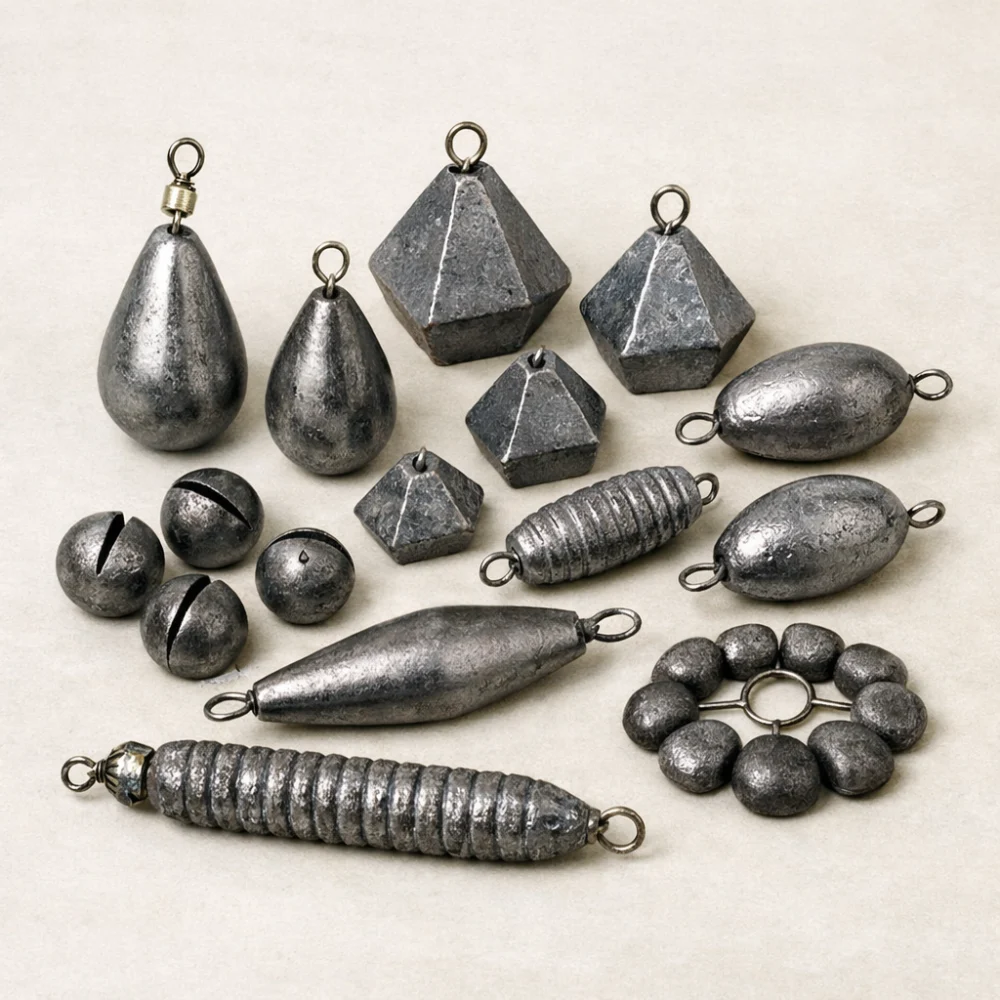
Fishing sinkers and weights are used to help your rig sink, stay put or present bait in the right way. The category covers a wide range of shapes and styles, from compact general-purpose weights to designs aimed at holding bottom in moving water or supporting a specific rig setup.
If you are new to terminal tackle, the main decision is usually not which weight is “best”, but which shape and weight style suits your fishing. A good choice depends on the water, the rig, how far you need to cast and whether you want the bait to sit still, drift naturally or anchor more firmly.
For many buyers, the challenge is separating shape, material and application. Those factors matter more than the name on the pack, and the same nominal weight can behave differently depending on its form and where you fish.
What should I look for when choosing fishing sinkers and weights?
Start with the fishing situation rather than the packet size. The most useful starting point is the style of fishing you do, because that affects whether you need a weight that casts well, grips the bottom, or simply adds enough mass to set a rig correctly. From there, compare the shape, the material and the way the weight attaches to your setup.
The trade-off is usually between holding power, casting behaviour and presentation. A more streamlined shape may cast more smoothly, while a more textured or specialised design may be better at staying in place. Specifications vary by model, so always check the individual product page before buying.
| Feature | What it means | Why it matters | What to check |
|---|---|---|---|
| Shape | The physical form of the weight, such as compact, elongated or designed to grip | Shape affects casting, bottom contact and how the rig behaves in water | Whether the shape suits still water, flowing water or longer casts |
| Weight size | The mass of the sinker | Heavier weights can help with distance or stability, but may reduce finesse | That the size matches your rod, rig and intended presentation |
| Material | What the weight is made from | Material can affect size, density and handling preference | Any preference for compactness or non-toxic alternatives where relevant |
| Attachment style | How the weight connects to the rig | It affects how securely the sinker sits and how easy it is to change | Compatibility with your chosen rig or terminal tackle setup |
| Intended use | Whether it is aimed at casting, holding bottom or rig presentation | The same sinker can be unsuitable if used for the wrong purpose | Product descriptions that mention the intended fishing method |
Key decision criteria explained
Shape and water conditions
Shape is one of the biggest influences on performance. Some forms are made to cast efficiently, while others are better at resisting movement on the bottom. If you fish flowing water, snaggy ground or windy conditions, shape can matter as much as nominal weight.
Think about whether you need the sinker to settle and stay put, or whether you want a more natural presentation. A shape that works well in one environment may be a poor fit in another.
Weight and presentation
More weight is not automatically better. A heavier sinker may help the rig reach distance or remain stable, but it can also make the setup feel less subtle. Lighter options can be easier to fish delicately, though they may not behave as well in wind, current or at range.
Choose the smallest practical weight that still suits your rig and conditions, then adjust if the presentation is not behaving as expected.
Material and density
Different materials can change how compact a sinker feels for its weight. Some buyers prefer a smaller profile in the same weight class, while others focus on general handling and the type of fishing they do. The main point is to read the product description carefully rather than assuming all sinkers of the same weight will look or fish the same.
Compatibility with your rig
Some sinkers are best suited to particular rig setups, while others are more general-purpose. Compatibility is less about fashion and more about whether the weight can be used cleanly with your line, hooklength or feeder-style arrangement. Check the product page for any notes about use with specific rigs or terminal tackle components.
Common sinker and weight types
There is a practical difference between general-purpose sinkers and weights designed for a more specific job. That distinction is often more useful than brand or packaging style when you are comparing options.
- General-purpose weights: Useful when you want a straightforward sinker for common setups and do not need a specialised design.
- Streamlined casting weights: Better when distance and smooth flight matter more than bottom grip.
- Bottom-holding styles: Suited to situations where the weight needs to resist movement once it lands.
- Specialist rig weights: Intended for particular presentations or rig arrangements where precise behaviour matters more than versatility.
Not every buyer needs a specialist option. If your fishing is varied and you are building a general terminal tackle kit, a simple, adaptable style may be the most practical starting point.
Which type suits different buyers?
| Buyer need | What to prioritise | Why it helps |
|---|---|---|
| Beginner building a basic kit | Simple, versatile sinkers with clear weight information | Easy to understand and useful across more than one setup |
| Angler fishing at range | Streamlined shape and a weight that casts predictably | Helps the rig travel and land in a controlled way |
| Angler fishing moving water | Holding power and bottom stability | Reduces unwanted movement once the rig is in place |
| Angler focused on subtle presentation | Weight that does the job without overloading the rig | Supports a more delicate presentation |
| Angler replacing lost tackle | Match the existing rig and size as closely as possible | Minimises unnecessary changes to the setup |
Common mistakes to avoid
- Choosing by weight alone: Two sinkers with the same mass can behave differently because of shape and intended use.
- Using a specialist design for every situation: A highly specific weight may be less versatile than a simpler option.
- Ignoring the rig setup: A sinker should suit the rest of the terminal tackle, not just the fishing environment.
- Overlooking presentation: A heavier option is not always the better one if you want a natural bait presentation.
Safety and suitability caveats
Check that the sinker is suitable for your intended style of fishing and the rest of your setup. If you fish in different waters, a weight that works well in one place may not be appropriate in another. It is also sensible to consider any local rules or venue requirements that may affect tackle choice, without assuming every product is suitable everywhere.
Because terminal tackle varies widely, product descriptions matter. What looks similar on a shelf may be intended for a different use once you read the full details.
Maintenance, storage and lifespan considerations
Fishing sinkers and weights are usually simple items, but they still benefit from basic care. Rinse and dry them after use if they have been exposed to wet or dirty conditions, then store them separately so they do not tangle with hooks, swivels or line. Keeping them organised also makes it easier to find the right size next time.
Wear can be affected by how often you fish, where you fish and how the sinker is handled. Check for damage, deformation or anything that could interfere with the rig before you use it again.
How to compare options efficiently
- Decide what the sinker needs to do: cast, hold bottom or support presentation.
- Choose the most suitable shape for the water and fishing style.
- Compare weight, attachment style and any notes about intended use.
- Check whether the option fits your existing terminal tackle setup.
- Read the individual product page carefully before buying.
Summary buyer decision checklist
- Does the sinker suit your fishing style and water conditions?
- Is the shape appropriate for casting, holding or presentation?
- Is the weight practical for your rig and target presentation?
- Does the attachment method work with your terminal tackle?
- Have you checked the individual product page for the exact details?
Frequently asked questions
What is the difference between a sinker and a weight?
In practice, the terms are often used interchangeably for tackle that adds mass to a rig. The important point is not the label but what the item is designed to do in use.
How do I choose the right size?
Start with the fishing situation, then pick the smallest size that still performs the job you need. If you are not sure, compare the product details with your current setup rather than guessing from appearance alone.
Are all sinkers suitable for every rig?
No, some are more general-purpose while others are intended for specific setups or conditions. Check whether the product description mentions a particular use, especially if you are matching it to an existing rig.
Does the shape really matter that much?
Yes, because shape affects how the weight casts, lands and stays in place. In many situations, shape is just as important as the listed size.
Should I buy a mixed selection or one type only?
A mixed selection can be useful if you fish in different conditions or are building a first kit. If you already know your main setup, buying a more focused type can be simpler.
How should I store sinkers and weights?
Keep them dry and separated from other terminal tackle where possible. That makes them easier to organise and helps avoid unnecessary wear or tangling.

