
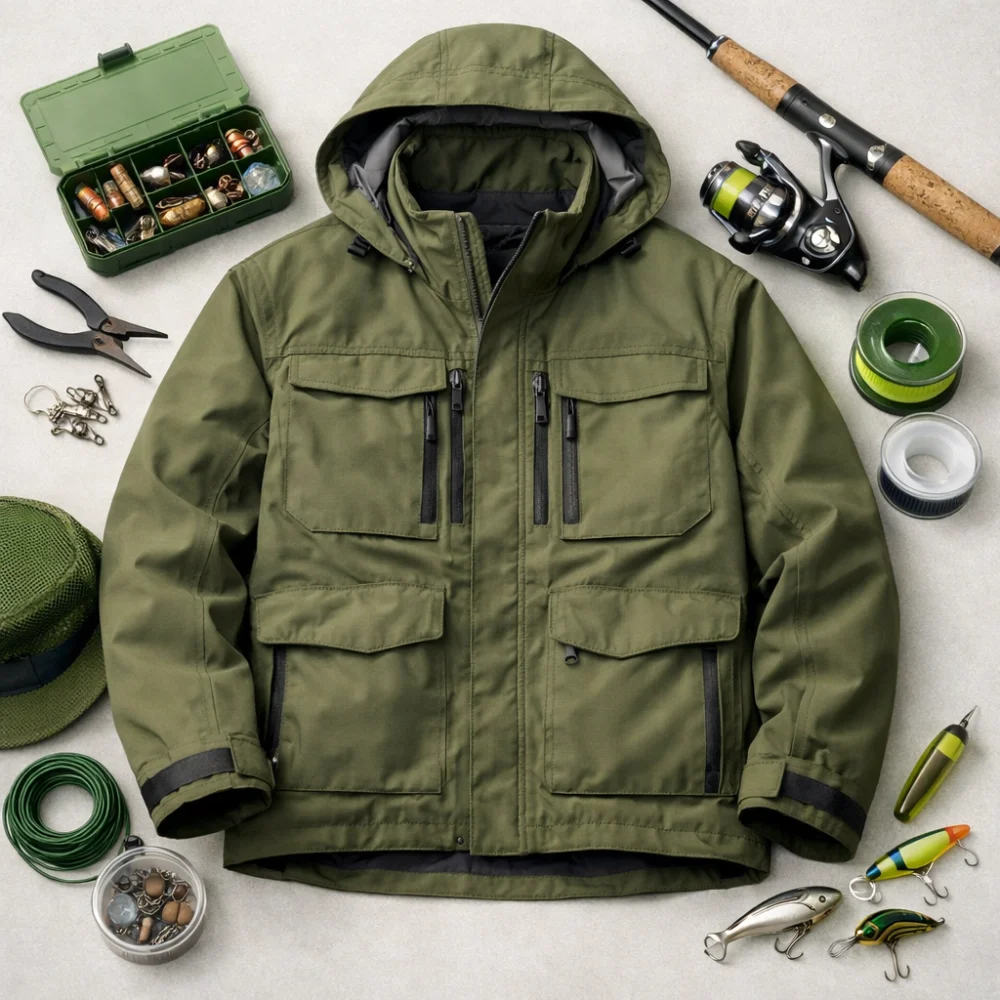
Fishing jackets are chosen for time outdoors, where comfort, movement and protection from the weather matter more than fashion alone. The right option depends on when and where you fish, how much layering you prefer and whether you need something light, warm or more weather-resistant.
This guide helps you compare the features that usually affect the buying decision most. It stays focused on jackets rather than waders, bibs or other fishing clothing, so you can narrow your choice more quickly.
What should you look for in a fishing jacket?
The best starting point is the conditions you expect to wear it in. A lighter jacket may be easier to move in and pack away, while a more protective design may feel less flexible but better suited to unsettled weather. Comfort, layering space and practical details such as pocket layout often matter as much as the outer fabric.
Specifications vary by model, so always check the individual product page before buying.
| Feature | What it means | Why it matters | What to check |
|---|---|---|---|
| Weather protection | How much the jacket is intended to help with wind, rain or damp conditions | Helps you match the jacket to the kind of fishing you do most often | Look for the level of protection described on the product page and whether it suits your usual conditions |
| Warmth and layering | Whether the jacket is designed as a light outer layer or something warmer | Affects comfort across seasons and how easily you can wear layers underneath | Check the lining, thickness and whether it is intended to be worn over other clothing |
| Fit and mobility | How the jacket sits on the body and how freely you can cast, reach and move | Fishing often involves repeated arm movement and standing or walking for long periods | Review the cut, size guidance and whether the style looks suited to active wear |
| Pockets and storage | How much space is provided for small items you may want close to hand | Useful for keeping essentials organised without needing a separate bag | Check pocket count, placement and whether the layout suits your tackle or personal items |
| Breathability | How well the jacket is designed to manage heat and moisture during wear | Important if you walk to your fishing spot or wear the jacket for long sessions | Look for fabric descriptions that suggest comfort during active use rather than only weather resistance |
| Packability and weight | How easy it is to carry when conditions change | Helpful if you travel light or expect variable weather through the day | Consider whether the jacket seems suited to being carried in a vehicle, bag or kit setup |
Which details matter most?
Weather resistance versus everyday comfort
A fishing jacket often needs to balance protection with wearability. If you fish in exposed places, protection from wind and rain may matter more than a soft feel or a very lightweight build. If you fish in milder weather, a more comfortable and flexible jacket may be the better daily choice.
Warmth without unnecessary bulk
Some buyers want a jacket that works as an outer layer over fleece or base layers, while others prefer something warmer on its own. Bulk can make a jacket feel less easy to move in, so think about whether you need insulation or simply a shell that helps take the edge off the weather.
Practical features you will actually use
Pockets, fastenings, cuffs and hood details can be useful, but only if they match how you fish. A jacket with plenty of storage may be helpful for short sessions and simple carry, while a cleaner design can be easier to wear if you only need weather cover. The main question is whether the features support your routine or add unnecessary complexity.
Common fishing jacket types
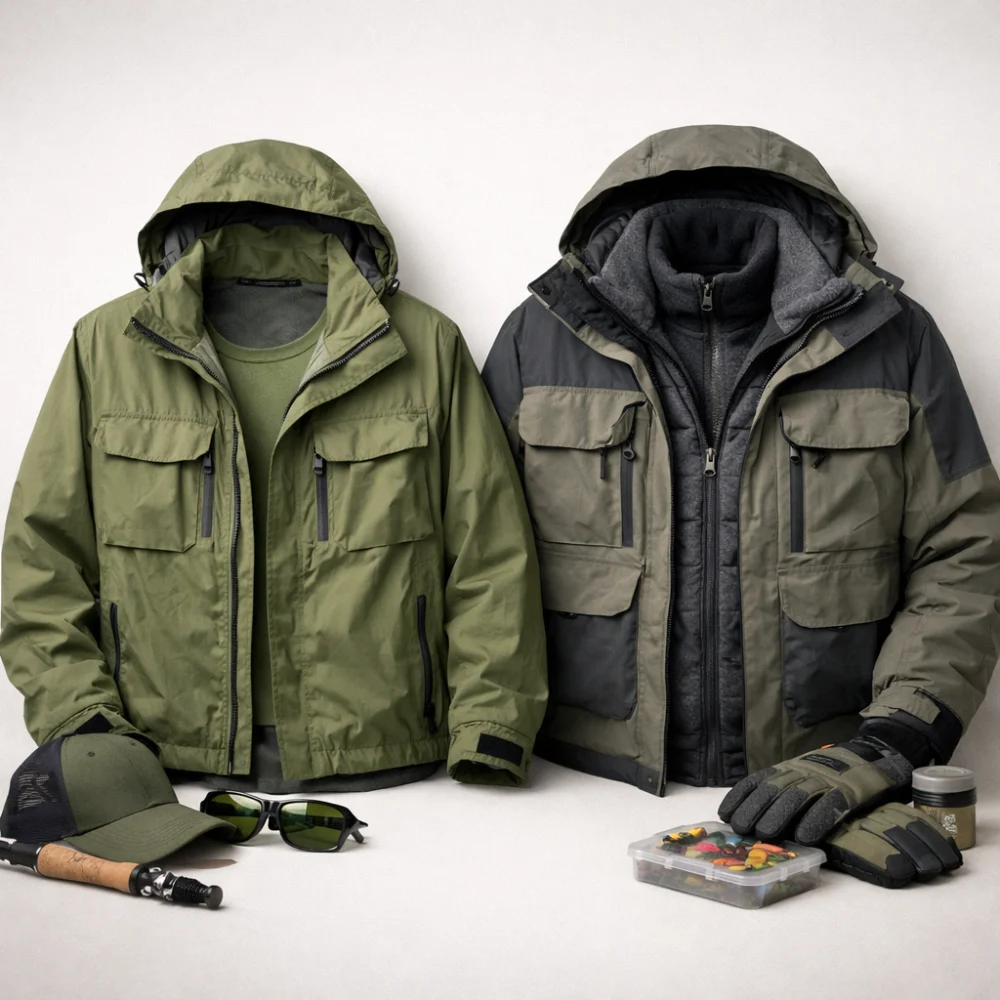
Within this category, jackets may be aimed at different uses rather than a single fixed style. Some are closer to lightweight outer layers, others are built more like warm everyday jackets, and some focus on practical outdoor wear with added fishing-friendly storage. The right choice depends on whether you prioritise mobility, warmth or all-round weather cover.
- Lightweight jackets: Often suited to mild or changeable weather, with an emphasis on ease of movement and carrying comfort.
- Insulated or warmer jackets: Better for colder sessions, though they may feel bulkier and less airy.
- Utility-style jackets: May offer more pockets or outdoor practicality, which can suit anglers who like to keep essentials close to hand.
Which jacket suits which buyer?
| Buyer need | What to prioritise | Why |
|---|---|---|
| Mild-weather angler | Light weight, easy movement, manageable layering | You may want comfort and flexibility more than heavy insulation |
| Cold-weather angler | Warmth, room for layers, weather protection | Staying comfortable for longer usually matters more in colder sessions |
| Mobile or travelling angler | Packability, low bulk, versatile use | A jacket that is easy to carry and wear across different settings is more practical |
| Angler who wants storage | Useful pocket layout and secure closures | Keeping small items organised can reduce the need for extra bags |
Common mistakes to avoid
- Choosing warmth without checking mobility: A warmer jacket may be the right idea, but it should still allow comfortable casting and handling.
- Focusing only on pocket count: More pockets are not always better if they are awkward to access or do not suit what you carry.
- Ignoring layering needs: If you wear thicker clothing underneath, a close-fitting jacket may feel restrictive.
- Assuming all fishing jackets are equally weather-ready: Designs vary, so check what each one is intended to do rather than relying on the category name alone.
Suitability and buying caveats
Think about the sort of fishing you actually do, rather than the broad idea of outdoor use. A jacket that is useful for one season or location may be less comfortable in another. If you are unsure between two options, the more important question is usually whether you want a lighter layer for movement or a more protective layer for staying warm and dry.
It is also worth checking the product description for any details that affect fit, layering or intended conditions. That information is more useful than the category name on its own.
Care, storage and longevity
A fishing jacket will usually last better if it is dried and stored properly after use, especially when it has been worn in damp or muddy conditions. Keep an eye on the fastening points, cuffs and seams, because these are the parts most likely to see repeated wear. If the jacket has a lining, insulation or special outer finish, follow the care guidance on the individual product page so you do not reduce its usefulness over time.
How to compare fishing jackets efficiently
- Decide where and when you will wear the jacket most often.
- Choose the level of warmth and weather protection you actually need.
- Compare fit, movement and layering room before looking at extras.
- Check pocket layout, hood detail and other practical features.
- Read the individual product information closely before deciding.
Fishing jacket buyer checklist
- Does the jacket suit the weather conditions I usually fish in?
- Will I be able to move freely and layer underneath it if needed?
- Is the pocket layout useful for my way of fishing?
- Do I want a lighter, more flexible jacket or a warmer, more protective one?
- Have I checked the product page for the details that matter most?
Frequently asked questions
Are fishing jackets different from regular outdoor jackets?
They can be, but not always dramatically. Some are general outdoor jackets that happen to work well for anglers, while others are designed with more practical storage or a cut that suits active outdoor use. The important part is whether the jacket matches the way you fish.
Should I choose a waterproof jacket for fishing?
That depends on where and when you fish. If you are often out in wet or changeable weather, weather protection may be a priority. If you mostly fish in milder conditions, a lighter jacket may be more comfortable for regular use.
Is a heavier jacket always warmer?
Not necessarily. Some heavier jackets feel bulkier without giving the kind of warmth or comfort you want, especially if you are active. It is better to think about the intended use and layering room rather than relying on weight alone.
How important are pockets on a fishing jacket?
They are useful, but only if the layout suits your needs. A good pocket arrangement can help with small essentials, yet too many pockets can add bulk or feel awkward if you do not use them. Think about what you normally carry.
What size should I buy if I want to layer underneath?
Choose a fit that leaves comfortable room for the clothing you actually plan to wear beneath it. If you expect to wear thicker layers, check the sizing guidance on the product page carefully. A jacket that is too close-fitting can limit movement and reduce comfort.
Can one fishing jacket work all year round?
Sometimes, but it depends on the design and your local conditions. A versatile jacket may handle a range of weather, yet it may still be too warm in summer or not protective enough in colder, wet weather. Many buyers prefer to choose for their main season first.
What should I check before ordering online?
Check the fit, intended use, pocket layout and the product description for any features that matter to you. It is also wise to compare how the jacket should be worn, whether it allows layering and whether it suits the conditions you expect most often.

